John J. Schessler, MS, SPC, CPT is the founder of Athlete Mindset HQ and a sport psychology, fitness, and performance professional with a background in child and adolescent psychology. His work explores the intersection of mindset, physical performance, mental well-being, fitness, and human development. Through practical, evidence-informed education, John challenges outdated ideas about fitness and performance while helping people build stronger bodies, healthier mindsets, and sustainable habits for life. His philosophy is simple: More Than Winning—build the person, and performance follows.
Hosted by John Schessler and Erika Reid, this podcast is about what happens after the decision — after the promise, after the setback, after the moment that defines you. This is where discipline meets identity. Where growth gets uncomfortable. Where you learn to become the person who finishes what they started.
We’re talking mindset, resilience, real stories, and the truth about becoming who you’re capable of being. No fluff. Just follow through.
First episode dropping soon. Follow now and be part of it from day one.
When the Body Is Capable, But the Signal Is Compromised
By John J. Schessler, BA, CMT, SPC, OS
Most athletes assume performance is determined by muscular strength, conditioning, or effort. While these factors matter, they are secondary to the true driver of athletic performance:
The nervous system.
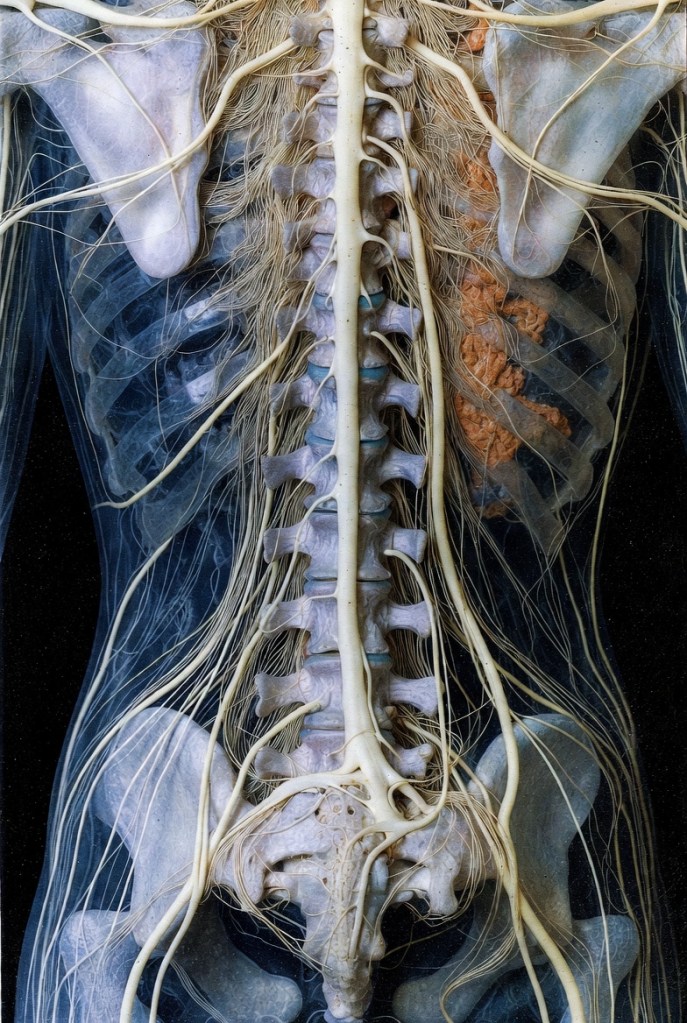
Every movement—every sprint, lift, cut, or reaction—originates as an electrical signal in the brain. That signal travels through the spinal cord and peripheral nerves to activate muscle fibers. When this signal is strong, efficient, and synchronized, performance is explosive and precise. When the signal is fatigued or disrupted, performance declines—even if the muscles themselves are physically capable.
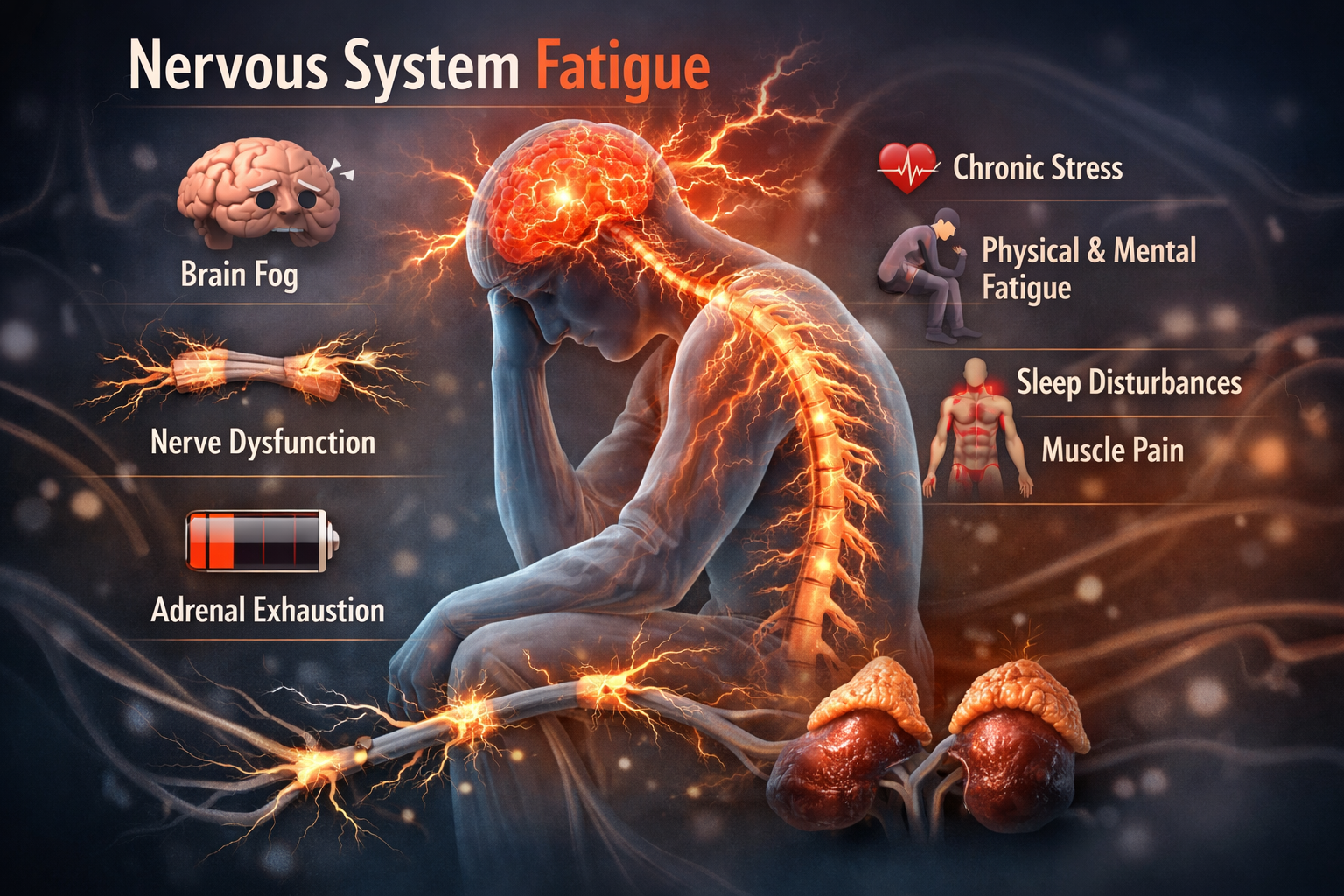
This phenomenon is known as nervous system fatigue or neural performance failure.
The Nervous System Is the Governor of Strength and Performance
The nervous system controls performance through motor unit recruitment. A motor unit consists of a motor neuron and the muscle fibers it activates. The ability to recruit more motor units—and recruit them faster—is what determines strength, speed, and explosiveness (Enoka & Duchateau, 2016).
Research shows that increases in strength during early training phases are driven primarily by neural adaptations, not muscle growth (Moritani & deVries, 1979).
This means:
Strength is a nervous system skill before it is a muscular trait.
The brain determines how much of your physical capacity you are allowed to use.
Central Fatigue: When the Brain Reduces Output
Central fatigue refers to reductions in the nervous system’s ability to activate muscles, originating in the brain and spinal cord (Gandevia, 2001).
This can result in:
• Reduced force production • Slower reaction time • Loss of explosiveness • Reduced coordination • Increased injury risk
Studies show the central nervous system acts as a protective regulator, limiting motor output when it detects excessive stress, fatigue, or perceived threat (Noakes, 2012).
This is not weakness.
It is protection.
The Brain Protects You Before the Body Fails
The nervous system constantly monitors internal and external stress. When total stress load becomes too high, the brain reduces motor output to prevent injury or systemic damage (Meeusen et al., 2013).
This explains why athletes may feel:
• Strong in training but slow in competition • Explosive one day and flat the next • Physically capable but neurologically inhibited
The limitation is not muscular.
The limitation is neural.
Nervous System Fatigue Comes From More Than Training
Neural fatigue is influenced by both physical and psychological stress.
Contributors include:
Physical stressors • Heavy lifting • Maximal sprinting • High contact exposure • Excessive training volume
Even one night of poor sleep can significantly impair neural performance.
Elite athletes prioritize sleep because they understand:
Recovery restores the nervous system.
Why Elite Athletes Appear Effortless
Elite athletes are not always the most muscular.
They are the most neurologically efficient.
Their nervous systems can:
• Recruit motor units faster • Coordinate movement more efficiently • Maintain output under fatigue • Reduce inhibitory neural signals
They are neurologically trained, not just physically trained.
Nervous System Training Is the Foundation of Elite Performance
Proper programming must consider neural stress and recovery.
Effective neural training includes:
• Heavy strength training with proper recovery • Explosive power training • Sprint work • Adequate sleep • Periodized programming • Stress management
This efficiency allows them to produce more force with less perceived effort (Aagaard et al., 2002).
Overtraining occurs when neural stress exceeds neural recovery capacity (Meeusen et al., 2013).
Performance declines not because the athlete is weaker—but because the nervous system is fatigued.
Final Takeaway: The Nervous System Determines Performance Capacity
Muscles do not determine your full performance potential.
Your nervous system does.
When the nervous system is healthy and efficient, performance is explosive, coordinated, and consistent.
When the nervous system is fatigued, performance declines—even in highly trained athletes.
The highest-level athletes and coaches understand this principle.
They train the nervous system—not just the muscles.
Because performance is not just about physical strength.
It is about neural strength.
Coach ABOUT ME & Credentials
I’m a Behavior Interventionist, mental performance specialist, and coach helping athletes and high-performing individuals develop the mental resilience required to perform at their highest level—when it matters most.
My work focuses on strengthening mindset, emotional regulation, and psychological consistency under pressure. Drawing from my background in behavioral psychology, education, and athletics, I translate evidence-based mental performance principles into practical, actionable strategies that directly improve performance in competition, training, and high-stakes environments.
I work with athletes, teams, and student populations to build mental toughness, confidence, focus, and stress tolerance—skills that separate preparation from execution and potential from results.
My approach is direct, practical, and results-driven. Mental toughness isn’t about being emotionless—it’s about awareness, adaptability, and disciplined follow-through.
I am available for:
• Athlete and team mental performance development • High school and collegiate athletic program workshops • Leadership and resilience speaking engagements • Student performance and mindset training • Mental performance coaching for competitive athletes
My mission is to help individuals and teams develop the psychological edge required to perform, lead, and grow with confidence.
John J. Schessler, BA, CMT, SPC, OS Sports Performance Coach Intervention Specialist Certified Master Trainer Specialist in Performance Conditioning and Neurological-Based Training
Education: Bachelor of Arts in Psychology, Child and Adolescent Development
Master of Science in Psychology, Sports Psychology (Currently Completing)
Aagaard, P., Simonsen, E. B., Andersen, J. L., Magnusson, P., & Dyhre-Poulsen, P. (2002). Increased rate of force development and neural drive following resistance training. Journal of Applied Physiology, 93(4), 1318–1326.
Enoka, R. M., & Duchateau, J. (2016). Translating fatigue to human performance. Medicine & Science in Sports & Exercise, 48(11), 2228–2238.
Fullagar, H. H., Skorski, S., Duffield, R., Hammes, D., Coutts, A. J., & Meyer, T. (2015). Sleep and athletic performance. Sports Medicine, 45(2), 161–186.
Gandevia, S. C. (2001). Spinal and supraspinal factors in human muscle fatigue. Physiological Reviews, 81(4), 1725–1789.
McEwen, B. S. (2007). Physiology and neurobiology of stress. Physiological Reviews, 87(3), 873–904.
Meeusen, R., et al. (2013). Prevention, diagnosis, and treatment of overtraining syndrome. European Journal of Sport Science, 13(1), 1–24.
Moritani, T., & deVries, H. A. (1979). Neural factors vs hypertrophy in strength gain. American Journal of Physical Medicine, 58(3), 115–130.
Noakes, T. D. (2012). Fatigue is a brain-derived emotion. Frontiers in Physiology, 3, 82.
In a sports culture obsessed with now—now results, now playing time, now recognition—redshirting often gets mislabeled as a setback. Athletes hear words like “delayed,” “behind,” or worse, “not good enough yet.” That framing is wrong.
Redshirting, when used intentionally, is one of the most athlete-protective and development-focused tools in college athletics. It’s not a punishment. It’s a strategy.
1. Physical Development Takes Time—And That’s Not Weakness
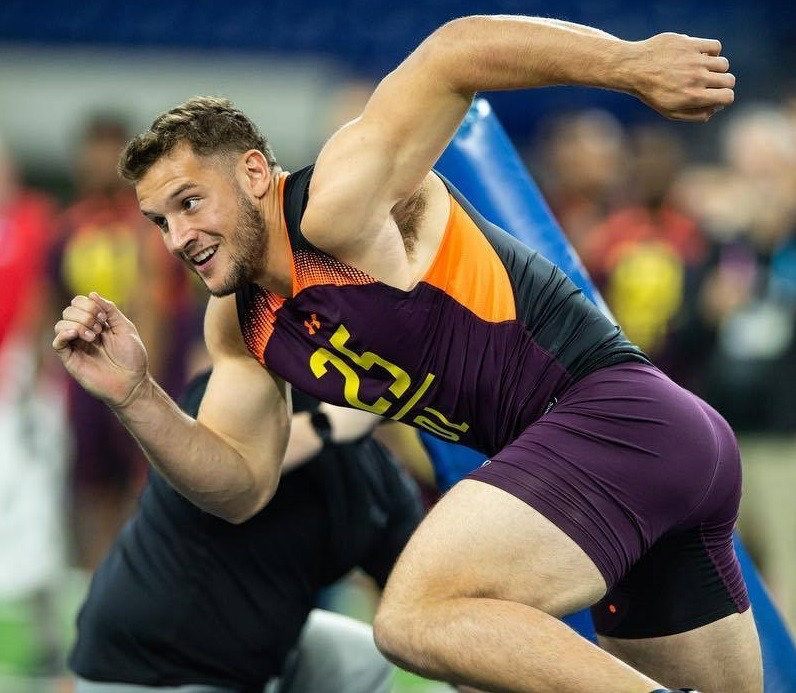
The jump from high school to college athletics is massive. Faster speeds, heavier loads, denser schedules, longer seasons. Redshirting allows athletes—especially freshmen—to adapt physically without the constant stress of competition.
Research supports this transition gap. Studies on collegiate injury trends show that first-year athletes experience higher injury rates, particularly non-contact and overuse injuries, due to rapid increases in training volume and intensity (Hootman et al., 2007). A redshirt year gives athletes time to:
Increase strength and neuromuscular control
Improve movement efficiency
Build tissue tolerance
Learn recovery strategies
From a long-term athlete development perspective, delaying full competition exposure can reduce injury risk and extend playing careers (Balyi et al., 2013).
2. Mental Maturity Matters as Much as Talent
College athletics isn’t just a physical challenge—it’s a psychological one. New environments, academic pressure, social shifts, expectations, and identity changes all hit at once.
Research in sport psychology consistently shows that athlete burnout and anxiety increase when perceived demands outweigh coping resources (Gustafsson et al., 2011). Redshirting provides a buffer year to:
Learn program expectations
Develop confidence outside constant evaluation
Adjust to academic rigor
Build emotional regulation skills
This mental runway is especially important for athletes transitioning from being “the star” to one piece of a competitive roster.
3. Skill Development Without the Spotlight
Game reps matter—but deliberate practice matters more early on. Redshirting allows athletes to refine technique, decision-making, and positional understanding without fear-based performance pressure.
Motor learning research shows that skill acquisition improves when athletes can practice at high intensity without outcome anxiety, allowing for experimentation, error correction, and deeper learning (Ericsson et al., 1993).
Instead of surviving games, redshirt athletes can:
Learn systems thoroughly
Correct inefficient mechanics
Develop consistency
Train at game speed without game consequences
When competition begins, performance is more stable—and confidence is earned, not forced.
4. Long-Term Athletic Identity > Short-Term Ego
Not playing hurts. There’s no way around it. Athletes are competitors, and redshirting challenges ego, patience, and identity.
But that discomfort often builds psychological resilience, a trait strongly associated with long-term success in sport (Fletcher & Sarkar, 2012). Redshirt athletes frequently emerge as:
More coachable
Emotionally tougher
Better communicators
Stronger leaders
They learn that their value is not defined by minutes, stats, or immediate validation—but by preparation and contribution.
5. Redshirting Is an Investment, Not a Delay
A redshirt year does not mean “you’re not good enough.” It often means “we’re investing in who you can become.”
Data from the NCAA indicates that many redshirt athletes go on to:
Play more total seasons
Log more career games
Experience fewer major injuries
Graduate at higher rates than non-redshirt peers
Programs that use redshirting well are thinking long-term—about health, sustainability, and athlete welfare, not just immediate wins.
Final Thought
Redshirting isn’t about holding athletes back—it’s about setting them up.
In an era where burnout, overuse injuries, and mental health struggles are rising in college athletics, redshirting can be one of the most ethical, strategic, and athlete-centered decisions a program makes.
The goal isn’t to play sooner. The goal is to play better, longer, and healthier.
Sometimes, the smartest move forward is taking a season to build.
Coach’s Disclaimer
This article is for educational and informational purposes only. Redshirting decisions should be made collaboratively between the athlete, coaching staff, medical professionals, and academic advisors. Individual needs, medical history, eligibility rules, and program policies vary. This content does not replace professional medical, psychological, or athletic training advice.
Coach Credentials
John J. Schessler, BA, CMT, SPC, OS
Certified Personal Trainer & Sports Performance Coach
Sports Psychology Coach (Applied Focus)
USAW Wrestling Coach
Experience in youth, high school, collegiate, and adaptive athletics
Specialization in athlete development, injury prevention, and long-term performance planning
Coaching philosophy: Develop the human first. Protect the athlete. Build for longevity.
References
Balyi, I., Way, R., & Higgs, C. (2013). Long-term athlete development. Human Kinetics.
Ericsson, K. A., Krampe, R. T., & Tesch-Römer, C. (1993). The role of deliberate practice in the acquisition of expert performance. Psychological Review, 100(3), 363–406.
Fletcher, D., & Sarkar, M. (2012). A grounded theory of psychological resilience in Olympic champions. Psychology of Sport and Exercise, 13(5), 669–678.
Gustafsson, H., Kenttä, G., & Hassmén, P. (2011). Athlete burnout: An integrated model and future research directions. International Review of Sport and Exercise Psychology, 4(1), 3–24.
Hootman, J. M., Dick, R., & Agel, J. (2007). Epidemiology of collegiate injuries for 15 sports. Journal of Athletic Training, 42(2), 311–319.
About Me — Coach John Schessler
I’m Coach John — the mind behind ThePGHSportsPsyCoach — and my mission is simple: help athletes build the kind of mental toughness, confidence, and resilience that shows up long after the final whistle blows.
I coach from experience, education, and heart. As a Sports Psychology Coach and Behavior Interventionist, I’ve spent years working with athletes and students who carry big potential but also big pressure. My job? Teach them how to channel that pressure into power.
Right now, I’m leveling up my own game, pursuing my graduate degree in Sports Psychology so I can support athletes at an even higher level. Every day, I study how mindset, emotion, and performance work together — and every day, I bring that knowledge straight to the athletes and readers who trust me.
This blog is your locker room talk for the mind. Here, we break limits. We train confidence. We learn how to stay locked in when it matters most.
Because winning isn’t just physical — it’s mental. And when you master your mind, the rest follows.
If you’re ready to grow, challenge yourself, and build an unshakeable mental edge… welcome to the team. Let’s get to work.
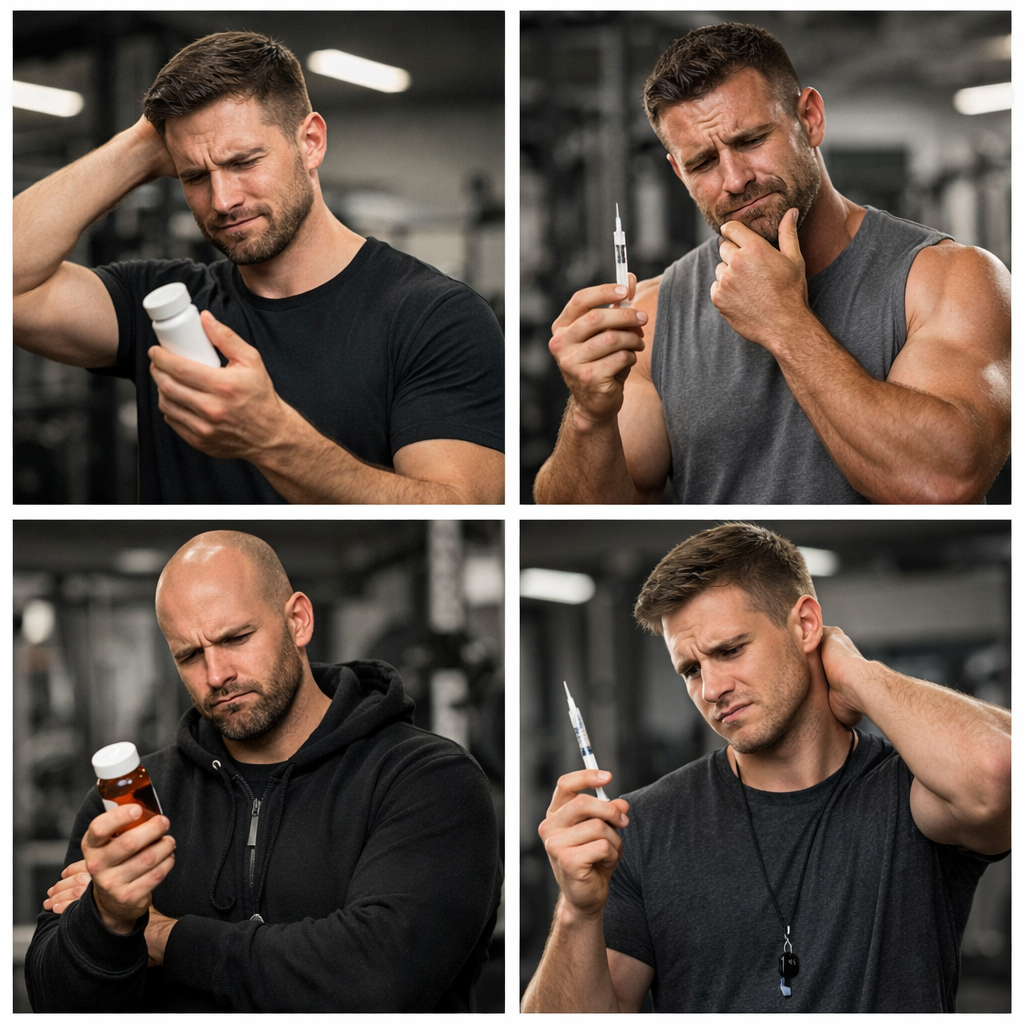
This article reflects my professional opinion as a personal trainer and coach based on my education, experience, and firsthand work with clients in fitness and strength training environments. It is not intended to shame, diagnose, or personally attack individuals who choose to use performance-enhancing drugs.
I do not provide guidance, instruction, or support for the use of anabolic steroids or other performance-enhancing substances. My coaching philosophy prioritizes long-term health, transparency, ethical practice, and sustainable physical development.
The views expressed here are focused on coaching ethics and men’s health, particularly the responsibility coaches and fitness professionals have when influencing clients, athletes, and the broader fitness culture.
This content is for educational and informational purposes only and should not be interpreted as medical advice. Individuals should consult qualified medical professionals regarding health-related decisions.
Let’s stop dancing around it.
In bodybuilding and modern fitness culture, anabolic steroids and performance-enhancing drugs are often framed as a “personal choice” or a “necessary tool.” As a 15 year+ Personal Trainer and Sports Psychology Graduate student, I disagree — strongly, I always have. When steroids are used to gain a competitive or aesthetic edge and then passed off as discipline, genetics, or superior coaching, that’s cheating. And worse, it’s unethical.
Not controversial. Just honest.
Steroids Break the Contract of Coaching
Coaching is a trust-based profession. When someone hires a trainer, they are buying into guidance that is supposed to be repeatable, safe, and honest.
Steroids shatter that contract.
Enhanced athletes recover faster, grow muscle at unnatural rates, tolerate higher training volumes, and maintain physiques that are biologically unattainable for natural lifters. When those results are used to:
sell programs
build credibility
attract clients
dominate “natural” competitive spaces
…without disclosure, it becomes professional deception.
That’s not coaching. That’s marketing built on omission.
Men Pay the Price for This Lie
This isn’t just about trophies or stage shots. This is a men’s health issue.
Men are quietly absorbing the message that:
their bodies aren’t enough
progress should be rapid or something is wrong
extreme size equals masculinity
pain, suppression, and long-term damage are acceptable trade-offs
I see the fallout in gyms constantly: hormonal issues, chronic injuries, anxiety, body dysmorphia, and men who feel like failures because they can’t keep up with chemically enhanced standards.
Steroid culture doesn’t just alter bodies — it distorts identity.
“They Still Work Hard” Is a Weak Defense
Yes, enhanced athletes train hard. That argument misses the point.
Steroids don’t replace effort — they change the rules. They amplify results, reduce consequences, and allow workloads that naturals physically cannot sustain. That means the outcome is no longer comparable.
If one athlete follows the rules of biology and another rewrites them pharmacologically, calling that an even contest — or selling both paths as equivalent — is intellectually dishonest.
Hard work doesn’t excuse cheating. It never has.
Coaches: Pick a Side
If you’re a coach or trainer, this part is uncomfortable — but necessary.
You cannot claim to care about men’s health while:
glorifying enhanced physiques as aspirational norms
ignoring long-term endocrine damage
refusing to disclose PED use while selling coaching
dismissing concerns as “part of the game”
Ethical coaching requires boundaries. It requires saying no to shortcuts that harm the very people who trust us.
Silence is not neutrality. Silence is endorsement.
Real Strength Is Built, Not Injected
Real strength is boring. It’s slow. It’s earned in seasons, not cycles.
It’s built through:
sustainable training
intelligent recovery
hormonal health
consistency under realistic expectations
respecting the limits of the human body
That version of strength doesn’t go viral — but it lasts.
Final Word
From a coaching and men’s health perspective, steroid use to gain an edge is cheating because it corrupts fairness, destroys transparency, and sacrifices long-term wellbeing for short-term dominance.
Men deserve better than lies wrapped in muscle.
And coaches owe them the truth.
John Schessler is an NPTI Certified Personal Trainer and an AFAA Sports Psychology Coach with over 10 years of experience working in strength training, behavior change, and men’s health. His work centers on ethical coaching, long-term performance, and sustainable physical development without shortcuts. Drawing from hands-on coaching and real-world athletic environments, John challenges harmful fitness industry norms and advocates for transparency, discipline, and responsibility. As a motivational speaker, he helps men build strength that supports not only performance, but health, identity, and longevity.
Men’s sports have long been built on a narrow definition of strength. Be tough. Be quiet. Push through. Handle it yourself. Emotion is something you manage privately—if at all. Vulnerability, for many male athletes, has been framed as a liability rather than a skill.
But the reality is this: the old model is costing men their health, longevity, and love for the game.
The Unspoken Rules Men Learn Early
From a young age, boys in sport absorb powerful messages:
Don’t complain.
Don’t show fear.
Don’t be “too emotional.”
Pain is part of the job.
These rules may produce short-term toughness, but long-term they often lead to emotional suppression, identity confusion, and burnout. Many male athletes become exceptional at performing strength while quietly carrying anxiety, self-doubt, shame, or fear of failure.
Vulnerability isn’t missing in men’s sports—it’s just hidden.
Vulnerability Is a Performance Skill
In men’s athletics, vulnerability does not mean losing composure or motivation. It means being honest enough to recognize internal signals before they sabotage performance.
A male athlete who can say:
“I’m carrying pressure right now.”
“I’m struggling with confidence.”
“I need support to reset.”
…is demonstrating mental discipline, not weakness.
Elite performance depends on awareness. You can’t regulate what you refuse to acknowledge.
Why Men Struggle to Speak Up
For many men, sport is deeply tied to identity. It’s where respect, belonging, and self-worth are earned. Admitting vulnerability can feel like risking all three.
Men often fear:
Losing status in the locker room
Being seen as unreliable or soft
Letting teammates or coaches down
So instead, they internalize. And what’s internalized doesn’t disappear—it leaks out as injury, anger, withdrawal, or disengagement.
Strong Teams Make Room for Real Conversations
Teams that allow men to be honest don’t become less competitive—they become more cohesive.
When vulnerability is normalized:
Communication improves under pressure
Teammates trust each other more deeply
Mistakes are processed faster
Accountability becomes shared, not feared
Men don’t need to be fixed—they need permission to be human without losing respect.
Coaches Shape Masculinity in Sport
In men’s sports, coaches don’t just train athletes—they shape beliefs about manhood.
A coach who models emotional regulation, names stress openly, and treats vulnerability as part of preparation sends a powerful message: strength includes self-awareness.
This doesn’t lower standards. It raises them. Because disciplined men don’t avoid emotion—they manage it.
Vulnerability Extends Careers
Many male athletes don’t struggle during competition—they struggle after injury, transition, or retirement. When sport has been the only place vulnerability is disallowed, there’s nowhere to process loss or change.
Men who develop emotional flexibility in sport are better equipped to:
True strength isn’t the absence of feeling. It’s the ability to feel and still act with purpose.
Men’s sports don’t need less toughness. They need better definitions of it.
The strongest athletes aren’t the ones who feel nothing. They’re the ones who feel it all—and still show up.
About Me
Hi, I’m John Schessler, a graduate student in Sports Psychology, Behavior Interventionist, and certified Sports Psychology Coach (AFAA) with a passion for helping athletes build stronger minds, healthier habits, and unshakable confidence. I also hold a B.A. in Psychology from Southern New Hampshire University, with a Child & Adolescent Development focus. I truly believe that if we start training our young athletes the correct way early on, we can avoid many of the injuries and other mental health ailments that plaque many of our professional athletes as well as those on the high school and collegiate levels. My work blends mental performance coaching, psychology, and lived experience to help people show up as the best version of themselves—on the field, in the gym, and in everyday life.
I’ve always believed that mental strength is the real competitive edge. That belief pushed me toward a career where I could combine my love of sport with my mission to support mental wellness. Whether I’m working with students at Merakey, coaching athletes through pressure and performance anxiety, or developing new mental-skills tools, I’m constantly exploring how mindset, behavior, and resilience shape performance.
Right now, I’m pursuing my M.S. in Sports Psychology with the goal of becoming an Athletic Mental Health Counselor. I want to change the narrative around athlete well-being, break stigmas, and help athletes of all backgrounds access mental-performance support that actually meets them where they are.
This blog is a place where I bring together everything I’ve learned—research, personal experience, coaching insights, and the lessons athletes teach me every day. My hope is that you’ll find something here that inspires you, supports you, or simply reminds you that you’re not alone in your journey to become mentally stronger.
If you’re an athlete, parent, coach, educator, or someone chasing self-improvement, welcome. You’re exactly where you need to be.
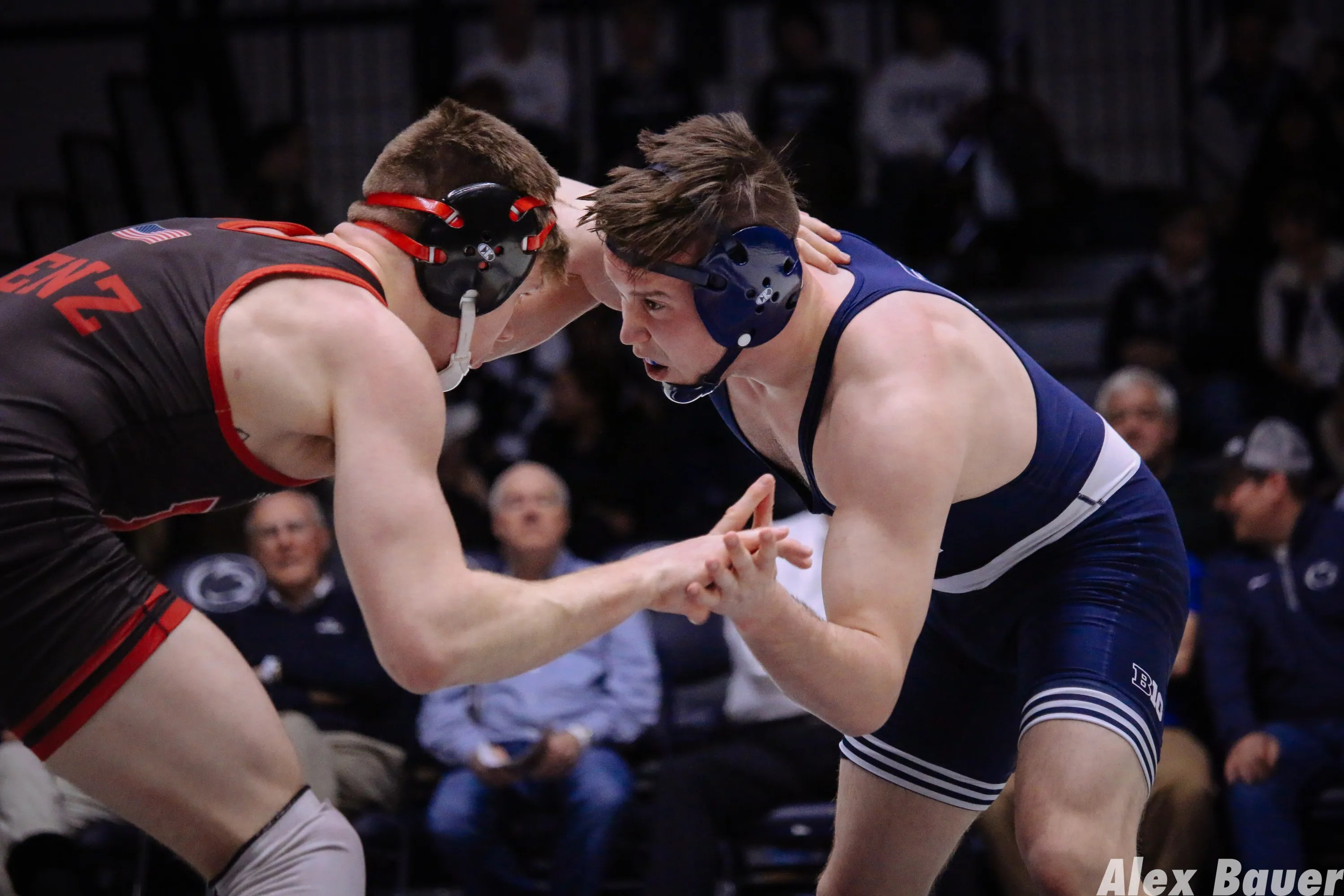
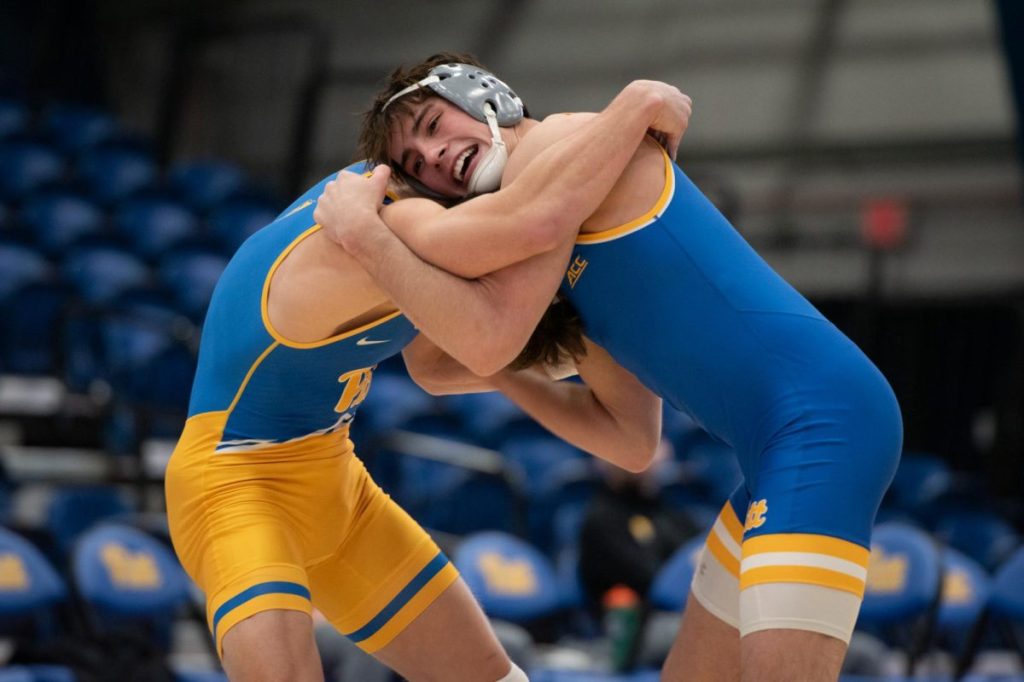
Wrestling doesn’t change when you move from high school to college—but the demands on your body absolutely do. Training volume increases, recovery windows shrink, and the margin for error gets smaller.
Nutrition at each level should reflect not just performance goals, but age, independence, training load, and long-term health.
Let’s break it down.
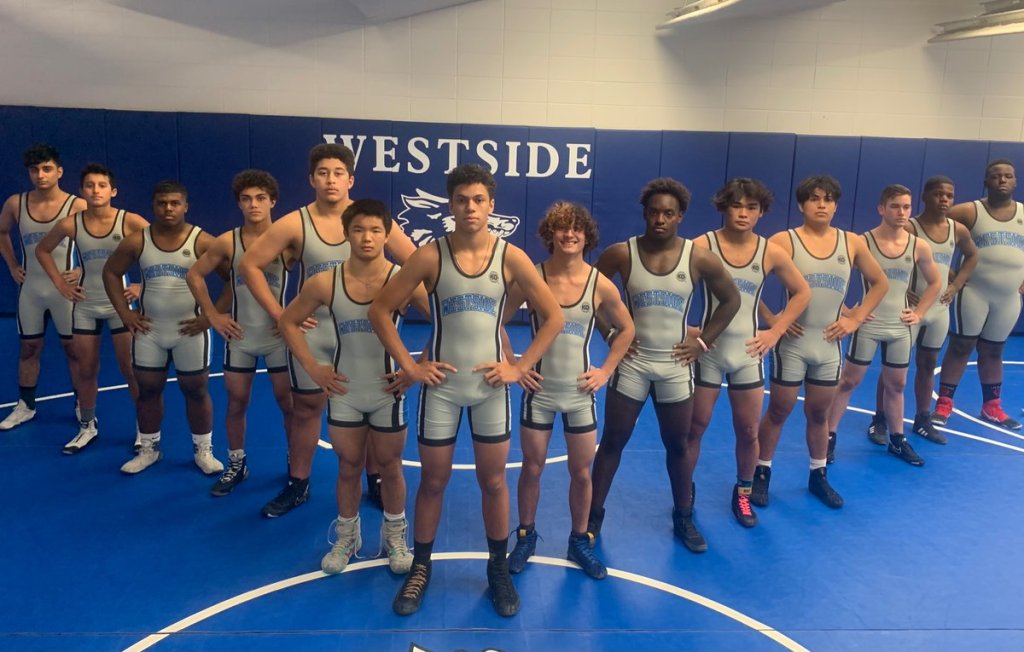
High School Wrestlers: Building the Foundation
High school wrestlers are still growing—physically, hormonally, and neurologically. That alone changes how nutrition should be approached.
Key Focus: Growth, Energy, and Consistency
At this level, nutrition should:
Support growth and development
Fuel daily practices and competitions
Prevent burnout and disordered eating patterns
Establish healthy habits that last beyond the season
Sports drinks only during long or intense sessions
Weight Management at the HS Level
Gradual and supervised
Focus on performance, not the scale
Extreme cutting can stunt growth and increase injury risk
Bottom line for high school wrestlers: Eat regularly. Fuel practices. Recover well. Build habits that support both wrestling and development.
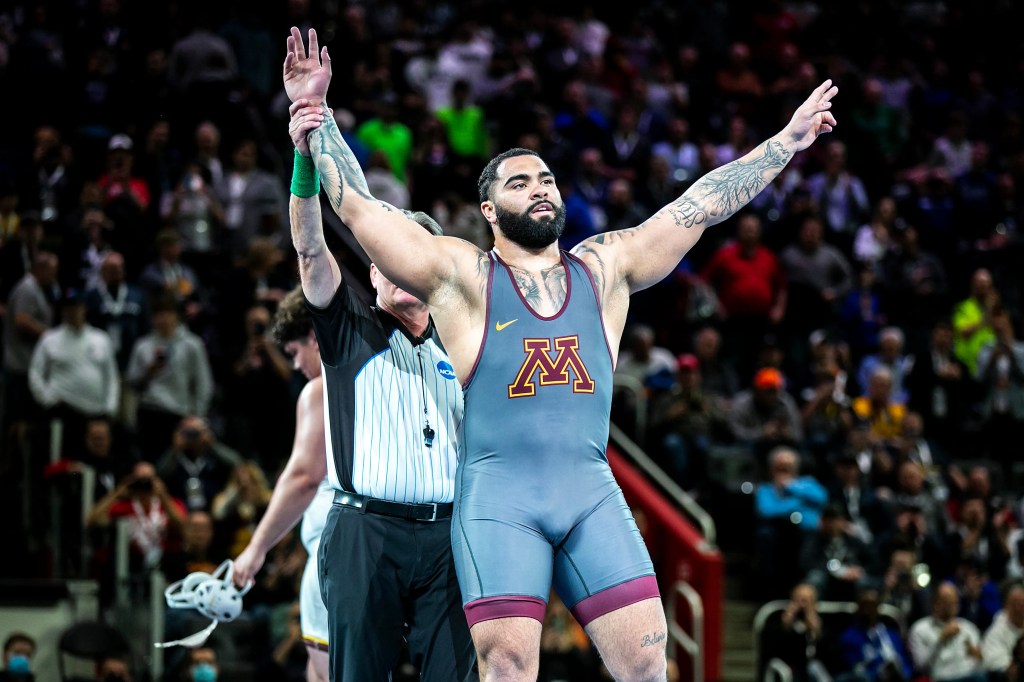
College Wrestlers: Performance, Recovery, and Precision
College wrestling is a different animal. Training frequency increases, intensity rises, and recovery becomes a skill—not a luxury.
Key Focus: Output, Recovery, and Sustainability
Nutrition now must:
Support multiple daily training sessions
Accelerate recovery between practices
Preserve lean mass during weight management
Sustain performance across long seasons
Common College Pitfalls
Under-fueling due to time constraints
Over-reliance on caffeine
Poor recovery nutrition
Inconsistent eating during travel or heavy weeks
College Nutrition Priorities
Protein
Higher daily needs due to training volume
Spread intake evenly across the day
Essential post-practice and post-lift
Carbohydrates
Strategic, not random
Heavy intake around training sessions
Essential for repeat high-intensity efforts
Fats
Support hormones and joint health
Especially important during long seasons
Shouldn’t be eliminated during weight management
Hydration & Recovery
Sweat losses are higher
Electrolytes matter more
Sleep + food + hydration = recovery triangle
Weight Management at the College Level
Requires planning and consistency
Extreme cuts reduce power, reaction time, and resilience
Smarter fueling often leads to better body composition outcomes
Bottom line for college wrestlers: Nutrition is no longer optional—it’s a performance tool. The athletes who fuel well last longer, train harder, and stay healthier.
The Big Picture: Development vs. Optimization
High School
College
Growth & habit formation
Performance & recovery
Parent-supported structure
Athlete-driven responsibility
Lower training volume
High training density
Long-term health priority
Output + sustainability
Final Thoughts
The mat doesn’t care what level you’re at—but your body does.
High school wrestlers need support, structure, and education. College wrestlers need precision, consistency, and recovery strategy.
The athletes who respect nutrition early don’t just win more matches—they extend their careers and protect their health long after the final whistle.
About Me — Coach John Schessler
I’m Coach John — the mind behind ThePGHSportsPsyCoach — and my mission is simple: help athletes build the kind of mental toughness, confidence, and resilience that shows up long after the final whistle blows.
I coach from experience, education, and heart. As a Sports Psychology Coach and Behavior Interventionist, I’ve spent years working with athletes and students who carry big potential but also big pressure. My job? Teach them how to channel that pressure into power.
Right now, I’m leveling up my own game, pursuing my graduate degree in Sports Psychology so I can support athletes at an even higher level. Every day, I study how mindset, emotion, and performance work together — and every day, I bring that knowledge straight to the athletes and readers who trust me.
This blog is your locker room talk for the mind. Here, we break limits. We train confidence. We learn how to stay locked in when it matters most.
Because winning isn’t just physical — it’s mental. And when you master your mind, the rest follows.
If you’re ready to grow, challenge yourself, and build an unshakeable mental edge… welcome to the team. Let’s get to work.
There’s a version of masculinity a lot of men were handed early on: be strong, don’t complain, handle it yourself. It works… until it doesn’t.
Men’s health conversations often stop at the gym, the doctor’s office, or jokes that deflect anything uncomfortable. But beneath the surface, there are real struggles men carry quietly—sometimes for years—because talking about them feels risky, embarrassing, or “unmanly.”
Let’s talk about the stuff that usually stays unspoken.
1. Emotional Suppression & “White-Knuckling” Life
Many men are experts at pushing through. Stress, grief, anxiety, burnout—rather than naming it, they grip tighter and move forward. This “white-knuckling” approach can look like strength from the outside, but internally it often leads to emotional numbness, irritability, or sudden breakdowns.
Suppressing emotions doesn’t make them disappear. It just forces them to come out sideways—through anger, withdrawal, overworking, or health problems.
2. Anxiety That Doesn’t Look Like Anxiety
When people picture anxiety, they imagine panic attacks or visible fear. For men, anxiety often shows up differently:
Constant tension
Trouble sleeping
Hyper-focus on control
Over-preparing or avoiding situations entirely
Feeling “on edge” with no clear reason
Because it doesn’t match the stereotype, many men don’t even label it as anxiety—they just assume something is wrong with them.
3. Depression Without Sadness
Men’s depression is frequently missed because it doesn’t always look like sadness or tears. It can show up as:
Anger or impatience
Emotional flatness
Loss of motivation
Isolation
Risk-taking behaviors
Instead of saying “I’m depressed,” men often say, “I’m just tired,” or “I’m fine, just busy.”
4. Body Image & Performance Pressure
We talk about women and body image (rightfully so), but men struggle here too—just more quietly. Pressure to be:
Lean but muscular
Strong but not “vain”
Athletic, capable, youthful
This can drive unhealthy training habits, disordered eating, steroid use, or deep shame when the body changes with age or injury.
5. Sexual Health, Libido & Performance Anxiety
Few topics carry more silence than sexual health. Erectile dysfunction, low libido, performance anxiety, fertility concerns—many men would rather suffer quietly than admit fear or insecurity.
What often goes unsaid: stress, mental health, sleep, hormones, and emotional connection play huge roles here. Silence just compounds the problem.
6. Loneliness & the Shrinking Circle
As men age, friendships often fade. Work, family, and responsibilities take over, and social connection quietly erodes. Many men find themselves surrounded by people—but emotionally alone.
Loneliness doesn’t always feel dramatic. Sometimes it’s just the absence of being known.
7. Identity Loss After Injury, Job Changes, or Fatherhood
When a man’s identity is tied to performance—athlete, provider, protector—any disruption can feel like a personal failure. Injury, job loss, career stagnation, divorce, or even becoming a parent can trigger deep identity confusion.
Instead of grieving the change, men often push forward without processing what was lost.
Why This Silence Matters
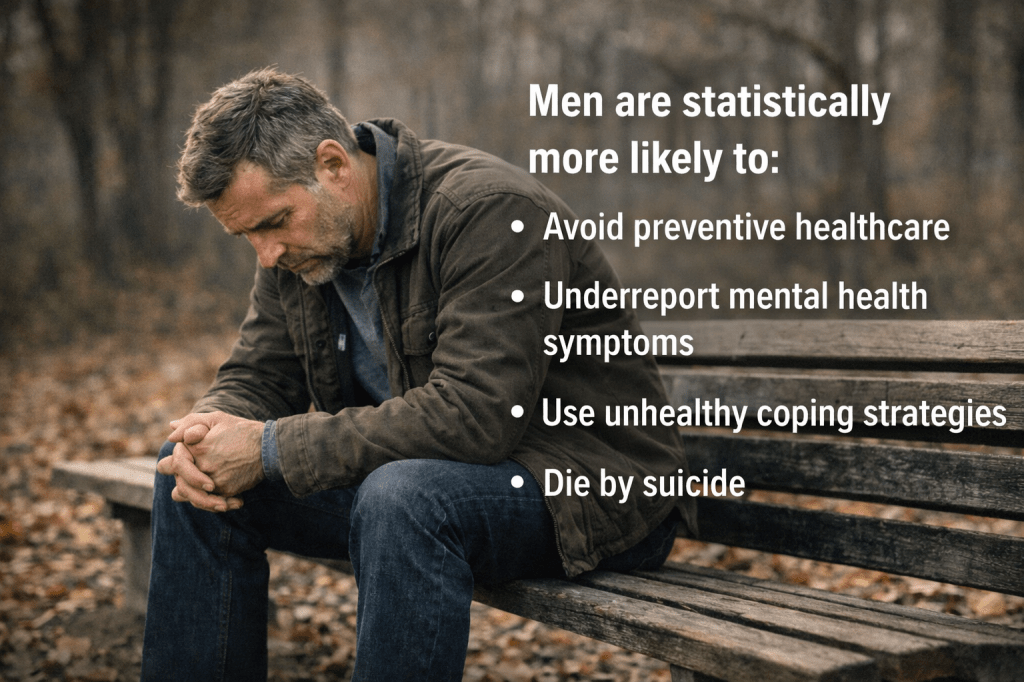
Men are statistically more likely to:
Avoid preventive healthcare
Underreport mental health symptoms
Use unhealthy coping strategies
Die by suicide
This isn’t about weakness. It’s about conditioning—and a lack of safe spaces to be honest.
What Real Strength Actually Looks Like
Strength isn’t pretending you’re unaffected. It’s recognizing when something isn’t right—and choosing to address it.
That might look like:
Talking to a coach, therapist, or trusted friend
Going to the doctor without minimizing symptoms
Learning emotional language for the first time
Letting someone see you unsure, tired, or scared
Final Thought
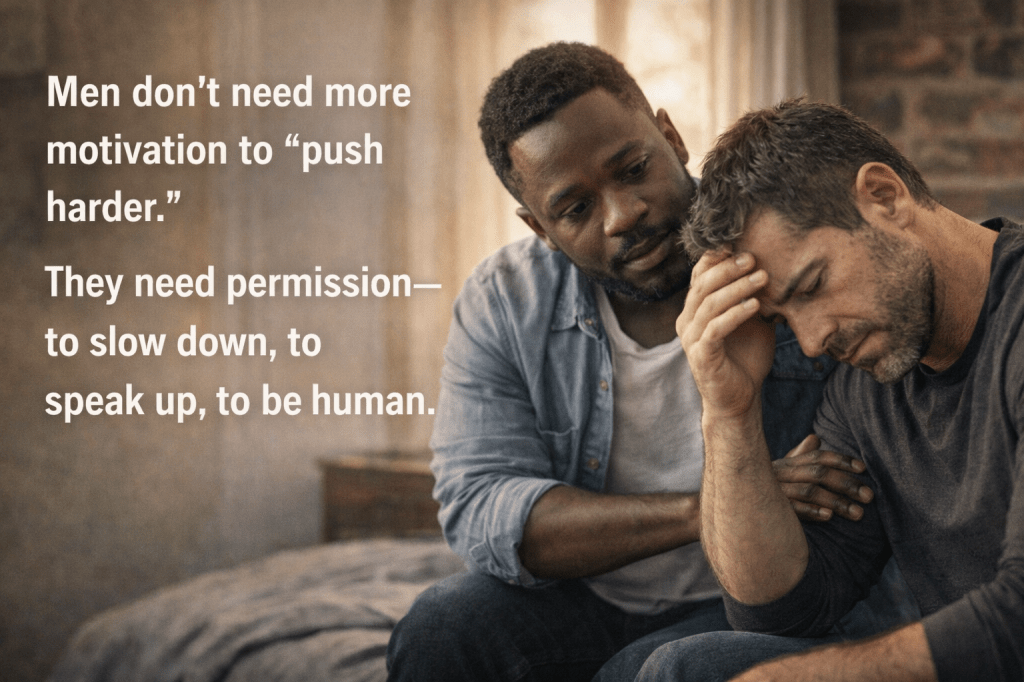
Men don’t need more motivation to “push harder.” They need permission—to slow down, to speak up, to be human.
If any of this resonates, you’re not broken. You’re responding normally to pressure that was never meant to be carried alone.
And the moment you start talking about it? That’s not weakness—that’s where healing starts.
About Me — Coach John Schessler Jr.
I’m Coach John — the mind behind ThePGHSportsPsyCoach — and my mission is simple: help athletes build the kind of mental toughness, confidence, and resilience that shows up long after the final whistle blows.
I coach from experience, education, and heart. As a Sports Psychology Coach and Behavior Interventionist, I’ve spent years working with athletes and students who carry big potential but also big pressure. My job? Teach them how to channel that pressure into power.
Right now, I’m leveling up my own game, pursuing my graduate degree in Sports Psychology so I can support athletes at an even higher level. Every day, I study how mindset, emotion, and performance work together — and every day, I bring that knowledge straight to the athletes and readers who trust me.
This blog is your locker room talk for the mind. Here, we break limits. We train confidence. We learn how to stay locked in when it matters most.
Because winning isn’t just physical — it’s mental. And when you master your mind, the rest follows.
If you’re ready to grow, challenge yourself, and build an unshakeable mental edge… welcome to the team. Let’s get to work.
For many college athletes, sport isn’t just something they do — it’s who they are. And while that identity can be powerful, motivating, and deeply meaningful, it can also become fragile.
From an interventionist’s perspective, athlete identity isn’t just a philosophical idea. It’s something I see play out in behavior, emotional regulation, motivation, and mental health — especially when something disrupts sport as the central organizing force in an athlete’s life.
In college athletics, that disruption happens more often than we talk about.
Athlete Identity: Strength or Vulnerability?
Athlete identity refers to how strongly an individual defines themselves through their role as an athlete. At healthy levels, it provides:
Structure
Purpose
Belonging
Motivation
But when identity becomes narrow, problems emerge.
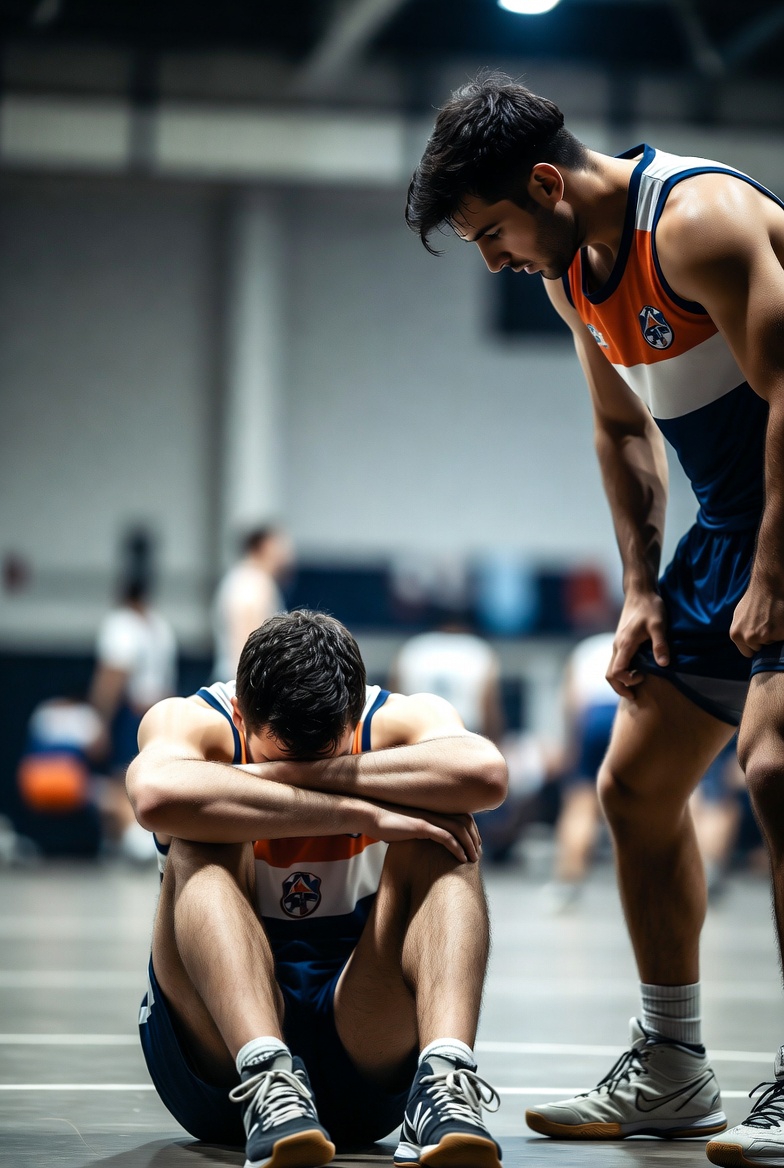
I’ve worked with individuals who struggle not because they lack toughness or discipline, but because they lack identity flexibility. When performance drops, an injury occurs, or playing time disappears, their entire sense of self takes the hit.
From an interventionist lens, this shows up as:
Emotional dysregulation after poor performances
Withdrawal when injured or benched
Anxiety tied to evaluation or scholarship pressure
Difficulty engaging academically
Resistance to help because “athletes push through”
These aren’t character flaws. They’re predictable responses to an identity that has no backup system.
The College Athlete Pressure Cooker
College athletes exist at the intersection of multiple stressors:
Academic demands
Performance evaluations
Roster uncertainty
Scholarship implications
Coaching dynamics
Social comparison (especially in the NIL and social media era)
When sport is the only identity, every setback feels existential.
As an interventionist, I don’t ask, “Why is this athlete struggling?” I ask, “What supports or identities are missing?”
That shift matters.
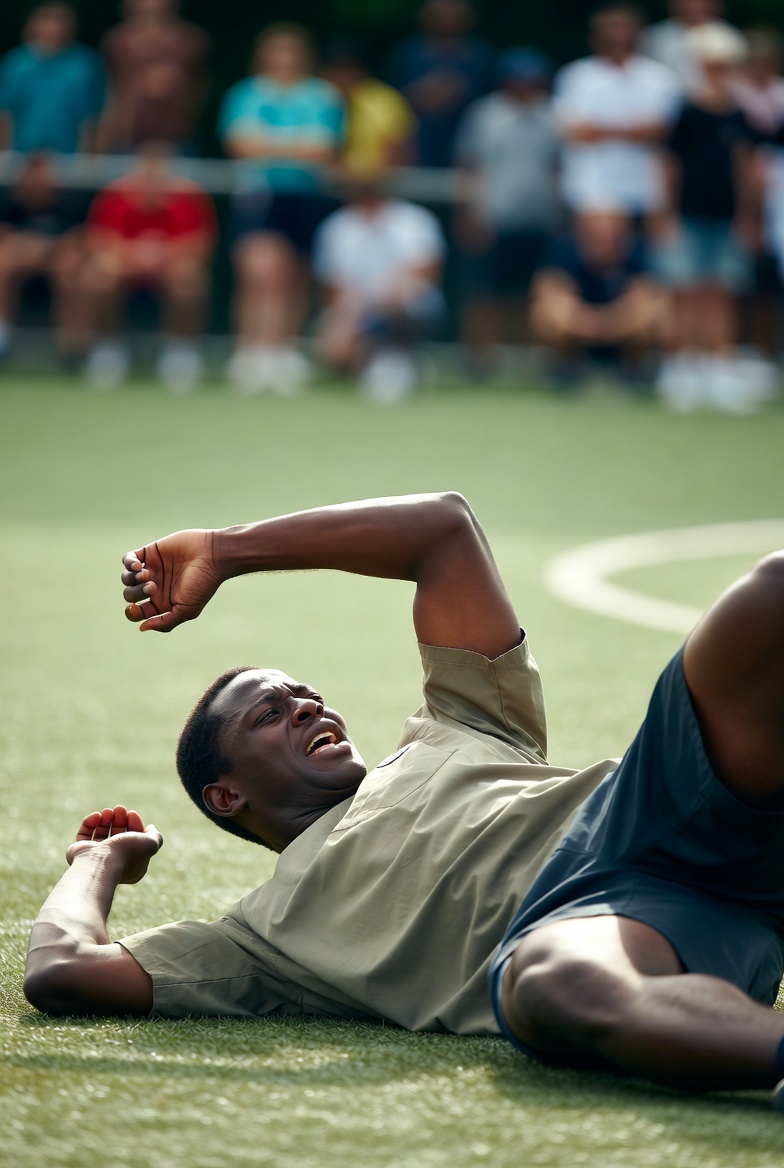
Injury: Where Identity Cracks First
Injury is one of the most revealing moments in athlete identity.
Physically, the athlete may be sidelined. Psychologically, they’re often disconnected from their team role, routine, and sense of value.
What I see often:
Fear of becoming “replaceable”
Loss of purpose during rehab
Overcompliance or rushing return-to-play
Emotional flatness or irritability
Avoidance of team spaces
Clearance to play doesn’t automatically mean readiness to be an athlete again.
Intervention at this stage isn’t about motivation speeches. It’s about helping the athlete maintain dignity, connection, and identity beyond performance output.
Identity Foreclosure and the “What If I’m Not Enough?” Question
Many college athletes never explore who they are outside of sport. Not because they don’t want to — but because sport leaves little room to ask.
When eligibility ends, when a roster spot disappears, or when professional aspirations don’t materialize, the question surfaces:
“Who am I without this?”
Without intentional intervention, this moment can lead to:
Depression
Anxiety
Loss of direction
Difficulty transitioning into post-sport life
From an interventionist standpoint, this isn’t a failure of resilience. It’s a gap in preparation.
Reframing Identity as a Skill — Not a Threat
One misconception I see often is that expanding identity weakens performance.
In reality, the opposite is true.
Athletes with identity balance tend to:
Recover better from mistakes
Tolerate feedback more effectively
Maintain confidence through slumps
Transition more smoothly after injury or sport exit
Intervention doesn’t mean taking sport away — it means adding layers:
Student
Leader
Mentor
Teammate
Learner
Person with values beyond the scoreboard
This isn’t about lowering standards. It’s about increasing psychological durability.
What Effective Intervention Looks Like in College Athletics
From my perspective, identity-based intervention should be:
Proactive, not crisis-driven
Embedded into athlete development, not isolated therapy
Normalized as performance support, not “mental health only”
This can include:
Guided reflection on values and roles
Language shifts from “you are your performance” to “you bring more than output”
Support during injury that keeps athletes socially and emotionally connected
Encouraging academic and leadership engagement without guilt
Helping athletes tolerate discomfort without self-worth collapse
Small, consistent interventions matter more than one-time talks.
Final Thought: Strong Athletes Need Flexible Identities
College athletics asks a lot of young people during a critical developmental window. Identity isn’t something athletes should have to figure out after they break.
From an interventionist’s lens, the goal isn’t to take away the power of being an athlete — it’s to make sure that power doesn’t disappear the moment sport changes.
The strongest athletes aren’t the ones who define themselves by sport alone. They’re the ones who can compete fiercely without losing themselves in the process.
About Me — Coach John Schessler
I’m Coach John — the mind behind ThePGHSportsPsyCoach — and my mission is simple: help athletes build the kind of mental toughness, confidence, and resilience that shows up long after the final whistle blows.
I coach from experience, education, and heart. As a Sports Psychology Coach and Behavior Interventionist, I’ve spent years working with athletes and students who carry big potential but also big pressure. My job? Teach them how to channel that pressure into power.
Right now, I’m leveling up my own game, pursuing my graduate degree in Sports Psychology so I can support athletes at an even higher level. Every day, I study how mindset, emotion, and performance work together — and every day, I bring that knowledge straight to the athletes and readers who trust me.
This blog is your locker room talk for the mind. Here, we break limits. We train confidence. We learn how to stay locked in when it matters most.
Because winning isn’t just physical — it’s mental. And when you master your mind, the rest follows.
If you’re ready to grow, challenge yourself, and build an unshakeable mental edge… welcome to the team. Let’s get to work.
























 Athlete Mindset HQ Institute