
by John Schessler, MS, CPT, SPC
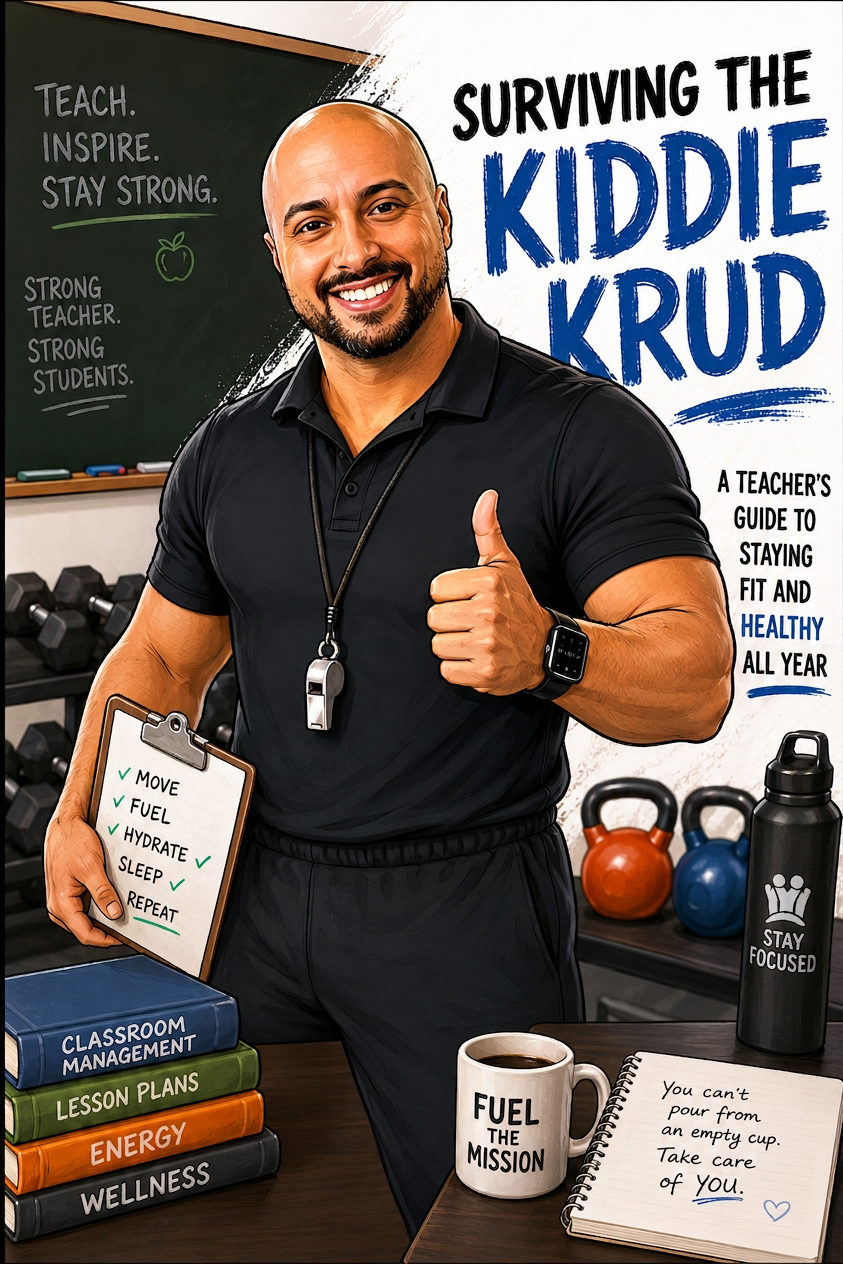
It happens like clockwork every autumn. The first few weeks of school are pure energy—crisp lesson plans, freshly sharpened pencils, and shiny hallway displays. Then comes week four.
A cough echoes from the back row. A runny nose wipes against a sleeve. Before you know it, the infamous “Kiddie Krud” has invaded your classroom, and you’re wondering if writing sub plans is worth the trouble or if you should just power through on day-old coffee and sheer willpower.
Teaching is an endurance sport. Between circulating rooms, managing chaos, grading during prep periods, and constantly projecting your voice, your body takes a beating. If you don’t actively protect your physical health, the school year will quickly run you down.
Here is your complete game plan to armor your immune system, hit the gym efficiently, and build resilient strength from the first bell to summer break.
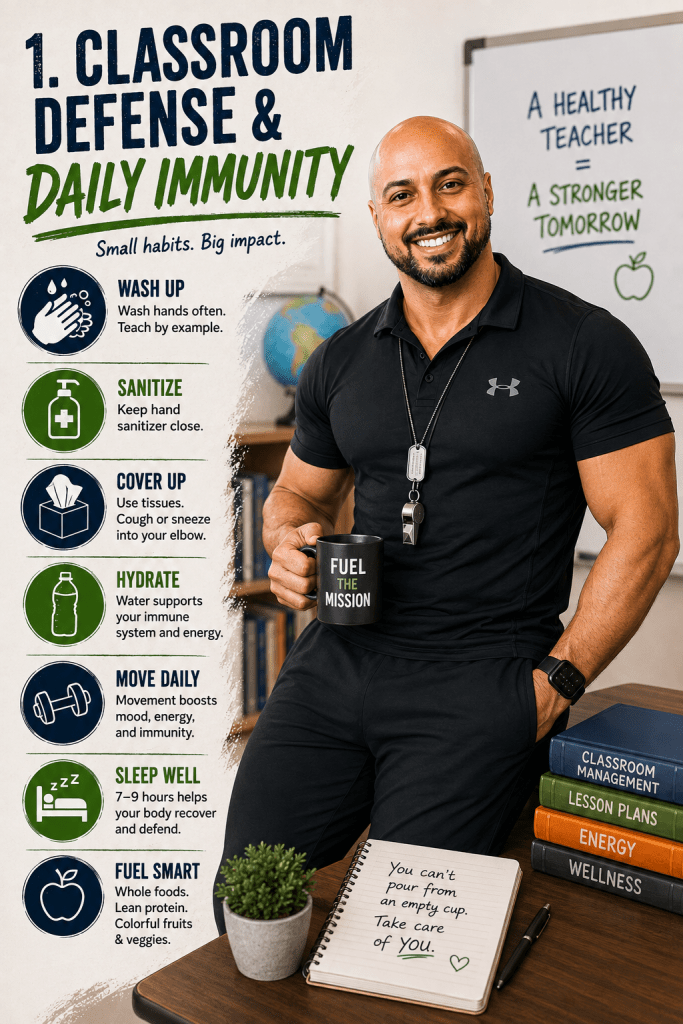
1. Classroom Defense & Daily Immunity
You cannot control what germs walk through your classroom door, but you can control your internal defense system and personal boundaries.
- Hydrate Intentionally: Dehydration dries out the mucosal lining in your respiratory tract, making it easy for viruses to take hold. Keep an insulated 32 oz water bottle at your desk and finish at least two full bottles before the final bell.
- Fuel with Micronutrients: Skip the staff lounge donuts that send your blood sugar on a rollercoaster. Focus on lean proteins, colorful produce rich in antioxidants, and baseline supplements like Vitamin D3, Vitamin C, and Zinc to keep immune responses robust.
- Establish Personal Safe Zones: Keep dedicated pens that students never touch, sanitize your desk/keyboard daily, and drill the “vampire cough” (into the elbow crook) with your class early.
- Protect 7–8 Hours of Sleep: Sleep is when your body produces infection-fighting cytokines. Set a hard cutoff for grading in the evening to let your nervous system wind down.
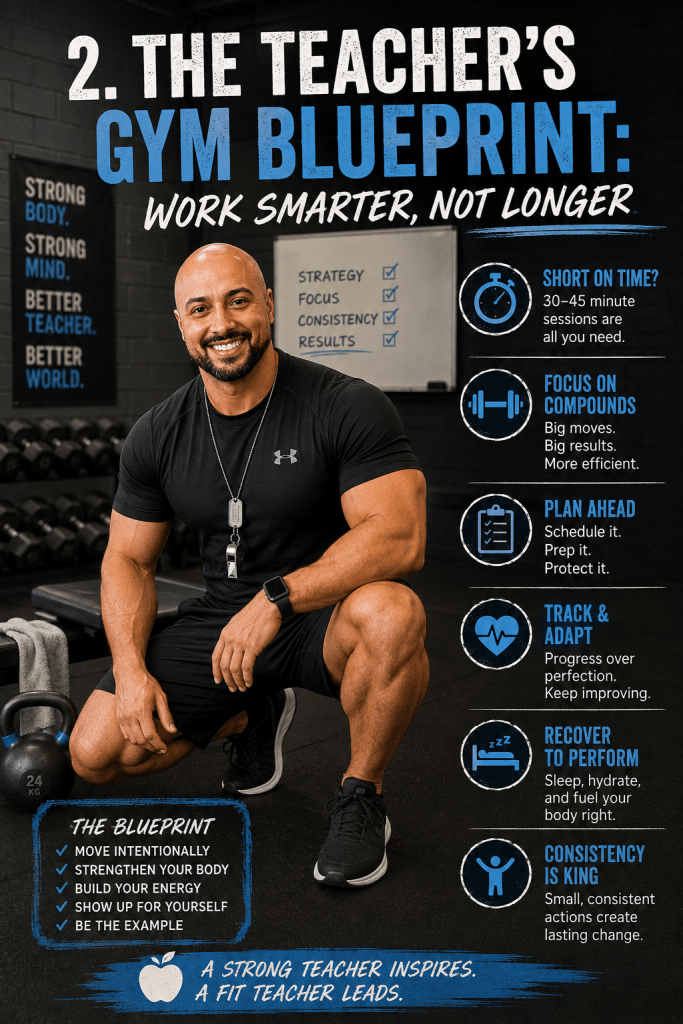
2. The Teacher’s Gym Blueprint: Work Smarter, Not Longer
The biggest barrier teachers face in the gym isn’t motivation—it’s decision fatigue and physical exhaustion. After seven hours on your feet, the last thing you need is a 90-minute bodybuilding split that leaves you crippled with soreness for tomorrow’s bus duty.
The goal of your gym sessions should be:
- Strengthening the Posterior Chain (glutes, hamstrings, upper back) to reverse the forward-slouch of grading and leaning over desks.
- Decompressing the Spine & Hips after standing on concrete floors all day.
- Boosting Energy & Circulation to flush out metabolic waste and keep immune markers elevated.
The 3-Day Teacher Strength Split (40 Minutes Each)
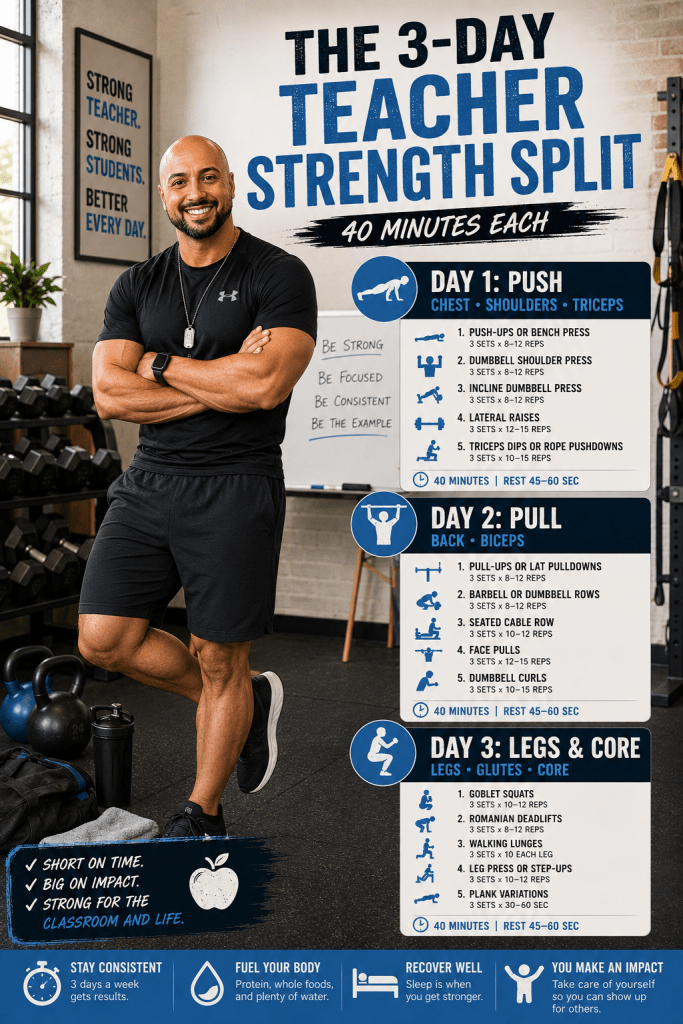
Aim for 3 non-consecutive days (e.g., Monday, Wednesday, Friday or Tuesday, Thursday, Saturday). Keep rest periods to 60–90 seconds to stay efficient.
Day 1: Full-Body Functional Strength (Lower Focus)
Target: Building leg endurance, hip stability, and core bracing.
| Exercise | Sets | Reps | Coaching Notes |
| Goblet Squat (Kettlebell or Dumbbell) | 3 | 10–12 | Keeps torso upright; opens hips tight from sitting during prep. |
| Romanian Deadlift (Dumbbells or Barbell) | 3 | 10 | Loads hamstrings and glutes; protects lower back from lifting heavy supply boxes. |
| Dumbbell Flat or Incline Bench Press | 3 | 8–10 | Builds chest, shoulder, and tricep pressing strength. |
| Half-Kneeling Lat Pulldown / Cable Row | 3 | 12 | Strengthens upper back while actively stretching the back hip flexor. |
| Farmer’s Carries | 3 | 40 paces | Grip heavy dumbbells and walk tall; bulletproofs grip and core. |
Day 2: Posture & Posterior Chain (Upper Focus)
Target: Reversing “teacher slouch” and opening the chest and shoulders.
| Exercise | Sets | Reps | Coaching Notes |
| Seated Cable Rows (Neutral Grip) | 4 | 10–12 | Focus on squeezing shoulder blades back and down. |
| Dumbbell Standing Overhead Press | 3 | 8–10 | Reinforces vertical pushing power and core stability. |
| Face Pulls (Rope Attachment) | 3 | 15–20 | The ultimate antidote for forward-head posture and rounded shoulders. |
| Dumbbell Bulgarian Split Squats (or Reverse Lunges) | 3 | 8/leg | Single-leg balance and hip strength for all-day standing stamina. |
| Deadbugs or Hollow Body Holds | 3 | 30–45 sec | Anti-extension core work to protect the lumbar spine. |
Day 3: Total-Body Circuit & Conditioning
Target: Elevating heart rate, building work capacity, and clearing mental stress.
Complete this as a circuit. Rest 90 seconds after each full round; repeat for 3 to 4 total rounds.
- Kettlebell Swings (or Trap Bar Deadlifts): 12–15 reps (explosive hip hinge)
- Push-Ups (or Incline Push-Ups on a Bench): 10–12 reps
- Chest-Supported Dumbbell Rows: 10–12 reps
- Goblet Reverse Lunges: 8 reps per leg
- Plank with Shoulder Taps: 20 total taps (controlled)
3. Post-Gym Decompression (5-Minute Mobility Cooldown)
Don’t jump straight into the car after your workout. Finish with these three mobility movements to calm your central nervous system before heading home:
- Couch Stretch (1 min/side): Opens up tight hip flexors and quads by alternating between standing and classroom chairs.
- Child’s Pose with Lat Stretch (1 min): Reach arms diagonally to lengthen the lats and decompress the lower back.
- Thoracic Spine Foam Rolling / Open Books (1 min/side): Restores mobility to the mid-back and neck.
The Takeaway
Taking care of your body isn’t an extracurricular activity—it’s the foundation of your career longevity.
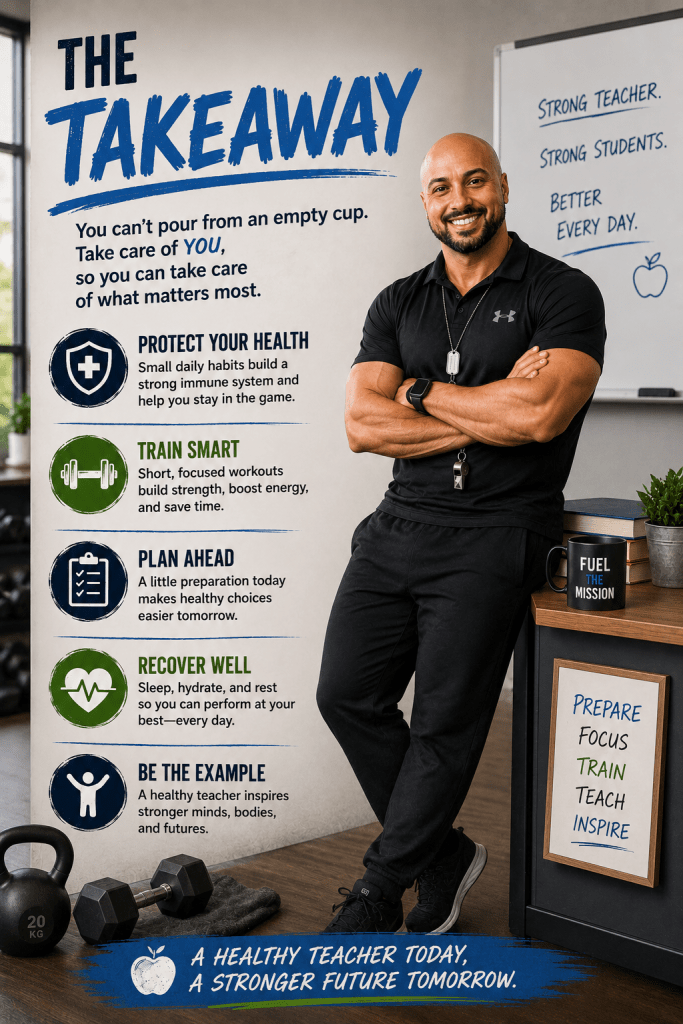
When you prioritize clean nutrition, consistent movement, and targeted resistance training, you build physical resilience that makes classroom challenges manageable and keeps the Kiddie Krud out of your sick days.
Put your workouts on your planner just like your lesson plans, and give yourself the energy you deserve.
ABOUT THE AUTHOR
John J. Schessler, M.S.
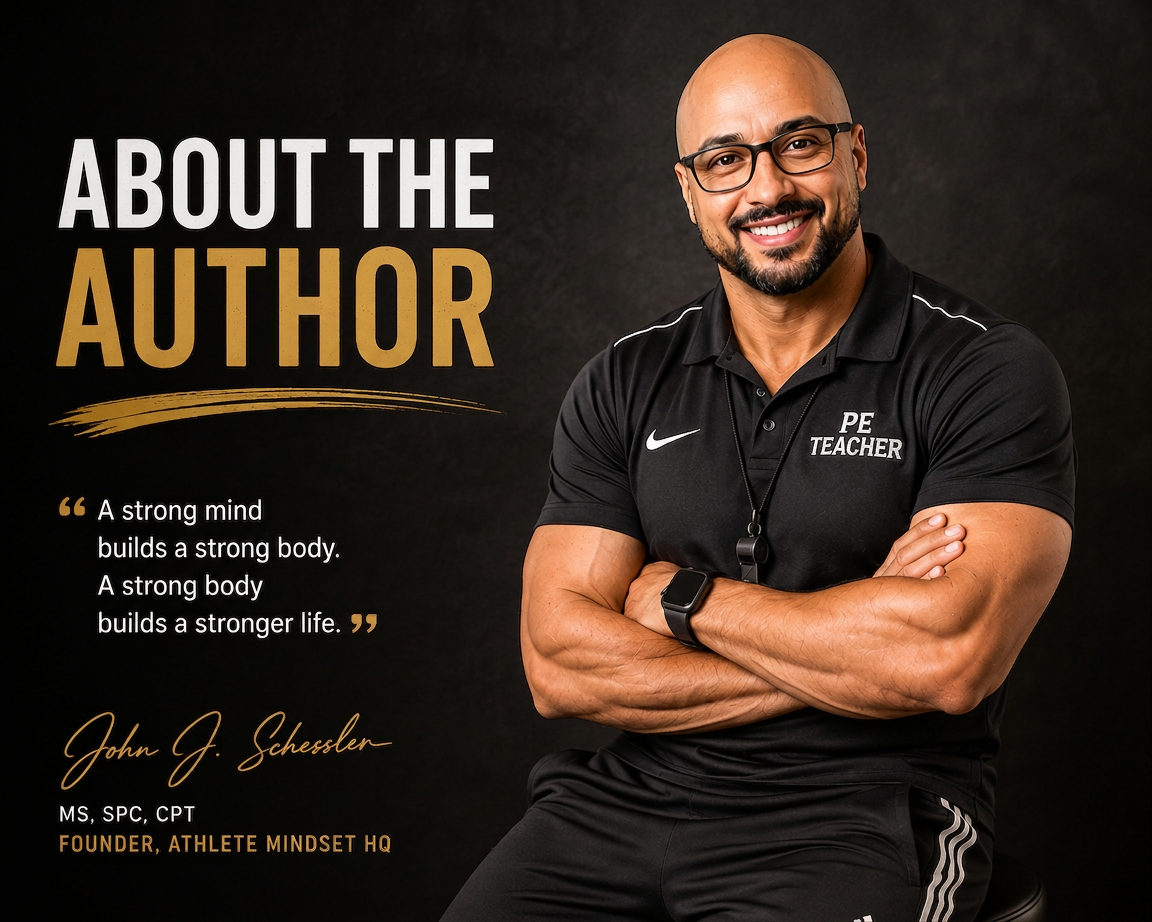
John J. Schessler, M.S., is a Mental Performance Coach, Behavior Interventionist, motivational speaker, and founder of Athlete Mindset HQ—a high-performance coaching platform dedicated to helping athletes, professionals, and everyday individuals develop the mindset needed to thrive under pressure and perform at their highest potential.
John earned his Master of Science in Sport Psychology from Capella University and his Bachelor of Arts in Child & Adolescent Psychology from Southern New Hampshire University. His work bridges the gap between psychology, human performance, behavioral science, and personal development, combining evidence-based strategies with practical coaching that people can immediately apply in sport, work, and everyday life.
His passion for helping others is rooted in his own journey. As a child, John survived Guillain-Barré Syndrome, spending weeks in a coma before fighting through rehabilitation to reclaim his life. That experience shaped his belief that resilience isn’t something you’re born with—it’s something you build through adversity, discipline, and purpose.
Today, John works with individuals from all walks of life, helping them strengthen confidence, improve emotional resilience, overcome obstacles, and develop the habits that lead to lasting success. Whether coaching athletes, mentoring students, speaking to organizations, or creating educational content, his mission remains the same: to help people become mentally stronger than the challenges they face.
John is also the host of The Follow Through Podcast, where he explores sports psychology, leadership, men’s mental health, motivation, resilience, and human performance through practical conversations that inspire listeners to move beyond intention and into action.
His philosophy is simple:
Mental strength isn’t about never struggling. It’s about developing the confidence, discipline, and resilience to keep moving forward—especially when life gets difficult.
Because success isn’t built by what you intend to do.
It’s built by what you follow through on.
Personal Brand Statement
John J. Schessler, M.S. is dedicated to helping people unlock their potential by strengthening the one asset that influences every area of life—the mind. Through education, coaching, and authentic conversation, he empowers others to develop confidence, resilience, and the discipline to follow through on their goals.


Leave a comment