Athlete Mindset HQ Institute

A Blog for health, wellness and mindfulness information…

  • by John Schessler, CMT, ET-C

    I recently was watching TikTok and I’m on the medical side of it, so things like Grey’s Anatomy often pops up. This one particular clip was when Dr. Lincoln (played by Chris Carmack), who is the Head of Orthopedic Surgery at Grey-Sloan Memorial, was evaluating a woman for knee pain. Both the woman and his resident accompanying him were severely overweight. During the evaluation, Dr. Lincoln told the woman that she’d probably have less pain if she exercised and lost some weight. This remark got looks from both the resident as well as the female patient. The patient then got angry, which is 100% understandable btw, and proceeded to tell the doctor that she had diabetes, was on meds and the weight had nothing to do with her ‘being lazy’. After the conversation was over, the doctor and resident were walking through the hospital and the resident basically smoked Dr. Lincoln and told him that there were other factors on some of her tests that he failed to look at properly. Bottom line: Not all presenting problems such as this led to the obvious answer.

    Having worked in the medical field as well as other careers where interacting with patients and people in general requires me to have some sort of sensitivity to the people I’m training, treating, etc. I’ve heard this of doctors and how they’re not some of the most sensitive people in the world and a lot of them give patient information very bluntly. My question is: Why? You would think that in one of the most people-centered careers in the world, doctors would treat cases like this with a little more tact and finesse. Sadly, DEI training hasn’t reached us all and if it has, it needs to be revisited every once in a while.

    Doctors are trained extensively on how to diagnose and treat patient ailments; however, most doctors receive little to no interpersonal skills or sensitivity training. In today’s competitive medical field and litigious environment, proper sensitivity training is vital. The above scenario was obviously written by writers who work on a television show so a lot of what you hear coming out of the actor’s mouths isn’t 100% accurate. However, this happens more than people think it does in today’s society. The medical field in 2024 overall is a bustling business, doctors and other medical personnel race to heal patients, perform life-altering surgeries and give bad news to people all of the time…. every day. all day. With the demands that doctors are faced with, it makes sense that sensitivity isn’t always at the top of the list. The truth is that sensitivity training for physicians is needed today more than ever due to the fast pace that is part of the healthcare environment. Hospital administrators and HR professionals are in a very difficult position when a patient or employee makes a complaint against a physician. More than ever, patients have multiple choices when it comes to health care providers and facilities can earn the wrong reputation quickly.

    Patients and their families come to hospitals, clinics and doctor’s offices with certain expectations from their care providers and having a good bedside manner is right up there in the top five. An ill person or somebody having surgery should expect their medical team treating them to be thorough BUT also to take the patient’s emotional state into huge consideration when breaking bad news, going through medical testing or following up on how things are going in ways of recovery. Most doctor’s are exposed to sensitivity training courses in Medical School that touch on how to have a good bedside manner. The problem is there’s usually a disconnect between Med School and the profession because as the old saying goes, “If you don’t use it, you lose it.” A person’s sensitivity towards others is only as effective as long as it’s being reinforced, retrained or retaught and if medical professionals aren’t receiving trainings every now and then on these things, this you got a huge problem about the compassion and empathy that your staff portrays.

    How do we fix this problem?

    Well, normally, trainings and workshops that deal with these types of subject matter are usually set-up and structured by the company’s human resources department. So, its HR’s fault, right? Not exactly. There’s a lot of grey area here and no one person or department are we pointing fingers at. A training is only effective when you have great presenters, roleplays and vitally important information that medical professionals can actually use. Plus, if you are specifically talking about doctors who have been practicing medicine for over 30 years, odds are that they’ve gotten comfortable being straight to the point. Why? Because it’s like ripping off a band-aid, sudden shock at first with no time to process information but as time passes, the pain sets in for the patient and their family. Unless families follow-up with the doctor and call their behavior up to them, nothing gets paid attention to, nor is it resolved.

    In my career, which is faaaaar from that of a doctor’s and I’d never want their set of responsibilities they have to think about on a minute-to-minute basis. The one thing that both our professions have in common is that we deal with people who come to us broken (physically and mentally) and sometimes need to be handled with some compassion and empathy. For myself, I always try to keep myself in check and I think I actually do a really good job. The secret? When you’ve had medical things happen to you, you become very empathetic to other people’s struggles, and you take them into account. Most doctors probably haven’t had that many bad things happen to them that didn’t wind them up inside a hospital for test after test, etc.
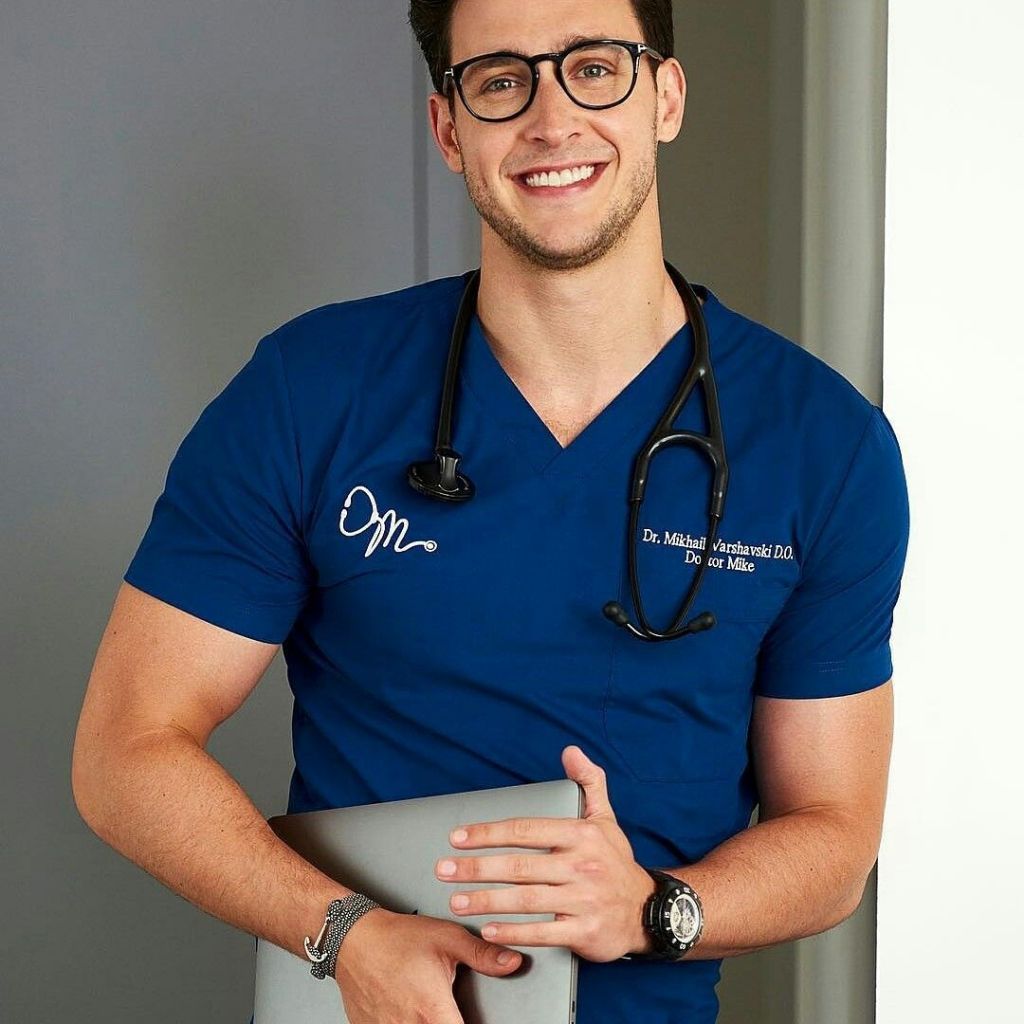
    We as professionals are better than, and true most of us are but there are some that could stand to shake the dust off their emotional radars and home in on those skills that will make them exemplary in this area. We have to be better because if something bad happens to your loved ones, you had better hope you are given the heartbreaking news by a doctor who cares and understands what that feels like.
    #bedsidemanner #emotions #crisiscounseling #psychologyofemotion #doctors #chriscarmack #justinchambers #drmike #healthcare #sensitive #training #DEI #personaltrainer #professionals #humanresources #medicine #topicofdiscussion #responsibility #writer #flipyourscriptpt #goodjob #patientcare #hospitals #medicalprofessionals #behappy #scrubslife #orthopedics #physicaltherapy #chiefofsurgery #greysloanmemorial #greysanatomy

    John J. Schessler, Jr. is a Pittsburgh-Based Personal Master Trainer, motivational speaker, writer, social media creator and senior at @SNHU majoring in Child & Adolescent Developmental Psychology. He also is creator and host of the podcast, “Flip Your Script”, available on most podcast platforms. For speaking engagements and training inquiries, please email pghwellnesspt@gmail.com.
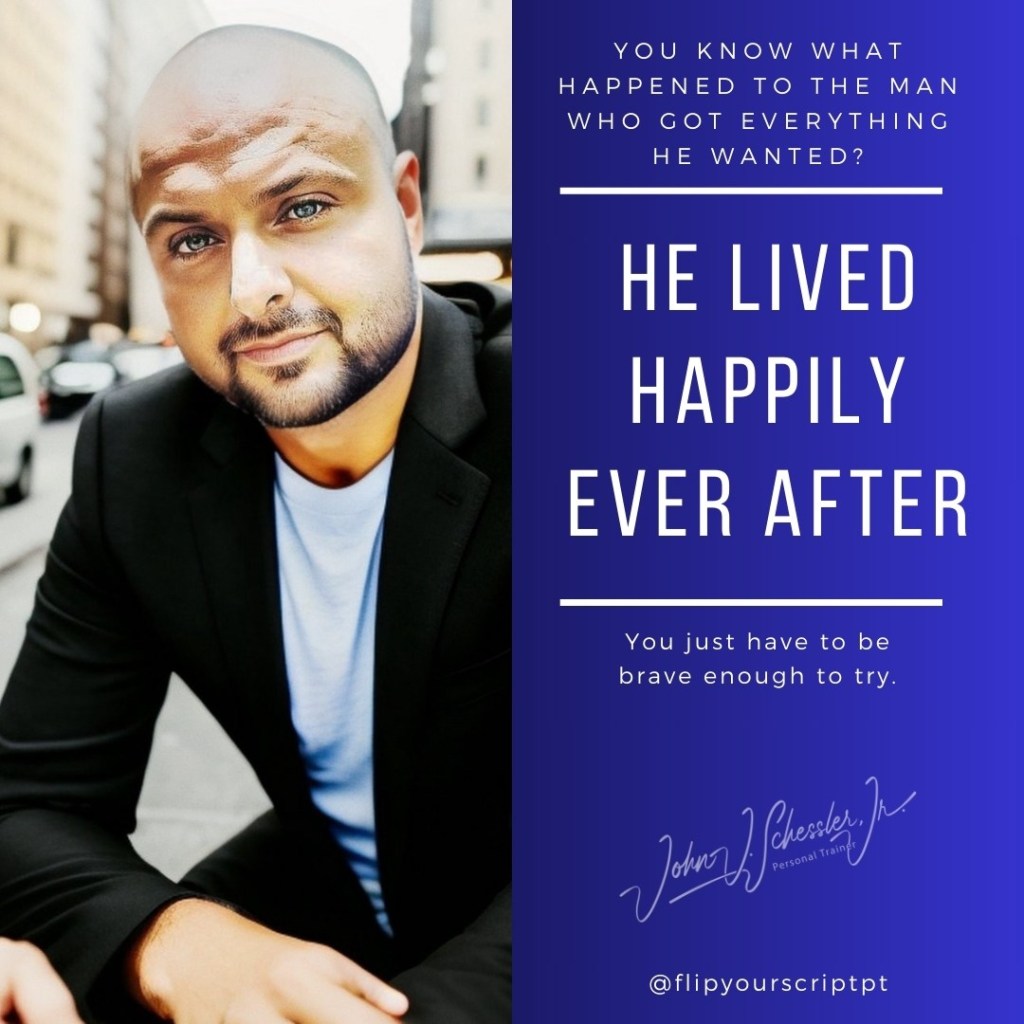
  • In a world full of uncertainties, there’s one thing that remains constant: our ability to try. 💪✨ Being brave doesn’t always mean having all the answers or knowing the outcome. It’s about taking that leap, even when your knees are shaking and your heart’s racing. 🚀

    Every journey starts with a single step, every success with a courageous attempt. So, dare to dream, dare to chase those aspirations, and dare to be the architect of your own destiny. 💫✨

    Remember, it’s okay to stumble, to fall, because in those moments, we learn, we grow, and we discover the strength we never knew we had. 🌱💪

    So here’s to the adventurers, the dreamers, and the believers – here’s to being brave enough to try! 🌈✨ #BraveEnoughToTry #CourageousHeart #DreamBig #fitness #psychology #happilyeverafter #willywonka #genewilder #johnschesslerjr #brave #armourup #flipyourscriptpt #pittsburgh #crisiscounselor #socialwork #personaltrainer #goalsetting2024 #amilliondreams #humanity #community #friendship #family #goals #intotheunknown

    John J. Schessler is a Pittsburgh-Based Personal Fitness Coach, Men’s Life Coach and Author. He is also a certified Orthopedic & Sports Injury Specialist, Exercise Therapist & Fitness Influencer. He has been working in the fitness industry as a gym manager and personal trainer for over 15 years and is currently a Senior studying Child & Adolescent Developmental Psychology at SNHU.

  • by John Schessler NASM-CPT, ET-C

    It’s March already and Trainers are starting to see trends being set for 2024 as to what types of equipment are popular, what training types are going to be popular, etc. There are also some things that are changing as well Let’s dive right in!

    STRENGTH TRAINING IS EMPHASIZED MORE. As exercise and fitness continues to evolve over time, the fitness community is continuing to recognize and emphasize that strength training is more and important to men’s and women’s overall health. This is nothing new for professionals in the field though as I personally have steered my clients to having a 50/50 split of both cardiovascular exercise and strength training. You really can’t have one without the other and ladies…. you will not end up getting bulky, I promise you! Functional fitness is also here to stay as well like such things as HITT workouts, circuit training and other weight training techniques to make fitness workouts more fun and interesting!

    PEOPLE NEED MORE SLEEP. Did you know that 2 out of 3 Americans don’t get the appropriate amount of sleep? Any trainer will tell you that good sleep is imperative to good health and how sleep impacts your recovery, overall performance and so much more. The more people learn about how sleep is good for their overall fitness, the more people are equipped to make changes to their workout and personal schedules to allow that to happen. With the aid of technology, smartwatches now have sleep apps that track your sleep patterns, your REM sleep and your wake patterns during the night. This trend is having people take ownership of their sleep is wonderful and it continues to improve as tech evolves.

    THE DATA SPEAKS FOR ITSELF. The more people are introduced to personalized data concerning their health stats and personal fitness demographics, the more people are becoming interested in data-driven research and evidence-based results. Of course, this includes the science behind certain ways trainers use different techniques when training certain muscle groups for certain goals clients may have. This use of data means that people will expect much more data-driven solutions when it comes to tailoring workouts specifically for each person based on their goals, needs and wants.

    AI IS COMING IN FOR THE ASSIST. AI is practically everywhere these days, trying to make our lives easier by providing assistance is most areas of life and fitness is included in that. With AI-powered apps and such, gaining access to personalized nutrition and workout programs is becoming easier and more efficient for a majority of people, not to mention faster. What sometimes takes trainers days, can now be done within minutes. Does this mean eventually Personal Trainers will become replaced with AI as well? I highly doubt it IMO. Artificial intelligence is wonderful however, members of gyms tend to prefer a more hands on approach when it comes to learning how to properly lift weights, use proper form and workout effectively. Never fear, us trainers are not going anywhere.

    PRICING STRUCTURES WILL CONTINUE TO CHANGE. As gyms and clubs continue to introduce new technology, updated equipment and more streamlined services, prices will continue to rise. It’s just simple supply and demand and if you’re a business owner, you depend on that continuous supply and demand to help pay your bills and allow you to make a living. There’s no sense in choosing pricing that’s too high – but there’s no shame in charging adequate pricing for top-notch services to members.

    GROUP FITNESS CLASSES ARE MORE COMMON. For more and more people, group fitness classes are gaining momentum among older adults, people who feel more comfortable in a group setting and beginners to gyms. The majority of my new clients often ask about group classes as opposed to 1:1 training sessions only because of the social aspect. Joining a gym is like moving to a new town, only with a lot more support and motivation!

    Each year the fitness and health industry are turned upside-down with new trends that change all the time to meet the demands of our evolving society. Trying to educate yourself and keep up with the latest trends seems almost impossible for the rate that they keep changing. If you do allow yourself to read on the aspects of fitness in 2024 that are important to you, you’re more apt to begin or stick with your routine because you’ll be more informed than the average bear! So, get out there and kick some ass!

    #fitness #trendingfitness2024 #gymlife #writer #motivationalspeaker #evolvingfitness #pittsburgh #flipyourscriptpt #johnschesslerjr #physicaltherapy #snhu #psychology #exercisetherapy #therapist #counselor #BBC #pediatrics #teampedes #sportsinjury #orthopedics #sleepisimportant #ai #podcastersofinstagram

    John J. Schessler, Jr. is a Pittsburgh-Based Personal Trainer, Writer, Motivational Speaker and host of the podcast, “Flip Your Script, available on all podcast platforms. John also is a Senior in Child and Adolescent Psychology at Southern New Hampshire University, graduating in Fall 2024. Mr. Schessler has been working for the fitness and physical therapy industries for the past 18 years and holds certifications in Sports Injury, Orthopedics, Exercise Therapy, Tactical Conditioning & Pediatric Functional Fitness. His works have been featured on the BBC News Outlet in the UK. For training questions and speaker inquiries, please email him at pghwellnesspt@gmail.com

  • By John Schessler, CMT, ET-C,

    If you are a diabetic or prone to having physical symptoms from having low sugar, you know that having things to eat or drink on hand can be lifesavers, literally. One of the scenarios that I usually find myself assisting clients and gym members in are these types of issues. By the time a member comes to me at the gym and complains of becoming lightheaded, usually we still have some time to get some sugar into them. Most of us know what having low blood sugar IS but what does it LOOK like? Here’s a breakdown:

    Low blood sugar or hypoglycemia is pretty common these days and mainly found in patients who have Type I Diabetes. Hypoglycemia occurs when blood sugar levels drop below 70mg/dL and for those without having diabetes, hypoglycemia occurs when your blood sugar falls below 55mg/dL. Usually when someone experiences a drop in blood sugar, the individual needs to ingest sugar or carbohydrates and having their blood sugar levels return to a normal level.

    Back to my initial question, what do someone who is having a low sugar attack look like and what are the signs? According to the Cleveland Clinic,

    The signs include:

    Shaking or trembling.
    Weakness.
    Sweating and chills.
    Extreme hunger (polyphagia).
    Faster heart rate.
    Dizziness or lightheadedness.
    Confusion or trouble concentrating.
    Anxiety or irritability.
    Color draining from your skin (pallor).
    Tingling or numbness in your lips, tongue or cheeks.


    Signs of severe hypoglycemia include:

    Blurred or double vision.
    Slurred speech.
    Clumsiness or difficulty with coordination.
    Being disoriented.
    Seizures.


    Watching someone have a hypoglycemic episode can be very unpleasant for the person in question. However, the first signs of an oncoming attack can be good warning signs for you to get some sugar or carbs into your system quickly. Severe hypoglycemia is a medically threatening scenario and must be treated as such because if left untreated, the patient could go into shock, experience multiple organ failure or death in the worst-case scenario.

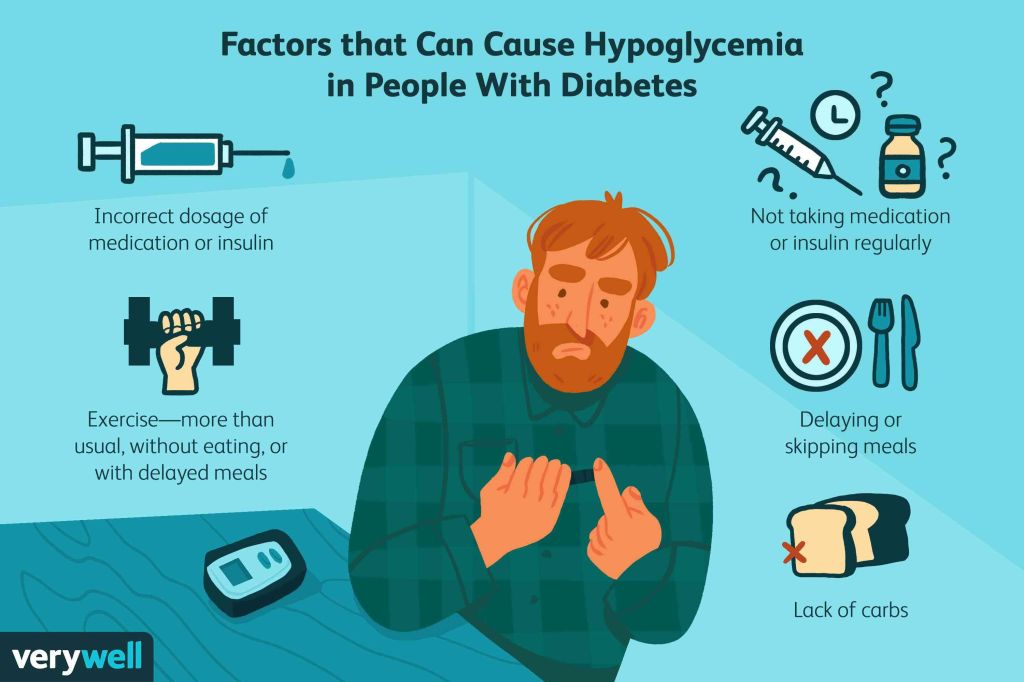
    Hypoglycemia happens when your blood sugar drops below a healthy range. Several factors can contribute to this for people with diabetes. Hypoglycemia can develop if things like food, exercise and diabetes medications are out of balance.

    Common situations that can lead to hypoglycemia for people with diabetes include:

    Taking too much insulin, the wrong insulin or injecting it into your muscle instead of in your fat tissue.
    Not timing insulin and carb intake correctly (for example, waiting too long to eat a meal after taking insulin for the meal).
    Taking too much or too high of a dose of oral diabetes medications.
    Being more active than usual.
    Drinking alcohol without eating.
    Eating meals later than usual or skipping meals.
    Not balancing meals by including fat, protein and fiber.
    People who are pregnant and have Type 1 diabetes are also more likely to experience low blood sugar during the first trimester due to hormone changes.

    You treat mild to moderate hypoglycemia by eating or drinking sugar (carbohydrates).

    The American Diabetes Association recommends the “15-15 rule” to treat an episode of mild to moderate hypoglycemia:

    Eat or drink 15 grams of fast-acting carbs to raise your blood sugar.
    After 15 minutes, check your blood sugar.
    If it’s still below 70 mg/dL, have another 15 grams of fast-acting carbs.
    Repeat until your blood sugar is at least 70 mg/dL.
    To know how many carbs you’re eating, read food nutrition labels. Some examples of foods that contain about 15 grams of fast-acting carbs include:

    1 small piece of fruit, such as half a banana.
    4 ounces (half-cup) of juice or regular soda (not diet).
    1 tablespoon of sugar, honey or syrup.
    1 tube of instant glucose gel (check the instructions).
    3 to 4 glucose tablets (check the instructions).
    If you have symptoms of hypoglycemia but can’t check your blood sugar, use the 15-15 rule until you feel better.

    Children may need fewer grams of carbs to treat hypoglycemia. Check with your child’s healthcare provider.

    Hypoglycemia isn’t anything to be swept under the rug if you are experiencing changes in your blood sugar. Aside from organ failure, patients can experience cardiac arrest, falling into a coma, and permanent brain damage. This is why it is extremely important if you suspect that you may have hypoglycemia to have your PCP order a CBC blood panel to see where your levels lie. The more proactive you are about it, the more you can stay on top of your health and livelihood.

    #diabetes #hypoglycemia #hyperglycemia #glucose #medicalinformation #medicine #personaltrainer #hospital #greysanatomy #lowbloodsugar #equalibrium #fitness #health #therapist #flipyourscriptpt #johnschesslerjr #pittsburgh #americandiabetesassociation #awareness #exercise #psychology #themoreyouknow

    John J. Schessler is a Pittsburgh-Based Personal Trainer, Motivational Speaker, Exercise Therapist & Writer. He is also the host and Showrunner of the podcast, “Flip Your Script” available on all podcast platforms. Mr. Schessler has been working in the fitness and health industry for the past 17 years and has specializations in Orthopedics, Pediatrics, Sports Injury and Tactical Conditioning. For speaking engagements or training inquiries, please email John directly at pghwellnesspt@gmail.com.

  • Here are some key facts about dieting and weight loss in the United States:

    1. Obesity Prevalence:
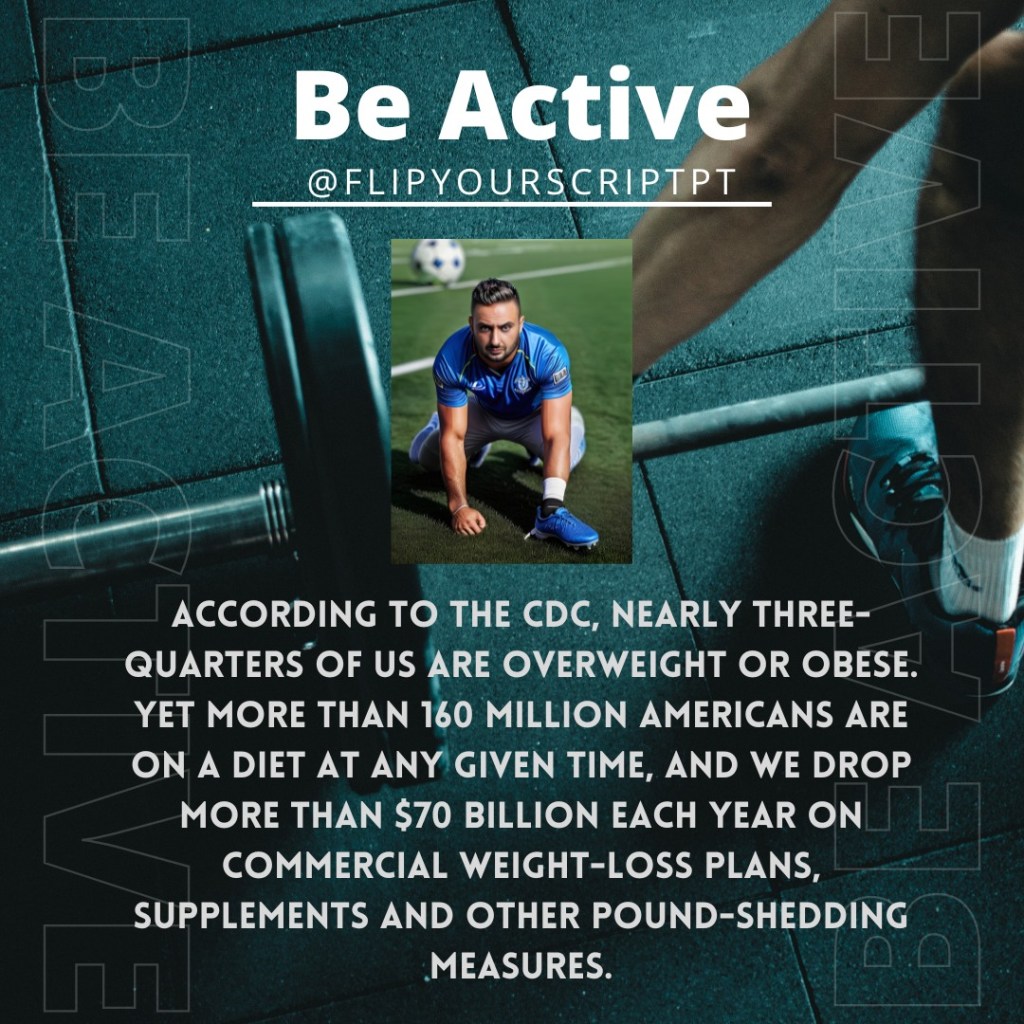
    • Approximately 40.2% of adults in the U.S. are considered obese¹.
    • In 2019, only about one in 10 adults met recommendations for fruit and vegetable intake¹.
    • Among children aged 1 to 5 years old, nearly half did not eat a vegetable and nearly a third did not eat fruit every day during the week before a survey in 2021¹.
    1. Weight Loss Efforts:
    • 49.1% of Americans try to lose weight each year.
    • About 43 million Americans (17%) follow a special diet annually².
    • The most searched diets include keto, Mediterranean, and anti-inflammatory diets².
    • However, approximately 80% of weight loss achieved through special diets is regained within five years.
    1. Best Diets of 2024:
    • According to the annual ranking by U.S. News, the best diets in 2024 include various approaches such as the Mediterranean diet, DASH (Dietary Approaches to Stop Hypertension), and the Flexitarian diet³.

    Remember that maintaining a healthy lifestyle involves more than just dieting; regular physical activity, balanced nutrition, and overall well-being play crucial roles in achieving and maintaining a healthy weight. 🌱🏋️‍♀️🥦

    For more detailed information, you can explore the CDC’s Nutrition Data & Statistics page.

    Source: Conversation with Bing, 2/15/2024
    (1) Data & Statistics | Nutrition | CDC. https://www.cdc.gov/nutrition/data-statistics/index.html.
    (2) Dieting Statistics in 2024 (Latest U.S. Weight-Loss Data). https://bodyketosis.com/dieting/.
    (3) These are the best diets of 2024, according to the annual ranking … – MSN. https://www.msn.com/en-us/health/health-news/these-are-the-best-diets-of-2024-according-to-the-annual-ranking-from-us-news/ar-AA1mCVXH.

    dieting #lifestylechange #fitness #beinghealthy #personaltrainer #trainerjohn #pghwellnesspt #flipyourscriptpt #overweight #obese #bodypositive #eatinghabits #weightloss #diet #workingout #feelinggood #beactive #stayhappyandhealthy #pittsburgh #sportsinjury #orthopedics #themoreyouknow

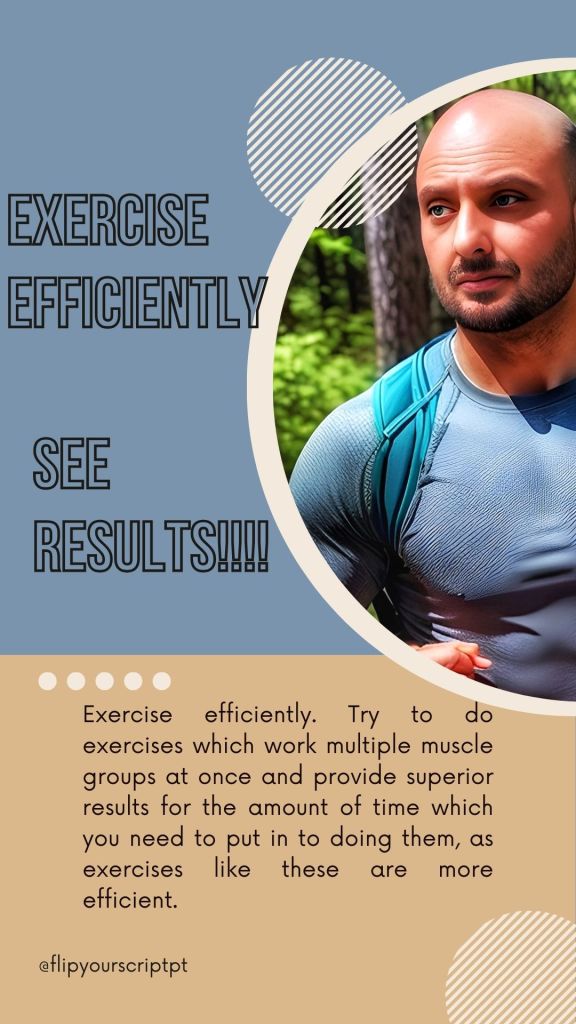
  • Compound exercises challenge multiple areas of your body at the same time and produce excellent results in the long run. The integration of explosive movements can increase your range of motion and strengthen your cardiovascular system, allowing you to intake more air when you need it. HIIT routines are an awesome way to incorporate these exercises into your daily exercises regime and keep things fun and interesting!

    #compoundexercises #rangeofmotion #explosivemovements #fitness #fitfam #flipyourscriptpt #strength #strong #efficiency #consistency #accountable #anatomy #health #pittsburgh #lgbtq #selfcare #vitamins #running #spinning #cycling #bodybuilding #strengthtraining #exerciseisfun #healthybodies #edgy #motivation #kinesiology #fitnesstips

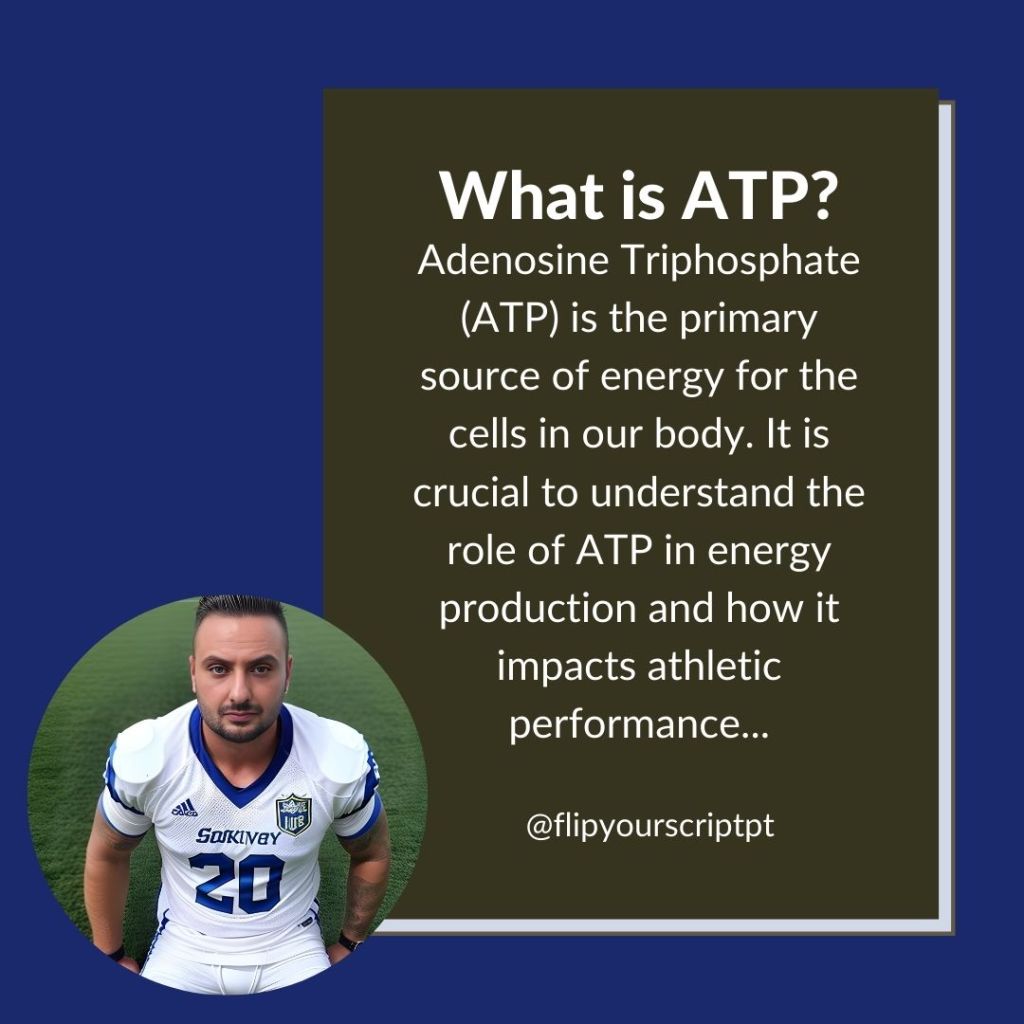
  • ATP is often referred to as the “energy currency” of the cell because it stores and transfers the energy needed for various cellular processes. Comprised of an adenosine molecule and three phosphate groups, ATP releases energy when one of the phosphate groups is removed, resulting in Adenosine Diphosphate (ADP). This energy release fuels essential processes such as muscle contractions, nerve impulses, and protein synthesis.
    A thorough understanding of ATP energy and its role in athletic performance is essential for fitness professionals seeking to help their clients achieve optimal results. By leveraging this knowledge, you can guide your clients toward improved performance, endurance, and overall fitness success.

    personaltraining #exercisetherapist #fitnesslife #gymlife #athleticperformance #humananatomy #physiology #energy #CMT #DPT #sportspsychology #ATP #adenosinetriphosphate #medicine #cellsatwork #power #strength #athletics

  • by John J. Schessler, Jr. CMT, ET-C, TCS

    Have you ever had a surgery or procedure and one of the first things your doctor discusses with you is physical therapy to assist with your recovery. Okay, great, you have insurance, so it’s covered right? Well yes and no. The healthcare disaster in the US when it comes to co-pays is utterly ridiculous and a lot of people these days are foregoing physical therapy and taking recovery into their own hands because either the co-pays are too expensive, or the patient feels that the physical therapy isn’t really accomplishing that much for their recovery. The mere fact that people have to make such a choice is proof enough that we have an issue that needs looked at in our healthcare systems when it comes to insurance companies, what they cover and how much is left up to the consumer. Let’s dive in.

    As far as insurance companies go, there’s about seven different categories that medical professionals can bill under – co-pays for the primary care doctor, emergency room, etc. Physical therapists fall under the specialist category, billing for services rendered for broken bones, post-op surgery rehab, etc. A lot of times insurance will only pay for so many sessions and once they run out, so do the patients from continuing unfortunately, that is, if it’s an outpatient setting. What stops the patient from continuing therapy more time than not is, you guessed it, the co-pays. What happens next then?

    Enter the Personal Trainers.

    Picture this: You’re a few weeks out from having a total shoulder replacement. You’ve done inpatient physical therapy as well as a few sessions of outpatient physical therapy and you’re starting to gain range of motion back and things seem to be improving. One day, your PT begins the therapy session with a review of your insurance coverage and unfortunately, this week will be your last due to what the insurance has agreed to cover. Later at home, you think about joining your local gym and the next day you sign up and meet with the Trainer on staff, me.

    I’m not new to hearing this during my client consultations. The famous line I hear is usually, “I was going to physical therapy, but my insurance ran out so here I am.” All personal trainers hear this from time to time and if they’re good Trainers, they’ll know exactly how to handle it. At my gym, all members receive the awesome benefit of training services I provide to the gym community, so I’m extremely used to treating physical therapy-type issues people come in with and want help managing it. If the issue the person is having is out of my wheelhouse, I let them know it up front so there is no confusion that what I provide isn’t 100% therapeutic but more strengthening and improving your body’s limits. 

    A lot of people subscribe to the myth that personal training and physical therapy are the same thing. They are not and they shouldn’t be. One is performed for medical reasons and the other is for fitness, health and self-improvement. I’m not going to turn away a member because I’m not a DPT, I do have a working knowledge of PT modalities so I can rely on what I learned in college and thereafter to assist me. Obviously, any other trainer can to and as long as you don’t create bigger problems or injure the client, there are ways to train the affected issue and rehabilitate the person back to a functioning level. In all seriousness, DPT’s and CPT’s are very similar in things they can train and rehabilitate on a person. The major differences between the two are that DPT’s need to have a solid medical background of advanced medical terminology/skills to treat affected areas. CPT’s have working knowledge of kinesiology, anatomy/physiology, etc. but what we can’t do is diagnose, treat bone breaks, immediate post-operate surgical injuries, etc. 

    There’s always a loophole when it comes to co-pays and what I mean here is that you can make the decision to take matters into your own hands, go to the gym and seek the assistance of a trainer to assist you in your rehabilitation. Whatever the decision that you make, please make certain that you have checked all available forms of insurance and what’s covered before seeking a personal trainers help. There are legal headaches that could be involved if a CPT injures the client without the proper informed consent paperwork or knowledge of what is to be completed in the gym sessions. 

    Other trainers may read this and think it could never happen to them and odds are it won’t BUT….knowledge is power and sometimes we tend to let this stuff slip our minds, so it’s always good to be reminded of the ‘what-if’s’. At the end of the day, the power lies in the hands of the injured party. Do not allow your Physical Therapist to talk you into more sessions that you’ll be paying out of pocket if that’s not what you want or can’t afford. On the flip side, don’t go seeking a personal trainer out if you are having doubts about what kind of assistance you will be receiving without doing your homework first.

    We need to start empowering ourselves to speak up with our medical doctors, practitioners and trainers if there is something we feel isn’t right or in our best interests. They’ll respect you so much more for being upfront with them because hiding behind lies helps no one and you’ll end up losing in the end.

    John Schessler is a Pittsburgh-based certified Master Trainer, Motivational Speaker, Actor, Writer and host of the podcast, “Flip Your Script”, available on most podcast platforms.He has been working in the health & fitness field for 17 years and has certifications as an Orthopedic/Sports Injury Specialist, Tactical Conditioning Specialist and Exercise Therapist.Aside from his work in fitness, John has backgrounds in Special Education, Social Work, Psychology and Child/Adolescent Development.For speaking engagement questions or training inquiries, please email John at pghwellnesspt@gmail.com

    #fitness #medicalprofessionals #physicaltherapy #personaltraining #insurancecopays #doyourhomework #health #motivation #empowerment #DPT #CPT #certifications #rehabilitation #injury #sportsmedicine #sportsinjury #postop #motivationalspeaker #actor #podcastersofinstgram #lgbtq #chiropracticcare #selfimprovement #pittsburgh #doctors #hospitals

  • by John J. Schessler, Jr. CMT, ET-C

    Throughout the course of human events, the one constant that we can all share is a feeling of connection to others. Relationships are difficult for anyone to establish and even more difficult to keep together for any number of years. Dealing with your own problems from day to day is tough enough and then when you throw in another whole person and their problems. and their families, AND their careers…. AAAND their friends (that you usually don’t like!), it’s a lot, right? There seems to be some sort of unwritten rule I’ve noticed that our little American society has always adhered to that really needs to end. That is the rule of that if you are not married and happily single, you should not be chastised or put on blast for it. I’m really going to try to not get into religion here because I do not feel that it is my place to add to that conversation, however, I will discuss my own personal beliefs as how I think this subject should be handled. Before I get into the body of what I’m describing here, I want to add that I think everybody has a right to do what makes them happy, relationship-wise or something else. We all have one life and truth be told; the human life is relatively short. We need to focus on ourselves and not what others are doing in their personal lives because it’s causing mental health issues and making people feel guilty for things, they have no business feeling guilty for. Let’s get into it.

    In the early part of the 20th century, the everyone pretty much knew their roles in life; you’re born, you grow, you learn and then you find someone you click with and get married, which usually lasted for the rest of your life. That format has pretty much the way things have gone since the beginning of time and rightly so; humans are pack animals so it makes sense that we would want to hook up with someone for life. As we progressed through the decades, more world events happened and changed the way we view things and relationships weren’t spared. With the civil rights movement and women’s movement that turned into feminism, women were starting to branch out on their own, creating their own independence and freedom for their lives. We’ve all heard the line before, “I don’t need a man/woman to make me feel fulfilled.” and it’s 100% true, you don’t. However, the older generations as well as some X’ers and millennials still adhere to the traditions of old though. 

    In the 2000’s things started to drastically change though. People started to change the narrative on what the definition of a relationship really was. With the inclusion of the LGBTQ community, marriage rights, etc., dating and relationships got a facelift of sorts. Now, instead of just man/woman couples, there were gay couples, polyamorous, and the list goes on and on. The majority of society was becoming more comfortable with different types of relationships and comfortable with how people were living their lives. But the age-old question still remains, no matter what type of relationship you find yourself in, “Why aren’t you married yet?” or “Don’t you think it’s time you settled down?”

    Well, not actually. In my life of 41 years and as an out gay man for 14 years, I have no intention of slowing down anytime soon. I work full-time, I’m finishing up my Psychology degree and thoroughly enjoy my independence. This doesn’t mean that I do not want to be in a relationship, far from it, however, it’s not top priority for me at this moment in time. I used to feel so shitty when I was in college at Penn State back in the early 2000’s and all of my close friends were in relationships. Wherever we’d go, I’d always feel like the third wheel and then when I got home from wherever we went, I’d feel depressed because I wasn’t with somebody. That’s the struggle of being a closeted gay person; you want to engage in a relationship but if you did, you’d run the risk and probably out yourself. If you aren’t ready for that to happen, you suffer in silence. When I found myself in my first gay relationship, I was so happy but at the same time, I wasn’t. My ex-boyfriend was an alcoholic and a narcissist to the fifth degree, but I wasn’t aware of this fact until after the first year of us being together. During our three-year relationship, I found myself stressed out due to having to visit him in jail, being his taxicab service and wondering where he was and what he was doing at all hours of the day. All this while working full-time and dealing with my own personal life issues from day to day.

    I guess you can say relationships are a touch and go subject for me as for a lot of people. The bottom line of this article is nobody can dictate how you live your life and if you don’t want to date, don’t put yourself in that situation. If you do, that’s freakin’ awesome too! My dad always tells me “Live your life and be happy” when I’m leaving my parent’s house after visiting, and that’s how I intend to go about living. Just going with the flow is what suits me right now and taking life as it comes. I wish for other people to live life with the same freedom and low stress as I feel right now in life because I know this won’t last forever.

    Bene Vivre everyone!

    John J. Schessler is a Pittsburgh-based Personal Trainer, Writer, Motivational Speaker and a Senior at Southern New Hampshire University majoring in Child & Adolescent Psychology.He is also the creator of the podcast, ‘Flip Your Script’, available on all podcast platforms.John has worked in the fitness field for the past 16 years as a Master Personal Trainer, Orthopedic Specialist and Sports Injury Therapist. For speaking bookings or training inquiries, please email pghwellnesspt@gmail.com.Thank you!

    #relationships #personaltrainer #motivationalspeaker #writer #psychology #emotions #feelings #lgbtqia #gaymen #equality #womensmovement #civilrights #makeyourselfheard #liveyourlife #behappy #therapist #counselor #menswork #womenswork #lifecoach #loveandsex #romantic #tradition #marriage #gaymarriage #podcastersofinstagram #flipyourscriptpt #fitness #development #medicine #emapth #pittsburgh

  • According to Blue Cross/Blue Shield, more than $2.8 billion or 14 percent of overall healthcare spending is represented by orthopedic pain conditions (pain in the muscles, joints and bones). Keep in mind that 90% of all orthopedic surgeries performed on patients every year result in major reductions in pain and discomfort, but what about the surgeries that are not so successful? What are the risks?

    It’s important to note that while the majority of orthopedic surgeries are successful in alleviating pain and discomfort, there are still risks associated with these procedures. These risks can include infection, blood clots, nerve damage, and in some cases, the need for additional surgeries. In 2023, there were instances of unsuccessful orthopedic surgeries, which can have various implications for patients. It is essential for individuals considering orthopedic surgery to thoroughly discuss potential outcomes, including the possibility of unsuccessful procedures, with their medical professionals before making any decisions. One of the most common orthopedic surgeries that are unsuccessful despite their overwhelming success rate is hip replacement surgeries, and with over 600,000 of these surgeries performed each year, there’s bound to be some errors. This type of surgery deals with displacing pain and discomfort from the hips and surrounding regions and one of the telltale signs that your body is rejecting the surgery is that the pain doesn’t subside but instead worsens. Also, take into account the mechanical pieces used in the surgery, over the years they wear, tear and get old. With that in mind, it’s no wonder that over 32 billion hip replacement revision surergies are also performed each year in the US. Keep in mind that this doesn’t mean that something has gone horribly wrong during the initial surgery or that problems are going to happen right away. However, if you are suspecting that your replacement surgery has gone wrong or you’re experiencing complications, seek to get an evaluation from a Board-Certified Orthopedic surgeon to be determine a plan of action. (Gilbert, 2020)

    In 2009, the AMA called upon hospitals & medical personnel performing surgeries and life sustaining care to follow checklists to insure that the care they were providing was not going to create negative patient outcomes and is now the universal standard by which the medical community operates during routine operations with patients. However, even with checklists, some errors during surgeries are unseen or done by mistake. One of the most important things post-op is to do something that goes without saying, ‘follow your doctors orders’. Usually this includes eating a healthy diet, exercising regularly and do anything else you doctor or surgeon may include in your aftercare plan. If you avoid eating healthy and exercise and gain weight, that could unfortunately put undo stress onto the artificial joint causing it to become damaged. Once an artificial limb has become damaged, it’s imperative that a surgeon opn you back up to correct what has been done so you don’t experience more pain down the road. 

    Any surgery or medical procedure is always vulnerable to a cluster of problems that may go wrong becuase not all surgeries or surgeons are created equal. Doctors and Surgeons aren’t perfect, they’re human. All they are really doing is treating a problem the same way they’ve been trained and educated to. Errors in technique are usually due to misplacement of tools, devices or tissues. These errors can be reduced, fortunately, by the adoption of pre-surgical 3D imaging and planning, robotic technology for artificial component placement, cadavers and virtual laboratories for surgeon training, and the ubiquitous YouTube instructional videos. At the University of Pittsburgh Medical Center (UPMC) in Pittsburgh, a team of physicians are publishing their finding on Risk Analysis (RA) as a means of screening surgical patients for frailty. Patients who are exhibiting signs of frailty are often at risk for a higher mortality risk, pre-operative morbidities, particularly those individuals over the age of 65. For every healthcare system, improving patient outcomes is extremely important because it helps people develop trust in the medical personnel that treat patients daily. Hospitals are continually working to improve patient outcomes with the introduction of patient portals, new safety measures and standards as well as the use of Artificial Intelligence (AI)

    This is why doctors and medical personnel urge patients to ask questions about everything that could go wrong before they have their surgery so they can be prepared as to what the outcomes may be and they can plan accordingly with the medical team as issues arise. In life there are no guarantees for 100% success in all things and the world of medicine is definitely no exception. Treatments may not work, surgeries may be unsuccessful and people sometimes make mistakes unknowingly. The main thing for patients to do is their homework, ask the appropriate questions and follow the doctors orders!

    Resources:

    https://brettgilbert.emergeortho.com/blog/symptoms-of-a-failed-hip-replacement/

    Improving Upon Postoperative Outcomes | UPMC Physician Resources

    John J. Schessler is a Pittsburgh-Based Master Fitness Trainer Motivational Speaker and certified Exercise Therapist.He is also a fitness writer and host of the podcast, “Flip Your Script’, available on all podcast platforms.Aside from fitness, John is also a Senior at Southern New Hampshire University majoring in Child & Adolsecent Psychology and is working towards a Master’s degree in Pediatric Counseling.Working in fitness for over 15 years, John has certifications in Orthopedics, Sports Medicine and is a Tactical Conditioning Specialist.For speaking engagements or training inquiries, please email pghwellnesspt@gmail.com.
    #fitness #patientoutcomes #surgery #teampediatrics #teamortho #medicine #haveachecklist #strength #upmc #postoperative #orthopedics #sportsmedicine #nasm #bodybuilding #motivation #foryou #trending #hipreplacement #physicaltherapy #followdoctorsorders #riskanalysis #americanmedicalassociation #americanorthopedicassociation #bluecrossblueshield #insurance #liability #positive #outreach #artificalintelligence #writer #medical #psychology #counseling #personaltrainer #therapist #counselor