
By John Schessler, MS, CPT, SPC | Athlete Mindset HQ
You make time for the gym. You choose your exercises, grab your weights, and get to work. But there’s a question worth asking before you count your next repetition:
What are you practicing with each rep?
Strength training involves learning a skill. How you position yourself, control the resistance, and adjust when a movement becomes difficult all shape that practice.
As a personal trainer, I want people to understand the purpose of an exercise. When you know what you’re trying to accomplish, it becomes easier to choose a useful weight, recognize when you need an adjustment, and build confidence.
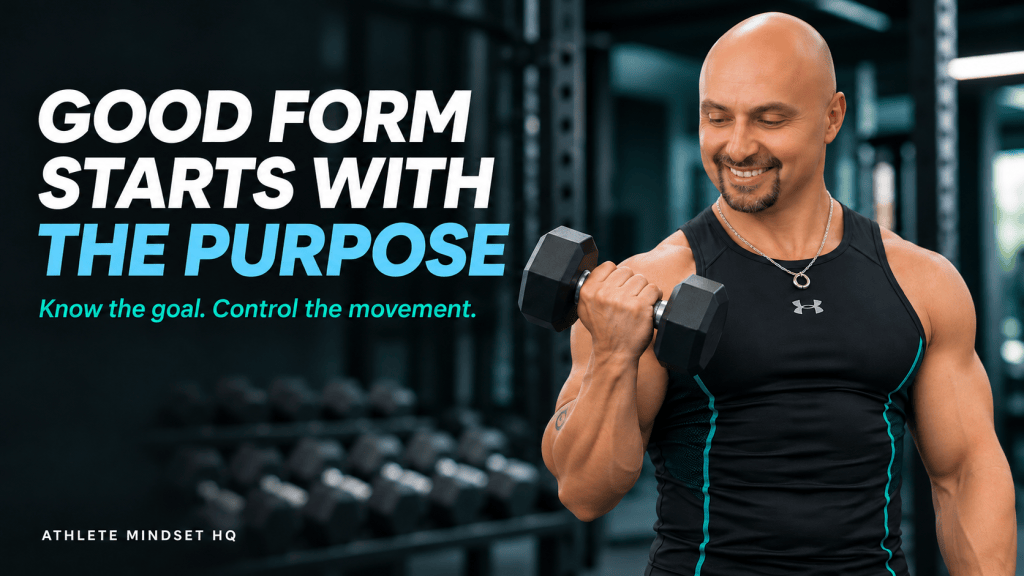
“Use good form” is common advice, but it needs an explanation.
For most general strength exercises, good technique means using a setup and movement you can control, through a range that suits your body and the goal of the exercise.
That does not mean everyone should look identical. Differences in height, limb length, mobility, experience, and equipment can change how a movement looks.
A useful starting question is:
Can I repeat this movement with control, or am I finding new ways to get the weight moving?
For example, during a biceps curl, your elbows may move slightly. But if every repetition requires a large backward lean and a swing of the hips, consider whether the weight still fits the exercise you intended to perform.

The number on the weight stack tells you how much resistance you selected. It does not tell you how well you performed the set.
A manageable working weight should allow you to:
- Establish a stable starting position.
- Move through your intended range.
- Control the return portion of the repetition.
- Finish the set without a major change in technique.
The final repetitions may move more slowly. They may require more concentration. That is different from losing control.
If your target is 10 repetitions but your technique changes substantially after six, reduce the resistance or end the set sooner. Let your current ability guide the load.
The weight should challenge the movement you planned to do.
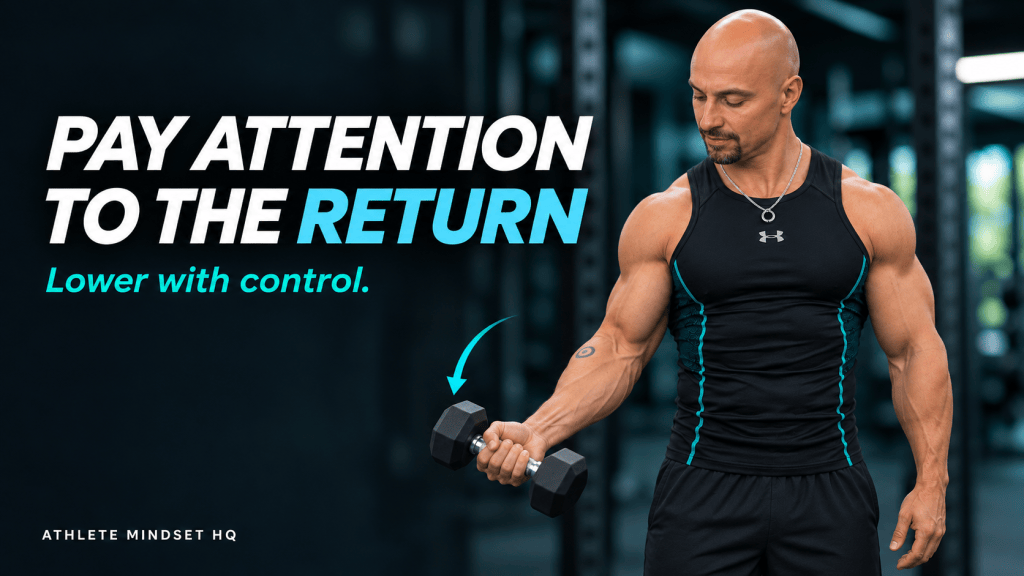
It is easy to focus on lifting, pressing, or pulling the weight and forget about bringing it back.
Watch what happens after the hardest part of the repetition. Does the cable pull you forward? Does the weight stack crash? Do the dumbbells drop quickly into the next rep?
Try this cue:
“Bring it back with the same attention you used to move it.”
You do not need to make every repetition extremely slow. Start with a smooth, deliberate pace that allows you to stay in control in both directions.
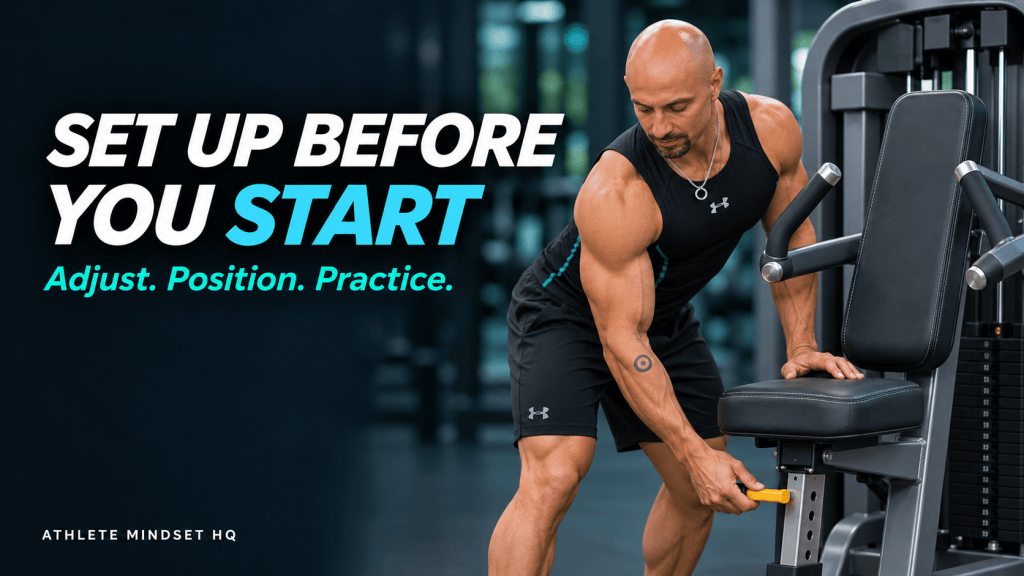
A useful set often begins with a few quiet seconds of preparation.
Adjust the seat. Check your foot position. Make sure the handles are within reach. Perform a light practice repetition before committing to the working weight.
Here are a few practical examples:
| Exercise | What to check | Simple cue |
|---|---|---|
| Machine chest press | Adjust the seat so the handles sit around mid-chest; keep your feet supported. | “Press smoothly and control the return.” |
| Lat pulldown | Secure the thigh pad and choose a grip you can use comfortably. | “Bring your elbows down toward your sides.” |
| Seated cable row | Sit tall with a stable torso and enough room to reach forward under control. | “Pull without throwing your body backward.” |
| Leg press | Keep your hips supported and use a depth you can control without your pelvis rolling away from the pad. | “Lower with control; press through your feet.” |
| Dumbbell curl | Choose a stance and load that let you keep your torso reasonably still. | “Curl, then lower deliberately.” |
These are starting points. A cue is useful when it helps you perform the movement more consistently.
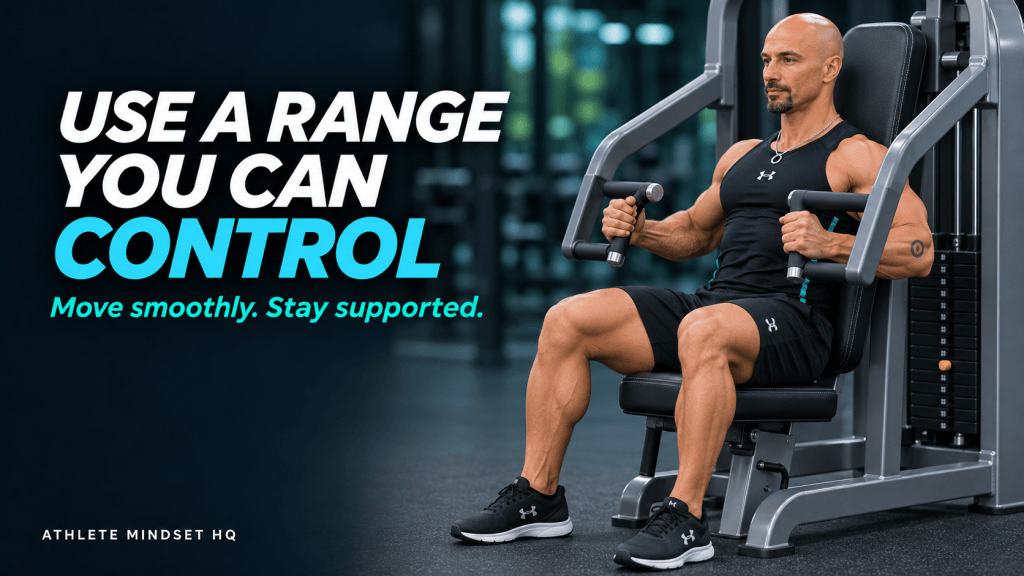
You may hear that every exercise must use the largest possible range of motion. A better place to begin is the range you can manage comfortably with the equipment and setup you are using.
On a leg press, for example, lowering farther is not automatically more useful if your hips begin lifting away from the pad. On a chest press, reaching farther back may change your shoulder position beyond what feels manageable.
Build consistency within your available range. As your skill and capacity develop, you can reassess it.
Avoid forcing yourself into a position simply because someone else can reach it.
Notice What Changes as You Tire
The first repetition and the final repetition will not always look exactly the same. Fatigue can slow movement and make a set feel much harder.
Pay attention to the size of the change.
A slower final repetition may still be controlled. A sudden twist, bounce, or large shift in body position is a reason to pause and reassess.
Ask yourself:
“Could I perform another repetition using roughly the same technique?”
If the answer is no, that can be a sensible place to finish the set. You do not need to keep going until you cannot move the weight.
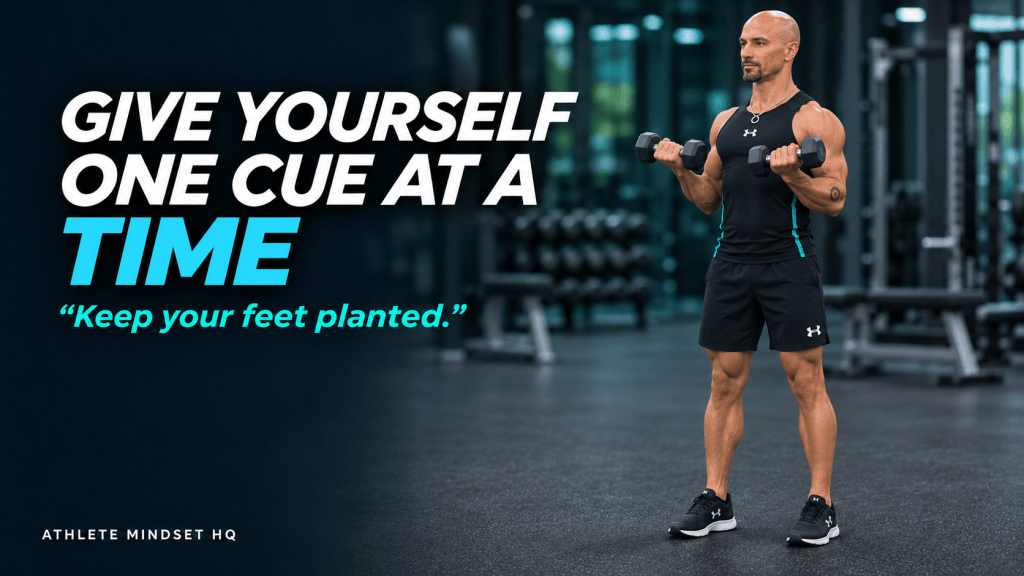
Trying to remember six instructions during an exercise can become distracting.
Choose one cue that addresses the main thing you want to improve:
- “Keep my feet planted.”
- “Control the lowering.”
- “Keep my torso steady.”
- “Use the same range each rep.”
- “Finish without swinging.”
Practice that cue across a few sets. Once it feels more familiar, decide whether another adjustment is needed.
Learning technique takes repetition, and simple instructions are easier to use while you are working.
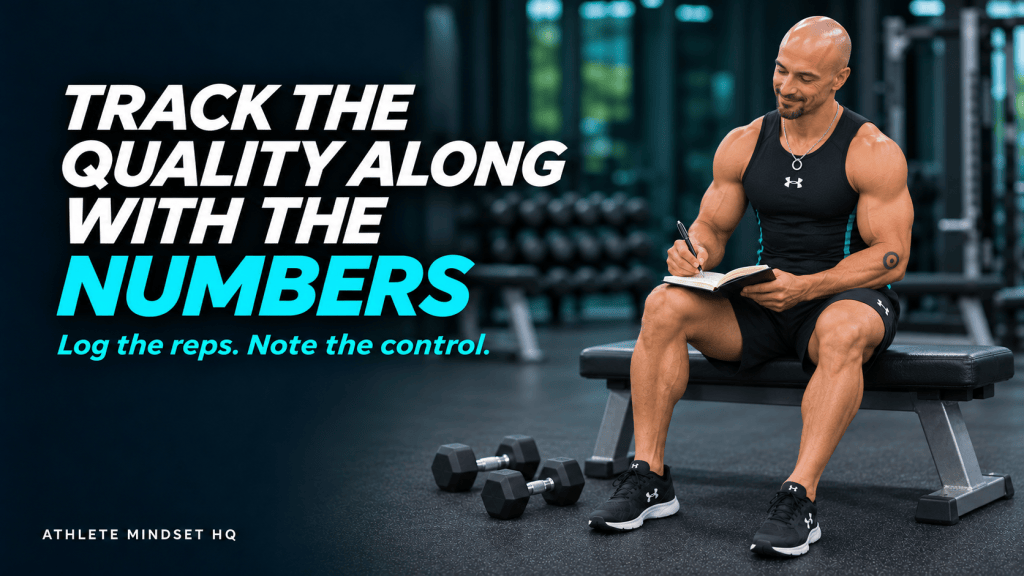
Your workout record can tell you more than sets, repetitions, and weight.
Add a brief note about how the movement went:
Seated row: 3 sets of 10 at 70 pounds. Controlled all three sets; try 11 reps next time.
Or:
Dumbbell curl: 15 pounds. Started swinging after rep eight; stay here and improve consistency.
Use those observations to make your next decision. Progress might mean adding resistance, completing another repetition, or performing the same work with better control.
Choose one exercise during your next workout and give it a little extra attention.
Check your setup. Use a manageable weight. Pick one helpful cue. Notice whether your final repetition stays close to the movement you started with.
You do not have to master every exercise at once. Give yourself room to learn, ask questions, and make adjustments.
Every rep is an opportunity to practice. Make it one you can build on.

I’m John J. Schessler Jr., MS, CPT, SPC—founder of AthleteMindsetHQ, personal trainer, behavior interventionist, and host of the Men, Actually podcast. I hold a master’s degree in sport psychology and a bachelor’s degree in child and adolescent psychology. My work brings together movement, mindset, and honest conversations about being human.
Through this blog, I explore mental performance, fitness, resilience, masculinity, identity, and well-being. Drawing from my experience supporting autistic students, coaching clients, and navigating my own challenges, I turn psychological concepts into practical ideas you can use in training, work, relationships, and everyday life.
My interest in resilience is personal. At age 10, I survived Guillain–Barré syndrome and faced the long process of relearning abilities I once took for granted. That experience continues to shape how I understand progress, patience, and the courage it takes to begin again.
As a gay man, educator, and coach, I value spaces where people can speak honestly, question expectations, and feel supported as they grow. Whether you’re pursuing a performance goal or figuring out your next chapter, my aim is to help you understand yourself, take a meaningful next step, and follow through.


Leave a Reply