

By John Schessler, MS, CPT, SPC
Founder/CEO, Athlete Mindset HQ
You walk into the gym feeling good about your progress. Then you notice another man lifting more weight, carrying more muscle, or getting more attention.
Your workout suddenly feels different. Without either of you saying a word, you have entered a competition he may not even know exists.
The same experience can happen when another man gets promoted, starts a relationship, or appears more confident in a room full of people. His success becomes a question about your own

standing: Where does that leave me?
Competition between men can involve enjoyment, ambition, connection, attraction, and the pursuit of respect. Biology belongs in that discussion, but so does the meaning a man attaches to winning.
Understanding that interaction requires looking beyond the idea that men are simply “wired to compete.”
Intrasexual competition refers to competition among members of the same sex, often discussed in evolutionary research in relation to mating opportunities. Among ancestral males, strength

and fighting ability may also have influenced conflicts over resources and social position.
Sell, Hone, and Pound (2012) reviewed evidence suggesting that physical formidability—the capacity to impose physical costs or resist them—was relevant to male competition throughout human evolutionary history. This provides one framework for considering why men might attend to another man’s strength or their own relative standing.
An evolutionary interpretation, however, cannot establish the motive behind an individual man’s behavior. A man pursuing a personal lifting record may enjoy mastery. Another may want recognition. A third may simply like training with competitive friends.
Historical pressures also do not make a behavior inevitable or desirable. Human relationships involve cooperation, learning, friendship, and care alongside competition.
The useful question is how these influences interact in a particular person and setting.
Psychologist Leon Festinger’s social comparison theory proposed that people evaluate their opinions and abilities partly by comparing themselves with others, particularly when clear objective standards are unavailable (Festinger, 1954).
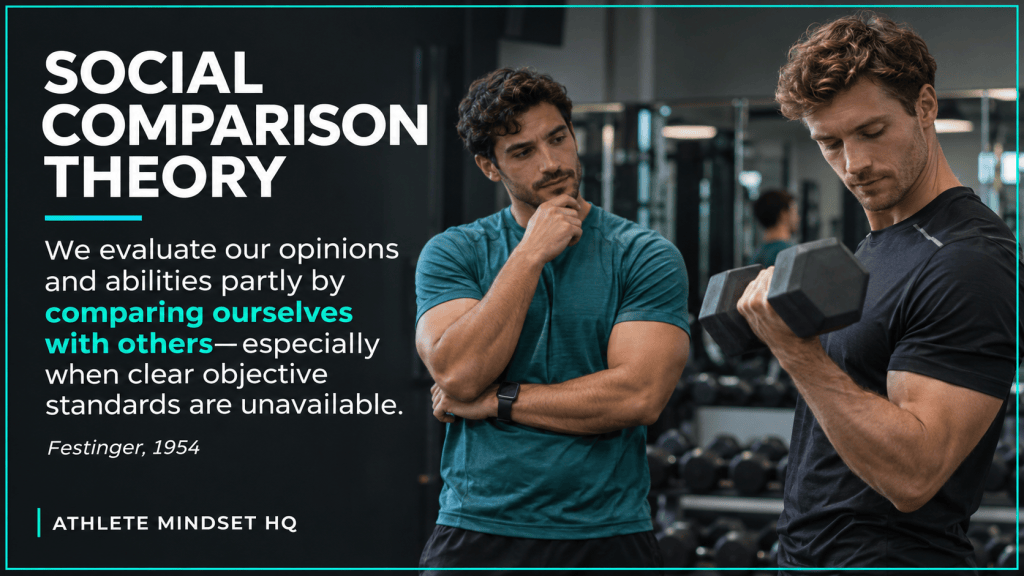
Applied to everyday life, another man can become a reference point for strength, attractiveness, financial success, or confidence.
An upward comparison involves comparing yourself with someone you perceive as doing better. That comparison can raise a practical question—What could I learn from him?—or become a harsh judgment: His success proves I am inadequate.
Those interpretations are different, even when the observation is identical.
“He lifts more than I do” describes a performance difference.
“I am less worthy because he lifts more” adds a judgment about identity.
That second statement is where comparison can become emotionally costly. A specific difference has been expanded into a conclusion about the whole person.
Testosterone is often treated as shorthand for aggression. Research suggests a more complicated relationship involving status, context, and other biological factors.
In a randomized experiment involving 40 men, Dreher and colleagues (2016) administered testosterone or a placebo before an economic bargaining task. Testosterone increased punishment in response to unfair offers, but it also increased rewards for generous offers. The findings support the possibility that testosterone can influence both antagonistic and prosocial behavior within a status-relevant setting.
This does not mean testosterone makes men generous in everyday life. It means a simple “more testosterone equals more aggression” explanation fails to capture what happened in that experiment.
Knight and colleagues (2022) likewise found that testosterone’s effects on competitive decisions depended on baseline cortisol and cues about an opponent’s status. Cortisol participates in stress regulation, among other functions. Their findings support examining hormones together with the social situation rather than treating testosterone as an independent command to compete.
These experiments also have limits. Administering a hormone in a controlled study does not reproduce every feature of naturally occurring competition. Neither study allows us to infer a stranger’s hormone levels from his personality.
A competitive man does not necessarily have unusually high testosterone. A gentle or reserved man does not necessarily have low testosterone.
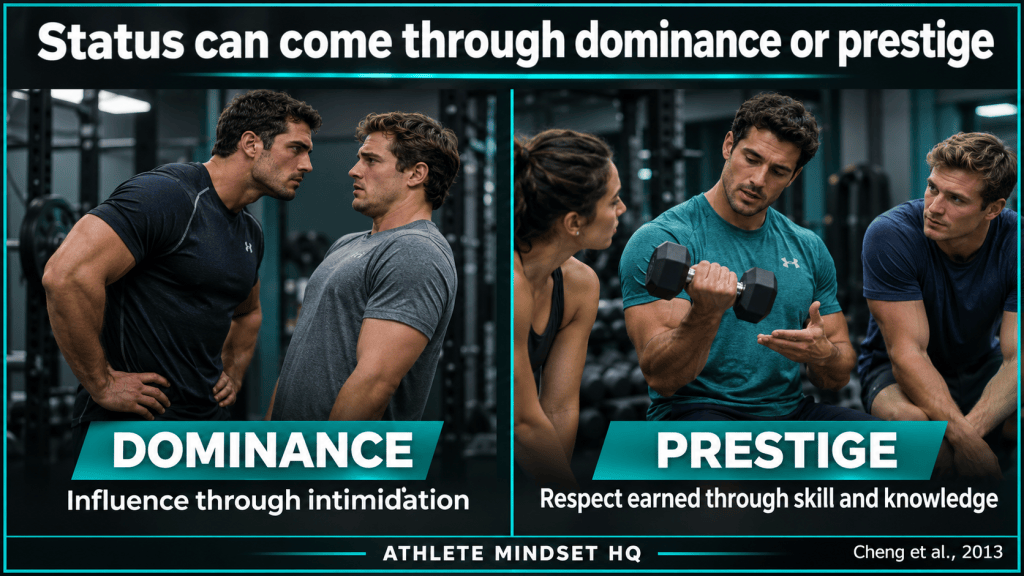
Wanting status does not always mean wanting to intimidate people.
Cheng and colleagues (2013) examined two distinguishable routes to social influence:
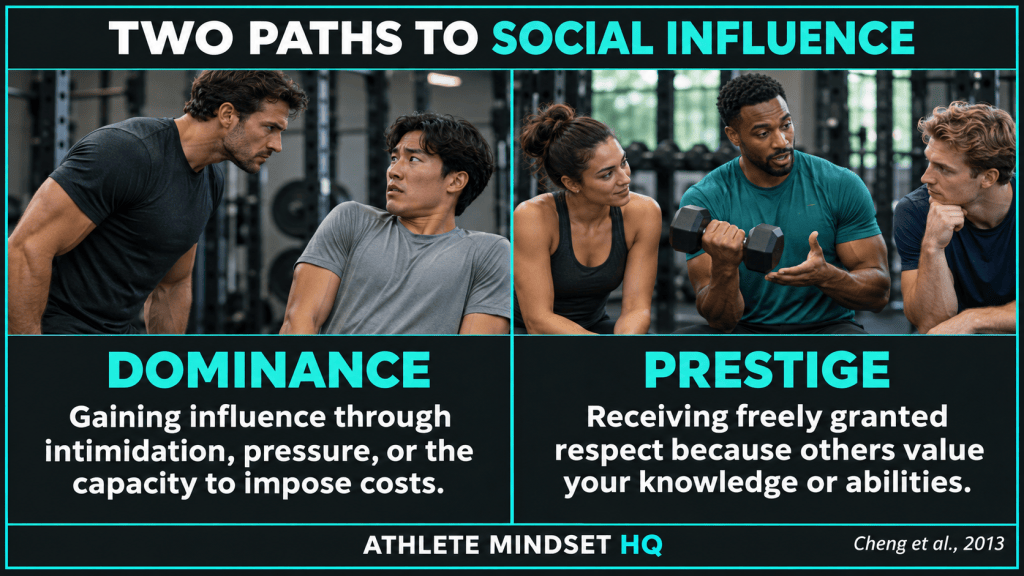
- Dominance: gaining influence through intimidation, pressure, or the capacity to impose costs.
- Prestige: receiving freely granted respect because others value your knowledge or abilities.
Their research found that both could provide routes to influence within groups.
This distinction helps explain why competitive behavior can look very different across settings. Someone may pursue influence by overpowering others; someone else may earn recognition through expertise and contribution.
Consider two approaches to the gym. One person belittles beginners to establish superiority. Another becomes respected because he trains consistently and helps people learn.
Both may care about how others see them, but the way they pursue recognition changes the experience for everyone around them.
The relationship between hormones and competition is bidirectional: biology can influence behavior, and experiences can affect biological responses.
Geniole and colleagues’ (2017) meta-analysis included more than 2,500 participants. Winners showed a larger testosterone increase than losers on average, but the overall effect was small and varied substantially between studies. The difference was stronger in settings outside the laboratory.
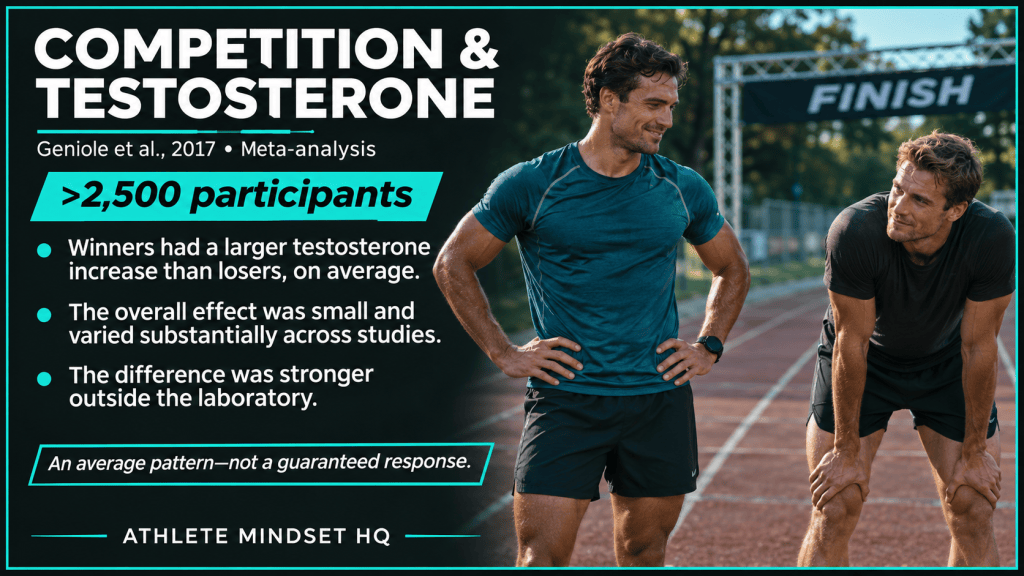
A win therefore does not guarantee a hormonal surge, and a loss does not guarantee a crash.
There is also the immediate experience of physiological arousal. Sympathetic nervous system activation and adrenergic signaling can increase heart rate and cardiac activity, helping prepare the body for action (Lymperopoulos et al., 2013).
That bodily activation does not, by itself, explain its meaning. Before a contest, a racing heart may accompany excitement, fear, anticipation, or several feelings together.
A useful pause is: What is my body preparing for, and what am I telling myself this situation means?
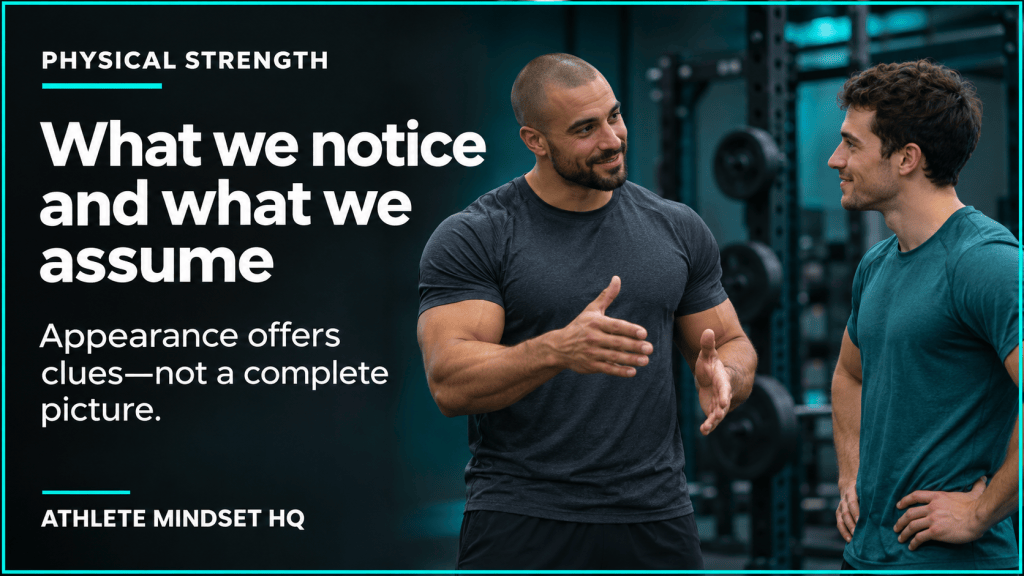
People can detect information about physical capability from appearance. Sell and colleagues (2009) found that observers could estimate men’s strength from photographs with some accuracy.
However, estimating strength is different from accurately judging confidence, kindness, aggression, or emotional security.
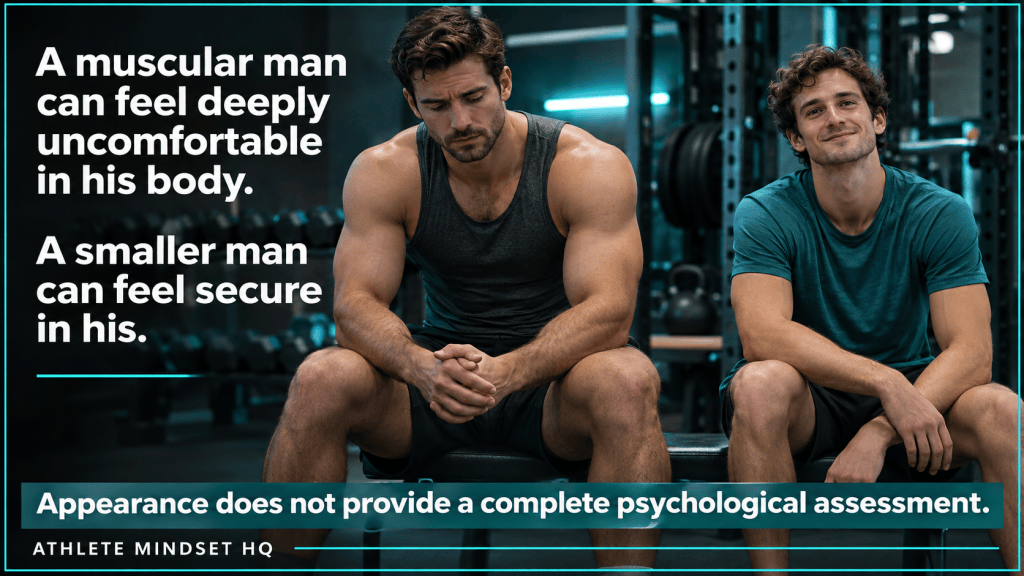
A muscular man can feel deeply uncomfortable in his body. A smaller man can feel secure in his. Appearance does not provide a complete psychological assessment.
The distinction matters because men may turn visible differences into imagined hierarchies. Noticing someone’s size is an observation; deciding that his size diminishes your masculinity is an interpretation.
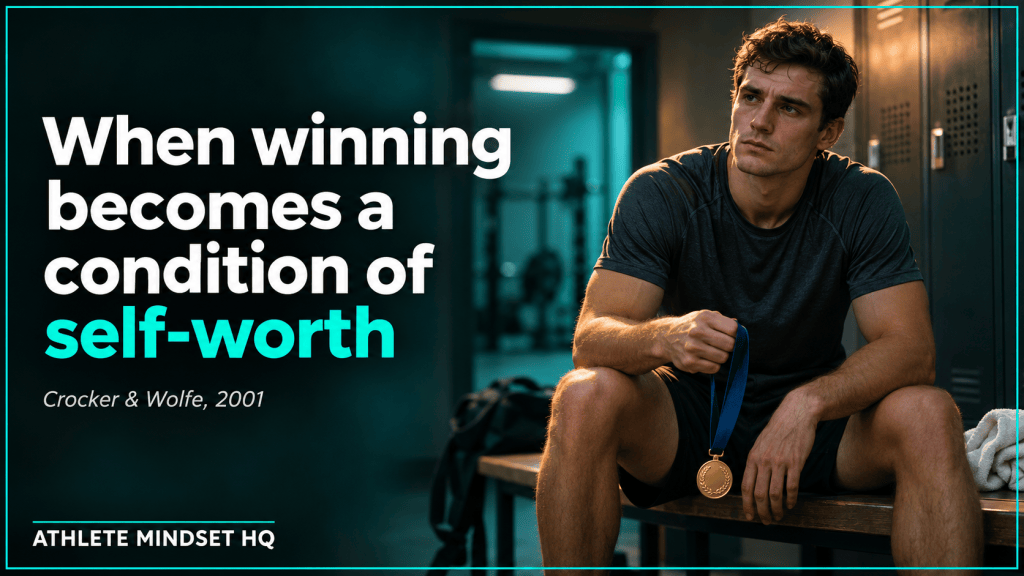
Crocker and Wolfe’s (2001) framework of contingencies of self-worth describes how people can stake their self-esteem on success in particular domains. These might include approval, appearance, competence, or competition.
Applied to male rivalry, the underlying rule might become:
I am worthwhile when I outperform other men.
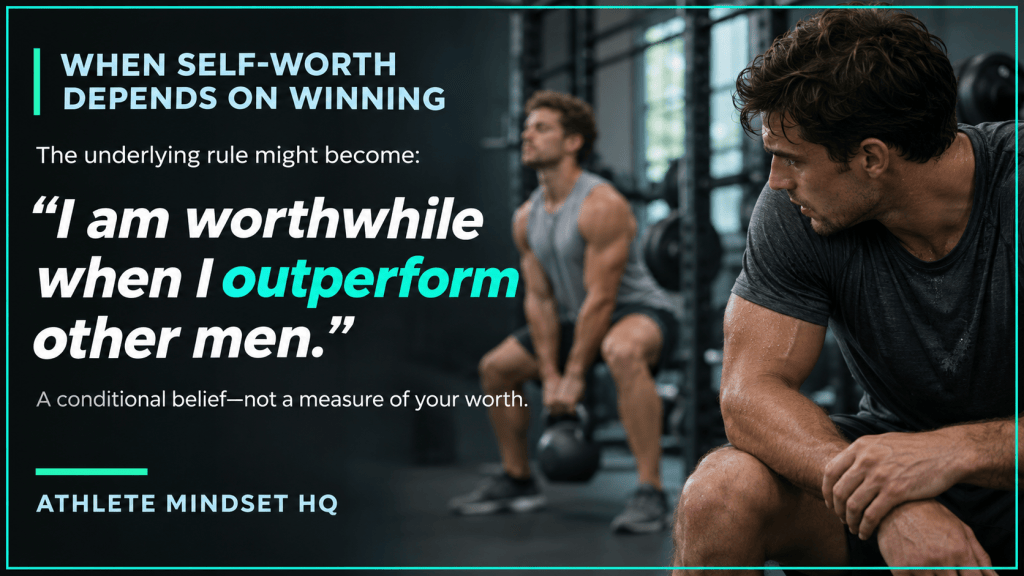
This is different from enjoying achievement. It makes achievement responsible for maintaining a basic sense of personal value.
Two men can lose the same contest and experience it differently. One thinks, I need more practice. Another thinks, This proves I am a failure.
The first statement identifies something to work on. The second turns an outcome into an identity.
This framework does not establish that all competitive men have fragile self-esteem. It offers a way to understand why particular comparisons feel disproportionately threatening.
If losing a casual contest leaves someone feeling humiliated for days, the emotional stakes may extend beyond the score.

Body comparison can include concerns about penis size and sexual desirability. Those concerns deserve a serious discussion without reinforcing the idea that anatomy determines masculinity.
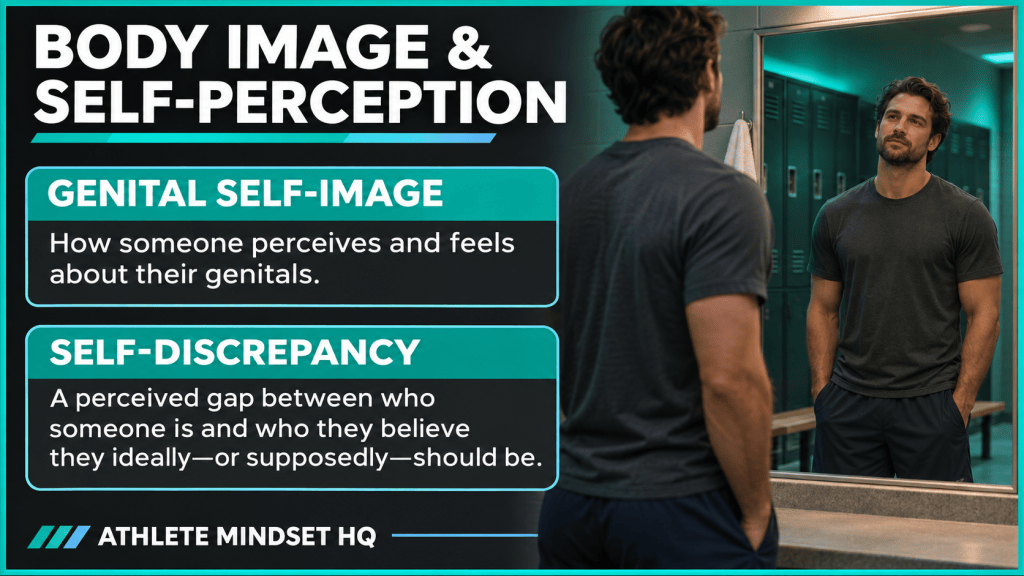
Genital self-image refers to how someone perceives and feels about their genitals. A related concept, self-discrepancy, concerns a perceived gap between who someone is and who they believe they ideally—or supposedly—should be.
Veale and colleagues (2016) investigated actual, ideal, and perceived expected penis size among selected groups of men, including men with body dysmorphic disorder. Their work highlights the importance of examining standards and expectations alongside physical measurements.
Body dysmorphic disorder involves distressing preoccupation with perceived appearance defects that are slight or not apparent to others, accompanied by repetitive behaviors or mental
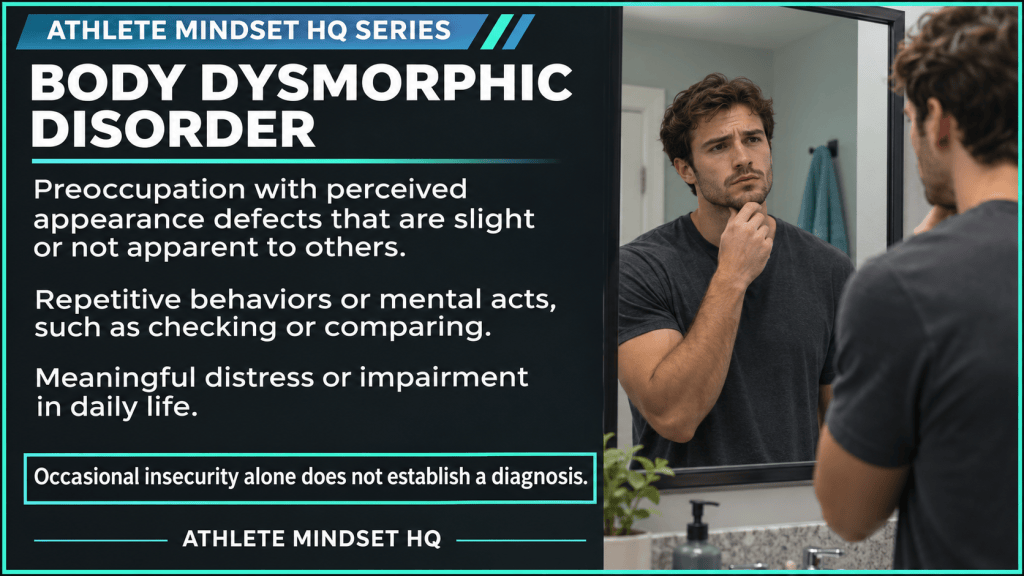
acts and meaningful distress or impairment. Occasional insecurity does not, by itself, establish that diagnosis.
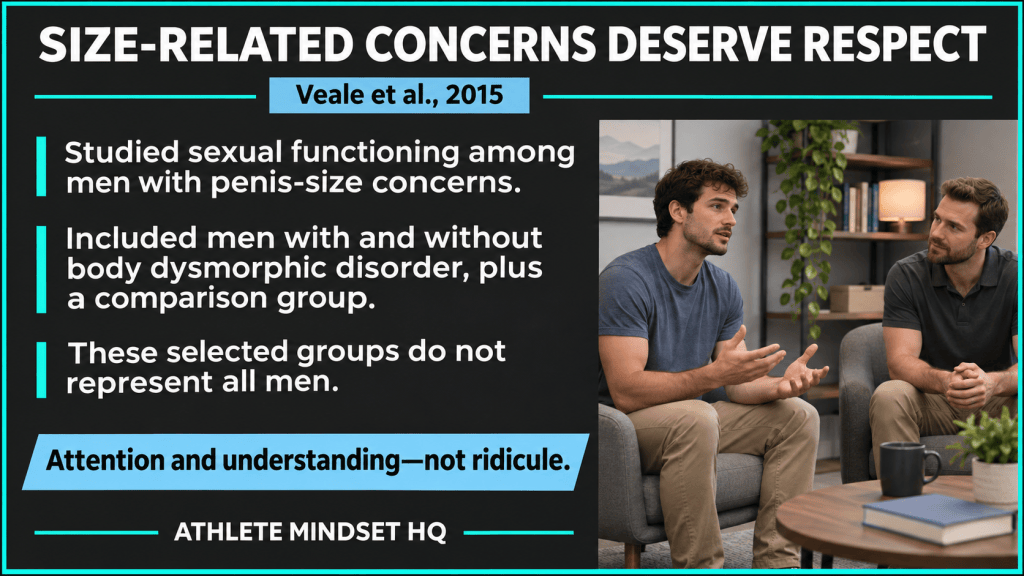
Veale and colleagues (2015) also studied sexual functioning among men with penis-size concerns, including men without body dysmorphic disorder. These selected clinical and comparison groups cannot represent all men, but the research demonstrates that size-related concerns merit attention rather
than ridicule.
Anatomy also cannot reliably reveal current testosterone levels. Slade and colleagues (2021) found only a weak association between adult testosterone and stretched penile length in a clinical sample. That does not support estimating an individual’s hormone level from his size.
Most importantly, this research does not establish penis size as a cause of aggression or competitive behavior.
Calling an aggressive man “compensating” is speculation. Using “small penis” as an insult reinforces a hierarchy in which some bodies are treated as deserving shame.
We can address harmful behavior directly without turning anatomy into an explanation or a punchline.
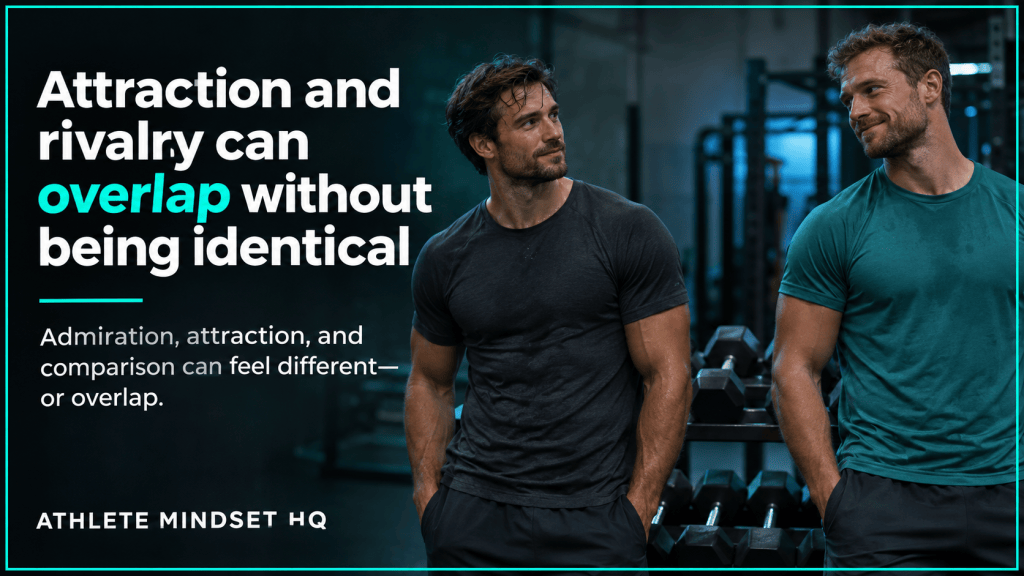
Another man may represent someone you admire, someone you find attractive, or someone whose attention and opportunities you want.
Those possibilities can overlap, but they should not be assumed.
“I want to look like him,” “I want him to notice me,” and “I want to learn from him” describe different experiences. Competition alone cannot reveal someone’s sexuality or prove hidden attraction.
For personal reflection, the useful question is specific: What caught my attention, and what did I make it mean about myself?
That question creates room for curiosity without forcing an explanation.

Competition can provide enjoyment, friendship, discipline, and opportunities to improve. Its value depends partly on how we participate and what we ask the outcome to prove.
Before turning another man into an opponent, consider:
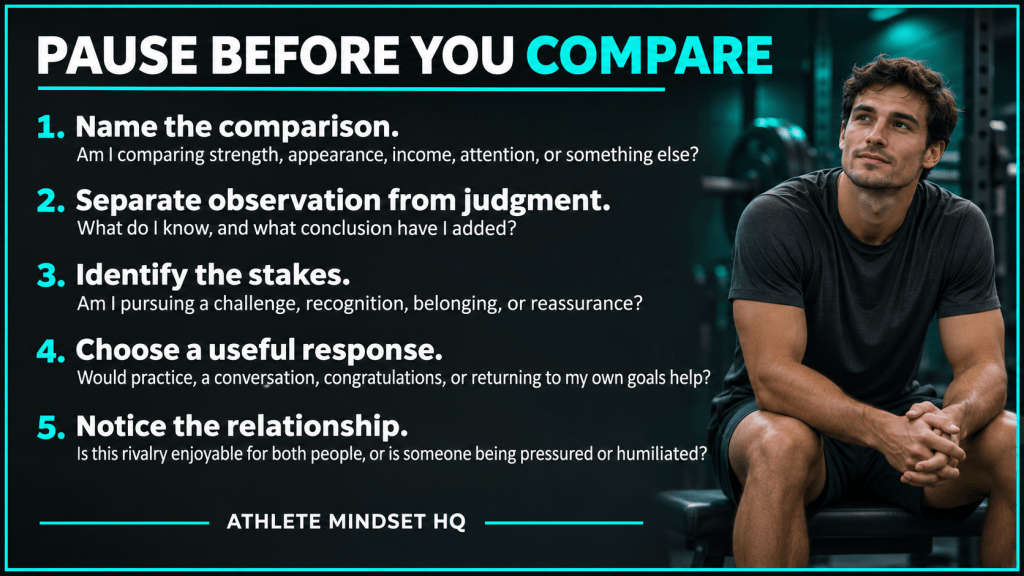
These are reflective prompts, not a test of masculinity.
Another man’s success can become information rather than a verdict. His strength can inspire a training goal. His expertise can become something to learn from. A physical difference can remain a difference without becoming a ranking of human worth.
The question I would leave with men is this:
When I compete, am I pursuing something I value—or asking the result to prove that I deserve to value myself?
References
Cheng, J. T., Tracy, J. L., Foulsham, T., Kingstone, A., & Henrich, J. (2013). Two ways to the top: Evidence that dominance and prestige are distinct yet viable avenues to social rank and influence. Journal of Personality and Social Psychology, 104(1), 103–125. https://doi.org/10.1037/a0030398
Crocker, J., & Wolfe, C. T. (2001). Contingencies of self-worth. Psychological Review, 108(3), 593–623. https://doi.org/10.1037/0033-295X.108.3.593
Dreher, J.-C., Dunne, S., Pazderska, A., Frodl, T., Nolan, J. J., & O’Doherty, J. P. (2016). Testosterone causes both prosocial and antisocial status-enhancing behaviors in human males. Proceedings of the National Academy of Sciences, 113(41), 11633–11638. https://doi.org/10.1073/pnas.1608085113
Festinger, L. (1954). A theory of social comparison processes. Human Relations, 7(2), 117–140. https://doi.org/10.1177/001872675400700202
Geniole, S. N., Bird, B. M., Ruddick, E. L., & Carré, J. M. (2017). Effects of competition outcome on testosterone concentrations in humans: An updated meta-analysis. Hormones and Behavior, 92, 37–50. https://doi.org/10.1016/j.yhbeh.2016.10.002
Knight, E. L., Morales, P. J., Christian, C. B., Prasad, S., Harbaugh, W. T., Mehta, P. H., & Mayr, U. (2022). The causal effect of testosterone on men’s competitive behavior is moderated by basal cortisol and cues to an opponent’s status: Evidence for a context-dependent dual-hormone hypothesis. Journal of Personality and Social Psychology, 123(4), 693–716. https://doi.org/10.1037/pspa0000305
Lymperopoulos, A., Rengo, G., & Koch, W. J. (2013). Physiology and pharmacology of the cardiovascular adrenergic system. Molecular Pharmacology, 84(4), 551–558. Full article
Sell, A., Cosmides, L., Tooby, J., Sznycer, D., von Rueden, C., & Gurven, M. (2009). Human adaptations for the visual assessment of strength and fighting ability from the body and face. Proceedings of the Royal Society B: Biological Sciences, 276(1656), 575–584. PubMed record
Sell, A., Hone, L. S. E., & Pound, N. (2012). The importance of physical strength to human males. Human Nature, 23, 30–44. https://doi.org/10.1007/s12110-012-9131-2
Slade, A. D., Christiansen, A. R., Keihani, S., Brant, W. O., & Hotaling, J. M. (2021). Stretched penile length and its associations with testosterone and infertility. Translational Andrology and Urology, 10(1), 49–55. https://doi.org/10.21037/tau-20-788
Veale, D., Miles, S., Read, J., Bramley, S., Troglia, A., Carmona, L., Fiorito, C., Wells, H., Wylie, K., & Muir, G. (2016). Relationship between self-discrepancy and worries about penis size in men with body dysmorphic disorder. Body Image, 17, 48–56. https://doi.org/10.1016/j.bodyim.2016.02.004
Veale, D., Miles, S., Read, J., Troglia, A., Wylie, K., & Muir, G. (2015). Sexual functioning and behavior of men with body dysmorphic disorder concerning penis size compared with men anxious about penis size and with controls: A cohort study. Sexual Medicine, 3(3), 147–155. https://doi.org/10.1002/sm2.63


Leave a Reply