

By John Schessler, MS, CPT, SPC
You finish your set, put the weights down, and think, “I probably could have done a few more.”
Does that mean you should go heavier next time?
Possibly. But the number on the dumbbell is only part of the decision. Your repetitions, technique, and effort can help you decide whether you’re ready for the next step.
Understand what progression means
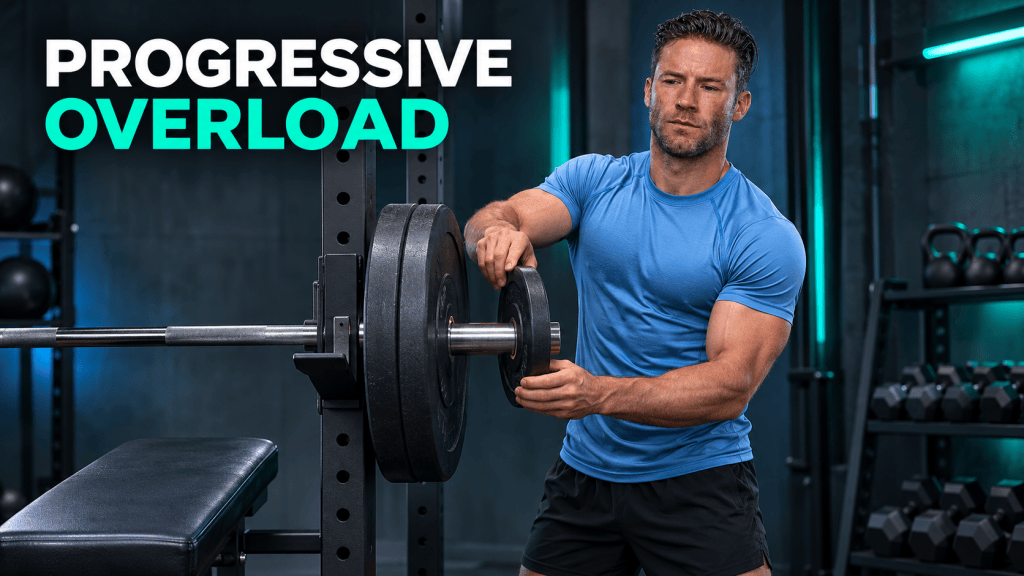
Progressive overload means gradually increasing the demands of training as your body adapts. Increasing weight is one way to do that. Completing more repetitions with the same weight or increasing training volume can also provide a greater challenge. The right adjustment depends on your goal and current program.
You don’t need to turn every workout into a personal record attempt. You need a way to recognize when your current workload is becoming more manageable.
Look at how you finish the set

Before reaching for the next weight, consider three questions:
- Did I complete my planned repetitions?
- Did I maintain my intended technique and range of motion?
- How many additional repetitions could I have completed with that same technique?
That last question introduces repetitions in reserve, often shortened to RIR. If you estimate that you could have completed two more controlled repetitions, you had approximately two repetitions in reserve.
Treat this as an estimate. It takes practice to judge your effort, especially when you’re new to lifting.

Give yourself a repeatable target
Here’s an example of how you might organize progression.
Suppose your program calls for three sets of 8–12 repetitions on a seated row. You use a weight that allows you to complete 10, 9, and 8 controlled repetitions.
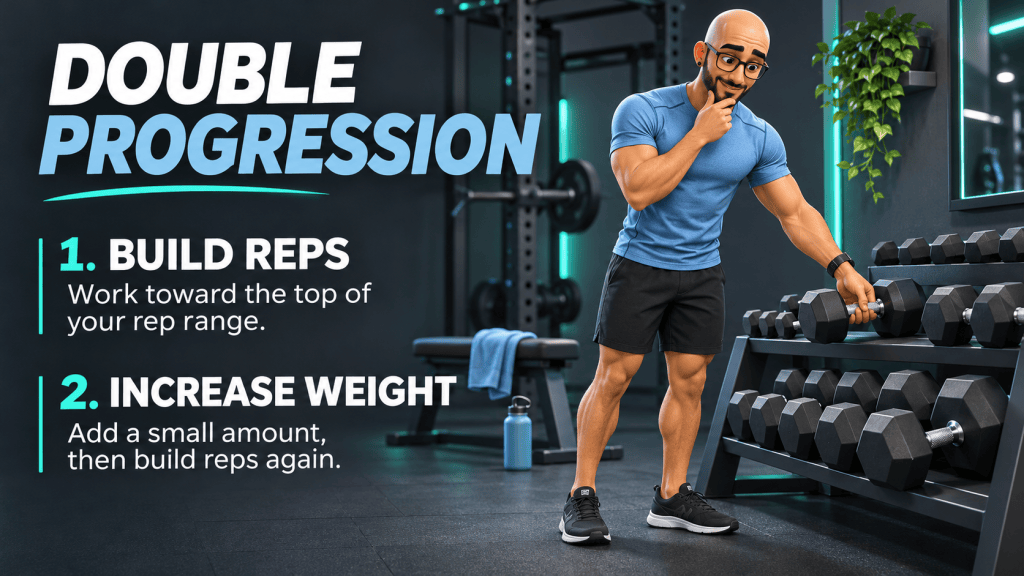
Over several workouts, you gradually work toward 12 repetitions on each set. Once you can consistently reach the top of that range with the intended technique and effort, consider a small weight increase. Your repetitions may move back toward the lower end of the range.
This approach is commonly called double progression: build repetitions within a range, then increase resistance.
The example is a framework to adapt to your program, rather than a requirement for every exercise.
Make the next step manageable
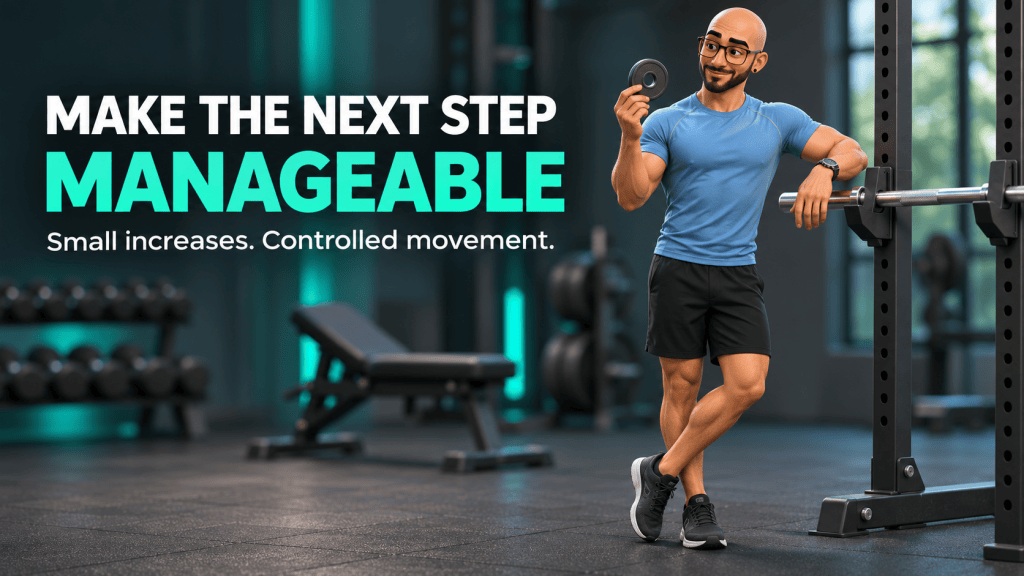
A heavier weight should still let you perform the exercise as intended. If the increase makes you swing, shorten the movement substantially, or rely on another body part to finish, reconsider the size of the jump.
Sometimes the next available dumbbell is a substantial increase. Spending longer at your current weight or using equipment with smaller increments can make progression more manageable.
Keep a simple training record
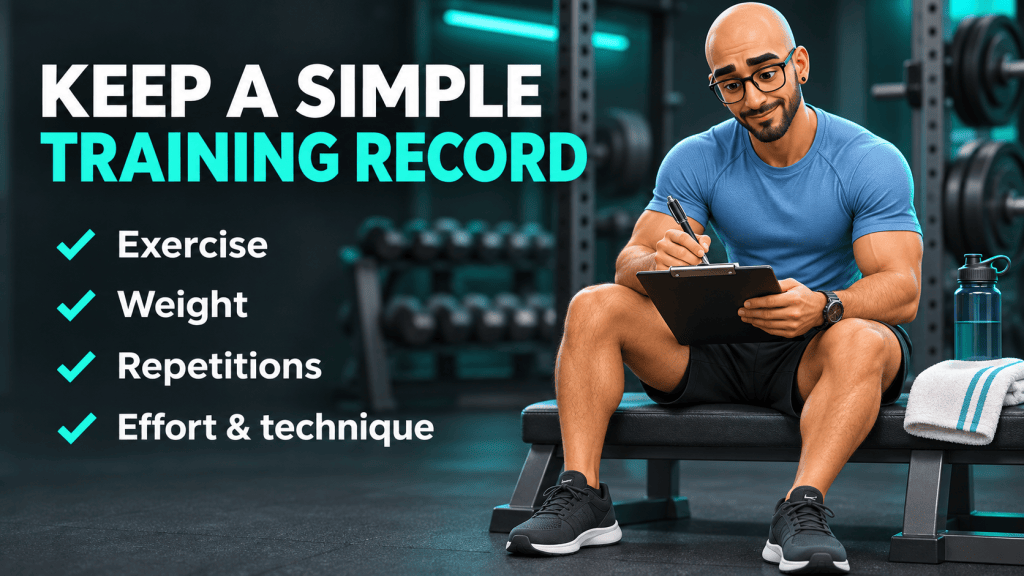
Write down the exercise, weight, repetitions, and a brief note about effort or technique.
“Three sets completed” tells you something.
“Seated row: 70 pounds, 12/12/11, controlled movement, final set challenging” gives you more information for your next session.
At your next workout, choose one exercise to track. What evidence would tell you that you’re ready for a heavier weight?
I’m John J. Schessler Jr., MS, CPT, SPC—founder of AthleteMindsetHQ, personal trainer, behavior interventionist, and host of the Men, Actually podcast. I hold a master’s degree in sport psychology and a bachelor’s degree in child and adolescent psychology. My work brings together movement, mindset, and honest conversations about being human.

Through this blog, I explore mental performance, fitness, resilience, masculinity, identity, and well-being. Drawing from my experience supporting autistic students, coaching clients, and navigating my own challenges, I turn psychological concepts into practical ideas you can use in training, work, relationships, and everyday life.
My interest in resilience is personal. At age 10, I survived Guillain–Barré syndrome and faced the long process of relearning abilities I once took for granted. That experience continues to shape how I understand progress, patience, and the courage it takes to begin again.
As a gay man, educator, and coach, I value spaces where people can speak honestly, question expectations, and feel supported as they grow. Whether you’re pursuing a performance goal or figuring out your next chapter, my aim is to help you understand yourself, take a meaningful next step, and follow through.


Leave a Reply