
By John J. Schessler, MS, CPT, SPC | AthleteMindsetHQ
You finish a workout, check what you lifted last week, and immediately feel disappointed.
Same dumbbells. Same number of repetitions. Same exercises.

Shouldn’t I be doing more by now?
Progressive overload is one of the most familiar concepts in fitness—and one of the easiest to turn into unnecessary pressure. We hear that we need to keep challenging our bodies, and somewhere along the way, that becomes a rule:
Every workout has to be harder than the last one.
That interpretation can turn training into a test you feel obligated to pass every time you walk into the gym.
What progressive overload actually means
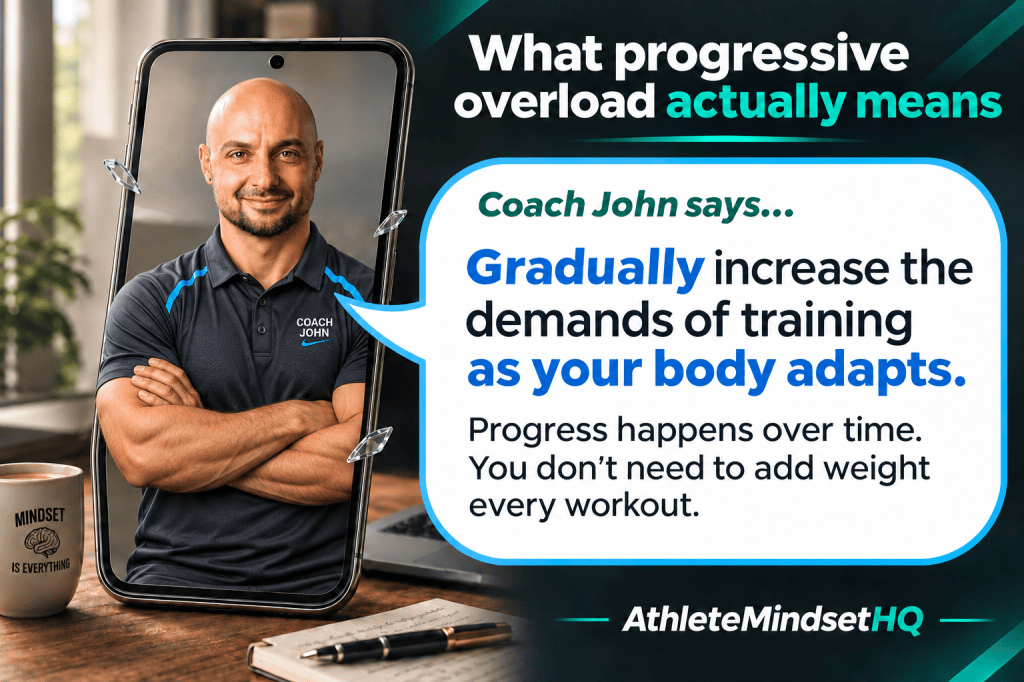
Progressive overload means gradually increasing the demands of training as your body adapts.
The key words are gradually and as your body adapts.
It doesn’t require adding weight every session. It doesn’t require leaving the gym exhausted. And it doesn’t mean a workout stops being useful because you repeated last week’s numbers.
Think of progression as a direction over time. Individual workouts are steps along the way, and those steps won’t always move in a straight line.
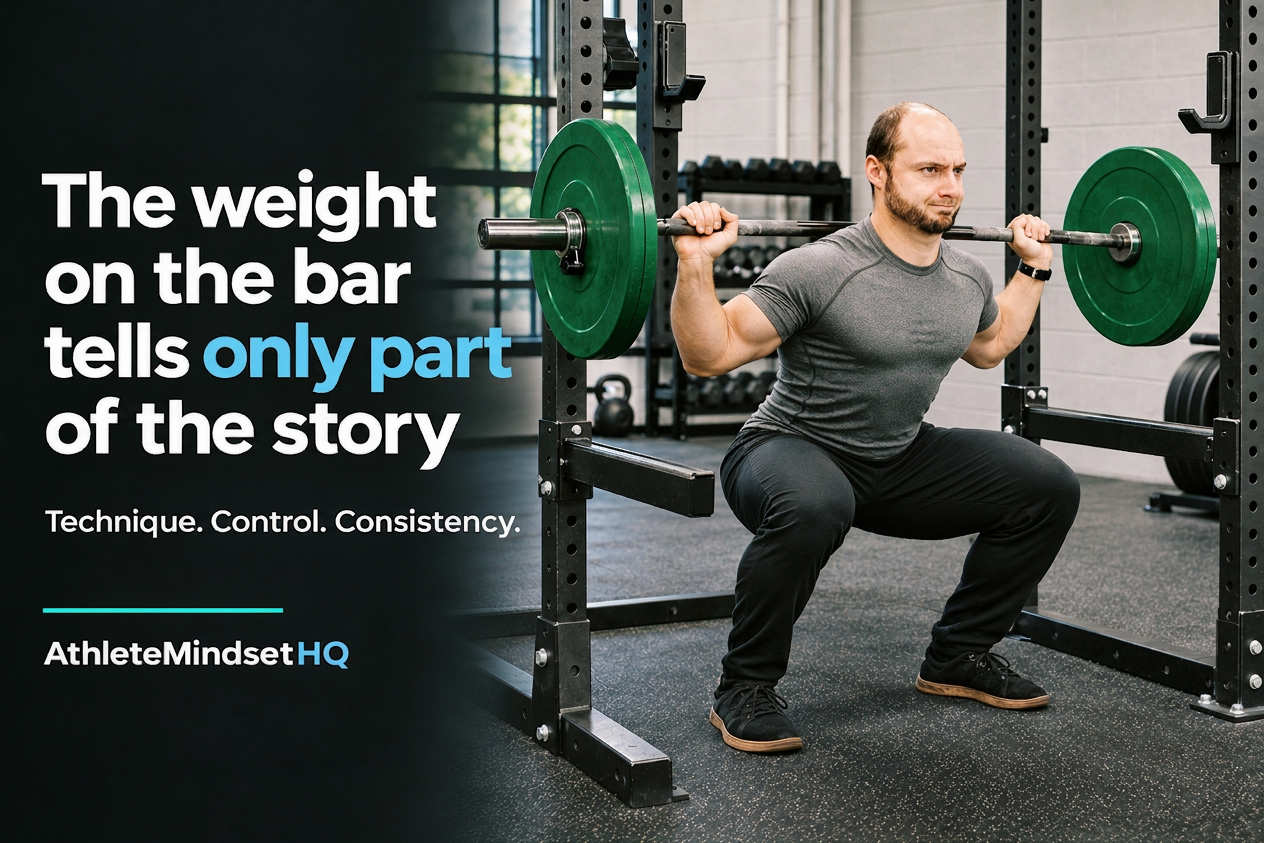
The weight on the bar tells only part of the story
Imagine two sets of dumbbell presses.
In the first, you rush through ten repetitions, shorten the movement as you get tired, and need help finishing.
In the second, you use the same weight for ten controlled repetitions through your intended range of motion, without assistance.
The number in your training log looks identical. The performance is different.
Better technique is valuable progress, even when it doesn’t represent an increase in training load. It can also establish the consistency you need to judge when adding weight makes sense.
Depending on your goal and program, progression might involve:
- Performing an additional repetition with the same weight and technique.
- Increasing the weight while staying within your planned repetition range.
- Adding a set when the additional workload is appropriate and recoverable.
- Gradually increasing duration or distance in conditioning work.
These options serve different purposes. They aren’t interchangeable, and you don’t need to increase all of them at once.
Where the mindset gets messy
The trouble starts when we attach our worth to our workout numbers.
If I lifted less today, I’m getting weaker.
If I didn’t push to exhaustion, I wasted my time.
If someone else is progressing faster, I must be doing something wrong.
Those thoughts can make it difficult to follow a sensible program. Instead of choosing a weight that fits the session, you choose one that protects your pride.
You add weight before you can control it. You squeeze in extra work because stopping feels lazy. You turn a planned easier day into another hard session because you’re afraid of losing momentum.
This is where the mental side of training matters. Can you make a decision based on the purpose of the workout while tolerating the feeling that you “should” be doing more?
That takes practice, too.
Give yourself a clear progression rule
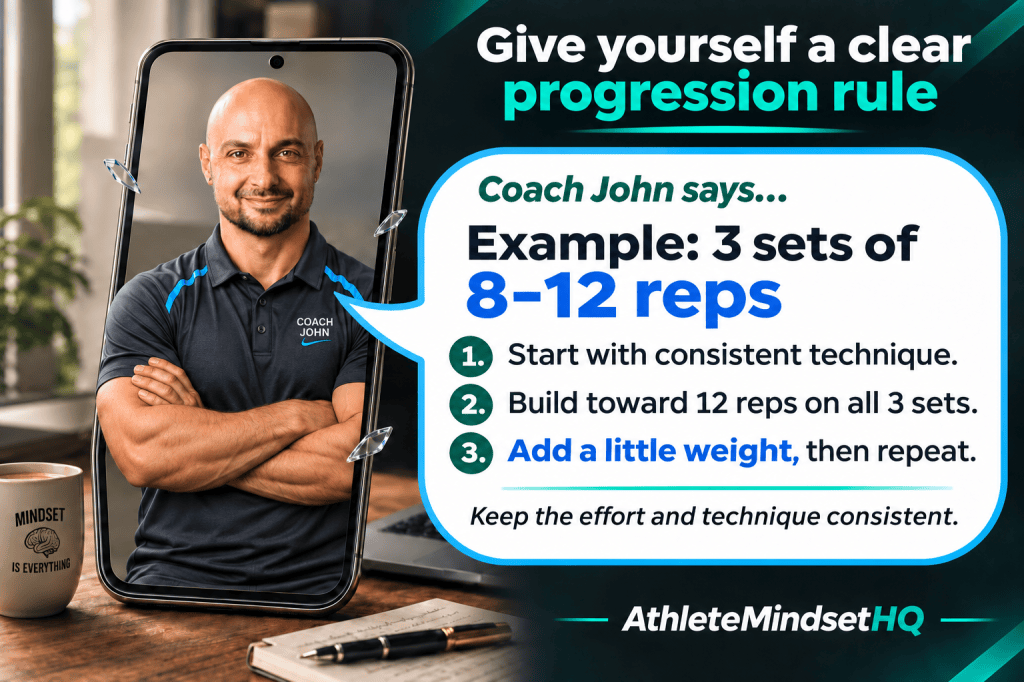
A progression rule removes some of the guesswork.
For example, suppose your program calls for three sets of eight to twelve repetitions on an exercise.
You begin with a weight you can manage for three sets of eight with consistent technique. Over subsequent sessions, you work toward more repetitions within that range. Once you can complete all three sets of twelve at the intended effort, you increase the weight by a small amount.
With the heavier weight, your repetitions may return toward the lower end of the range.
That is an example of progression across multiple sessions. It gives each workout a purpose without demanding a personal record every time.
The exact rule should fit the exercise, your experience, and your goals.
Ask a better question after your workout
Instead of asking only, “Did I do more?” try asking:
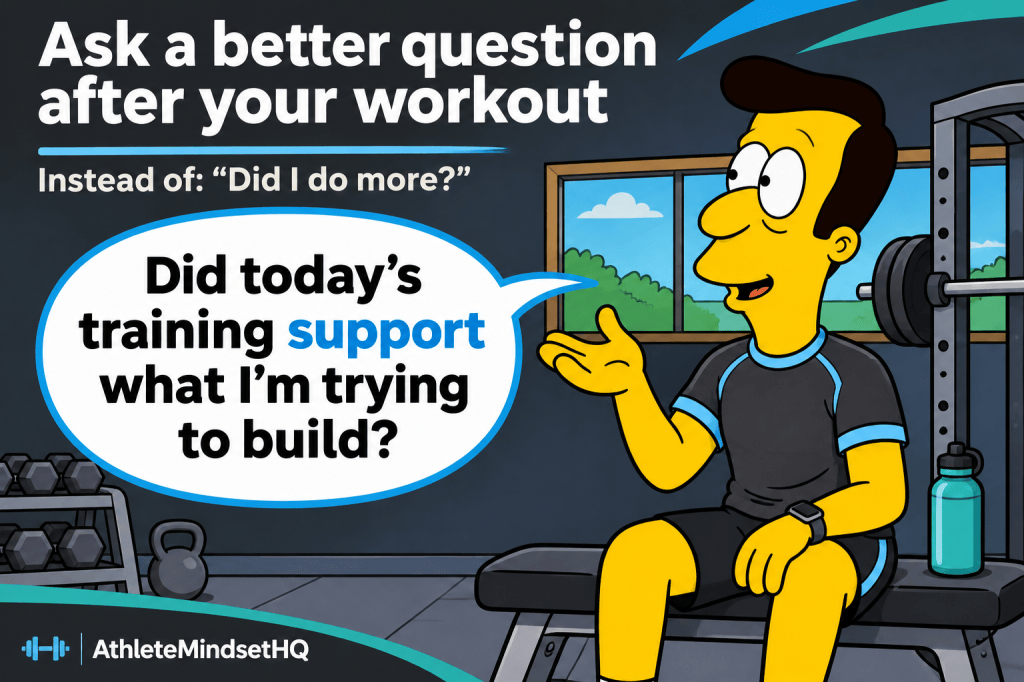
Maybe you added a repetition. Maybe you practiced an exercise until it felt more consistent. Maybe you followed the planned workload despite the temptation to add more.
You can acknowledge those wins while still tracking whether your program produces progress over time.
One difficult session doesn’t tell your whole training story. Neither does one exceptional session.
Look at the pattern.
A question to take into your next workout

Before you increase the weight, pause:
Am I ready for a greater challenge—or am I trying to prove that today was good enough?
Learning to recognize the difference can help you train with more purpose, patience, and confidence.
Your next workout needs a clear purpose. Give yourself permission to follow it.

For the comments: What do you usually use to judge a good workout—the weight you lifted, how tired you felt, or how well you followed your plan?
ABOUT THE AUTHOR
I’m John J. Schessler Jr., MS, CPT, SPC—founder of AthleteMindsetHQ, personal trainer, behavior interventionist, and host of the Men, Actually podcast. I hold a master’s degree in sport psychology and a bachelor’s degree in child and adolescent psychology. My work brings together movement, mindset, and honest conversations about being human.
Through this blog, I explore mental performance, fitness, resilience, masculinity, identity, and well-being. Drawing from my experience supporting autistic students, coaching clients, and navigating my own challenges, I turn psychological concepts into practical ideas you can use in training, work, relationships, and everyday life.
My interest in resilience is personal. At age 10, I survived Guillain–Barré syndrome and faced the long process of relearning abilities I once took for granted. That experience continues to shape how I understand progress, patience, and the courage it takes to begin again.
As a gay man, educator, and coach, I value spaces where people can speak honestly, question expectations, and feel supported as they grow. Whether you’re pursuing a performance goal or figuring out your next chapter, my aim is to help you understand yourself, take a meaningful next step, and follow through.


Leave a Reply