
By John J. Schessler, MS, CPT, SPC
You open your phone to watch a workout video.
A few minutes later, you’re comparing your stomach to someone else’s abs, wondering whether your arms are big enough, and questioning progress you felt good about earlier that morning.
Your body hasn’t changed. The way you’re looking at it has.
That’s a conversation we need to have more often in men’s health.
Because men have body insecurities, too. And sometimes those insecurities hide behind words that sound like ambition: discipline, dedication, improvement.
When Inspiration Becomes a Measuring Stick
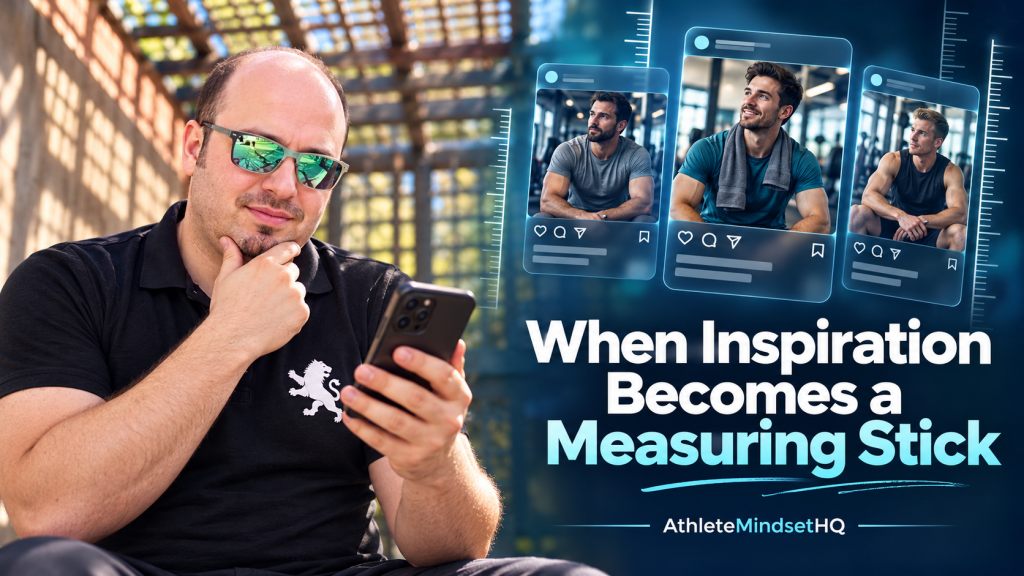
There is nothing wrong with following people who inspire you. A good fitness account can teach you something, introduce you to a useful exercise, or help you feel less alone in your journey.
But pay attention to what happens after you scroll.
Do you feel encouraged to work toward your goals? Or do you feel embarrassed about where you are?
Those are different experiences.
A photo gives you very little context. You may not know the lighting, posing, editing, preparation, or circumstances behind it. You also don’t know how that person feels about their own body.
Yet it’s easy to treat that image as the standard you should meet on an ordinary Tuesday.
The Pressure to Be Everything at Once
The expectations can feel exhausting.
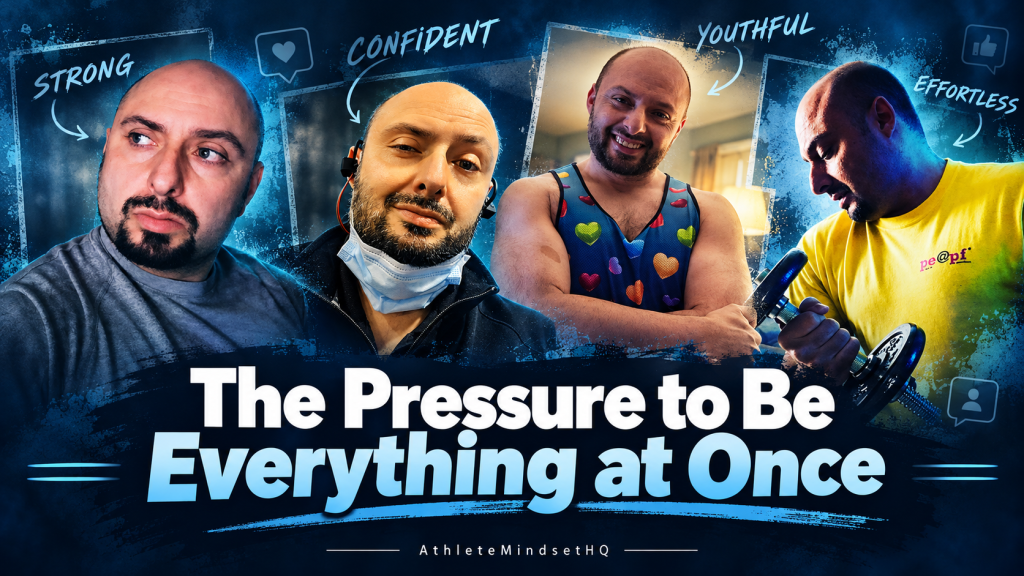
Build muscle. Stay lean. Look young. Be masculine. Make it look effortless.
Care about your appearance—but don’t admit that you’re insecure about it.
For some men, the pressure is about wanting to be bigger. For others, it’s wanting to be smaller, leaner, more defined, or less visibly affected by age.
And for gay men, appearance can become tangled with belonging and desirability. That isn’t every gay man’s experience, but it deserves space in the conversation. Wanting connection can become painful when you start believing your body has to qualify you for it.
You can enjoy looking good and still question the standards you’re chasing.
You can want to change your body and still deserve respect in the body you have today.
What Are You Asking Your Body to Prove?

As a personal trainer, I support having goals. Getting stronger, improving endurance, and building muscle can be meaningful pursuits.
But I also think we need to ask what we expect those changes to give us.
Are you working toward something you value?
Or are you hoping a different body will finally make you feel acceptable?
That question isn’t meant to shame anyone. Most of us have wanted an outside change to settle something uncomfortable inside.
The difficulty comes when the finish line keeps moving.
You reach a goal, briefly feel proud, and then find another feature to criticize. Someone online is always leaner, bigger, younger, or more defined.
If comparison chooses your finish line, you may never get to enjoy arriving.
Notice When Fitness Starts Taking Up Too Much Space
A structured routine can be helpful. It can also become worth examining when flexibility brings overwhelming guilt or your appearance starts deciding your mood.
Consider these questions:
- Can I miss or adjust a workout without feeling that I’ve failed?
- Can I enjoy a meal without thinking I need to compensate for it?
- Do I recognize progress beyond what I see in a photo?
- Am I avoiding people or experiences because I’m uncomfortable with how I look?
- Does fitness add to my life, or is my life increasingly organized around managing my appearance?
These questions aren’t a diagnosis. They’re an invitation to be honest with yourself.
You don’t have to wait until things feel unbearable to talk with a qualified mental health professional about body image, food, or exercise concerns.
Build a Feed That Supports You
You have some control over who gets repeated access to your attention.
Start with the accounts you see most often. Notice which ones leave you informed, encouraged, or connected—and which ones repeatedly leave you feeling inadequate.
Mute or unfollow when you need to. You don’t owe anyone your attention.
Look for people who show different body types, ages, abilities, and stages of training. Follow educators who explain their recommendations and acknowledge the limits of what they know.
And give yourself permission to enjoy movement without turning every session into content.
A workout can matter even when nobody sees it.
Give Yourself More Ways to Recognize Progress
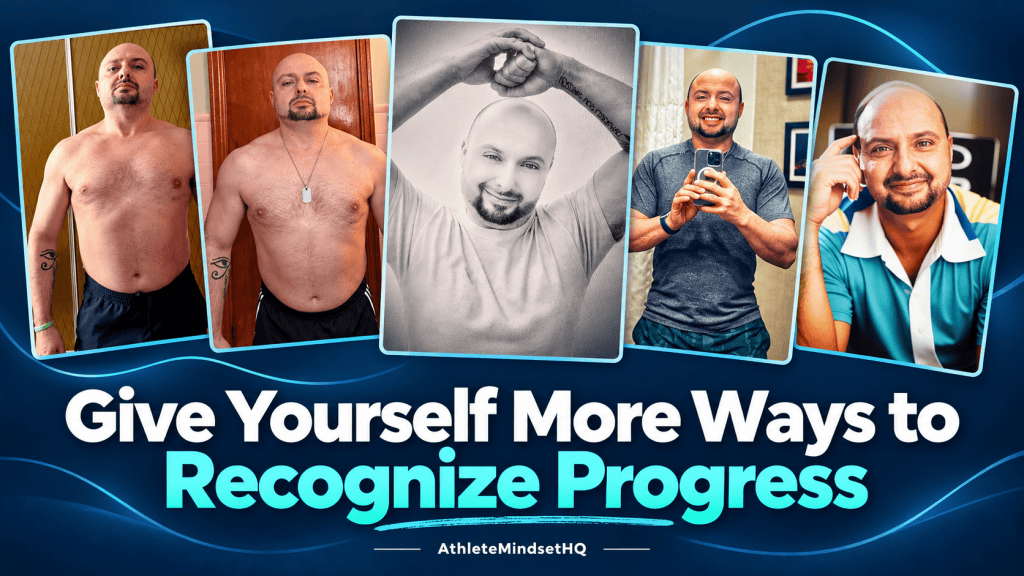
Appearance can be one goal without becoming your only measure.
Maybe you can carry something that used to feel heavy. Maybe your stamina has improved. Maybe you’re learning a new skill, enjoying your workouts more, or making room for exercise during a difficult season.
Those changes deserve your attention, too.
Try asking yourself:
What can I do now that I couldn’t do before?
Then ask:
What do I want fitness to help me experience in my life?
Your answers might include confidence, independence, recreation, connection, or the ability to keep doing things you love.
Those goals can guide your training even when the mirror feels unhelpful.
You’re Allowed to Be a Person in Your Body
You do not have to love every photograph or feel confident every day.
You can have an uncomfortable body-image day and still feed yourself, get dressed comfortably, spend time with people, and participate in your life.
You can notice a critical thought without making it your next training instruction.
“I don’t like how I look today” does not have to become “I need to punish myself tomorrow.”
The next time you close an app feeling smaller, pause before deciding your body needs fixing.
Notice what you saw. Notice what you started telling yourself. Then consider what would actually support you in that moment.
Your body is part of how you live, connect, work, play, and experience the world.
Give it goals worth pursuing—and give yourself room to live while you pursue them.
John J. Schessler, MS, CMT, SPC
AthleteMindsetHQ


Leave a Reply