
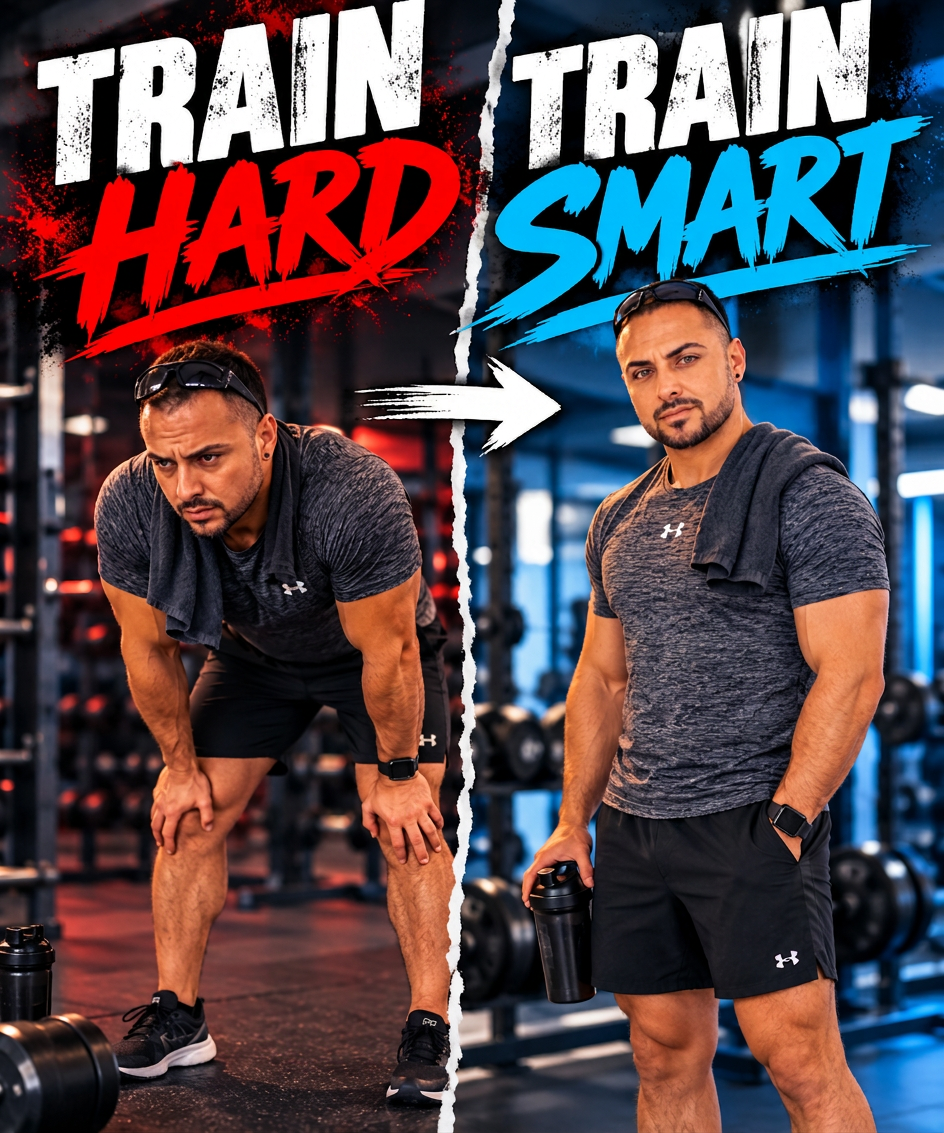
By John J. Schessler, MS, CPT, SPC | Athlete Mindset HQ
Somewhere along the way, we started confusing how exhausted we feel after a workout with how effective that workout actually was.
Think about that for a moment.
How many times have you walked out of the gym completely drenched in sweat, struggling to catch your breath, and feeling like you could barely lift your arms?
And what was your first thought?
“Wow. That was a GREAT workout!”
But was it?
Now, don’t misunderstand me. I believe in challenging yourself. I believe in discipline, consistency, and putting in the work necessary to achieve your fitness goals.
But after years of being involved in fitness and personal training, there’s something I’ve come to understand:
Working harder doesn’t automatically mean you’re working smarter. And sometimes, the things we associate with a successful workout aren’t the things that actually produce results.
Let’s talk about why.
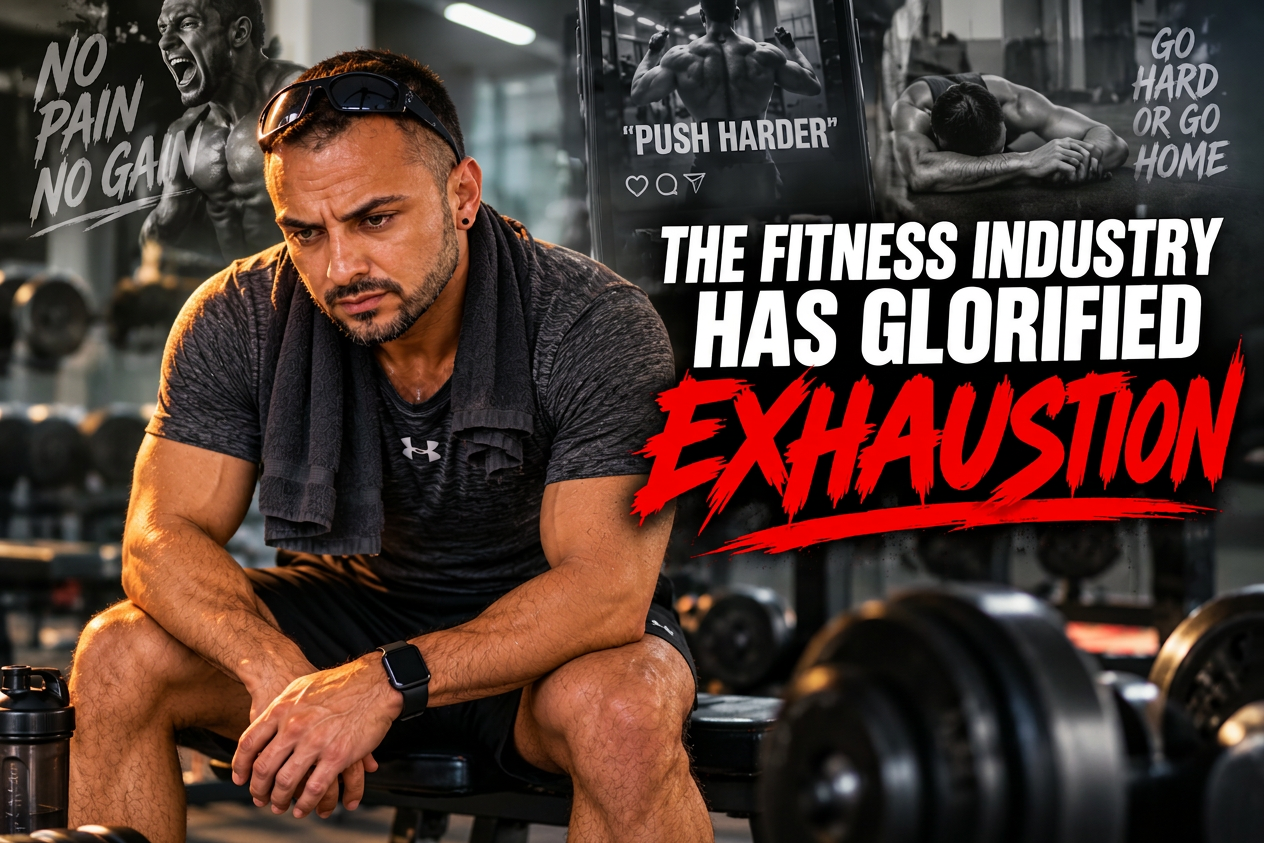
The Fitness Industry Has Glorified Exhaustion
We’ve all seen it.
The motivational videos featuring someone collapsing onto the gym floor after an intense training session.
The social media posts declaring “NO PAIN, NO GAIN!”
The fitness challenges promising to push your body beyond its limits.
And while there’s certainly nothing wrong with intensity or pushing yourself through a challenging workout, we’ve created a culture where physical exhaustion has somehow become the ultimate badge of honor.
If you aren’t sweating enough, you didn’t work hard enough.
If your muscles aren’t sore the next morning, you didn’t train hard enough.
If you can still walk comfortably after leg day, you must have done something wrong.
But here’s the problem.
None of those things, by themselves, tell us whether a workout was effective.
Sweating is primarily a mechanism your body uses to regulate temperature.
Muscle soreness can occur when you introduce unfamiliar movements or increase training demands.
And exhaustion tells you that you’ve expended energy.
Those experiences may accompany a productive workout, but they aren’t reliable measurements of progress.
In other words, feeling destroyed isn’t the same as getting stronger.
And I think that’s a lesson more people need to understand.
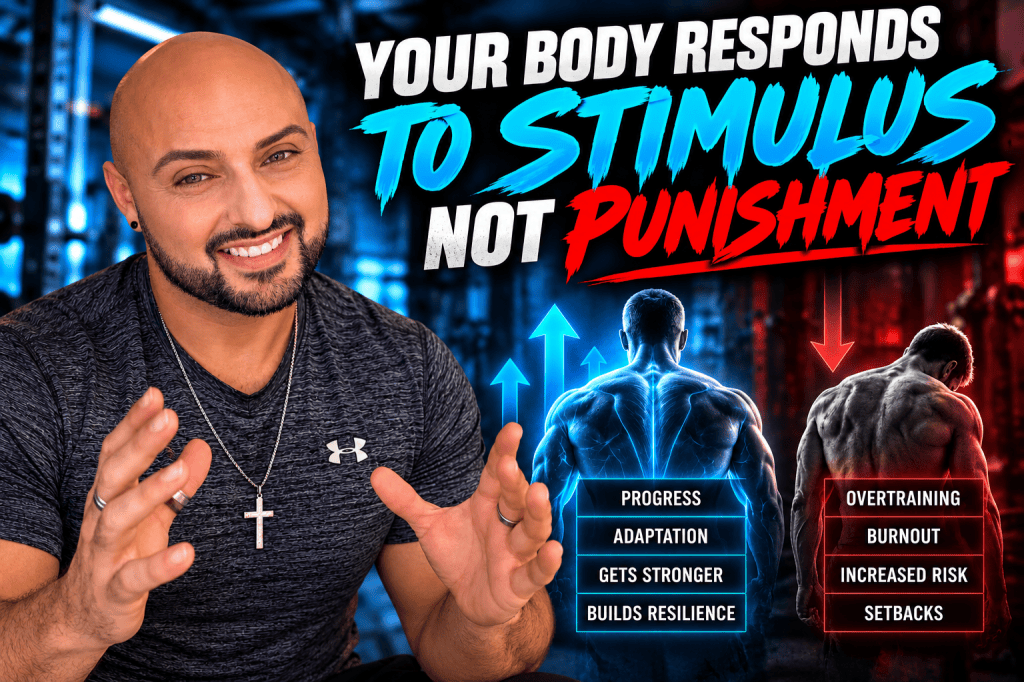
Your Body Responds to Stimulus, Not Punishment
One of the fundamental principles of exercise science is something called progressive overload.
Now, before your eyes glaze over because that sounds like something from a college textbook, let me explain it in everyday language.
Progressive overload simply means gradually increasing the demands placed on your body so that it has a reason to adapt.
Let’s say you’re performing a dumbbell chest press.
When you first begin, you’re using 20-pound dumbbells and completing eight repetitions with proper form.
A few weeks later, those same dumbbells feel a little easier.
Now you can complete 10 or 12 controlled repetitions.
Eventually, you may be ready to increase the weight.
That’s progressive overload.
Your body is adapting to the challenge you’ve placed upon it.
But here’s something people often overlook.
Progressive overload doesn’t always mean lifting heavier weights.
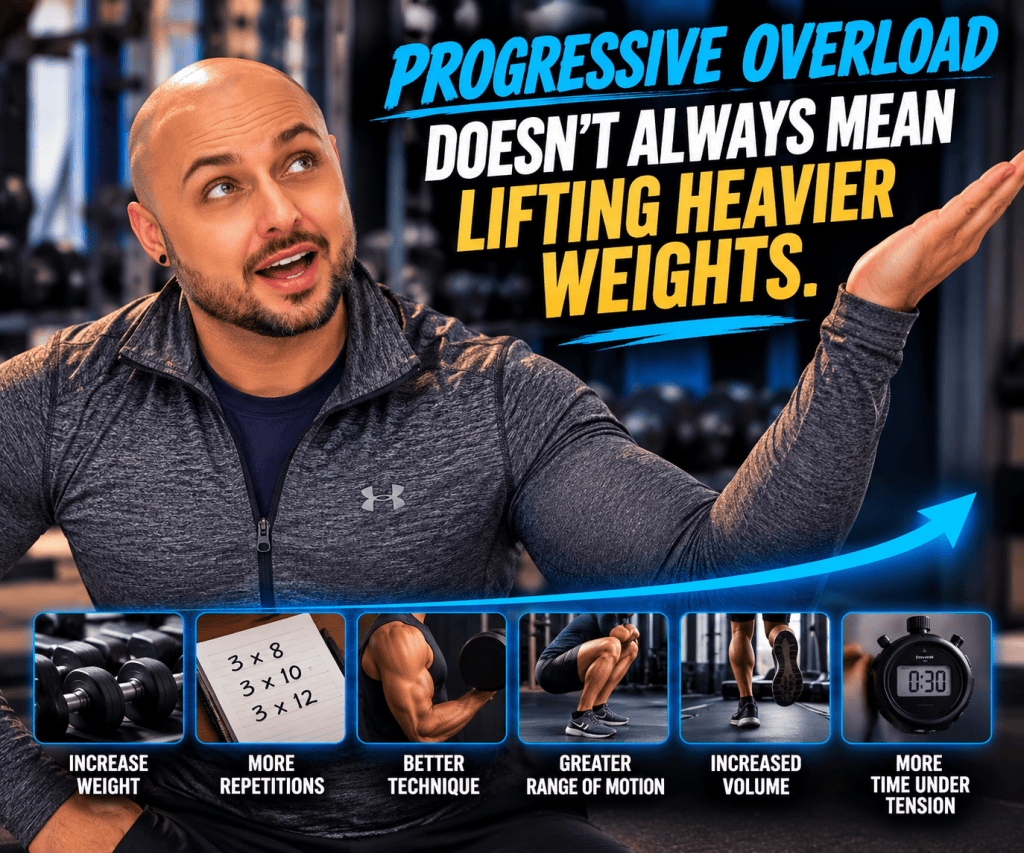
It can mean performing more repetitions with the same weight.
It can mean improving your range of motion.
It can mean developing better movement control or technique.
It can mean gradually increasing your overall training volume when your body is prepared for it.
The point isn’t to constantly push yourself to the breaking point.
The point is to provide an appropriate challenge that encourages improvement.
And that requires something many people struggle with.
Patience.
Muscle Soreness Is Not Your Fitness Report Card
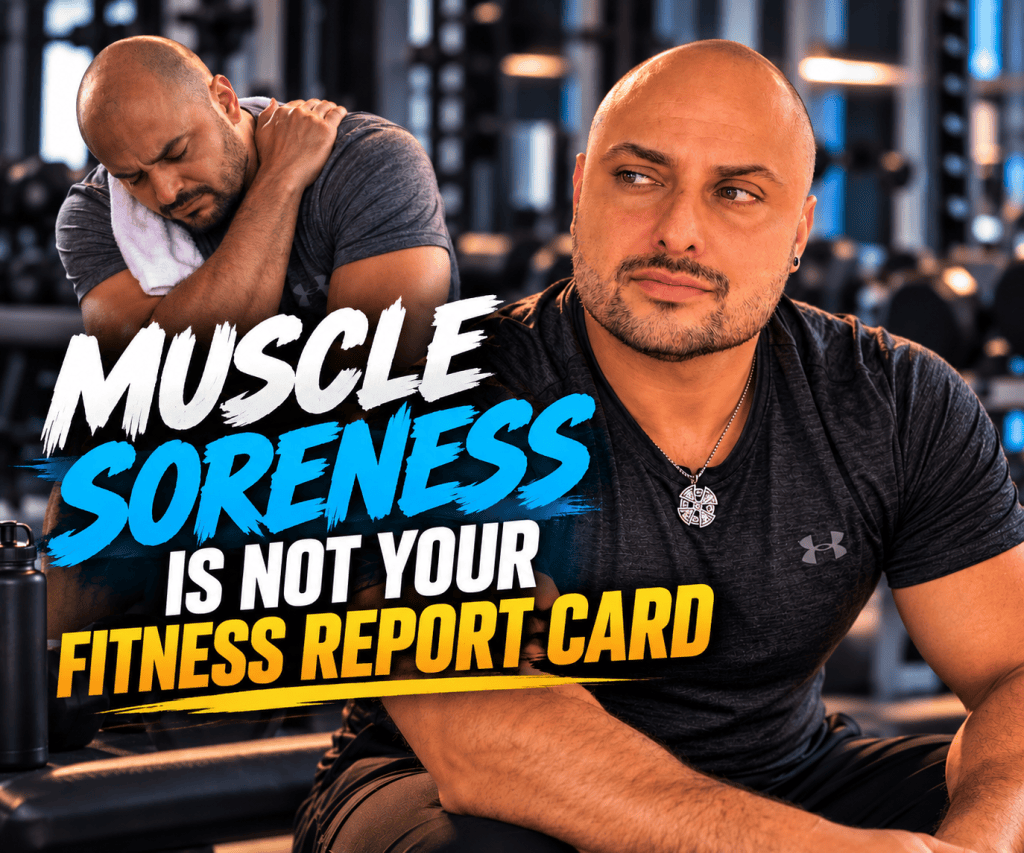
I want to address one of the biggest misconceptions I hear in fitness.
“I wasn’t sore after my workout, so I guess I didn’t do enough.”
Really?
Since when did soreness become the official measurement of success?
Let’s look at what’s actually happening.
Delayed-onset muscle soreness, often called DOMS, commonly appears after unfamiliar exercise or a significant increase in training demands.
It can be especially noticeable after movements that emphasize the lengthening phase of a muscle contraction, such as lowering yourself into a squat.
But soreness isn’t a direct indicator of how much muscle you’ve built.
It isn’t a reliable measurement of how much strength you’ve gained.
And it certainly doesn’t mean your workout was better than someone else’s.
In fact, as your body becomes accustomed to a particular training routine, you may experience less soreness even while continuing to make progress.
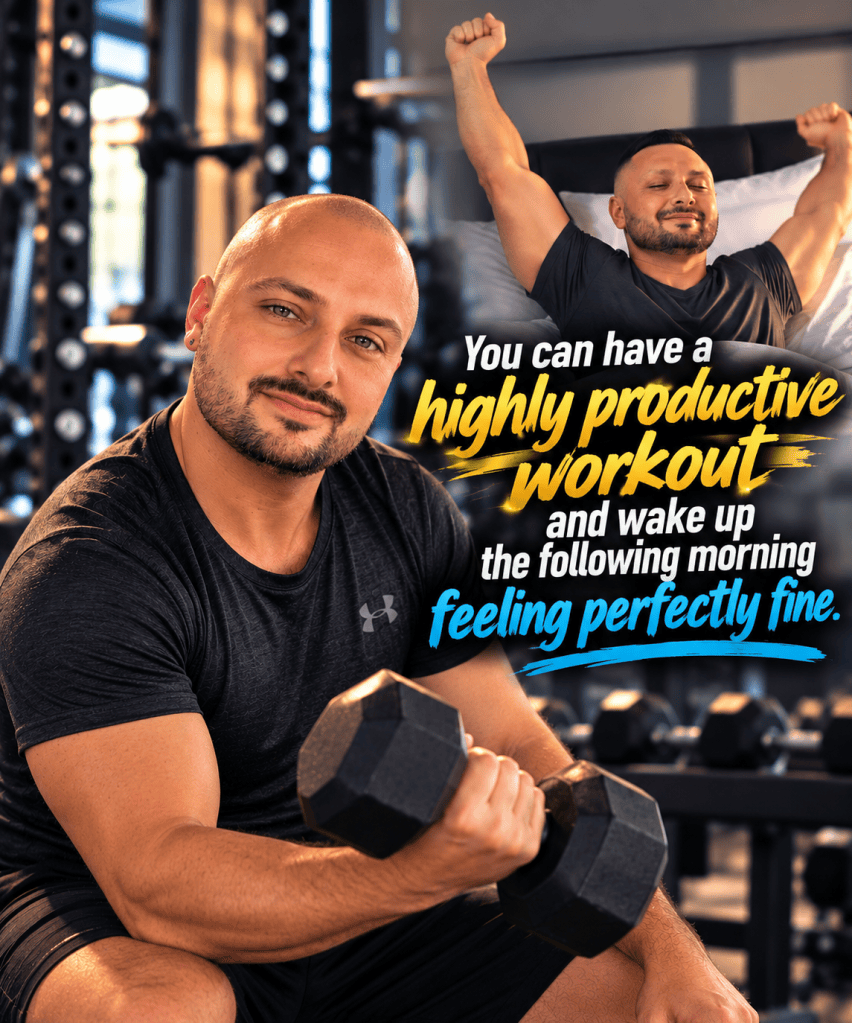
You can have a highly productive workout and wake up the following morning feeling perfectly fine.
That’s not failure.
That may simply mean your body is adapting to the training you’re doing.
So instead of measuring success by how uncomfortable you feel, start measuring it by your actual performance.
Are you getting stronger?
Are your movements becoming more controlled?
Are you developing better endurance?
Are you consistently completing your training sessions?
Those questions tell you much more about your progress than sore muscles ever could.
Recovery Is Not a Sign of Weakness
Now, here’s where I want to challenge another mindset.
The belief that taking time off from exercise somehow means you’re losing progress.
I’ve seen people develop a tremendous amount of guilt around taking a rest day.
They feel like they’re being lazy.
They worry that they’re falling behind.
They convince themselves that if they aren’t in the gym every day, they’re somehow failing.
But here’s the reality.
Recovery isn’t the opposite of training. Recovery is part of training.
When you engage in resistance training, you’re placing physical demands on your muscles and the systems that support movement.
Your body responds to those demands through a combination of physiological adaptations, many of which depend on adequate recovery.
And recovery involves more than simply taking a day off.
It includes getting sufficient sleep, consuming adequate nutrition, staying hydrated, and appropriately managing your training intensity and volume.
Sometimes it means choosing a lighter workout.
Sometimes it means taking a walk instead of performing another intense training session.
And sometimes it means giving your body a full day of rest.
None of those decisions makes you less disciplined.
In fact, recognizing when to train and when to recover is an important part of becoming a more knowledgeable, responsible athlete.
You cannot consistently demand more from your body while ignoring its need to recover.
Eventually, something may suffer.
Your energy.
Your performance.
Your motivation.
Or your ability to continue exercising consistently.
And consistency is one of the most important ingredients in long-term fitness success.
More Isn’t Always Better
Let’s imagine two people beginning a fitness program.
The first person is incredibly motivated.
They train intensely six or seven days per week, constantly add new exercises, and push themselves to exhaustion during nearly every session.
They’re convinced that the more they do, the faster their results will come.
The second person takes a different approach.
They follow a structured resistance-training program several days per week.
They gradually increase their training demands.
They prioritize proper technique.
They incorporate cardiovascular exercise appropriate for their goals.
They allow time for recovery.
And they monitor their progress over time.
Which person is likely to experience better long-term results?
We can’t predict that from their schedules alone. Individual fitness levels, goals, program design, and recovery capacity all matter.
But the second person has something particularly valuable.
A sustainable approach.
Fitness isn’t simply about how much exercise you can squeeze into one week.
It’s about developing habits and training practices that support improvement over months and years.
And that’s where I believe the real transformation happens.
The most effective workout program isn’t necessarily the one that demands the most from you today. It’s the one that gives you an appropriate challenge and allows you to keep improving tomorrow.
Train With Intention, Not Just Intensity
One of the most important questions I encourage people to ask themselves is:
“What am I actually trying to accomplish with this workout?”
Because your answer should influence how you train.
If your goal is building muscle, your training should prioritize appropriate resistance, sufficient training volume, gradual progression, and adequate recovery.
If your goal is improving cardiovascular endurance, your program should include aerobic activities that appropriately challenge your cardiovascular system.
If your goal is improving overall health and physical function, you may benefit from a balanced approach that incorporates strength, cardiovascular activity, mobility, and regular movement throughout your day.
The important thing is understanding that different goals often require different strategies.
And simply making every workout more exhausting doesn’t automatically make your program more effective.
Train with a purpose.
Know why you’re performing a particular exercise.
Understand what you’re trying to improve.
And recognize that the quality of your training matters just as much as the amount of effort you put into it.
The Psychological Side of Training Smarter
Now, I want to shift gears for a moment.
Because fitness isn’t just physical.
There’s an important psychological component to all of this.
And I believe it’s one we don’t discuss nearly enough.
For some people, the gym becomes a place where they constantly feel the need to prove something.
They need to lift more.
Train longer.
Push harder.
Never miss a workout.
And sometimes, without even realizing it, their sense of personal accomplishment becomes connected to how much discomfort they’re willing to tolerate.
But I want you to consider something.
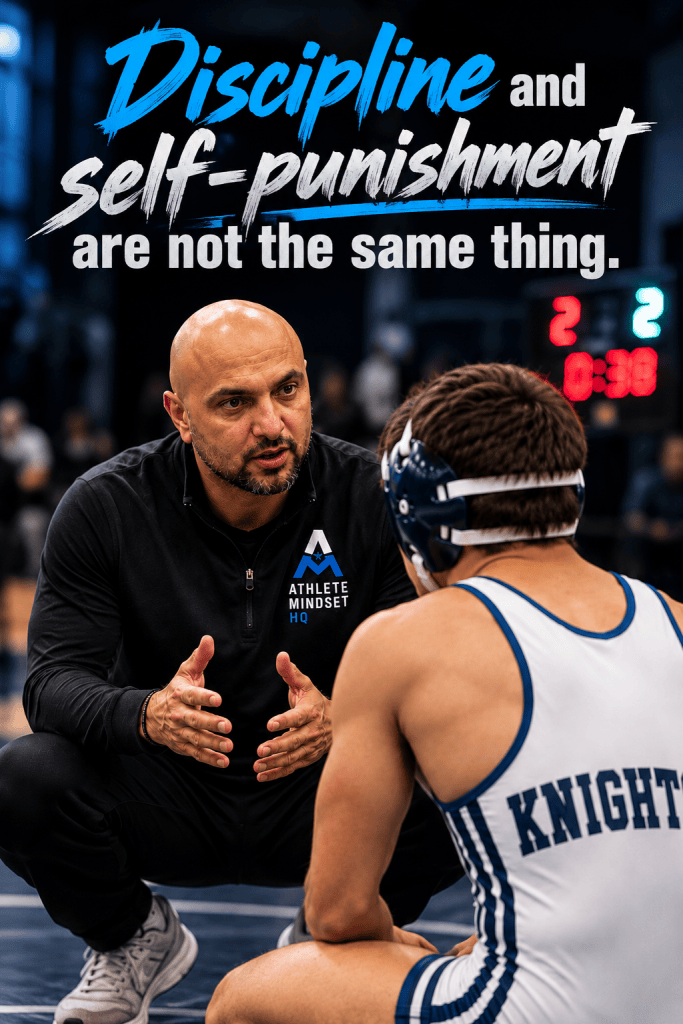
Discipline and self-punishment are not the same thing.
Discipline means consistently making choices that support your goals.
Self-punishment can mean continuing to push yourself simply because you believe you haven’t done enough.
And those two mindsets can lead to very different relationships with exercise.
You should absolutely challenge yourself.
You should work toward becoming stronger, healthier, and more physically capable.
But fitness shouldn’t become a constant battle against your own body.
Your body isn’t something you need to punish into submission.
It’s something you need to understand, challenge appropriately, and take care of.
And sometimes, the most disciplined decision you can make is knowing when enough is enough.
Five Questions to Ask After Your Next Workout
The next time you finish exercising, instead of immediately judging the workout by how exhausted you feel, ask yourself these five questions:
1. Did I train with a clear purpose?
Did the exercises I performed support my actual fitness goals?
2. Did I prioritize proper technique?
Was I focused on movement quality, or was I simply trying to get through the workout?
3. Am I making measurable progress over time?
Am I becoming stronger, improving endurance, moving more effectively, or developing better exercise consistency?
4. Am I recovering adequately?
Am I giving my body sufficient sleep, nutrition, and recovery time to support my training?
5. Is my fitness routine sustainable?
Can I realistically maintain this approach without constantly feeling exhausted, overwhelmed, or physically depleted?
Those answers are far more valuable than the amount of sweat on your shirt.
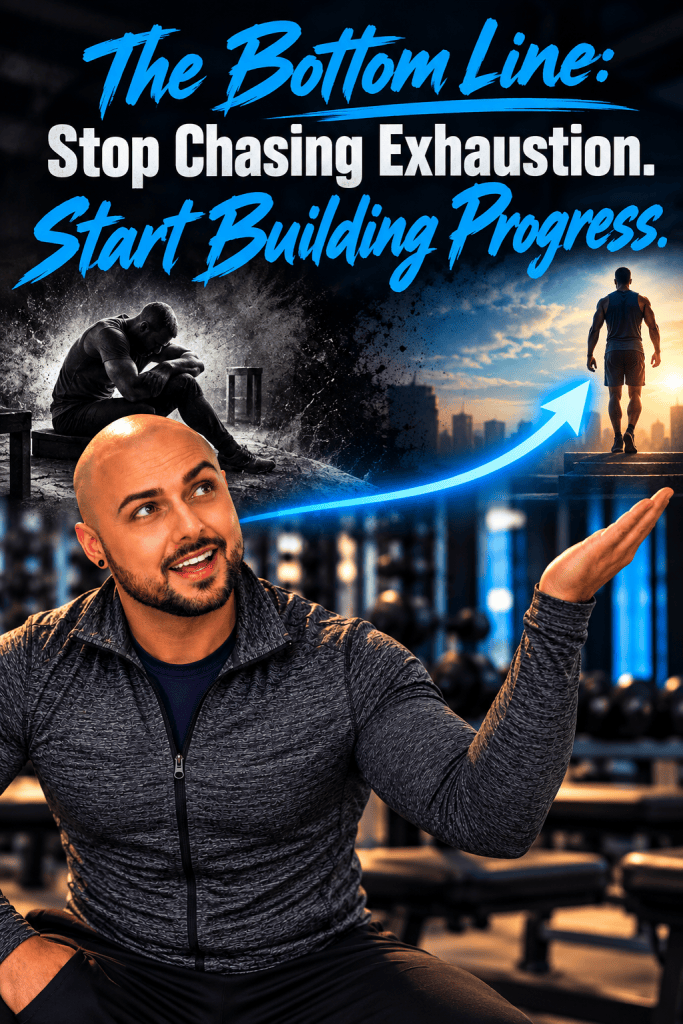
The Bottom Line: Stop Chasing Exhaustion. Start Building Progress.
I want to leave you with something that I hope changes the way you approach your next workout.
You do not have to destroy yourself to improve yourself.
Read that again.
You don’t need to leave every workout feeling completely depleted.
You don’t need to be sore every morning.
And you certainly don’t need to measure your commitment to fitness by how much discomfort you’re willing to endure.
What you need is a plan.
You need consistency.
You need appropriately challenging workouts.
You need recovery.
And perhaps most importantly, you need the patience to understand that meaningful physical progress takes time.
Fitness is not about proving how much punishment your body can handle.
It’s about discovering what your body can become when you train it with purpose, intelligence, and respect.
So the next time you walk into the gym, remember this:
Train hard when it’s appropriate. Train smart every single time.
Because the goal isn’t to see how exhausted you can become.
The goal is to see how much you can improve.
And those are two very different things.
Let’s Continue the Conversation
Have you ever felt guilty about taking a rest day? Have you ever assumed a workout wasn’t effective simply because you weren’t sore afterward?
I’d love to hear your experiences.
Share your thoughts in the comments, and let’s continue challenging the misconceptions that keep people from developing healthier, more sustainable relationships with fitness.
And if this article resonated with you, share it with someone who needs the reminder that progress isn’t measured by exhaustion.
Keep moving. Keep learning. Keep growing.
— Johnny
Athlete Mindset HQ | Fitness Education • Personal Growth • Mental Performance
John J. Schessler, M.S.
John J. Schessler, M.S., is a Mental Performance Coach, Behavior Interventionist, speaker, and founder of Athlete Mindset HQ—a high-performance coaching platform dedicated to helping athletes, professionals, and everyday individuals develop the mindset needed to thrive under pressure and perform at their highest potential.

John earned his Master of Science in Sport Psychology from Capella University and his Bachelor of Arts in Child & Adolescent Psychology from Southern New Hampshire University. His work bridges the gap between psychology, human performance, behavioral science, and personal development, combining evidence-based strategies with practical coaching that people can immediately apply in sport, work, and everyday life.
His passion for helping others is rooted in his own journey. As a child, John survived Guillain-Barré Syndrome, spending weeks in a coma before fighting through rehabilitation to reclaim his life. That experience shaped his belief that resilience isn’t something you’re born with—it’s something you build through adversity, discipline, and purpose.
Today, John works with individuals from all walks of life, helping them strengthen confidence, improve emotional resilience, overcome obstacles, and develop the habits that lead to lasting success. Whether coaching athletes, mentoring students, speaking to organizations, or creating educational content, his mission remains the same: to help people become mentally stronger than the challenges they face.
John is also the host of Men, Actually Podcast, where he explores sports psychology, leadership, men’s mental health, motivation, resilience, and human performance through practical conversations that inspire listeners to move beyond intention and into action.
His philosophy is simple:
Mental strength isn’t about never struggling. It’s about developing the confidence, discipline, and resilience to keep moving forward—especially when life gets difficult.
Because success isn’t built by what you intend to do.
It’s built by what you follow through on.
Personal Brand Statement
John J. Schessler, M.S. is dedicated to helping people unlock their potential by strengthening the one asset that influences every area of life—the mind. Through education, coaching, and authentic conversation, he empowers others to develop confidence, resilience, and the discipline to follow through on their goals.


Leave a Reply