
by John J. Schessler, MS, CPT, SPC
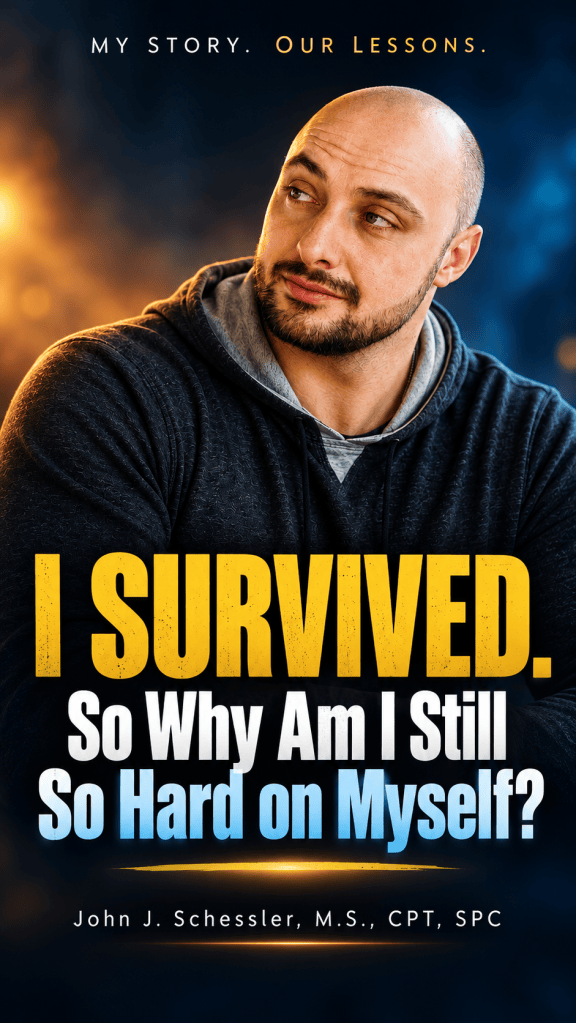
My Story. Our Lessons. | Part Two
By John J. Schessler, M.S., CPT, SPC
The Strange Contradiction of Being Me
In my previous article, The Life I Almost Didn’t Get to Live, I shared one of the most defining experiences of my childhood.
At ten years old, I developed Guillain-Barré syndrome, spent six weeks in a coma, and faced months of rehabilitation to regain abilities that most people never have to think twice about.
I shared the people who helped me, the uncertainty of recovery, and the unforgettable bowl of blue mashed potatoes that became a symbol of progress.
But after writing that story, something occurred to me.
I’m now 44 years old. I have a master’s degree in Sport Psychology, a bachelor’s degree in Child and Adolescent Psychology, and years of experience working in fitness, behavioral intervention, and coaching.
I spend much of my professional life helping people recognize their strengths, build confidence, and develop resilience.
And yet, I can still stand in front of a mirror and immediately identify everything I don’t like about myself. Most of us can.
Apparently, my inner critic didn’t get the memo about my graduate degree, lol.
Which is particularly unfortunate considering how much that degree cost.
You’d think self-compassion would have been included in the tuition.
But humor aside, I’ve been thinking about a question that makes me genuinely uncomfortable.
How can I have so much compassion for the ten-year-old boy who almost lost his life, yet sometimes struggle to extend that same compassion to the 44-year-old man he became?
It’s a question that has forced me to reconsider how I define strength, success, and personal growth.
And I suspect I’m not alone.
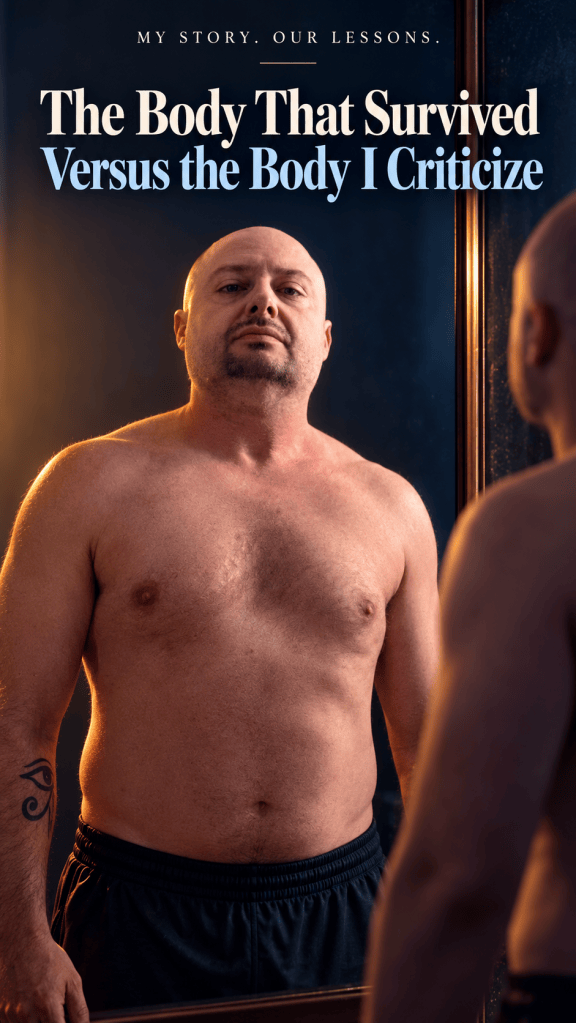
The Body That Survived Versus the Body I Criticize
When I was ten years old, I lost the ability to walk.
My body stopped cooperating with me in ways I couldn’t understand. Movements that had once been automatic became difficult or impossible.
Recovery required medical treatment, physical therapy, occupational therapy, speech-language therapy, and an extraordinary amount of support.
Today, I work in fitness.
I understand exercise programming, anatomy, biomechanics, and the importance of progressive training.
But I also live with lasting physical challenges from my childhood illness.
I experience foot drop, postural difficulties, lower-back discomfort, and muscle tightness that can sometimes lead to spasms.
These challenges are part of my everyday life.
And sometimes, (more often than not) they’re frustrating.
Sometimes I wish my body moved differently.
Sometimes I wish certain exercises were easier.
Sometimes I compare my physique to other men.
And sometimes, despite everything I’ve experienced, I find myself criticizing the very body that carried me through one of the most difficult chapters of my life.
Think about that contradiction.
I’m criticizing a body that once couldn’t walk.
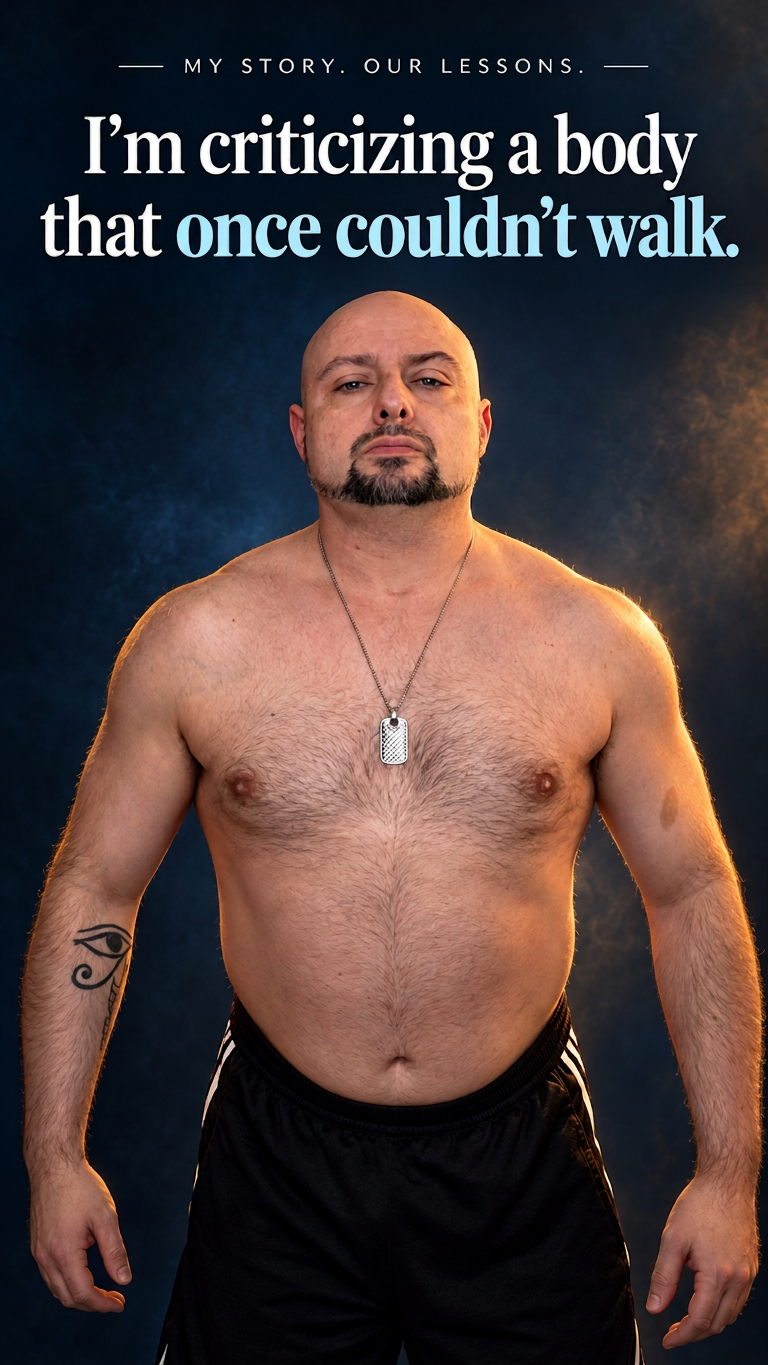
A body that spent months in rehabilitation.
A body that adapted to circumstances I never asked it to experience.
Instead of always recognizing what that body has accomplished, I sometimes focus on what I think it should look like.
That realization has been humbling.
But I also think it’s something many people can relate to.
Perhaps your body has changed after an illness.
Perhaps you’re recovering from an injury.
Maybe you’re getting older and discovering that your physical abilities aren’t quite what they used to be.
Or perhaps you’ve spent years comparing yourself to unrealistic standards of attractiveness, fitness, or masculinity.
Whatever your circumstances, it’s remarkably easy to become so focused on what you wish were different that you overlook what your body continues to do for you.
And I want to make something clear.
Appreciating your body doesn’t mean you have to love every limitation it experiences.
I can be grateful for my recovery and still feel frustrated by physical challenges.
I can respect my body while wanting to improve my strength and fitness.
Those feelings can exist together.
Self-acceptance doesn’t require pretending that everything is perfect.
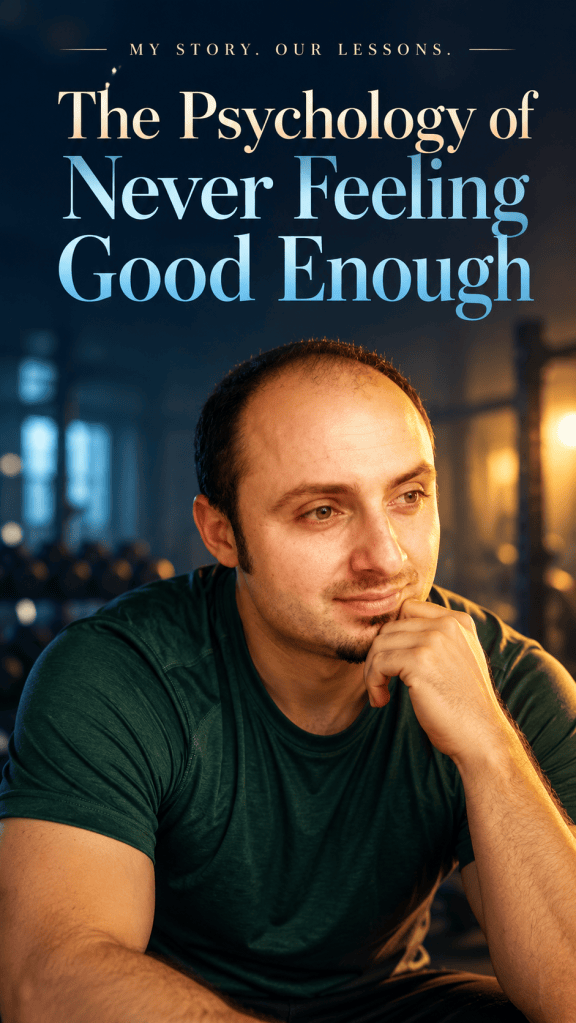
The Psychology of Never Feeling Good Enough
Why do we accomplish meaningful things and still feel dissatisfied with ourselves?
One explanation comes from psychologist E. Tory Higgins and his work on self-discrepancy theory.
The theory suggests that people hold different representations of themselves.
There’s the actual self, representing how we perceive ourselves today.
There’s the ideal self, representing the person we would like to become.
And there’s the ought self, representing the person we believe we should be based on expectations and responsibilities.
When we perceive significant differences between these versions of ourselves, those discrepancies can contribute to uncomfortable emotions.
And let me tell you, I’ve occasionally turned those discrepancies into a full-time occupation.
No benefits. No paid vacation. Just endless performance evaluations.
I can complete a graduate degree and immediately begin wondering what additional credentials I should pursue.
I can make progress in the gym and focus on the muscle group that isn’t developing as quickly as I’d like.
I can create meaningful content through Athlete Mindset HQ and become preoccupied with everything I haven’t accomplished yet.
Instead of appreciating the progress, I move the finish line a little bit more.
And that’s where ambition can become complicated.
There’s nothing inherently wrong with wanting more.
I believe in setting goals, developing skills, and challenging ourselves.
But there’s a difference between wanting to improve because you value growth and believing you must improve before you’re worthy of respect.
Consider how often we tell ourselves:
- I’ll feel confident when I lose another ten pounds.
- I’ll feel successful when I earn more money.
- I’ll feel accomplished when I get that promotion.
- I’ll feel attractive when my body looks different.
- I’ll finally be happy when I get everything figured out.
But what happens when we achieve those things?
Sometimes we celebrate.
Other times, we immediately create a new condition for feeling good enough.
The goalpost moves again.
And the satisfaction we expected never quite arrives.
When your self-worth depends entirely on the next accomplishment, there may never be an accomplishment big enough to satisfy it.
When Self-Improvement Becomes Self-Punishment
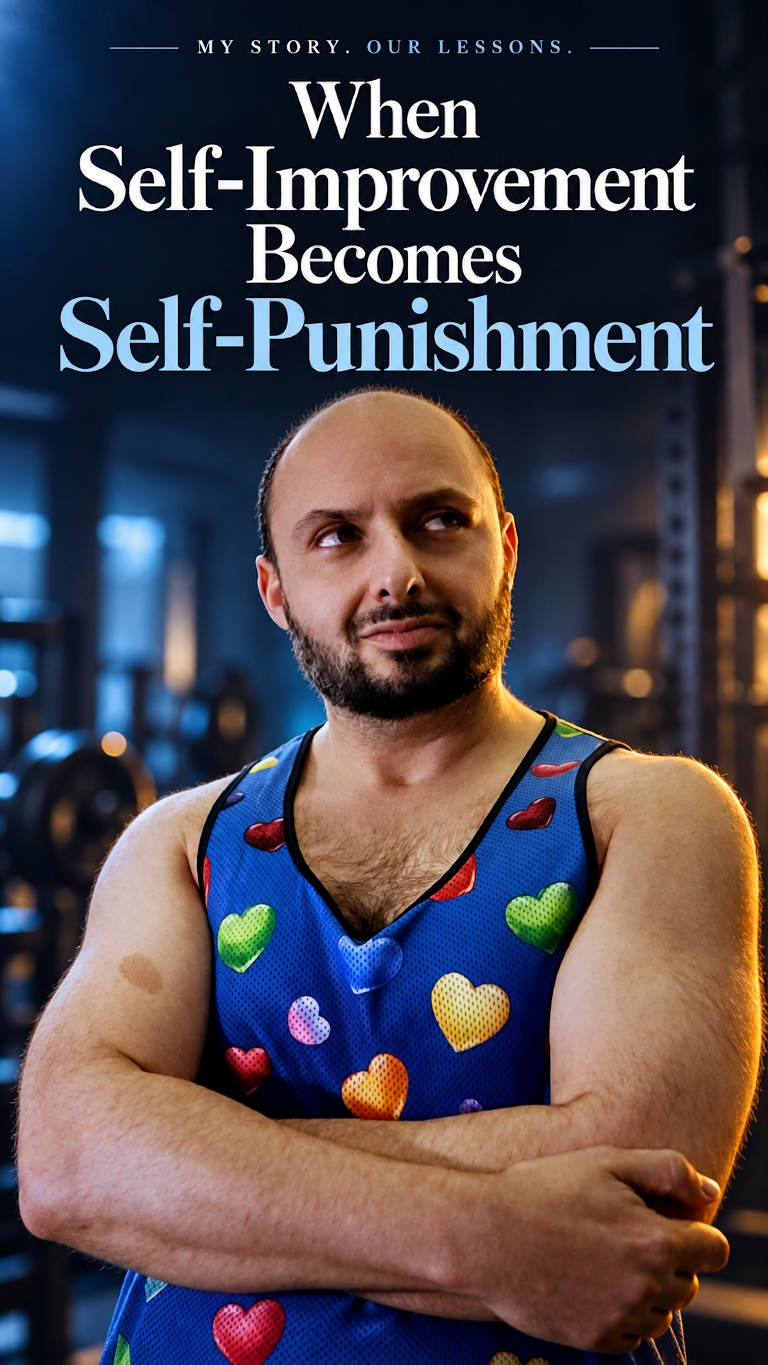
Working in fitness has given me a front-row seat to the ways people evaluate themselves.
And sometimes, the language we use about our bodies is surprisingly harsh.
We describe ourselves as lazy when we miss a workout.
We feel guilty for taking a rest day.
We treat weight fluctuations as moral failures.
We compare our bodies to people whose genetics, circumstances, resources, and training histories may be completely different from our own.
And then we wonder why fitness sometimes feels more like punishment than something that improves our lives.
Here’s what I find interesting.
If a personal training client told me they were struggling with an exercise, I wouldn’t immediately question their worth as a human being.
I’d evaluate the situation.
Is the movement appropriate?
Are they recovering adequately?
Are there physical limitations?
Do we need to adjust the program?
Are the expectations realistic?

I’d approach the problem with curiosity rather than condemnation.
Yet when we’re evaluating ourselves, we sometimes abandon that same reasoning.
We skip the problem-solving and go directly to judgment.
And somehow, we’ve convinced ourselves that this is discipline.
But discipline and self-criticism aren’t the same thing.
Accountability asks, “What can I do differently?”
Self-punishment declares, “There’s something wrong with me.”
One creates an opportunity for growth.
The other can turn an ordinary setback into a judgment about our identity.
Self-Compassion Isn’t an Excuse to Stop Trying
One of the most misunderstood concepts in psychology is self-compassion.
Some people hear the term and immediately assume it means lowering standards, avoiding responsibility, or accepting mediocrity.
But that’s not what the research suggests.
Psychologist Kristin Neff describes self-compassion through three interconnected elements: self-kindness, common humanity, and mindfulness.
Self-kindness involves responding to personal difficulties with understanding rather than harsh judgment.
Common humanity recognizes that imperfection and struggle are shared aspects of being human.
Mindfulness involves acknowledging difficult thoughts and emotions without becoming completely consumed by them.
Research has associated self-compassion with healthier coping and more adaptive responses to personal setbacks.
Importantly, self-compassion doesn’t require abandoning ambition.
It changes how we respond when things don’t go according to plan.
For example, imagine missing several workouts because work has been exhausting.
A self-critical response might sound like this:
“I’m lazy. I have no discipline. I’ll never reach my goals.”
A self-compassionate response might sound like this:
“This has been a demanding week. I haven’t trained as consistently as I’d like. What adjustments would make my routine more manageable?”
Both responses acknowledge the same situation.
But only one treats the person experiencing it as someone deserving of understanding.
And that’s a distinction I continue working on in my own life.
Because I don’t want to become less ambitious.
I want to pursue my ambitions without making self-criticism the price of admission.
The Psychology Degree Doesn’t Make Me Immune

Here’s something else I’ve learned.
Understanding psychology doesn’t automatically make you immune to the experiences psychology attempts to explain.
I can understand social comparison and still compare myself to other people.
I can understand cognitive distortions and still experience unhelpful thoughts.
I can study motivation and still have days when I don’t feel particularly motivated.
And I can understand self-compassion while struggling to practice it.
Knowledge creates opportunities for awareness.
It doesn’t eliminate human emotion.
This is where psychological flexibility, a central concept in Acceptance and Commitment Therapy (ACT), becomes particularly relevant.
Psychological flexibility involves being able to experience difficult thoughts and emotions while continuing to act in ways that align with our values.
It doesn’t require eliminating negative thoughts.
Instead, it encourages us to change our relationship with those thoughts.
For example, I might look in the mirror and think:
“My body should look better than this.”
Psychological flexibility allows me to recognize that statement as a thought rather than an unquestionable fact.
I can acknowledge the frustration without allowing it to determine my self-worth.
I can choose to exercise because I value health, strength, and independence rather than because I believe my current body is unacceptable.
I can pursue professional goals because I enjoy learning and contributing, not because another accomplishment will finally make me worthy.
And perhaps most importantly, I can recognize that difficult emotions don’t have to control my next decision.
I don’t have to believe every critical thought my mind produces.
Sometimes my brain is offering useful feedback.
And sometimes it’s simply being an unnecessarily dramatic coworker.
Learning to distinguish between the two is an ongoing process.
Would I Speak to That Ten-Year-Old Boy This Way?

Of everything I’ve reflected on while writing this article, this question has affected me the most.
Imagine I could sit beside the ten-year-old version of myself in that rehabilitation center.
Imagine he told me he was frustrated because his legs weren’t working properly.
Imagine he was embarrassed because he couldn’t keep up with other children.
Imagine he was upset because his body had changed.
Would I tell him he wasn’t trying hard enough?
Would I criticize him for not recovering faster?
Would I suggest that he needed to accomplish something extraordinary before he deserved to feel good about himself?
Of course not.
I’d remind him that what he was experiencing was difficult.
I’d tell him that frustration was understandable.
I’d encourage him to keep participating in his rehabilitation while recognizing that recovery wasn’t entirely within his control.
I’d remind him that he had people who loved him.
And I’d want him to understand something important.
His value as a person had absolutely nothing to do with whether he could walk, run, speak normally, or accomplish another rehabilitation milestone.
He was worthy of love and respect exactly as he was.
And then I have to ask myself:

Why doesn’t the 44-year-old version of that boy deserve the same consideration?
Why do I sometimes speak to myself in ways I would never speak to him?
Why do I hold myself to standards I would never impose on someone else?
And perhaps the most uncomfortable question of all:
When did I start believing that compassion was something I had to earn?
You Can Be Proud of Yourself and Still Want More
One of the lessons I’m trying to embrace is that pride and ambition can coexist.
I can be proud of earning my master’s degree while still wanting to advance professionally.
I can appreciate my physical abilities while continuing to pursue strength and fitness.
I can recognize the progress I’ve made with Athlete Mindset HQ while still imagining what it could become.
I can be grateful for my life while acknowledging that certain aspects of it remain challenging.
These things don’t contradict each other.
They reflect the complexity of being human.
And I think this is especially important for people who have experienced illness, disability, trauma, or other major life disruptions.
There’s sometimes an unspoken expectation that surviving something difficult should make you permanently grateful.
As though experiencing frustration afterward somehow diminishes the significance of your survival.
But gratitude isn’t a lifelong obligation to pretend everything is wonderful.
I can appreciate being alive without loving every circumstance of my life.
I can celebrate my recovery without denying the limitations that remain.
And I can recognize my resilience without turning every difficult experience into an inspirational performance for somebody else.
I don’t need to prove that my childhood illness happened for a reason.
It happened.
It changed my life.
And over time, I’ve found meaning in parts of that experience.
That is enough.
A Different Definition of Strength
As a personal trainer and mental performance coach, I spend a lot of time discussing strength.
Physical strength.
Mental toughness.
Resilience.
Discipline.
Confidence.
The ability to perform under pressure.
But the older I get, the more I believe we need to expand our understanding of what strength looks like.
Sometimes strength means pushing yourself.
Sometimes it means recognizing that you need rest.
Sometimes it means taking responsibility for a mistake.
Sometimes it means admitting that you’re struggling.
And sometimes it means refusing to treat yourself like an enemy simply because you haven’t reached your goals yet.
I’ve spent much of my adult life helping other people recognize their potential.
I want to continue doing that.
But I also want to become better at recognizing my own.
Not because I’ve accomplished enough to finally deserve respect.
But because respect shouldn’t have been conditional in the first place.
What I’d Tell the Little Boy Today

If I could go back and speak to that ten-year-old boy, I think I’d tell him something that the adult version of me still needs to hear.
I’d tell him that his body might not always cooperate.
That some physical challenges might follow him into adulthood.
That there will be moments when he feels frustrated, insecure, or disappointed.
And that none of those experiences make him less valuable.
I’d tell him he doesn’t need to become a personal trainer to prove his body is capable.
He doesn’t need to earn a master’s degree to prove he’s intelligent.
He doesn’t need to build a business to prove he’s successful.
And he doesn’t need to transform his childhood illness into an inspirational story to justify the life he gets to live.
Then I’d tell him something else.
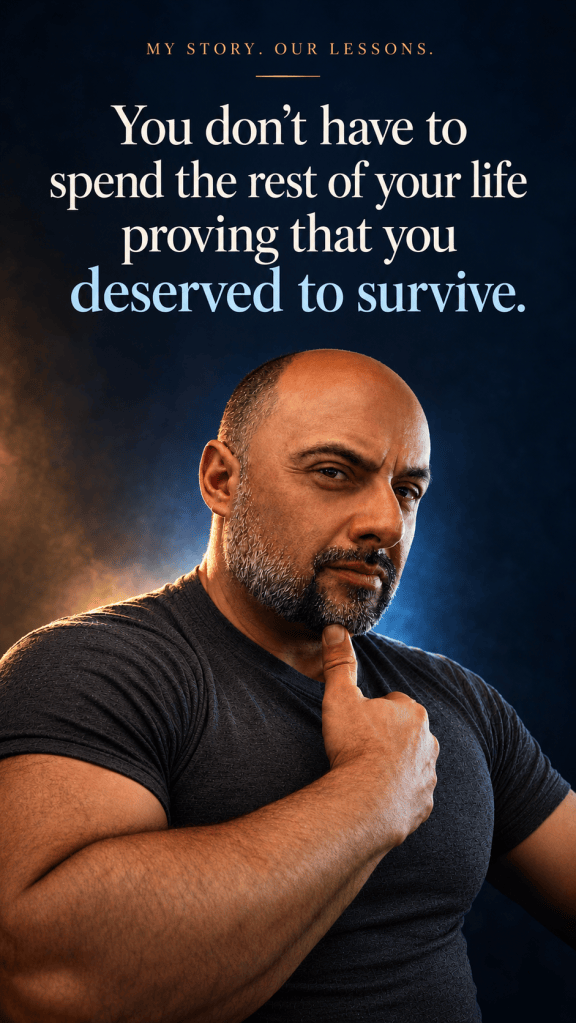
You don’t have to spend the rest of your life proving that you deserved to survive.
You can simply live.
You can pursue meaningful goals.
You can make mistakes.
You can change direction.
You can have difficult days.
And you can experience ordinary moments without feeling that every single one needs to contribute to some extraordinary achievement.
Because a meaningful life doesn’t have to be an endless performance review.
Sometimes an ordinary Tuesday is enough.
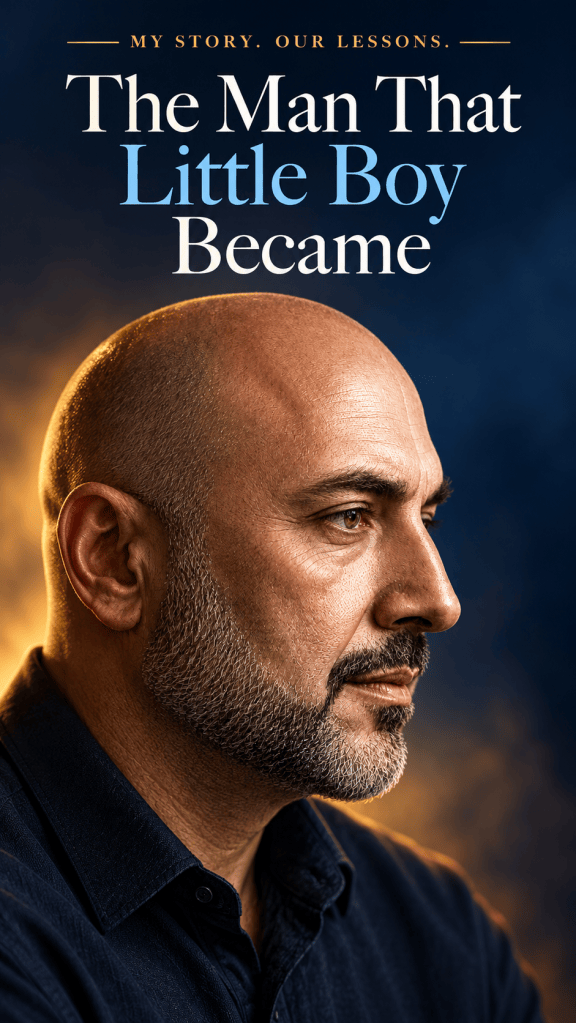
The Man That Little Boy Became
Today, I’m 44 years old.
I’m still ambitious.
I still have professional goals, fitness goals, creative projects, and things I want to accomplish.
I’m still working toward becoming the person I want to be.
And I suspect I’ll always be a work in progress.
But I’m beginning to understand something that I wish I’d recognized sooner.
I don’t have to criticize myself into becoming a better person.
I can pursue improvement without rejecting who I am today.
I can acknowledge my limitations without allowing them to define my worth.
And I can appreciate the man I’ve become without pretending that the journey has been perfect.
Because when I look back at that ten-year-old boy who couldn’t walk, couldn’t speak normally, and celebrated a bowl of blue mashed potatoes, I don’t see someone who needed to become extraordinary to justify his existence.
I see a child who deserved compassion.
And maybe it’s time I started offering some of that same compassion to the adult he became.
A Question for You
Before you finish reading, I want you to think about a younger version of yourself.
Maybe it’s the child you once were.
Maybe it’s the teenager who struggled to fit in.
Maybe it’s the young adult who made mistakes while trying to figure out life.
Now imagine speaking to that person the way you sometimes speak to yourself today.
Would you use the same words?
Would you hold them to the same standards?
Would you dismiss their accomplishments as quickly as you sometimes dismiss your own?
Or would you offer them patience, understanding, and encouragement?
And if you would offer those things to your younger self, here’s my question:
Why shouldn’t the person you’ve become deserve them, too?
You can still have goals.
You can still want more.
You can still challenge yourself.
But you don’t have to make your current self the enemy in order to become someone better.
You can be a work in progress without treating yourself like a problem that needs to be fixed.
And perhaps that’s one of the most important lessons I’m still learning.
The person you’re becoming deserves compassion.
But so does the person you are today.
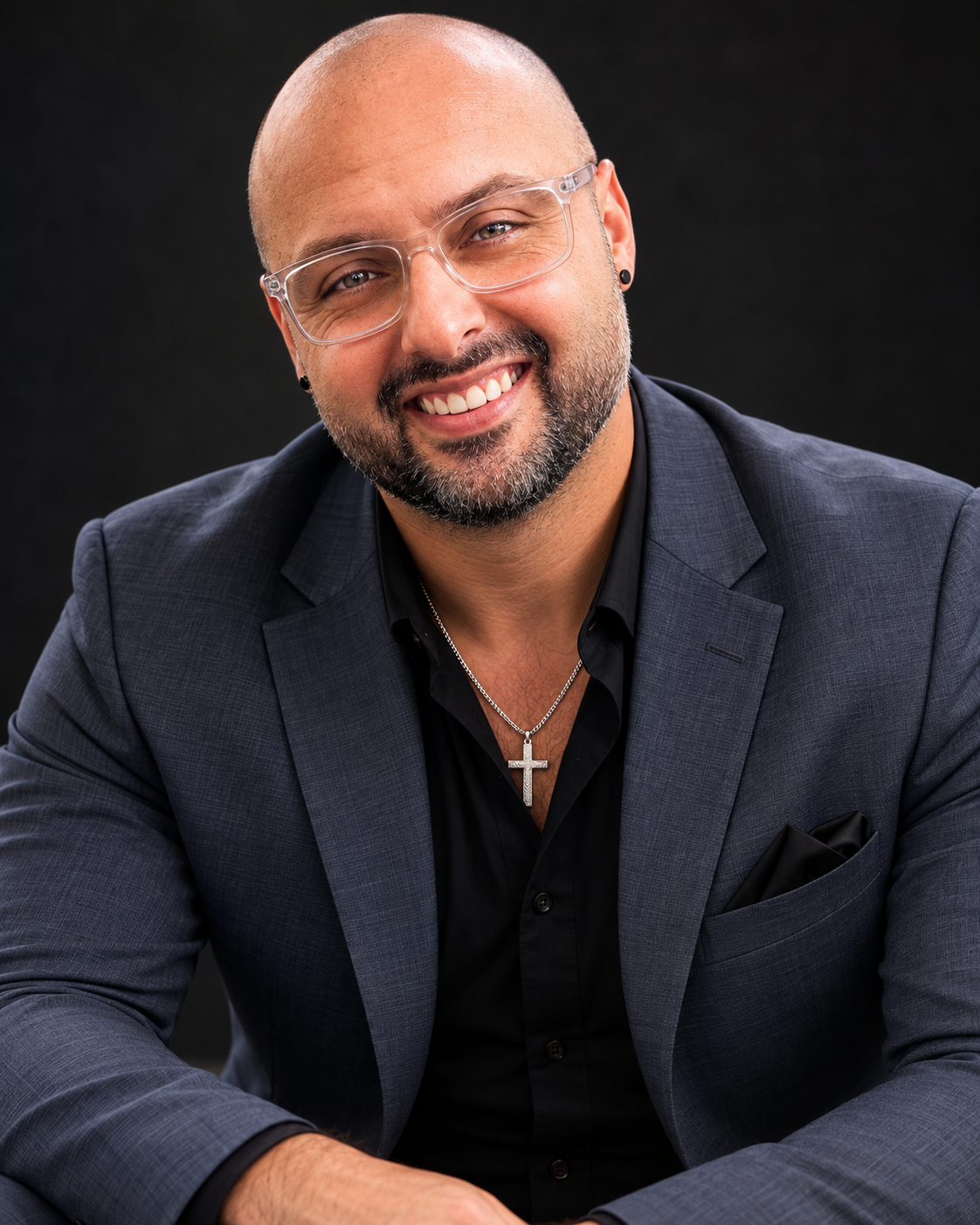
John J. Schessler, M.S., CPT, SPC, is the founder of Athlete Mindset HQ, a mental performance coach, certified personal trainer, and behavioral interventionist. Through personal storytelling, psychology education, and conversations about human performance, he explores the relationship between mindset, identity, resilience, and meaningful personal growth.
My Story. Our Lessons. is an ongoing series exploring the experiences that shape us and the psychological lessons we can carry into everyday life.
References and Further Reading
Higgins, E. T. (1987). Self-discrepancy: A theory relating self and affect. Psychological Review, 94(3), 319–340. https://doi.org/10.1037/0033-295X.94.3.319
Hayes, S. C., Luoma, J. B., Bond, F. W., Masuda, A., & Lillis, J. (2006). Acceptance and commitment therapy: Model, processes and outcomes. Behaviour Research and Therapy, 44(1), 1–25. https://doi.org/10.1016/j.brat.2005.06.006
Neff, K. D. (2003). Self-compassion: An alternative conceptualization of a healthy attitude toward oneself. Self and Identity, 2(2), 85–101. https://doi.org/10.1080/15298860309032


Leave a Reply