
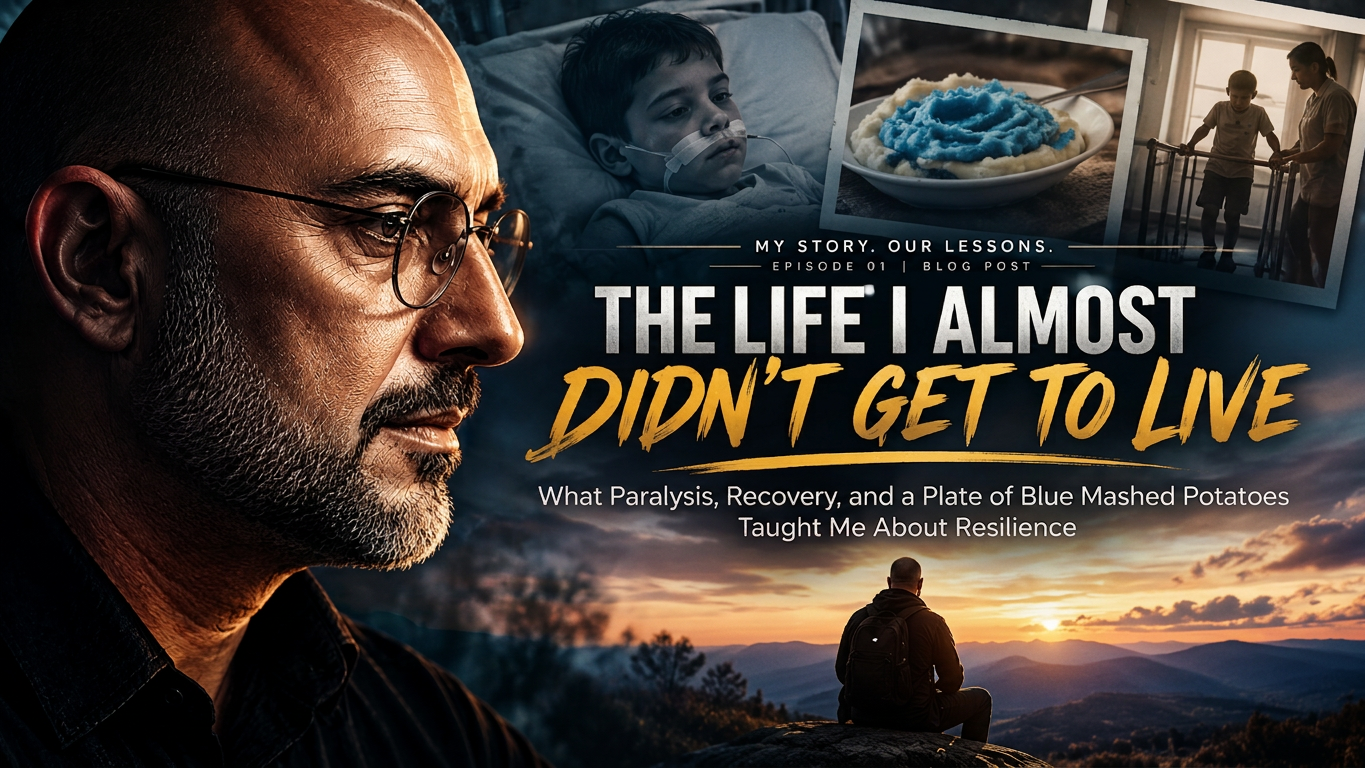
What Paralysis, Recovery, and a Bowl of Blue Mashed Potatoes Taught Me About Resilience
By John J. Schessler Jr., M.S., CPT, SPC
There are moments in life that divide everything into a before and an after.
Sometimes those moments arrive gradually. A relationship begins to unravel. A career takes an unexpected turn. A dream we once believed in starts to feel increasingly out of reach.
And sometimes, life changes so suddenly that we barely have time to understand what’s happening.
For me, that moment came when I was ten years old.
One day, I was a normally functioning little boy. And then, seemingly without warning, I became critically ill and fell into a coma.
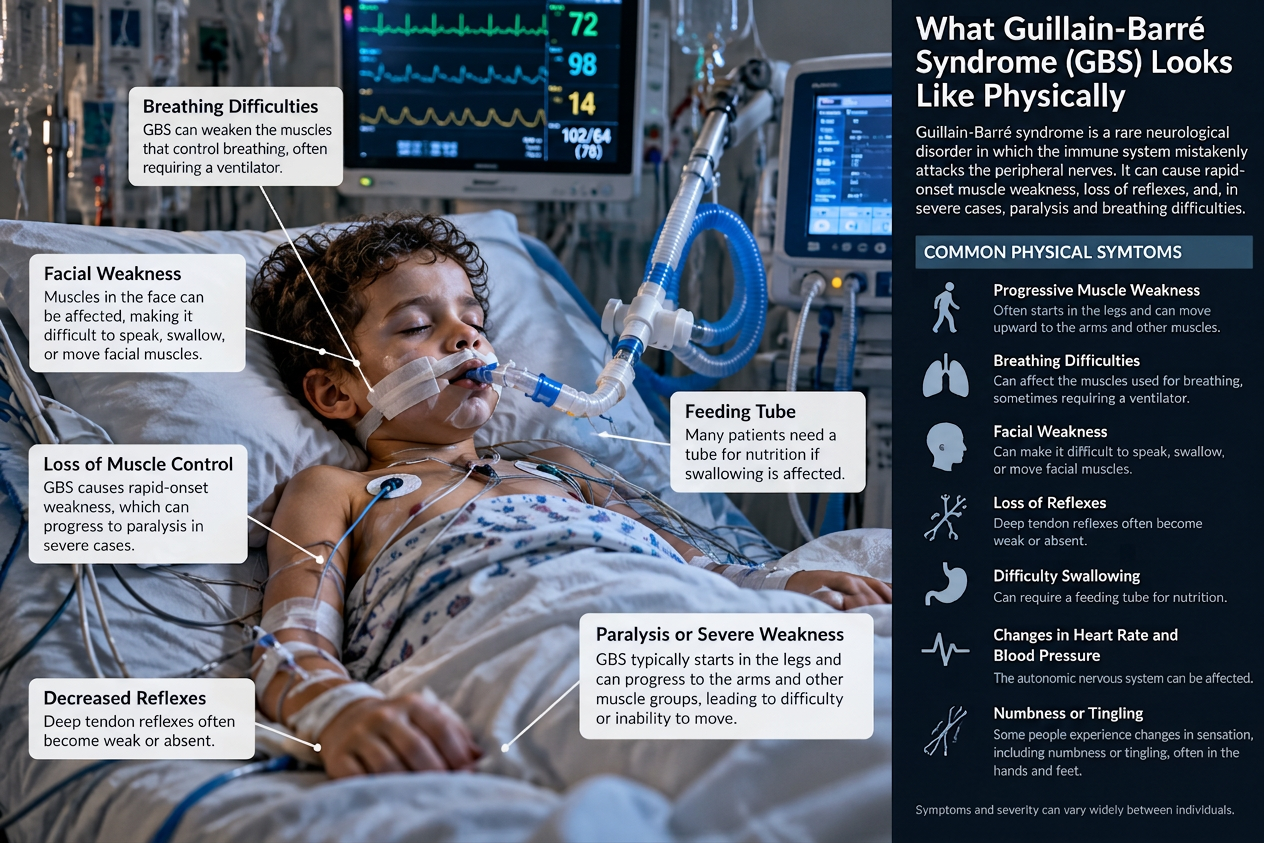
For six weeks.
When I woke up, the world I remembered was no longer the world I was living in.
I couldn’t walk. I couldn’t speak normally. I couldn’t perform the most basic activities independently. My body, which had once allowed me to run, play, and experience childhood without much thought, suddenly required machines, medical professionals, and other people to help me function.
I was eventually diagnosed with Guillain-Barré syndrome (GBS), along with encephaloradiculomyopathy.
Guillain-Barré syndrome is a rare neurological disorder in which the immune system attacks the peripheral nerves, potentially causing profound muscle weakness, paralysis, and, in severe cases, respiratory complications.
But at ten years old, I wasn’t concerned with understanding the neurological science behind my condition.
I just wanted my life back.
And I had no idea how difficult that journey would become.
When Normal Life Suddenly Disappears
We spend much of our lives assuming that tomorrow will look relatively similar to today.
We expect our bodies to cooperate. We expect to go to work, attend school, spend time with friends, and continue our familiar routines.
Most of us rarely stop to consider how much of our independence depends on things functioning the way they’re supposed to.
Until they don’t.
After my initial hospitalization, I spent three months living as an inpatient at a rehabilitation center.
Three months away from my home, my friends, and the everyday comforts of childhood.
Instead of participating in the activities most ten-year-olds were enjoying, my days revolved around physical therapy, occupational therapy, speech-language therapy, medical testing, and trying to regain abilities I had previously taken for granted.
And here’s something I want to make clear.
Recovery wasn’t some beautifully choreographed inspirational montage.
There wasn’t uplifting background music playing every time I completed a therapy session. There wasn’t a dramatic moment when everything suddenly became easier.
There was frustration.
There was confusion.
There was uncertainty about what my life would look like afterward.
And there was a ten-year-old boy who wanted to get better much faster than his body was allowing.
Looking back, I think that’s something we often misunderstand about resilience.
We imagine resilient people as individuals who never become discouraged, who approach every obstacle with unwavering confidence, and who somehow maintain a positive attitude regardless of their circumstances.
But resilience doesn’t require us to pretend that difficult experiences aren’t difficult.
Sometimes resilience looks like frustration.
Sometimes it looks like accepting help.
And sometimes it looks like showing up for another day of rehabilitation even when progress feels painfully slow.
The People Who Helped Me Rebuild
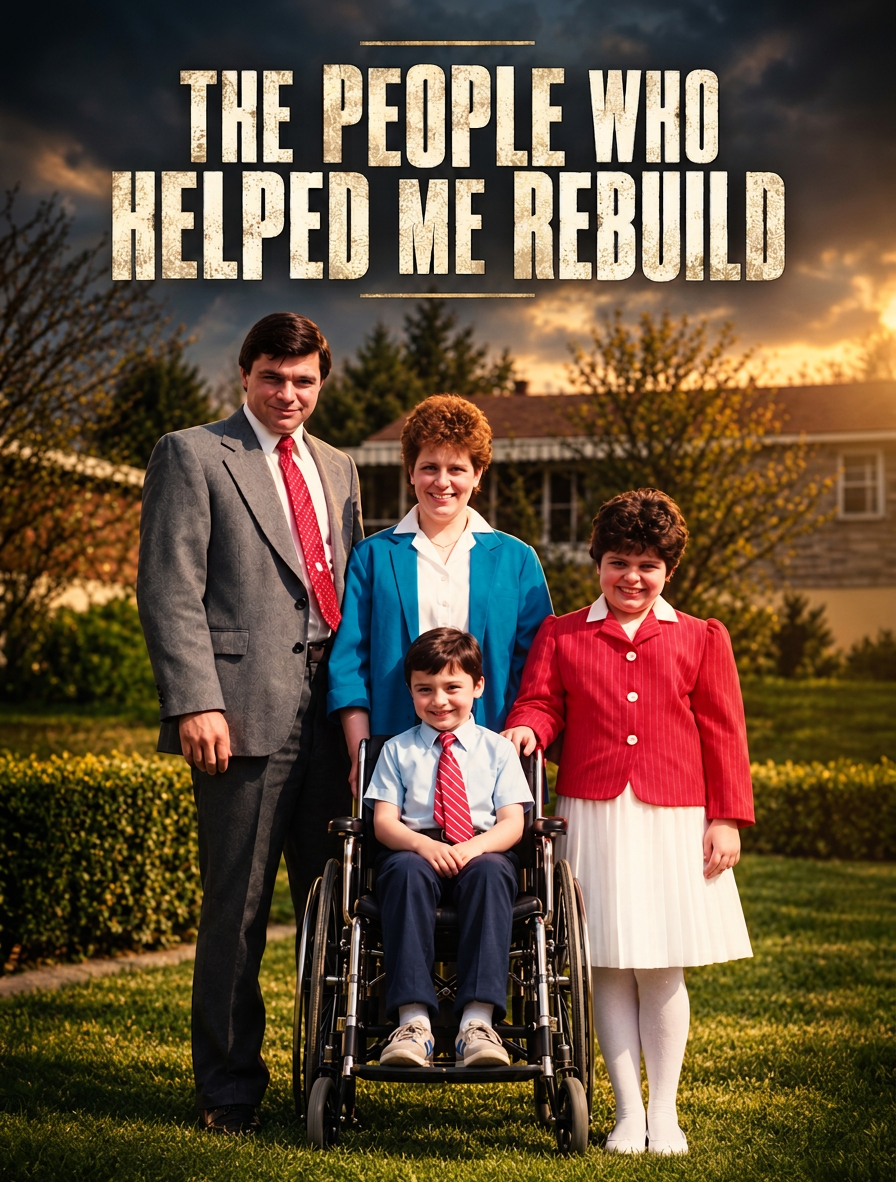
Although I was living away from home, I wasn’t facing rehabilitation alone.
My parents, sister, and grandmother visited frequently. Family visits were part of my everyday life.
I also had medical professionals and rehabilitation specialists helping me work toward recovery.
And I think this is an important part of the story because our culture tends to celebrate the idea of the individual who overcomes adversity entirely through personal determination.
We love stories about people who beat the odds, refuse to give up, and somehow conquer every obstacle through sheer willpower.
But that’s not how my recovery happened.
I needed help.
I needed therapy.
I needed medical care.
I needed people around me who could provide support during a period when I couldn’t do many things independently.
And there’s absolutely nothing shameful about that.
Being strong doesn’t mean never needing other people. Sometimes strength means recognizing that we cannot do everything alone.
That’s a lesson that extends far beyond physical rehabilitation.
Whether we’re struggling with our mental health, rebuilding after a personal setback, navigating a major life transition, or pursuing an ambitious goal, the support we receive from others can make a meaningful difference.
Independence is valuable.
But so is connection.
And sometimes, learning to accept support is part of moving forward.
The Most Important Plate of Mashed Potatoes I’ve Ever Eaten

Of all the experiences I had during rehabilitation, there’s one particular moment that has stayed with me for more than thirty years.
And believe it or not, it involves mashed potatoes.
Blue mashed potatoes, to be exact.
Yes, blue.
To this day, I have absolutely no idea why they needed to be blue. Apparently, regular mashed potatoes weren’t exciting enough, so somebody decided to give them the appearance of a questionable science experiment.
But those mashed potatoes became one of the most memorable milestones of my recovery.
During my hospitalization and rehabilitation, I had been receiving nutrition through a feeding tube inserted through my nose.
Eating normally was no longer something I could simply do whenever I wanted.
Eventually, I reached a point where I was able to begin eating soft foods.
And one of the first things I remember eating was a serving of blue mashed potatoes.
For most people, eating mashed potatoes isn’t exactly an accomplishment worth celebrating.
It’s something we do at Thanksgiving while debating whether we have enough room for another helping.
But for me, it was enormous.
I remember being so excited that I called home to tell my mother I had eaten mashed potatoes for the first time in months.
My speech was still recovering, but I could form sentences well enough to share the news.
And more than three decades later, I still remember making that phone call.
Why?
Because that moment represented something much bigger than food.
It represented progress.
It represented regaining an ability I had lost.
And it represented a small but meaningful step toward greater independence.
Progress doesn’t always look impressive to someone who doesn’t understand where you started.
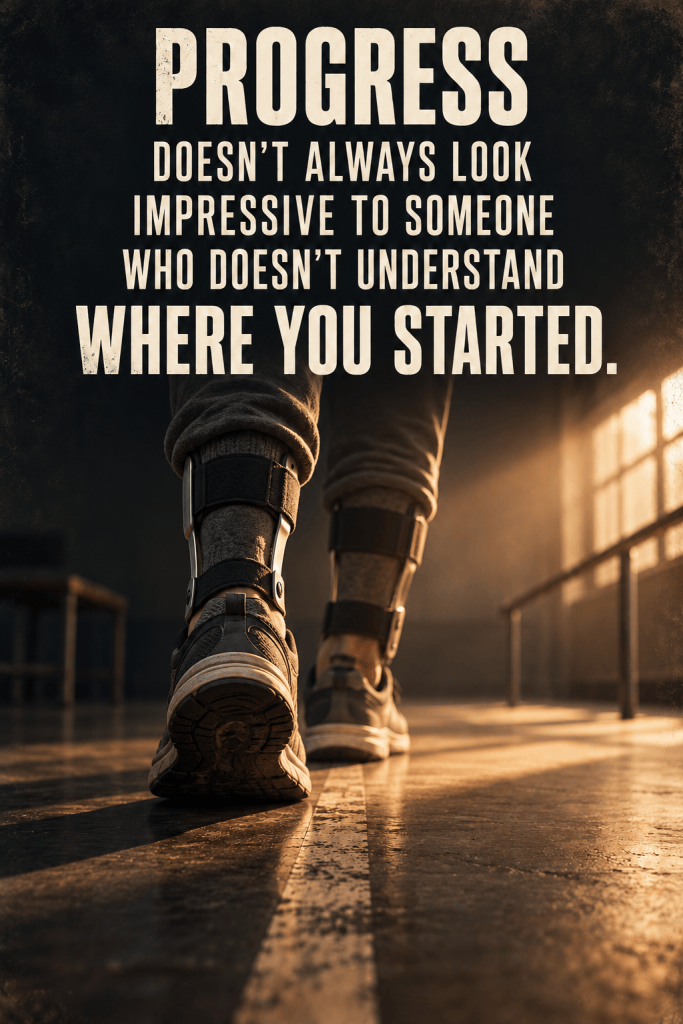
That is one of the most important lessons I’ve taken from this experience.
For one person, progress might mean running a marathon.
For someone else, it might mean walking across a room.
For one person, progress might mean earning a graduate degree.
For someone else, it might mean finding the courage to enroll in their first college course.
For someone who’s been exercising for years, completing a workout might be routine.
For someone who’s been struggling with depression, anxiety, illness, or a major life transition, taking that first step toward becoming active again might be an enormous accomplishment.
And for one ten-year-old boy recovering from paralysis?
Progress was eating blue mashed potatoes.
Sometimes the victories that matter most are the ones the rest of the world would barely notice.
The Psychology of Small Victories
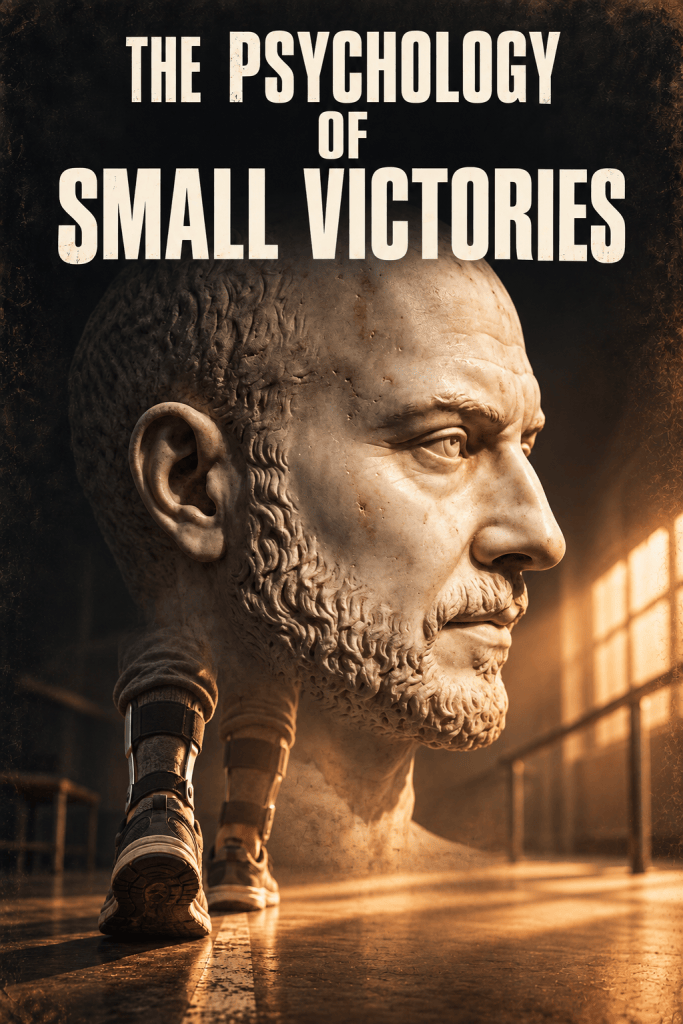
Today, with my educational background in psychology and sport psychology, I can look back at my childhood experiences through a different lens.
One psychological concept that helps explain the importance of meaningful progress is self-efficacy.
Psychologist Albert Bandura described self-efficacy as our belief in our ability to organize and execute the actions necessary to accomplish particular goals.
In simpler terms, self-efficacy involves believing that we can take meaningful action toward something we’re trying to achieve.
One important source of self-efficacy is what Bandura called mastery experiences—experiences of successfully performing tasks or overcoming challenges.
When we accomplish something that previously seemed difficult, that experience can help strengthen our confidence in our ability to approach future challenges.
This doesn’t mean that every small victory automatically transforms our confidence.
But it helps explain why recognizing progress can be psychologically meaningful.
And it also explains why constantly comparing our accomplishments to those of other people can be so unhelpful.
We aren’t all starting from the same place.
We aren’t all working with the same resources.
And we certainly aren’t all facing the same circumstances.
So why would we expect everyone’s progress to look identical?
Another psychological concept that connects to my experience is psychological flexibility.
Psychological flexibility involves being able to make room for difficult thoughts and emotions while adapting our behavior and pursuing actions consistent with what matters to us.
It doesn’t mean being happy all the time.
It doesn’t mean ignoring pain or pretending that everything is okay.
And it certainly doesn’t mean that positive thinking can cure a serious medical condition.
I was frustrated during rehabilitation.
I was confused.
I wanted things to happen faster.
But those feelings were part of the experience, not proof that I was failing.
And I think that’s something many of us need to remember.
You can feel discouraged and still make progress. You can experience uncertainty and still take meaningful action.
Resilience isn’t the absence of difficult emotions.
It’s a process of adapting to difficult circumstances, often with the support of other people.
Going Home Didn’t Mean Going Back
Eventually, I returned home.
But returning home didn’t mean everything went back to the way it had been before.
At school, I transitioned from spending the entire day in regular education classes to attending special education classes for part of the day.
My friends had questions about where I’d been and what had happened to me.
I wasn’t as independent as I had been before getting sick.
And certain things that had once been easy now required more effort.
I think this is one of the aspects of recovery that doesn’t receive enough attention.
We often imagine recovery as a straightforward journey from illness back to normalcy.
Someone becomes sick, receives treatment, completes rehabilitation, and eventually returns to their previous life.
But sometimes recovery doesn’t work that way.
Sometimes we don’t return to exactly who we were before.
Sometimes we have to adjust our expectations, develop new strategies, and learn how to live with changes that remain.
And that’s been part of my experience.
More Than Thirty Years Later
I’m now in my forties.
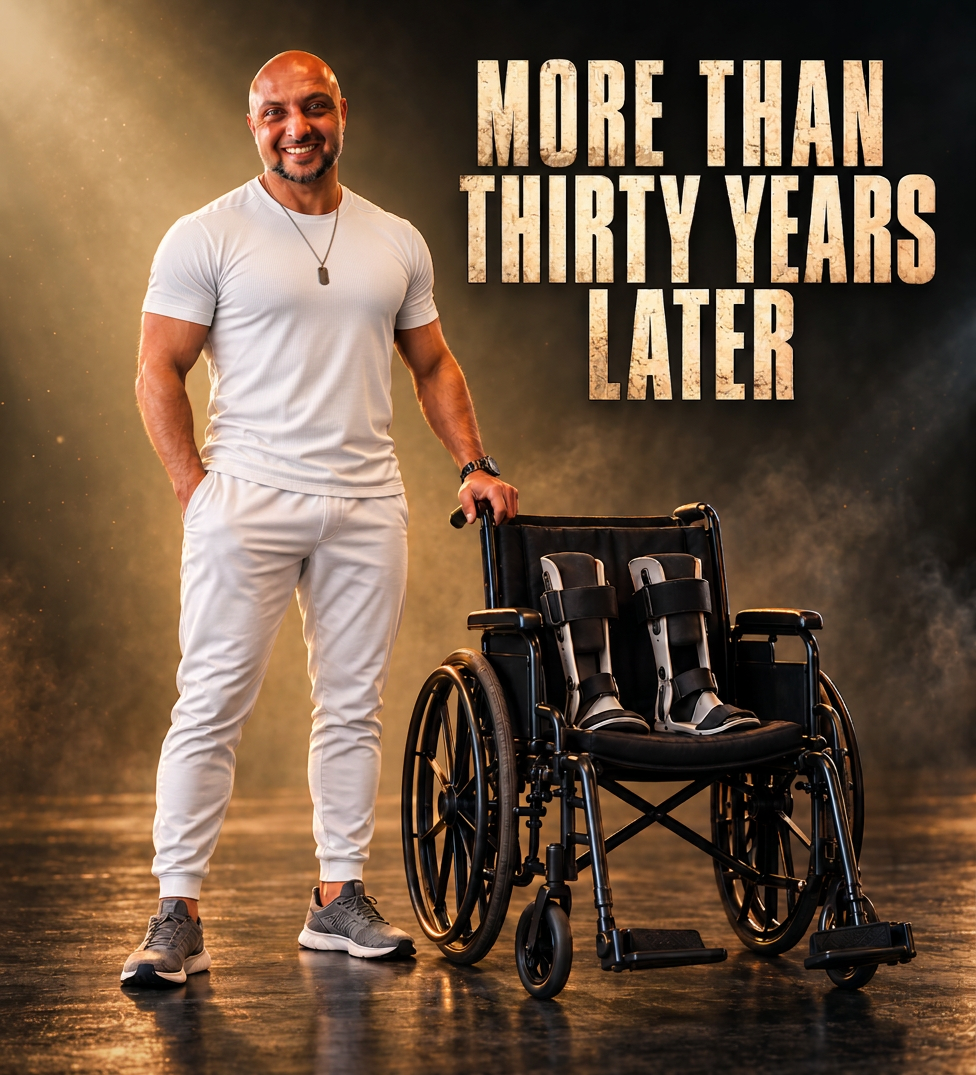
And more than thirty years after that ten-year-old boy woke up from a six-week coma, I still experience physical challenges.
I have foot drop.
I have an anterior pelvic tilt, and I deal with lower-back soreness throughout the day.
I also experience muscle tightness in my left leg, which can cause nighttime spasms.
So when I talk about recovery, I’m not describing a story in which everything eventually returned to exactly the way it was before.
Some challenges have remained part of my everyday life.
But my life has continued to unfold.
I became a certified personal trainer.
I pursued a career in education and behavioral intervention.
I earned my bachelor’s degree in child and adolescent psychology and my master’s degree in sport psychology.
And I’ve spent much of my adult life helping other people work toward their own physical, psychological, and personal goals.
I’m not sharing those accomplishments because I believe everyone who experiences adversity needs to accomplish something extraordinary afterward.
They don’t.
Our value as human beings isn’t determined by the number of degrees we earn, the careers we build, or how much adversity we manage to overcome.
And I don’t believe every painful experience automatically makes us stronger.
Sometimes difficult experiences are simply difficult.
Sometimes they leave lasting effects.
And sometimes we have to learn how to build meaningful lives while continuing to navigate those effects.
But here’s what I find meaningful about my own experience.
When I was ten years old, lying in a hospital bed unable to walk or talk, I couldn’t possibly have known what my life would look like decades later.
I couldn’t have predicted the education I would pursue, the work I would eventually do, or the opportunities I would have.
And that brings me to one of the most important lessons I want to share.
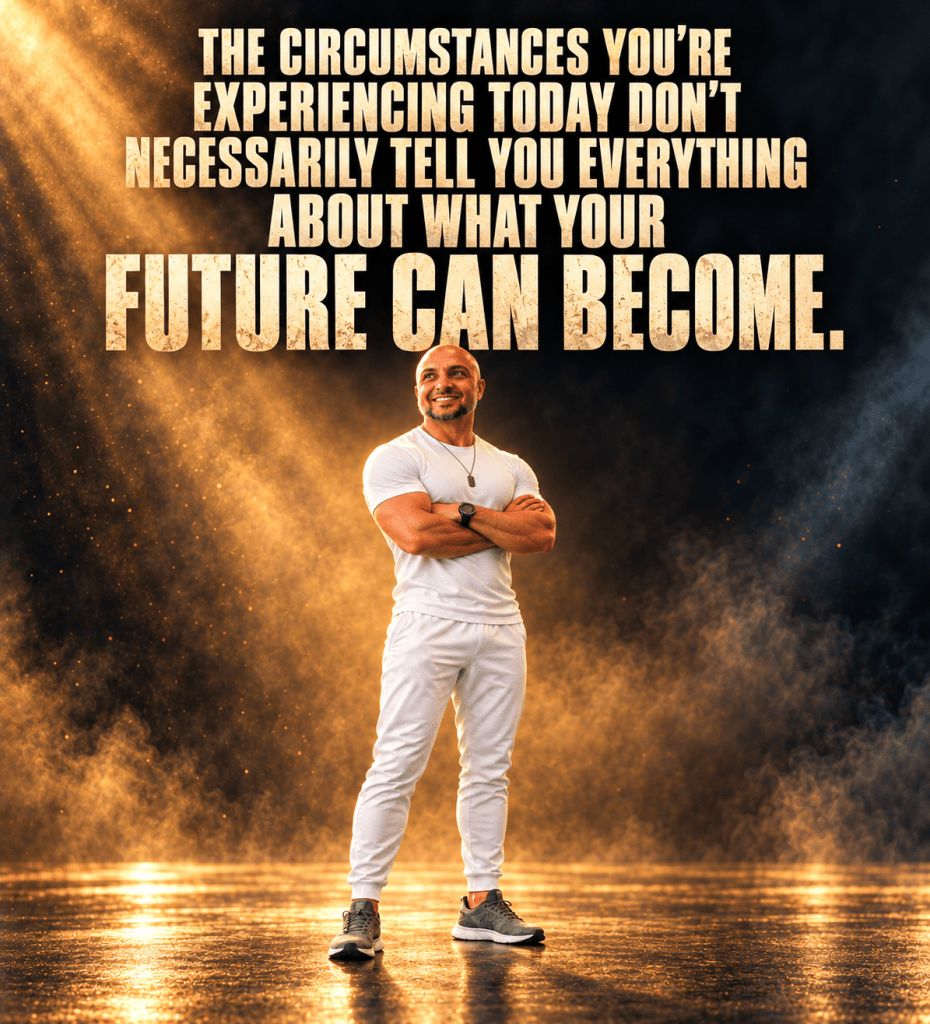
The circumstances you’re experiencing today don’t necessarily tell you everything about what your future can become.
You Are More Than Your Most Difficult Chapter
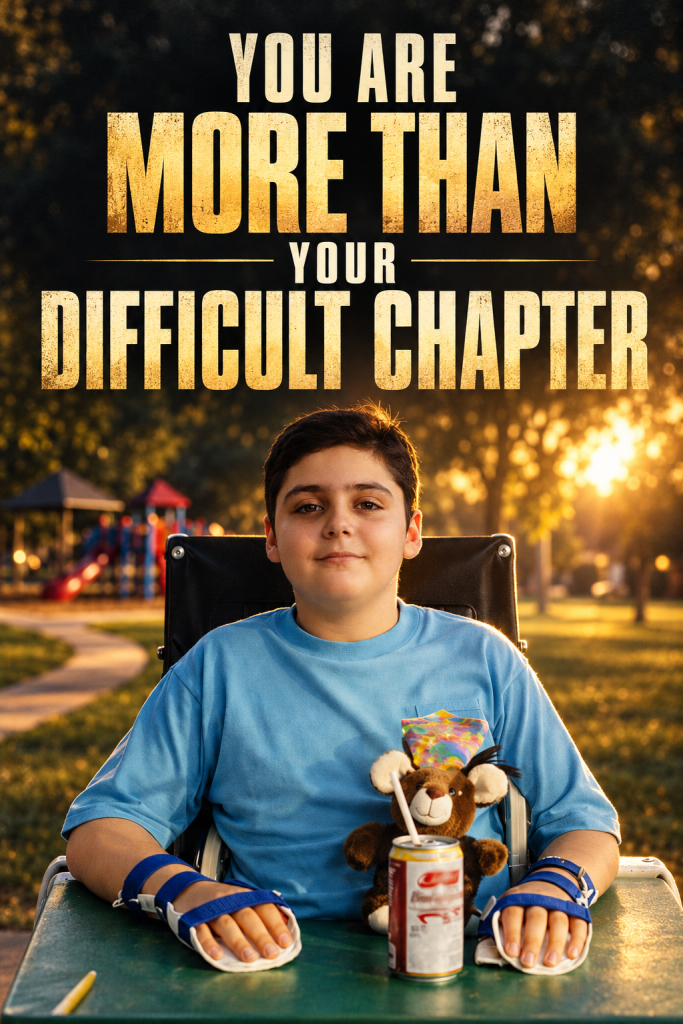
At some point, life is likely to challenge the expectations we have for ourselves.
Maybe it already has.
Maybe you’re dealing with an illness or injury.
Maybe you’re rebuilding after losing a job or ending a relationship.
Maybe you’re trying to return to school, change careers, improve your health, or find a new sense of direction.
Or maybe you’re simply frustrated because your life doesn’t look the way you imagined it would.
Whatever your circumstances, I want you to consider something.
There’s a difference between acknowledging that something is difficult and automatically assuming that nothing more is possible.
Recognizing limitations is important.
Accepting reality is important.
But so is remaining open to the possibility that your story may continue developing in ways you haven’t yet imagined.
When I look back at that ten-year-old version of myself, I don’t see somebody who possessed an extraordinary understanding of resilience.
I see a kid who was frustrated, confused, and trying to get better.
I see someone who needed help.
I see someone who was learning to navigate circumstances he never expected.
And I see someone whose future was still unfolding, even though he had no way of knowing what it would look like.
That’s what I hope people take away from this story.
You don’t have to have everything figured out.
You don’t have to be fearless.
You don’t have to pretend that the difficult things you’ve experienced haven’t affected you.
And you certainly don’t have to measure your accomplishments against somebody else’s definition of success.
You can acknowledge what you’ve lost while still appreciating what you’ve gained.
You can accept support without questioning your strength.
And you can recognize that your life has changed without assuming that it has somehow become less meaningful.
Your Next Chapter: What’s Your Version of the Blue Mashed Potatoes?
Before you finish reading, I want you to think about one question.
What’s your version of the blue mashed potatoes?
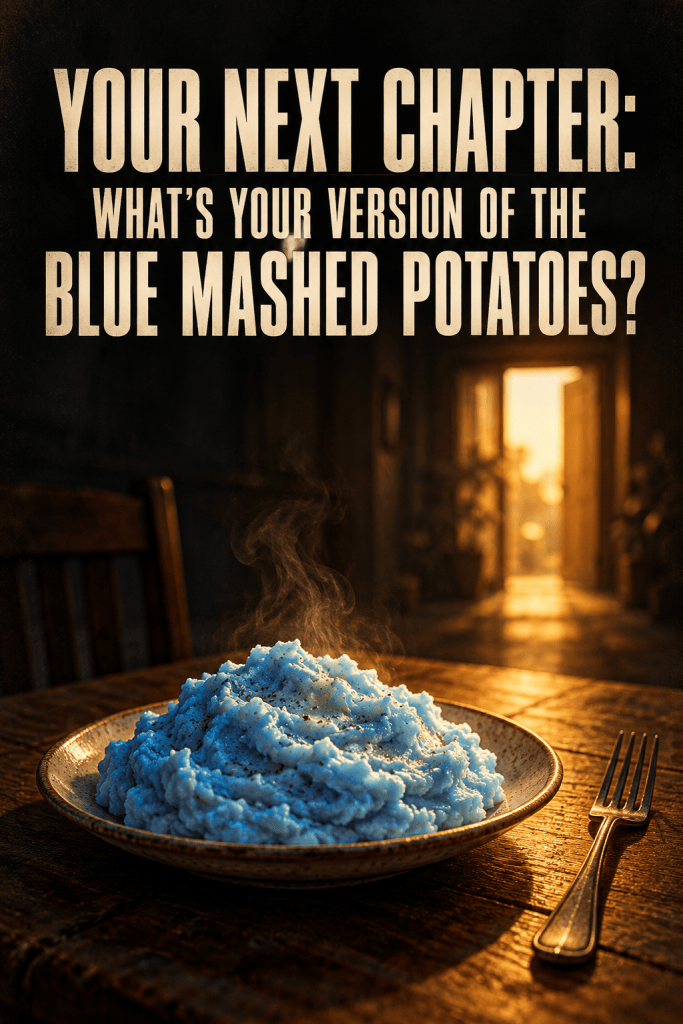
What’s something you’ve accomplished that might seem insignificant to someone else, but you know how much effort it required?
Maybe it was getting out of bed during a difficult period.
Maybe it was returning to school.
Maybe it was walking into a gym for the first time.
Maybe it was asking for help.
Maybe it was starting over after something didn’t work out the way you hoped.
Whatever it was, I want you to give yourself credit for it.
Because progress doesn’t need an audience to be meaningful.
And your accomplishments don’t have to impress everybody else to matter.
More than thirty years ago, I was a ten-year-old boy trying to regain abilities I’d lost, learning to live with uncertainty, and celebrating something as ordinary as eating mashed potatoes.
Today, I’m still learning.
Still growing.
Still pursuing goals.
And still navigating some of the physical challenges that became part of my life all those years ago.
I didn’t get my old life back exactly as it was.
But I still got to build a life worth living.
And if there’s one thing I hope my story reminds you of, it’s this:
Your circumstances may change.
Your plans may change.
Your definition of success may change.
But that doesn’t mean your story is finished.
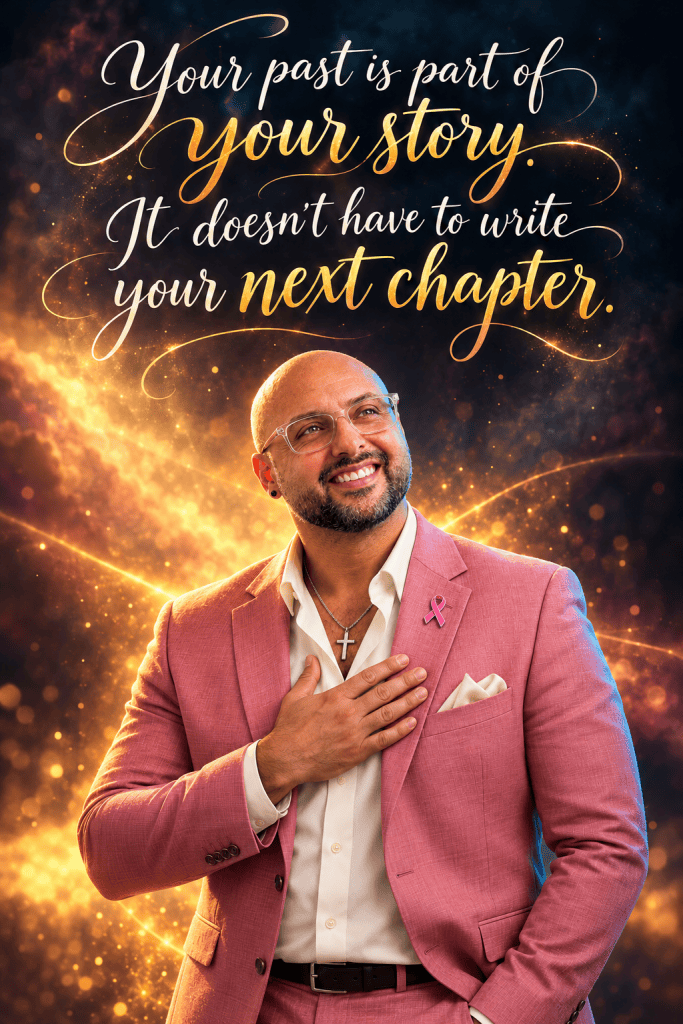
Your past is part of your story. It doesn’t have to write your next chapter.
My Story. Our Lessons. is a personal storytelling series exploring the experiences that shape us, the psychology behind human behavior, and the lessons that can help us move forward.
John J. Schessler Jr., M.S., CPT, SPC
Founder, Athlete Mindset HQ
Mental Performance & Fitness Education
What small victory in your own life deserves more recognition? Share your story in the comments. Sometimes your experience is exactly what someone else needs to hear.
John J. Schessler, M.S.
John J. Schessler, M.S.
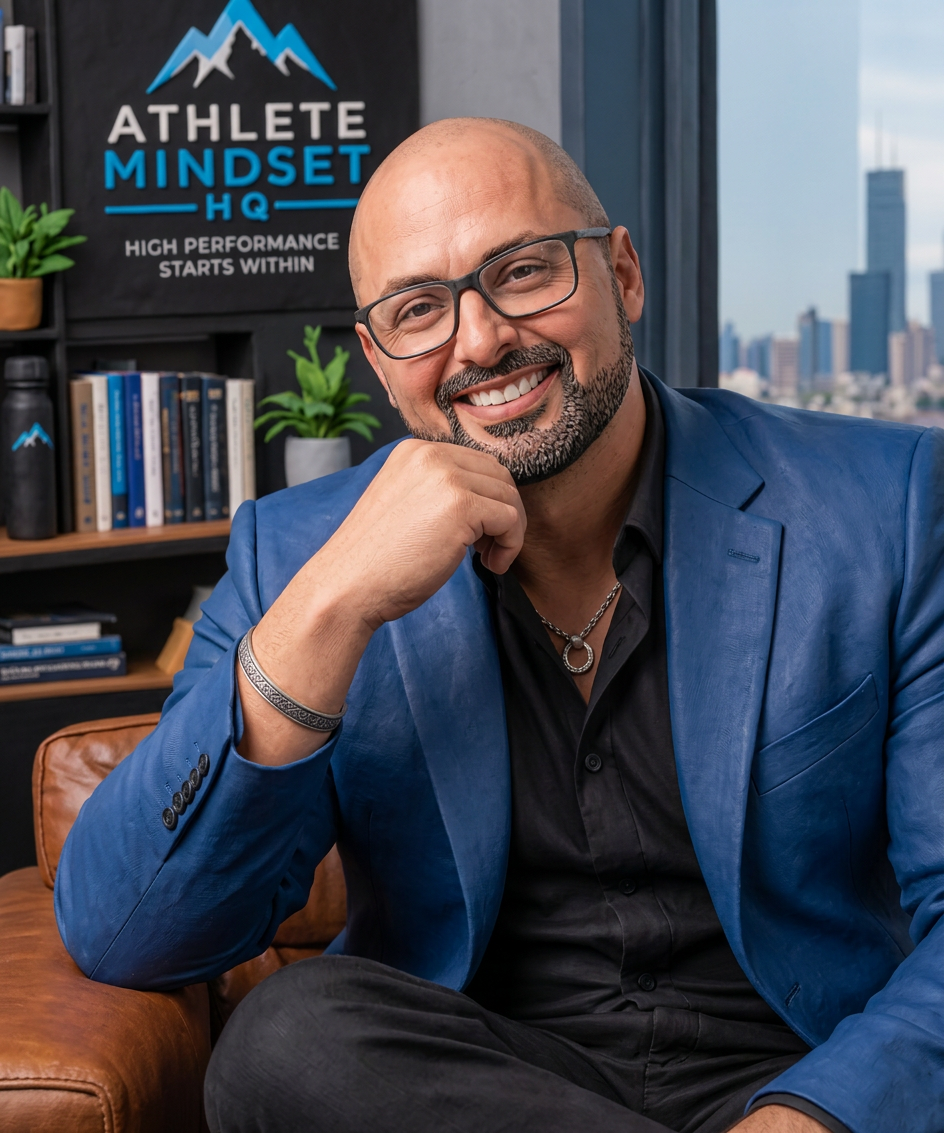
John J. Schessler, M.S., is a Mental Performance Coach, Behavior Interventionist, speaker, and founder of Athlete Mindset HQ—a high-performance coaching platform dedicated to helping athletes, professionals, and everyday individuals develop the mindset needed to thrive under pressure and perform at their highest potential.
John earned his Master of Science in Sport Psychology from Capella University and his Bachelor of Arts in Child & Adolescent Psychology from Southern New Hampshire University. His work bridges the gap between psychology, human performance, behavioral science, and personal development, combining evidence-based strategies with practical coaching that people can immediately apply in sport, work, and everyday life.
His passion for helping others is rooted in his own journey. As a child, John survived Guillain-Barré Syndrome, spending weeks in a coma before fighting through rehabilitation to reclaim his life. That experience shaped his belief that resilience isn’t something you’re born with—it’s something you build through adversity, discipline, and purpose.
Today, John works with individuals from all walks of life, helping them strengthen confidence, improve emotional resilience, overcome obstacles, and develop the habits that lead to lasting success. Whether coaching athletes, mentoring students, speaking to organizations, or creating educational content, his mission remains the same: to help people become mentally stronger than the challenges they face.
John is also the host of The Follow Through Podcast, where he explores sports psychology, leadership, men’s mental health, motivation, resilience, and human performance through practical conversations that inspire listeners to move beyond intention and into action.
His philosophy is simple:
Mental strength isn’t about never struggling. It’s about developing the confidence, discipline, and resilience to keep moving forward—especially when life gets difficult.
Because success isn’t built by what you intend to do.
It’s built by what you follow through on.
Personal Brand Statement
John J. Schessler, M.S. is dedicated to helping people unlock their potential by strengthening the one asset that influences every area of life—the mind. Through education, coaching, and authentic conversation, he empowers others to develop confidence, resilience, and the discipline to follow through on their goals. John J. Schessler, M.S., is a Mental Performance Coach, Behavior Interventionist, speaker, and founder of Athlete Mindset HQ—a high-performance coaching platform dedicated to helping athletes, professionals, and everyday individuals develop the mindset needed to thrive under pressure and perform at their highest potential.
John earned his Master of Science in Sport Psychology from Capella University and his Bachelor of Arts in Child & Adolescent Psychology from Southern New Hampshire University. His work bridges the gap between psychology, human performance, behavioral science, and personal development, combining evidence-based strategies with practical coaching that people can immediately apply in sport, work, and everyday life.
His passion for helping others is rooted in his own journey. As a child, John survived Guillain-Barré Syndrome, spending weeks in a coma before fighting through rehabilitation to reclaim his life. That experience shaped his belief that resilience isn’t something you’re born with—it’s something you build through adversity, discipline, and purpose.
Today, John works with individuals from all walks of life, helping them strengthen confidence, improve emotional resilience, overcome obstacles, and develop the habits that lead to lasting success. Whether coaching athletes, mentoring students, speaking to organizations, or creating educational content, his mission remains the same: to help people become mentally stronger than the challenges they face.
John is also the host of Men, Actually Podcast, where he explores sports psychology, leadership, men’s mental health, motivation, resilience, and human performance through practical conversations that inspire listeners to move beyond intention and into action.
His philosophy is simple:
Mental strength isn’t about never struggling. It’s about developing the confidence, discipline, and resilience to keep moving forward—especially when life gets difficult.
Because success isn’t built by what you intend to do.
It’s built by what you follow through on.
Personal Brand Statement
John J. Schessler, M.S. is dedicated to helping people unlock their potential by strengthening the one asset that influences every area of life—the mind. Through education, coaching, and authentic conversation, he empowers others to develop confidence, resilience, and the discipline to follow through on their goals.
#masculinity #bouncingback #survivor #dedication #fitness #menshealth #followthrough #menactuallypodcast #authenticity #mentalhealth #resilience #discipline #athleticmindsethq #johnschessler


Leave a Reply