
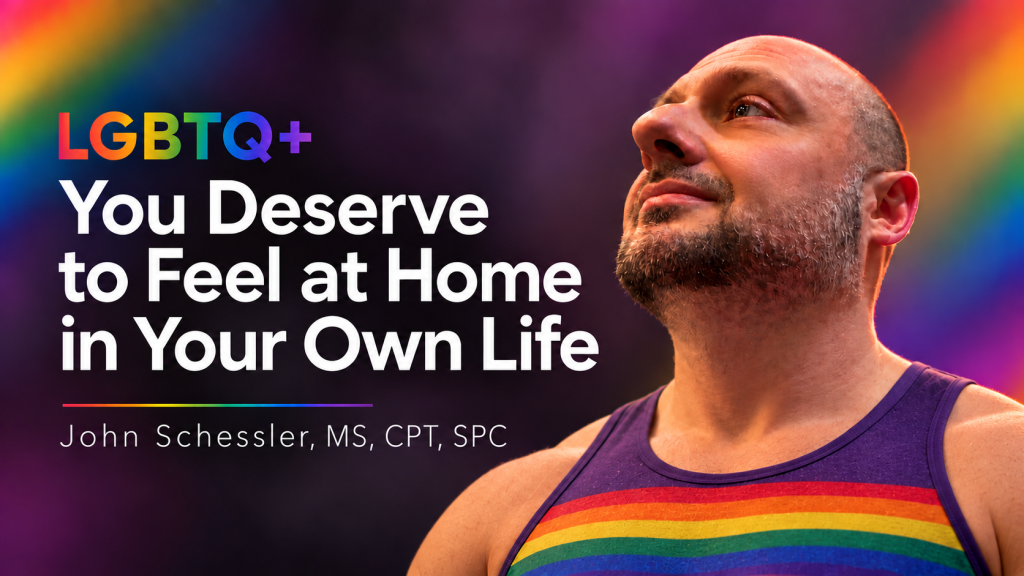
By John Schessler, MS, CPT, SPC
An ordinary question—“What did you do this weekend?”—can sometimes come with a decision nobody else sees.
Do you mention your partner? Do you change a pronoun? Do you leave out the part of the story that might lead to questions you’re not ready to answer?
For some LGBTQ+ people, those decisions are familiar. For others, being open comes easily in one setting and feels uncertain in another. A welcoming group of friends doesn’t necessarily mean a welcoming workplace or family gathering.
As a gay man, I believe acceptance should show up in those everyday moments. We should be able to share our lives, introduce the people we love, and participate in our communities with dignity.
That is what I mean by feeling at home in your own life: having room to be yourself without constantly wondering whether belonging depends on what you keep hidden.
The Part of Someone’s Life You May Not See
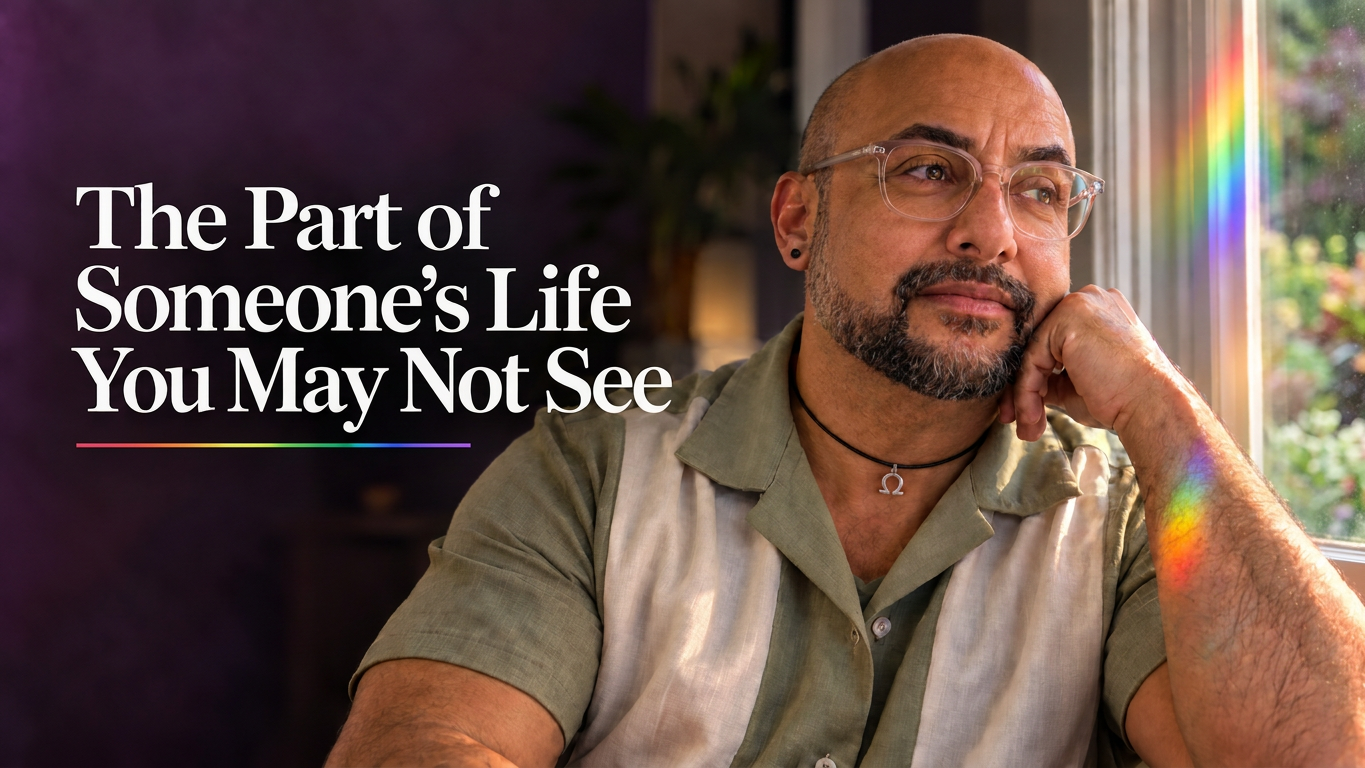
You can know someone for years and still not know how carefully they choose their words.
Maybe they’ve heard the jokes people make when they assume nobody in the room is LGBTQ+. Maybe they’re wondering whether bringing a partner to an event would change how they’re treated. Maybe they’re still finding language that fits their experience.
Or maybe they’re comfortable with who they are and simply tired of explaining it.
Imagine everyone at work talking about their relationships while you decide whether yours would receive the same interest and warmth. Imagine being invited to a family celebration but feeling unsure whether the person you love is welcome, too.
A conversation that feels casual to one person can carry more weight for another.
We don’t need to know every detail of someone’s life to make our shared spaces more welcoming. We can begin by paying attention to our assumptions, the language we use, and how we respond when someone shares something personal.
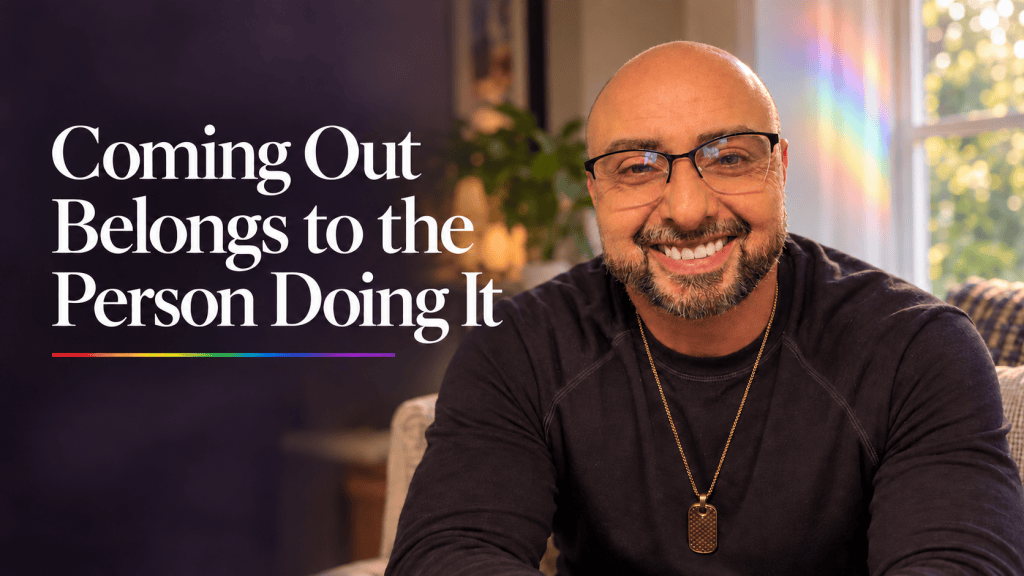
Coming Out Belongs to the Person Doing It
Coming out is often presented as one defining moment. It can also involve many smaller decisions: telling a friend, mentioning a partner to a new coworker, or correcting an assumption during a conversation.
Each situation can feel different.
Some people are open in every part of their lives. Others share their identity with a few trusted people. Some are still exploring what feels right to them.
There is no required timeline.
If you’re figuring out your identity, you can take your time. Your safety, circumstances, and readiness matter. Keeping something private does not make it less real.
If someone comes out to you, a thoughtful response can be simple:
“Thank you for trusting me.”
“I care about you.”
“Is there anything you need from me?”
You don’t need to understand everything immediately to respond with kindness.
You do need to respect their privacy. Someone sharing their identity with you does not give you permission to share it with anyone else. Asking “Who else knows?” or “Are you comfortable with me mentioning this around other people?” helps protect the trust they’ve placed in you.
I remember when I first started coming out to people in 2009, I was terrified. Like literally. I had no idea what to expect, how people’s reactions were going to affect me, and if I was going to be disowned or cut out of people’s lives because I was simply living my truth as a gay man. Luckily, I didn’t have a single negative reaction to coming out to anyone, and the truth is, it made my life so much richer. When you spend most of your teenage years and early twenties playing a part, all you want to do is take off the mask that has been suffocating you for so long.
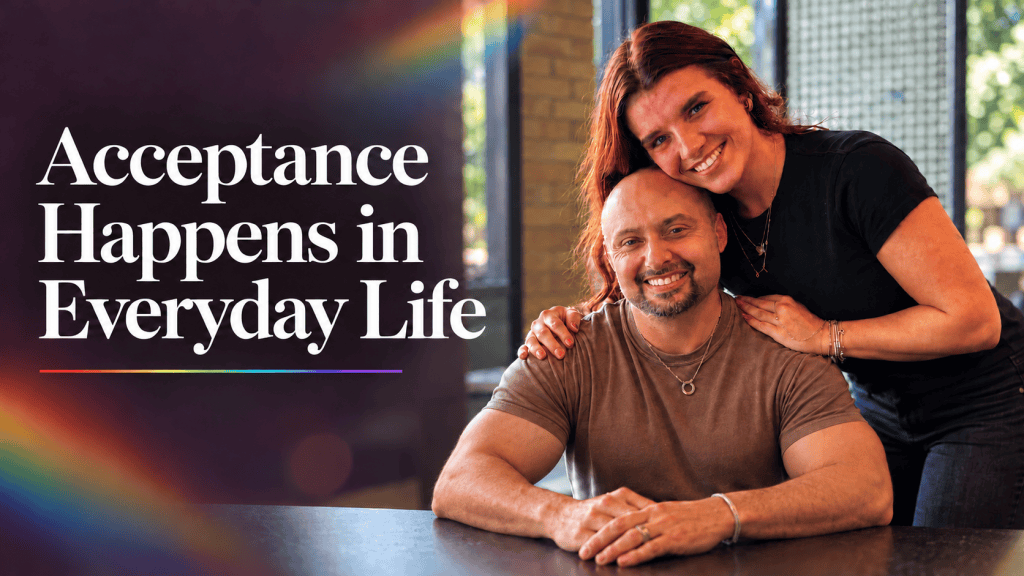
Acceptance Happens in Everyday Life
Public expressions of support can be meaningful. Everyday behavior gives that support substance.
Acceptance shows up when you ask about someone’s partner with the same interest you show everyone else. When you use the name and pronouns they’ve shared. When you include their relationship in family conversations and celebrations.
It also shows up when someone makes a joke at their expense.
Speaking up doesn’t always require a long confrontation. “That was disrespectful” or “Let’s not make someone’s identity the punchline” can make your position clear.
Consider the small details of belonging:
Who gets invited to bring a partner? Whose engagement receives congratulations? Who can talk about a date without the conversation suddenly becoming uncomfortable?
Those moments communicate whether someone is welcome as a whole person.
You may make a mistake along the way. Correct it briefly, learn from it, and keep treating the person with care. If someone tells you that a comment hurt them, listen before explaining what you intended.
A willingness to learn gives care somewhere to go.
There Is No Single Way to Be LGBTQ+
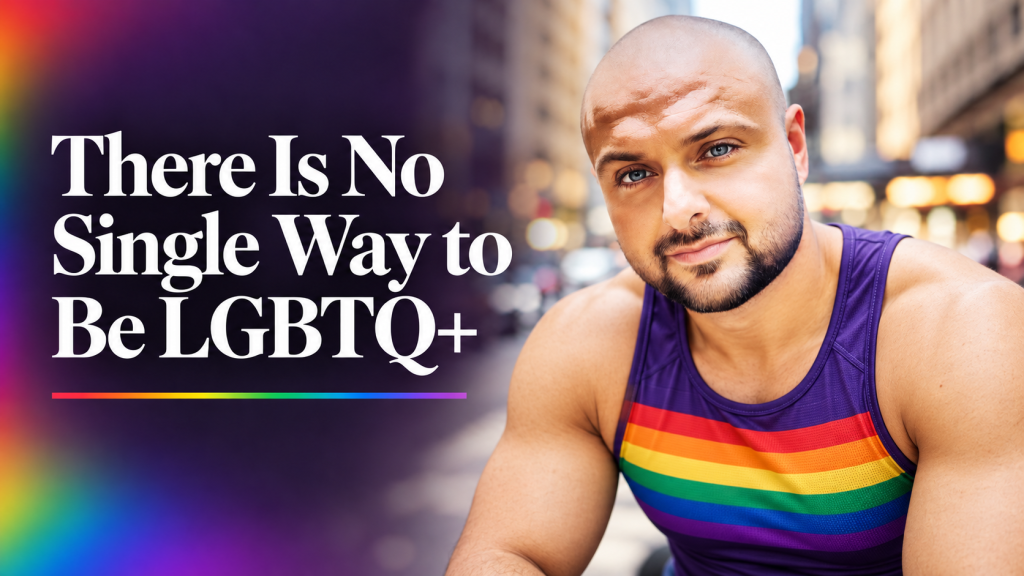
Being LGBTQ+ does not come with a required personality, appearance, or lifestyle.
You can be masculine, feminine, both, neither, or still deciding how those descriptions fit you. You can love sports, prefer the arts, enjoy both, or care about something entirely different.
You can be outgoing or quiet. You can want marriage and a family, prefer being single, or still be figuring out what you want.
You can have a strong connection to your faith. You can have complicated feelings about it. You can feel proud of your identity and still have difficult days.
As a gay man, I think it matters to say this clearly: we get to be individuals. We don’t owe anyone a performance of what they expect a gay man—or any LGBTQ+ person—to be.
I can speak from my perspective, but I cannot speak for every lesbian, bisexual, transgender, queer, or questioning person. Our experiences can differ across families, cultures, generations, and communities.
Listening allows us to understand more than our own experience.
That responsibility exists within the LGBTQ+ community, too. We should examine the assumptions we make about age, race, disability, body size, gender expression, and relationship status. A community becomes more welcoming through the ways its members treat one another.
You Are Allowed to Have Boundaries

Being open about your identity doesn’t mean every personal question deserves an answer.
You’re allowed to say, “I’d rather keep that private.”
You can say, “I’m happy to talk, but that question feels too personal.”
You can also say, “I’m not comfortable with the way this conversation is going.”
Sometimes people ask questions because they want to understand. Even then, you get to decide what you share and when.
Boundaries can matter in close relationships as well. You might need to tell someone, “I want you in my life, and I need you to speak respectfully about my partner.”
That can be a difficult conversation, especially when the relationship matters deeply to you. You can take time to think, seek support, and decide what is workable in your circumstances.
You don’t have to settle every disagreement or repair every strained relationship in one conversation.
Make Room for Joy
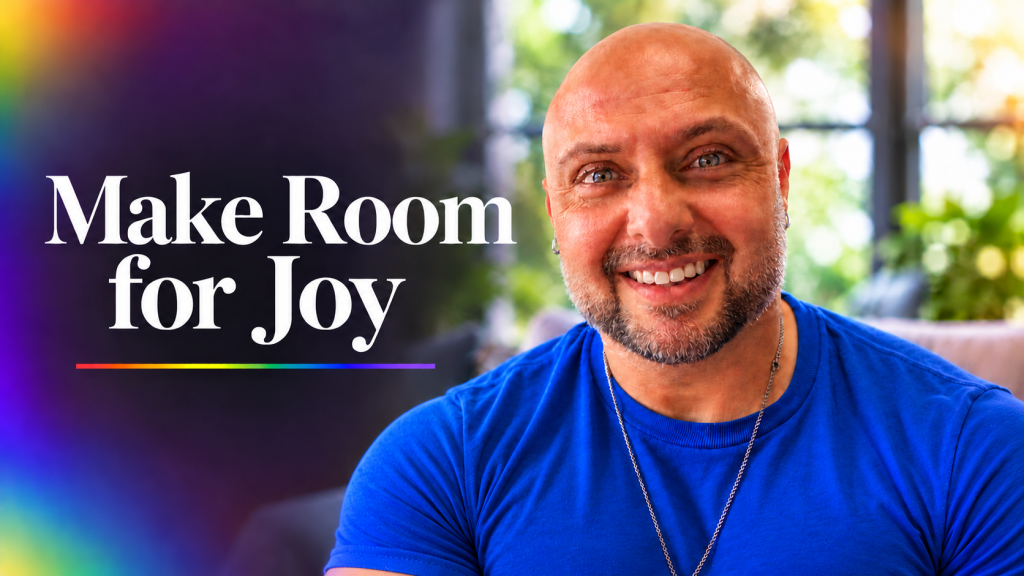
Conversations about LGBTQ+ lives should include joy.
There is joy in introducing your partner and feeling welcome. In a friendship where you can speak freely. In a family member who makes an effort to understand.
There is joy in finding clothes that feel like you, enjoying a quiet evening with someone you love, or realizing that you’ve stopped editing every sentence.
Those moments deserve attention.
LGBTQ+ people have full lives: friendships, careers, interests, responsibilities, ambitions, and ordinary routines. We laugh, make mistakes, learn, fall in love, and change our minds.
Sometimes belonging is wonderfully uneventful. You bring your partner to dinner. Someone asks how work is going. You help clean up. You go home feeling included.
There is something deeply meaningful about that ease.
What Support Can Look Like

If you want to support someone who is LGBTQ+, begin with the person in front of you.
Listen to what they say they need. Respect what they want kept private. Include them and the people important to them. Stay willing to learn.
Avoid assuming that one person can explain an entire community or that everyone wants the same kind of support.
A useful question is: “What would help you feel comfortable and included?”
Then follow through.
Support becomes meaningful when someone can rely on it during an ordinary conversation, an awkward moment, or a difficult day.
A Life That Belongs to You
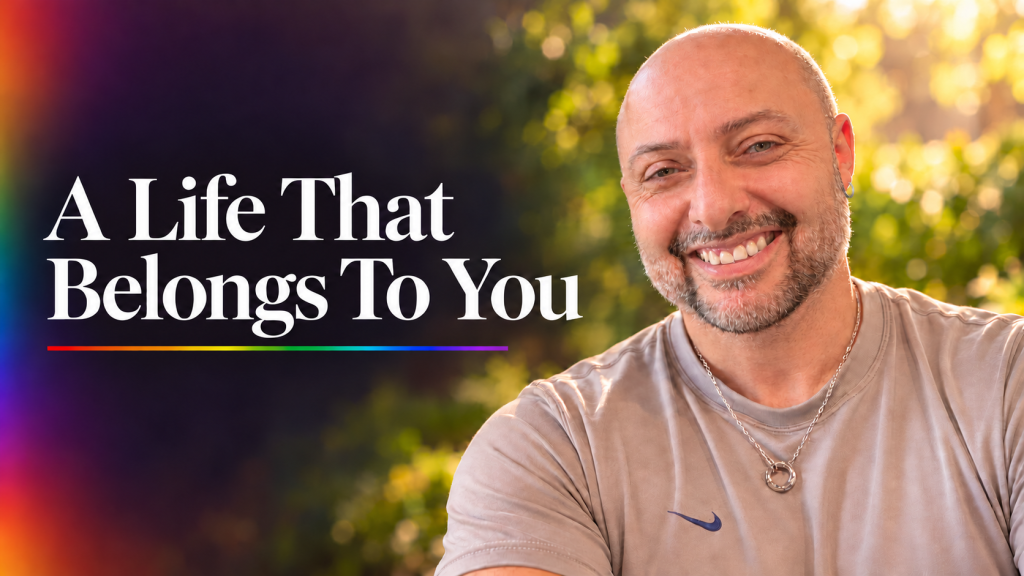
If you’re LGBTQ+ and reading this, I hope you have people around whom you can relax.
People who let you finish your sentence. Who welcome the person you love. Who give you room to grow without making you earn their respect by hiding part of yourself.
If that support is missing right now, you still deserve it. One trusted person, one welcoming space, or one honest conversation can be a place to begin.
And if someone shares who they are with you, consider what your response makes possible. Does it help them feel comfortable speaking freely the next time? Does it protect their trust? Does it show them that they still belong?
We can create that sense of welcome through the choices we make every day.
You deserve relationships where being yourself feels safe—and a life that feels like it belongs to you.
About the Author – John J. Schessler, M.S.
John J. Schessler, M.S., is a Mental Performance Coach, Behavior Interventionist, speaker, and founder of Athlete Mindset HQ—a high-performance coaching platform dedicated to helping athletes, professionals, and everyday individuals develop the mindset needed to thrive under pressure and perform at their highest potential.
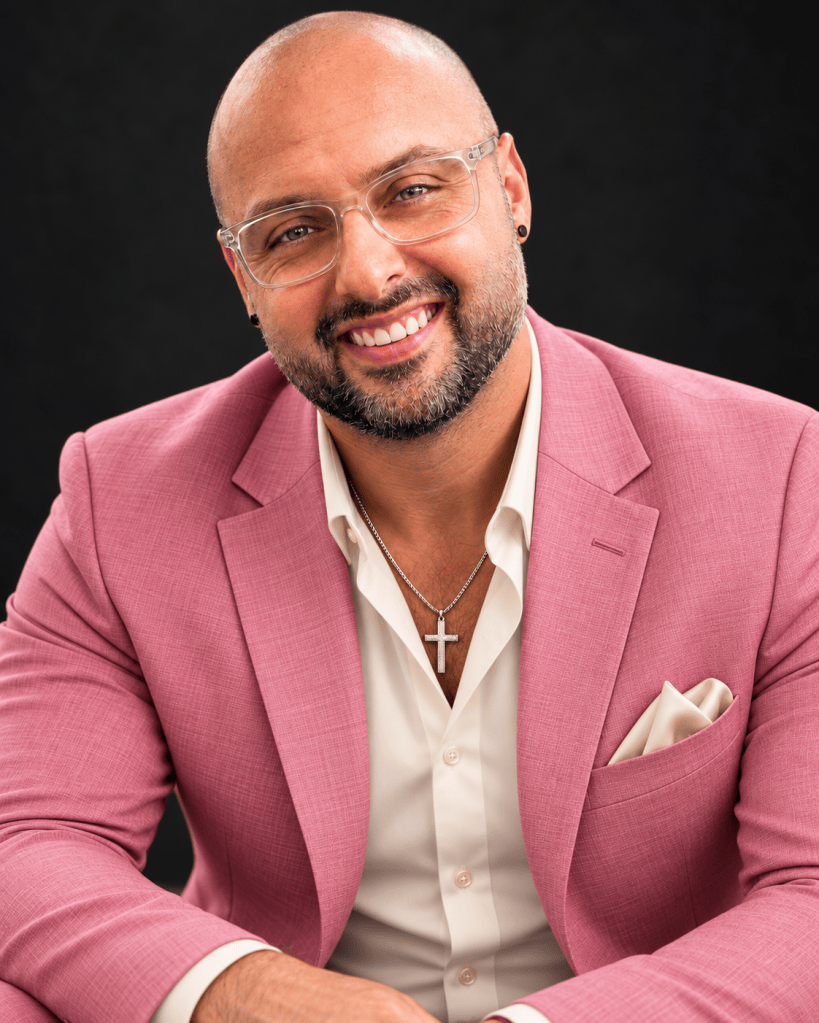
John earned his Master of Science in Sport Psychology from Capella University and his Bachelor of Arts in Child & Adolescent Psychology from Southern New Hampshire University. His work bridges the gap between psychology, human performance, behavioral science, and personal development, combining evidence-based strategies with practical coaching that people can immediately apply in sport, work, and everyday life.
His passion for helping others is rooted in his own journey. As a child, John survived Guillain-Barré Syndrome, spending weeks in a coma before fighting through rehabilitation to reclaim his life. That experience shaped his belief that resilience isn’t something you’re born with—it’s something you build through adversity, discipline, and purpose.
Today, John works with individuals from all walks of life, helping them strengthen confidence, improve emotional resilience, overcome obstacles, and develop the habits that lead to lasting success. Whether coaching athletes, mentoring students, speaking to organizations, or creating educational content, his mission remains the same: to help people become mentally stronger than the challenges they face.
John is also the host of The Follow Through Podcast, where he explores sports psychology, leadership, men’s mental health, motivation, resilience, and human performance through practical conversations that inspire listeners to move beyond intention and into action.
His philosophy is simple:
Mental strength isn’t about never struggling. It’s about developing the confidence, discipline, and resilience to keep moving forward—especially when life gets difficult.
Because success isn’t built by what you intend to do.
It’s built by what you follow through on.
Personal Brand Statement
John J. Schessler, M.S. is dedicated to helping people unlock their potential by strengthening the one asset that influences every area of life—the mind. Through education, coaching, and authentic conversation, he empowers others to develop confidence, resilience, and the discipline to follow through on their goals.


Leave a Reply