
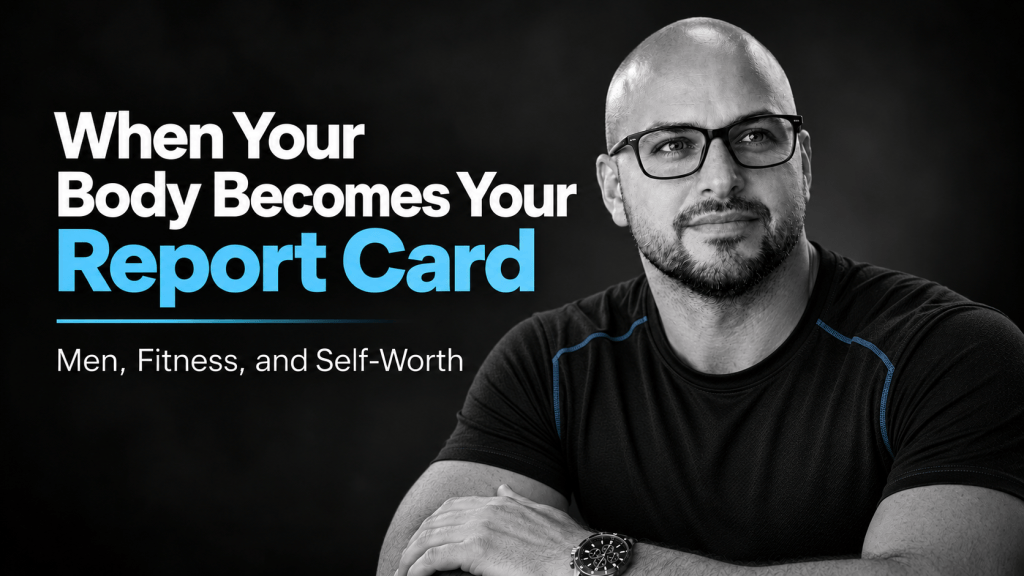
Men, Fitness, and Self-Worth
by John J. Schessler, MS, CPT, SPC
You can be in the best shape of your life and still feel like you’re not enough.
You can build a bigger chest, lift heavier weights, and hear someone say, “You look great,” while quietly wondering what they would think if you gained weight or lost some muscle.
For some men, fitness becomes more than something they do for their health. It becomes a daily evaluation of who they are.
The mirror gives the grade.
The scale confirms it.
The workout becomes another test to pass.
And somewhere along the way, a goal that once felt exciting starts to feel like a condition:
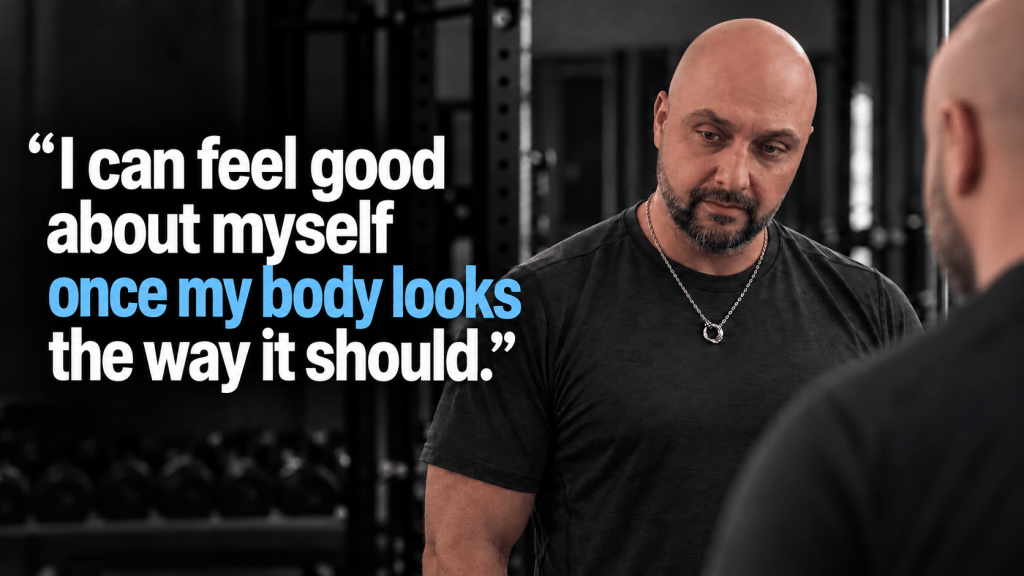
I can feel good about myself once my body looks the way it should.
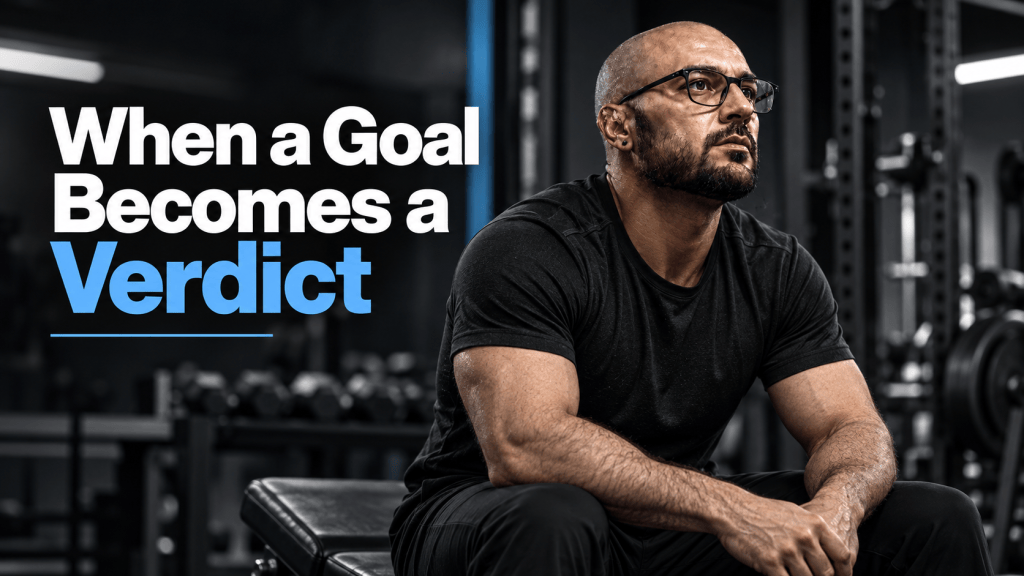
When a Goal Becomes a Verdict
There is nothing wrong with wanting bigger arms, a stronger chest, or better conditioning. Physical goals can give training direction and make progress satisfying.
But consider the difference between these two thoughts:
“I want to get stronger.”
“If I’m not strong, I’m less of a man.”
One describes a goal. The other turns performance into a judgment about your identity.
The same shift can happen with appearance. Wanting to change your body is one thing. Believing your current body makes you unworthy of affection, respect, or being seen is a much heavier burden to carry.
You might notice it when a missed workout feels like a character flaw. When an unflattering photo ruins an otherwise good day. When you dismiss a compliment because all you can see is the part of yourself that still needs work.
At that point, it helps to ask:
What am I expecting this physical change to prove?
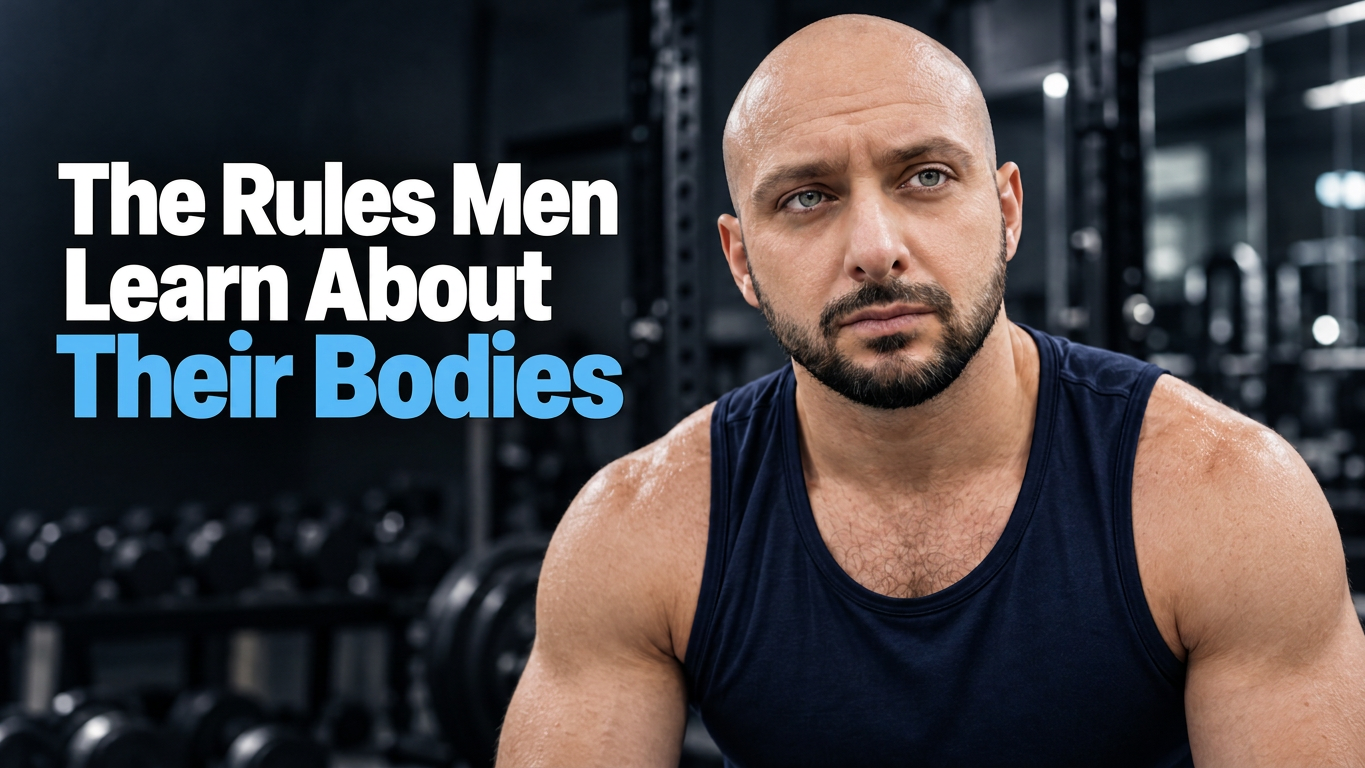
The Rules Men Learn About Their Bodies
Men receive plenty of messages about what a desirable body should look like: muscular, lean, broad, capable, and seemingly effortless.
Some hear these messages in locker rooms. Some hear them in dating spaces. Others absorb them through years of jokes, comparisons, advertisements, and scrolling.
Even praise can become complicated.
If people notice you more after you lose weight or build muscle, you may enjoy the attention while also wondering whether it depends on maintaining that appearance.
“What happens if my body changes?”
“Will I still be attractive?”
“Will people still take me seriously?”
Those questions deserve honesty. A man can feel proud of his progress and anxious about losing it at the same time.
The Goalpost Can Keep Moving
Perhaps you once thought you would feel confident when you reached a certain weight.
Then you reached it and noticed your chest.
You improved your chest and started focusing on your waist.
Your waist changed, but now someone else’s shoulders became the standard.
There is always another feature to examine if you are searching for evidence that you fall short.
That does not mean every new fitness goal is a problem. Training naturally evolves. But there is a difference between choosing another challenge because you enjoy the process and choosing one because you cannot tolerate yourself without it.
Before setting the next goal, pause long enough to acknowledge the one you achieved.
Can you appreciate progress without immediately attaching another requirement to it?
What a Missed Workout Says About You
Sometimes a missed workout means you planned poorly.
Sometimes it means work ran late, your child needed you, you were exhausted, or life demanded something else.
It does not automatically tell you how disciplined, valuable, or deserving you are.
Accountability can be practical: look at what happened, adjust your schedule, and return to training.
Self-criticism often adds a much larger story: “I always fail. I’m lazy. I’m letting myself go.”
That story rarely helps you decide what to do next.
A useful question is simpler:
What would make returning to my routine manageable?
Perhaps that means a shorter session. Perhaps it means a more realistic weekly schedule. Consistency has to fit the life you actually live.
Progress You Can Feel
Appearance is one way to notice change. It does not have to carry the entire meaning of your training.
You may also notice:
- Energy: You have more left for your day after work.
- Mobility: Everyday movements feel more comfortable.
- Endurance: You can walk, cycle, or play longer.
- Strength: Tasks that once felt difficult become easier.
- Confidence: You feel more comfortable learning something new.
These changes deserve attention even when they are difficult to photograph.
Think about what you want your fitness to let you experience. A hike with friends? More independence as you age? The ability to enjoy an active weekend? The satisfaction of learning a skill?
Give those goals space beside the physique goals.
Self-Respect Can Be Part of the Process
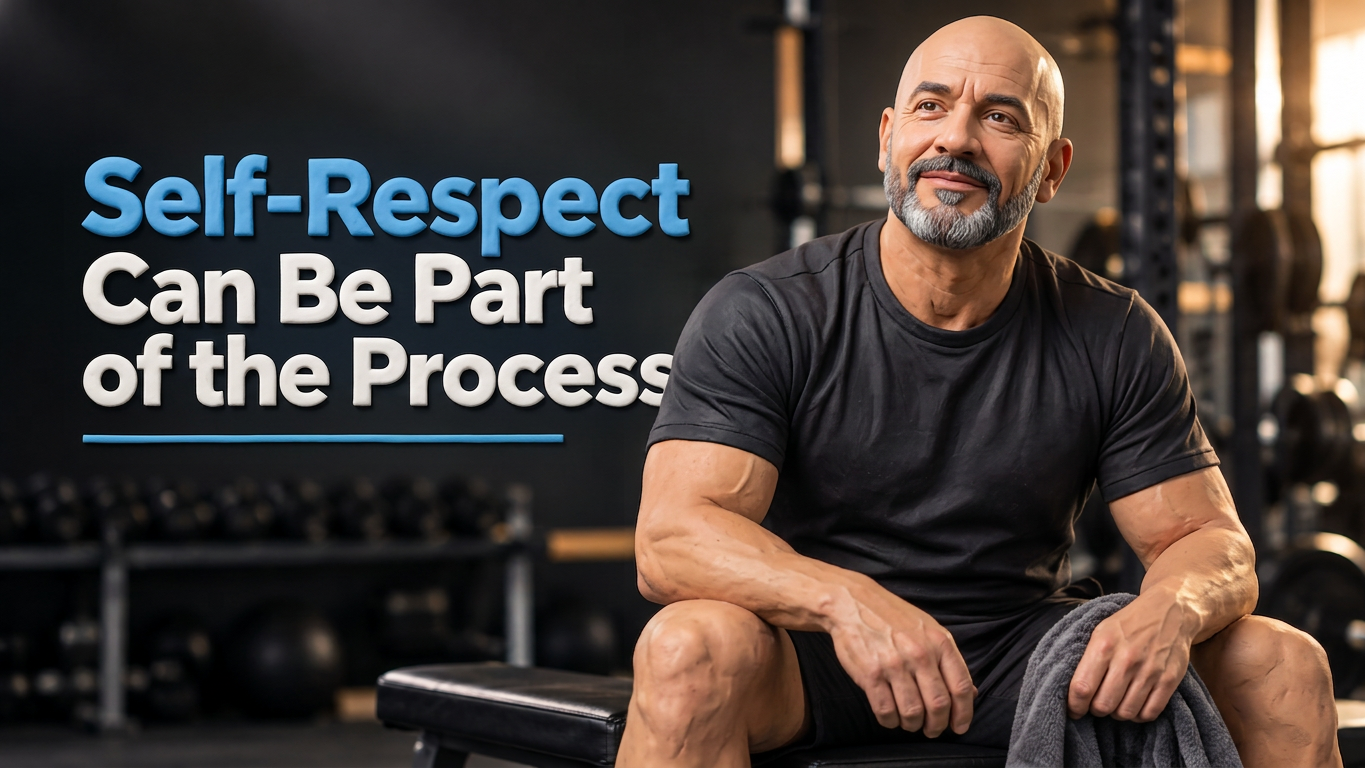
You do not have to abandon ambition to treat yourself with respect.
You can train hard, track progress, and care about your appearance while allowing yourself to be a person whose body changes.
That means paying attention to how you speak to yourself.
“I’m disgusting” offers no useful training direction.
“I want to improve my conditioning, and I can start with two manageable sessions this week” gives you somewhere to begin.
Self-respect also means allowing progress to take time. It means recognizing that your body has needs alongside your expectations. And it means letting yourself participate in life before you reach your ideal physique.
You can go to the beach now. Be in the photograph now. Wear clothes that fit comfortably now.
Your life does not need to wait for the final result.
A Question to Take Into Your Next Workout
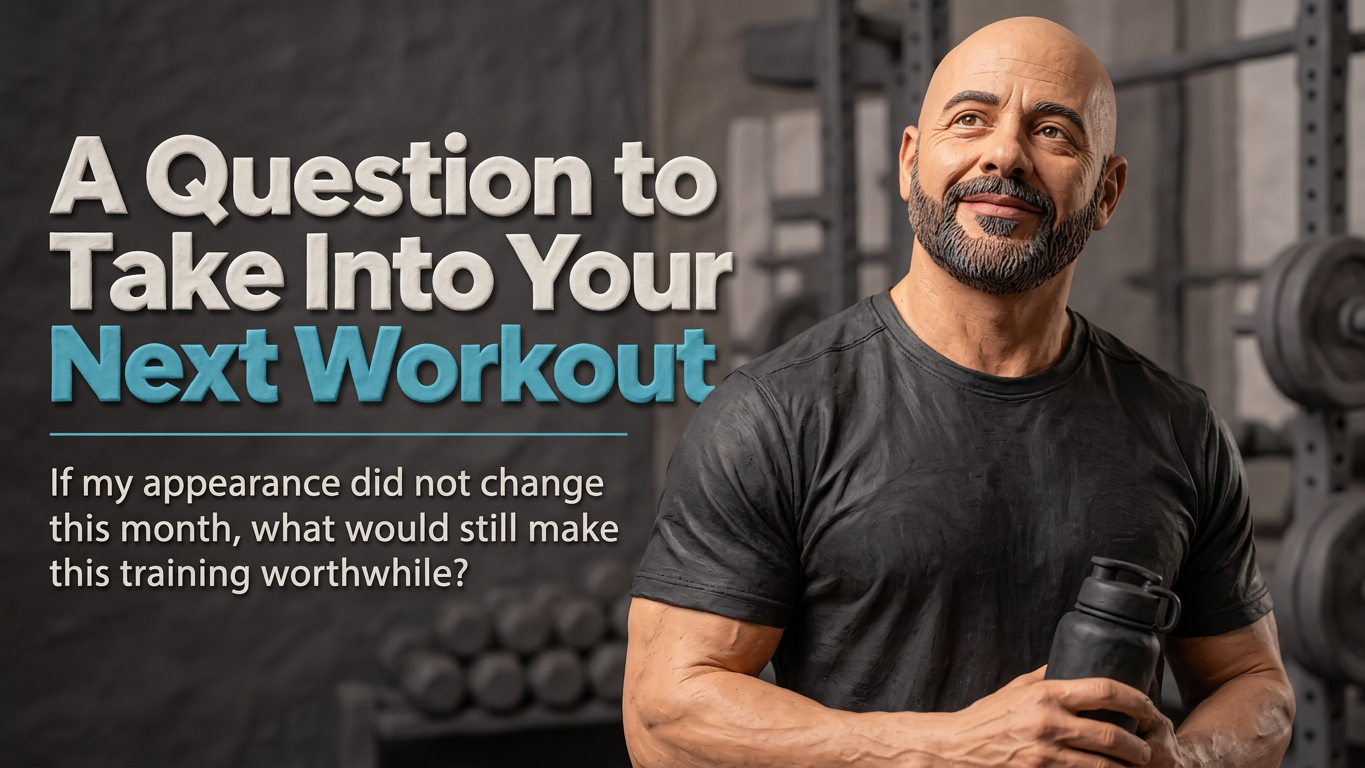
Before your next session, ask yourself:
If my appearance did not change this month, what would still make this training worthwhile?
You might answer: the routine, the enjoyment, the challenge, the time with friends, or the feeling of becoming more capable.
If an answer does not come easily, give the question some room. It may help you understand how much you have asked your appearance to carry.
Keep pursuing the goals that matter to you. But let your body be more than a report card.
It is the body you live in—through work, connection, ordinary days, and experiences you will remember long after a particular workout.
Build strength. Make room for self-respect.
About John J. Schessler, M.S.
John J. Schessler, M.S. is a Mental Performance Coach, Behavior Interventionist, speaker, and founder of Athlete Mindset HQ, a high-performance platform dedicated to helping people become the strongest version of themselves—mentally, emotionally, and physically.
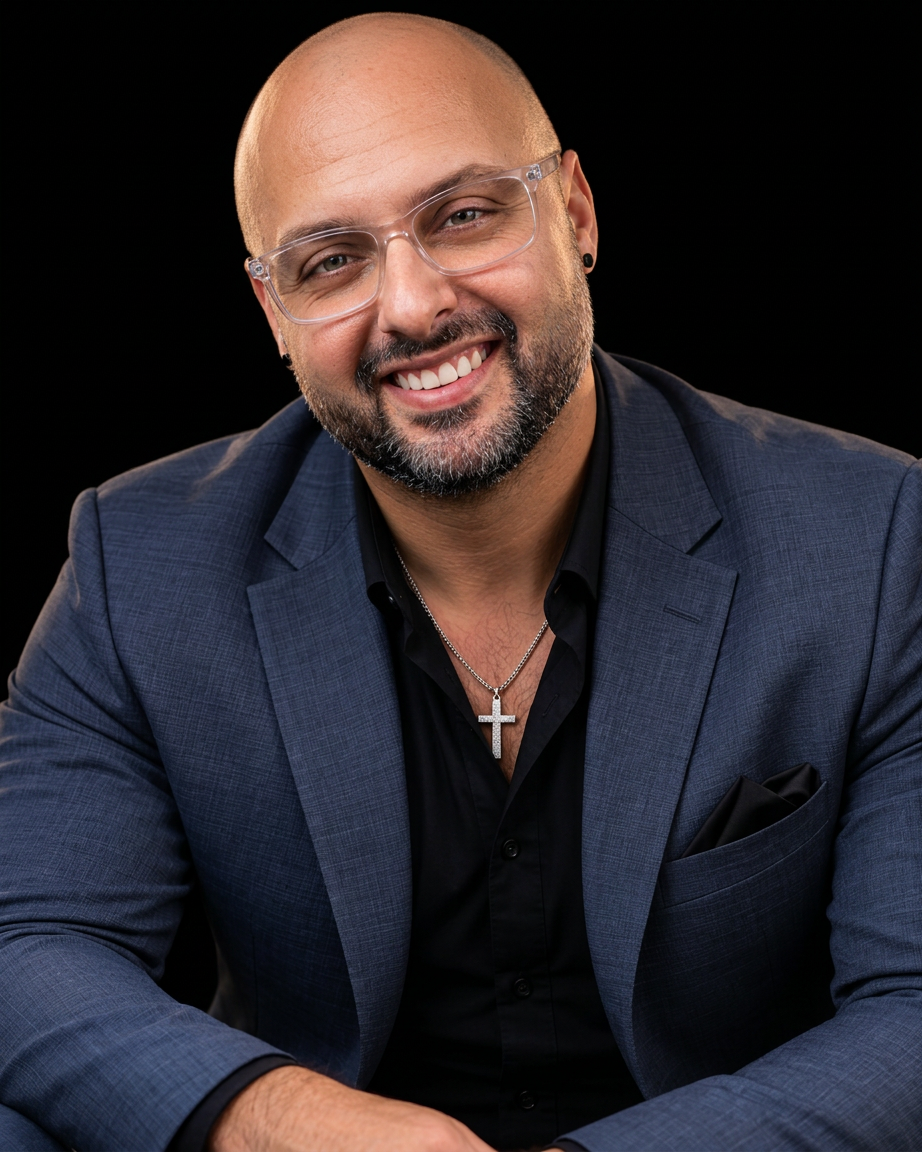
John earned his Master of Science in Sport Psychology from Capella University and his Bachelor of Arts in Child & Adolescent Psychology from Southern New Hampshire University. His work combines evidence-based psychology with practical coaching to help athletes, students, professionals, and individuals facing life’s challenges develop resilience, confidence, discipline, and lasting mental strength.
His passion for this work is deeply personal. Having overcome significant adversity early in life, John understands that real strength isn’t measured by what happens to us—it’s measured by how we respond. That perspective shapes every conversation, coaching session, presentation, and piece of content he creates.
Through Athlete Mindset HQ and The Follow Through Podcast, John shares practical strategies, meaningful conversations, and real-world tools that empower people to perform at their best—not only in competition, but in everyday life. Whether discussing sports psychology, behavioral health, leadership, men’s mental health, or personal growth, his goal remains the same: to educate, encourage, and equip others with the mindset needed to overcome obstacles and pursue excellence with purpose.
Because success isn’t built by what you intend to do.
It’s built by what you follow through on.


Leave a Reply