
By John J. Schessler, MS, CPT, SPC
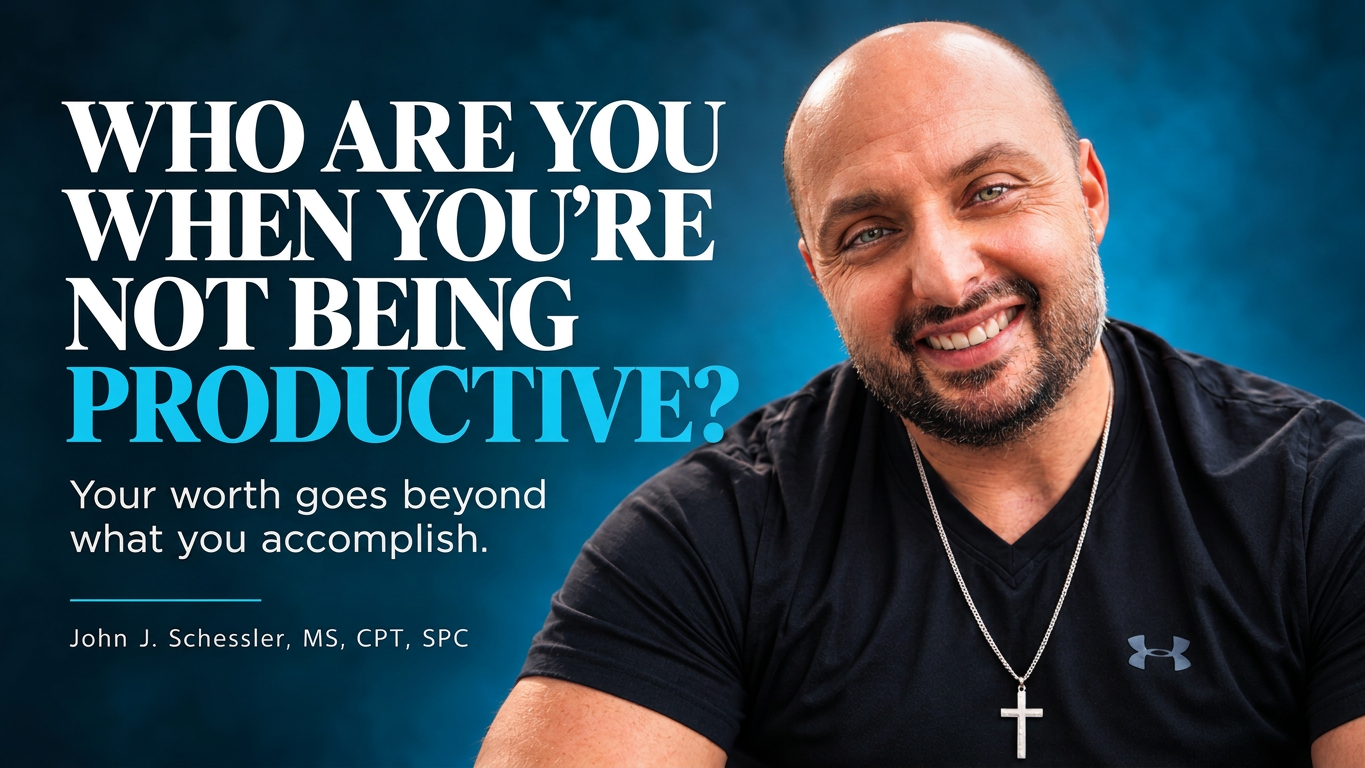
Learning to have a life that doesn’t require constant proof of your worth.
In my last entry, “We Need to Do Something About Hustle Culture,” I wrote about the pressure to keep doing more—to work harder, stay busy, and treat exhaustion as evidence that we’re serious about our lives.
But there’s another conversation underneath that one.
What happens when we finally slow down?
When the work is finished for the day, the workout is over, and nobody needs anything from us, can we enjoy the space?
Or do we immediately start looking for something else to accomplish?
For some of us, the hardest part of slowing down is what we begin to think about ourselves when we do.
I should be doing something.
I’m wasting time.
Everyone else is getting ahead.
Those thoughts deserve our attention. Because changing our schedules only gets us so far if we still measure our worth by how much we produce.
When “What Do You Do?” Becomes “Who Are You?”

We introduce ourselves through our roles.
Teacher. Coach. Trainer. Business owner. Parent. Student.
These roles matter. They give us opportunities to contribute, connect, and build something meaningful. I’m proud of the work I do in education, fitness, and coaching.
But a role can become a demanding place to live when we expect it to explain everything about us.
If being dependable becomes your entire identity, needing help can feel embarrassing.
If being ambitious becomes your entire identity, changing direction can feel like failure.
If being strong becomes your entire identity, admitting that you’re struggling can feel like losing yourself.
Over time, even the things we love can become tests we feel required to pass.
A workout becomes proof of discipline. A promotion becomes proof of value. A full calendar becomes proof that we matter.
And an ordinary, uneventful day starts to feel strangely difficult to accept.
The Goalpost Keeps Moving

There is a particular kind of bargain we make with ourselves:
Once I finish this, I’ll relax.
Once the degree is finished. Once the business grows. Once the body looks different. Once the money feels more secure.
Sometimes reaching those goals really does make life easier. Financial stability matters. Education creates opportunities. Consistent training can improve how we feel and what we can do.
But we can also reach a milestone and immediately decide it was insufficient.
We barely acknowledge what we accomplished before identifying the next thing we lack.
That makes satisfaction difficult to experience. Every achievement becomes a brief stop on the way to another obligation.
It’s worth asking ourselves: Have I given this goal a finish line I’ll actually recognize?
Can we let an accomplishment count before asking it to become something bigger?
Men Need Room to Be Ordinary

For men, this conversation can carry another layer.
There can be pressure to be useful, capable, financially successful, physically strong, and emotionally steady. Even when nobody says those expectations aloud, we may carry them into how we judge ourselves.
What do you bring to the table?
How much can you handle?
Who depends on you?
Providing and contributing can be deeply meaningful. The difficulty comes when a man feels he must always offer something to deserve connection.
He becomes the person who fixes everything, picks up the extra shift, makes everyone laugh, or keeps his struggles quiet.
But what happens when he needs company and has nothing impressive to report?
We need friendships where a man can show up tired, uncertain, or disappointed and still feel welcome. We need room for conversations that don’t require a success story.
Being loved should include being known on the days when you have little to give.
Even Rest Can Become Another Assignment
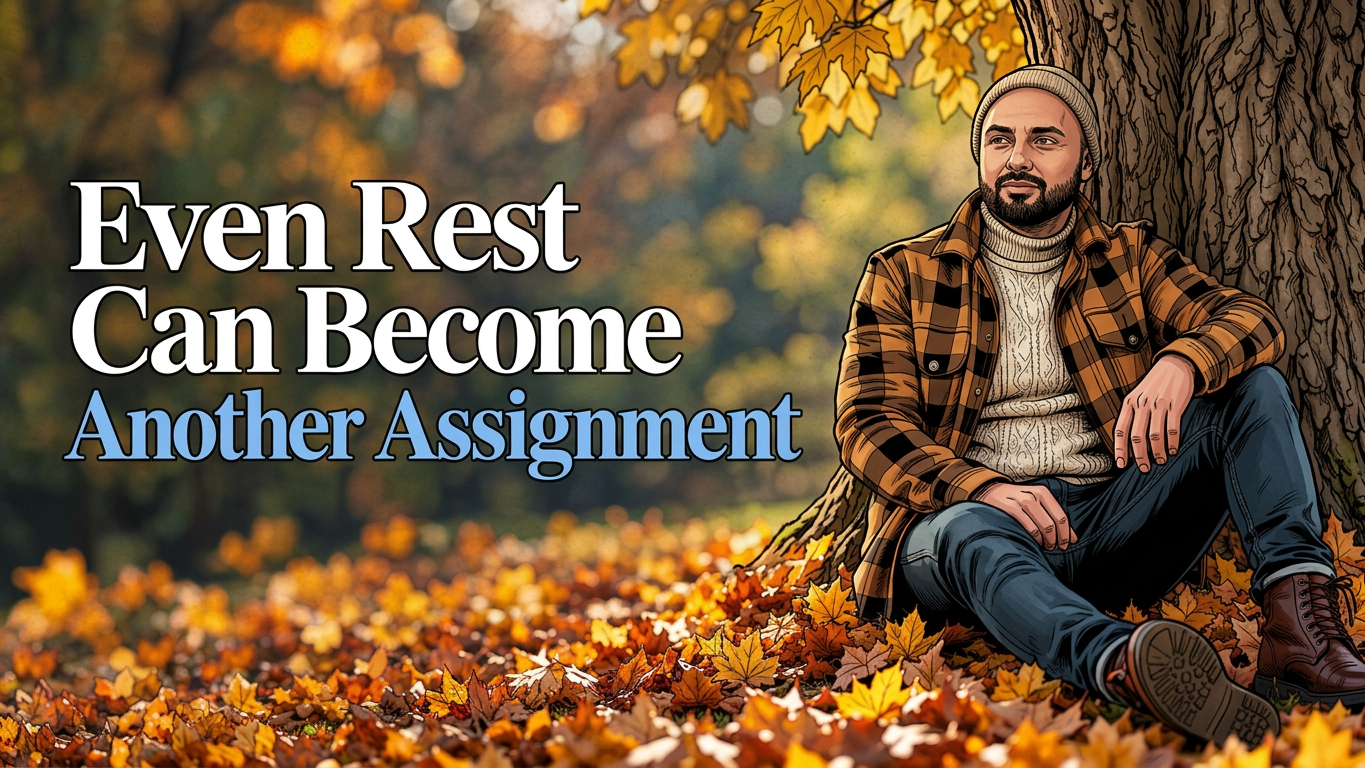
We can bring the same pressure into our downtime.
The walk needs a step count. The hobby needs an audience. The vacation needs content. The quiet morning needs a routine that improves our performance.
Tracking progress can be useful. Creating something worth sharing can be enjoyable. But we should also have experiences we’re allowed to enjoy without turning them into evidence of improvement.
Read a book because you’re curious.
Listen to music without doing another task.
Spend time with someone without making the conversation productive.
Try something you’re bad at and let yourself remain a beginner.
There is value in having parts of your life that don’t require evaluation.
What Would “Enough” Look Like Today?

Some people have very little control over how much they work. Bills, caregiving, staffing demands, and unstable income create real pressure. A conversation about slowing down has to acknowledge that.
Still, within whatever room we have, we can begin examining the demands we add ourselves.
A few questions can help:
- What actually needs to be finished today?
- What am I doing because I’m afraid someone will think less of me?
- What have I already done that deserves acknowledgment?
- What would I enjoy if I didn’t have to become good at it?
- Who can I spend time with without feeling the need to impress them?
The answers may reveal a small boundary we can set, an obligation we can reconsider, or a moment we can allow ourselves to enjoy.
We don’t have to redesign our entire lives to begin practicing this.
We can finish a reasonable amount of work and let the evening belong to us. We can accept a compliment without listing everything we still need to improve. We can leave some space in the calendar and resist filling it immediately.
Let Your Life Include You

I still believe in ambition. I believe in preparation, discipline, and following through on commitments.
I also want us to think carefully about the lives those efforts are helping us build.
Do they include friendship? Curiosity? Laughter? Time to notice how we feel?
Can we experience pride without immediately creating another test?
In my last entry, I wrote:
“You are allowed to have ambition. You are also allowed to be a person while you pursue it.”
The next step is giving that person some room.
Room to have interests that lead nowhere. Room to ask for support. Room to be appreciated without performing.
You deserve to recognize yourself in the life you’re working so hard to build.
About John J. Schessler, M.S.
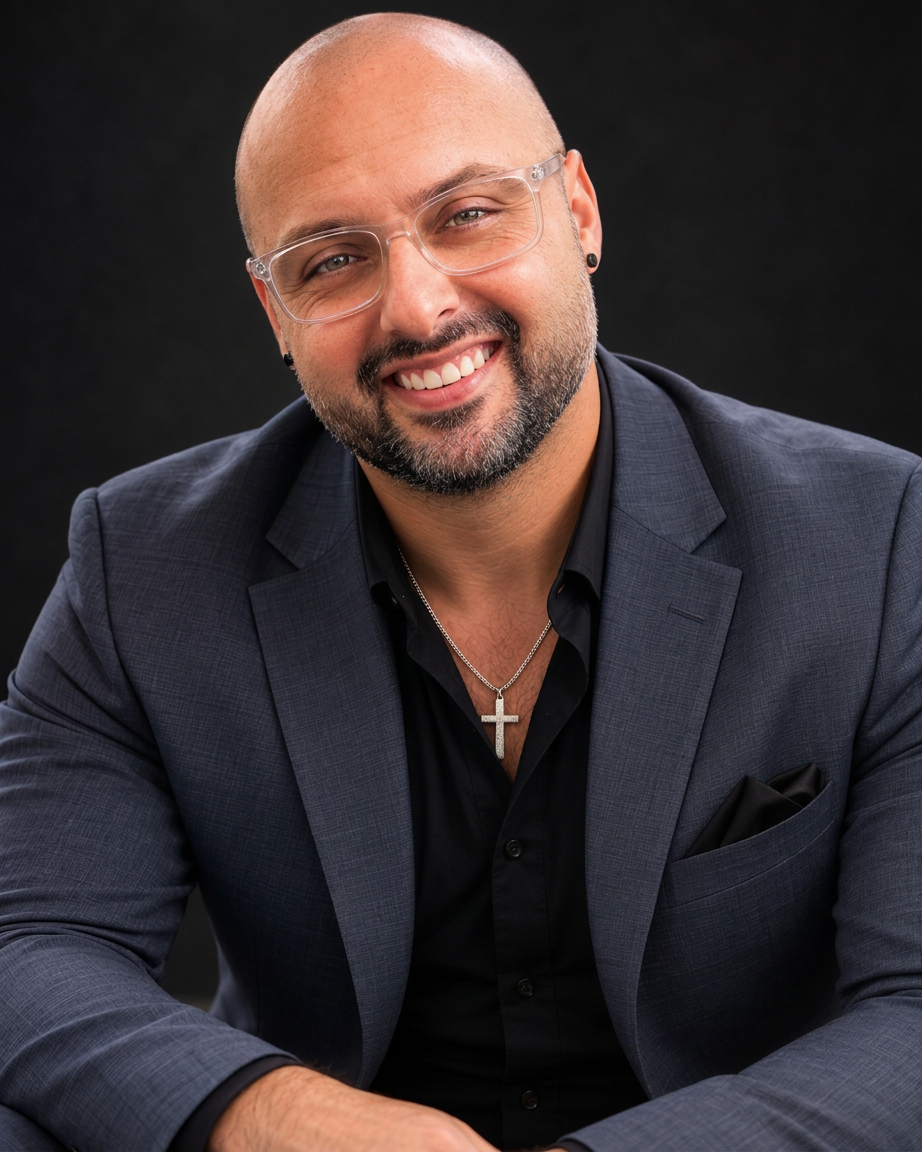
John J. Schessler, M.S. is a Mental Performance Coach, Behavior Interventionist, speaker, and founder of Athlete Mindset HQ, a high-performance platform dedicated to helping people become the strongest version of themselves—mentally, emotionally, and physically.
John earned his Master of Science in Sport Psychology from Capella University and his Bachelor of Arts in Child & Adolescent Psychology from Southern New Hampshire University. His work combines evidence-based psychology with practical coaching to help athletes, students, professionals, and individuals facing life’s challenges develop resilience, confidence, discipline, and lasting mental strength.
His passion for this work is deeply personal. Having overcome significant adversity early in life, John understands that real strength isn’t measured by what happens to us—it’s measured by how we respond. That perspective shapes every conversation, coaching session, presentation, and piece of content he creates.
Through Athlete Mindset HQ and The Follow Through Podcast, John shares practical strategies, meaningful conversations, and real-world tools that empower people to perform at their best—not only in competition, but in everyday life. Whether discussing sports psychology, behavioral health, leadership, men’s mental health, or personal growth, his goal remains the same: to educate, encourage, and equip others with the mindset needed to overcome obstacles and pursue excellence with purpose.
Because success isn’t built by what you intend to do.
It’s built by what you follow through on.


Leave a comment