
by John J. Schessler, MS, CPT, SPC
Content note: This article discusses allegations of sexual assault, drug and alcohol use, and consent.
There are stories that are difficult to write about because the facts are still being investigated.
And then there are stories that are difficult to write about because, regardless of what the legal system ultimately determines, they force us to confront uncomfortable questions about men, sex, consent, friendship, power, and the behavior we tolerate from other men.
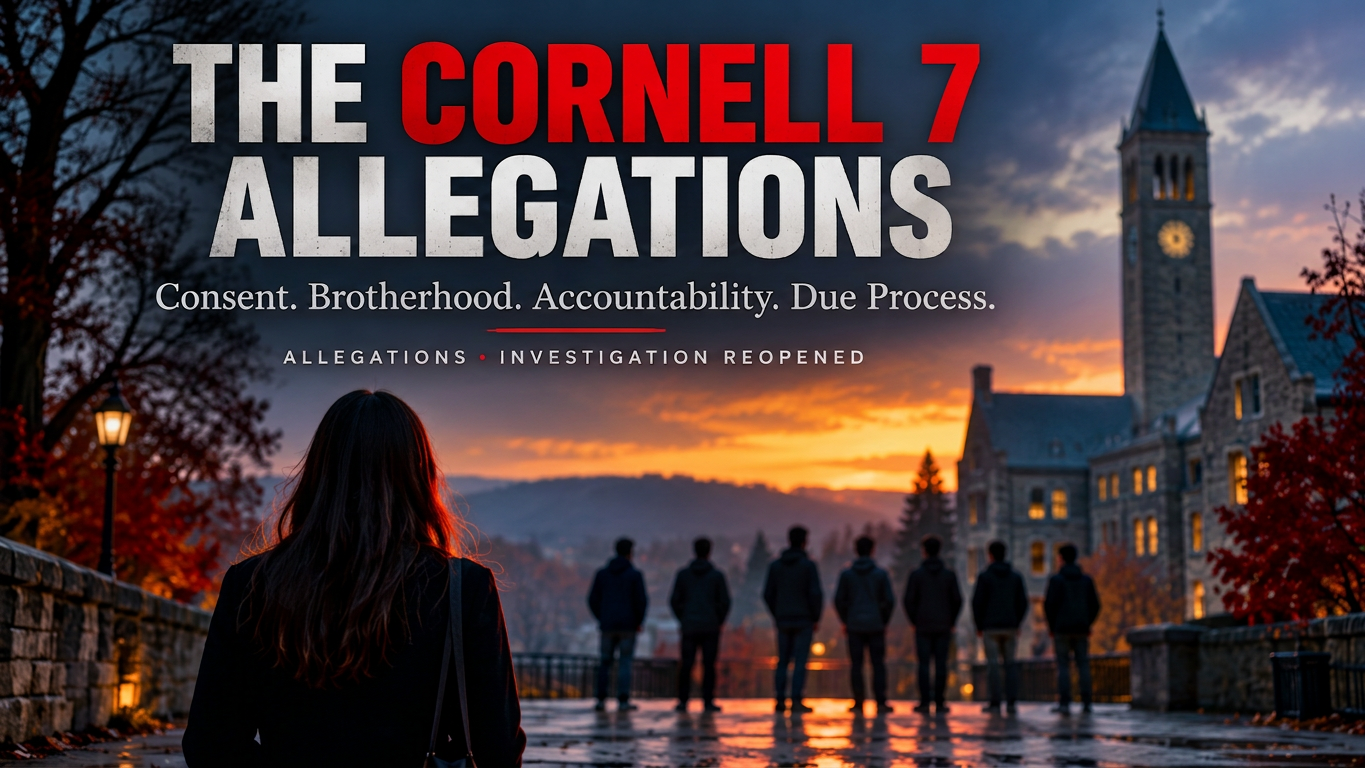
The allegations surrounding seven former or current Cornell University students are both.
A former Cornell student, identified publicly as Jane Doe, has filed a civil lawsuit alleging that she was sexually assaulted by seven members of the Chi Phi fraternity in October 2024 after consuming alcohol and drugs and becoming incapacitated.
These are allegations. They have not been established as criminal facts in court.
That distinction matters.
The Tompkins County District Attorney has now reopened the criminal investigation and said the evidence will be presented to a grand jury. Cornell has said its own disciplinary investigation resulted in expulsions and suspensions and that the Chi Phi chapter was closed.
There are also significant questions surrounding the original investigation. The district attorney says the woman’s sworn statement to police in 2024 described the sexual activity differently from the allegations contained in her 2026 lawsuit. Her attorney, meanwhile, has criticized the investigation and said authorities failed to adequately follow up.
Those questions deserve to be examined through the legal process rather than decided on social media.
But there is another conversation here.
And I think men need to be part of it.
Consent Is More Than the Absence of the Word “No”
One of the biggest mistakes we can make when teaching young men about consent is reducing it to a single question:
“Did she say no?”
That is far too small a standard.
Consent requires the capacity to make a decision.
Someone who is severely intoxicated or incapacitated may not be capable of meaningfully consenting. Previous sexual interest does not automatically establish consent to something happening later. Going into someone’s bedroom is not blanket consent. Flirting is not consent. Previous sexual activity is not permanent consent.
And consent can be withdrawn.
We need to teach young men something more sophisticated than simply avoiding the word no.
We need to teach them to recognize whether another person is actively, freely, and knowingly participating.
Because the better question isn’t:
“Can I technically get away with this?”
It’s:
“Is this person actually choosing this?”
What Do You Do When the Group Crosses the Line?

The allegations also raise another uncomfortable issue for men:
group behavior.
Most conversations about sexual violence focus entirely on an individual perpetrator and an individual victim.
But men rarely develop their understanding of masculinity in isolation.
We learn from other men.
Teammates.
Fraternity brothers.
Locker rooms.
Group chats.
Friends.
Older guys.
Younger guys watching us.
And groups can change behavior.
A guy who might hesitate alone may behave differently when surrounded by other men laughing, encouraging him, or treating someone’s body like entertainment.
That’s where masculinity becomes a group responsibility.
Because sometimes being a good man isn’t simply saying:
“I didn’t participate.”
Sometimes it means saying:
“Stop.”
Sometimes it means getting someone out of the room.
Sometimes it means calling out your friend.
Sometimes it means being willing to become unpopular with the group.
That is not weakness.
That may be one of the strongest things a man can do.
Brotherhood Cannot Mean Protecting Men From Consequences
Men talk about brotherhood constantly.
Sports teams call themselves brothers.
Fraternities call themselves brothers.
Military units talk about brotherhood.
Friend groups do too.
There is something beautiful about men feeling responsible for one another.
But brotherhood becomes dangerous when loyalty gets confused with silence.
Protecting your friend should not mean protecting him from accountability.
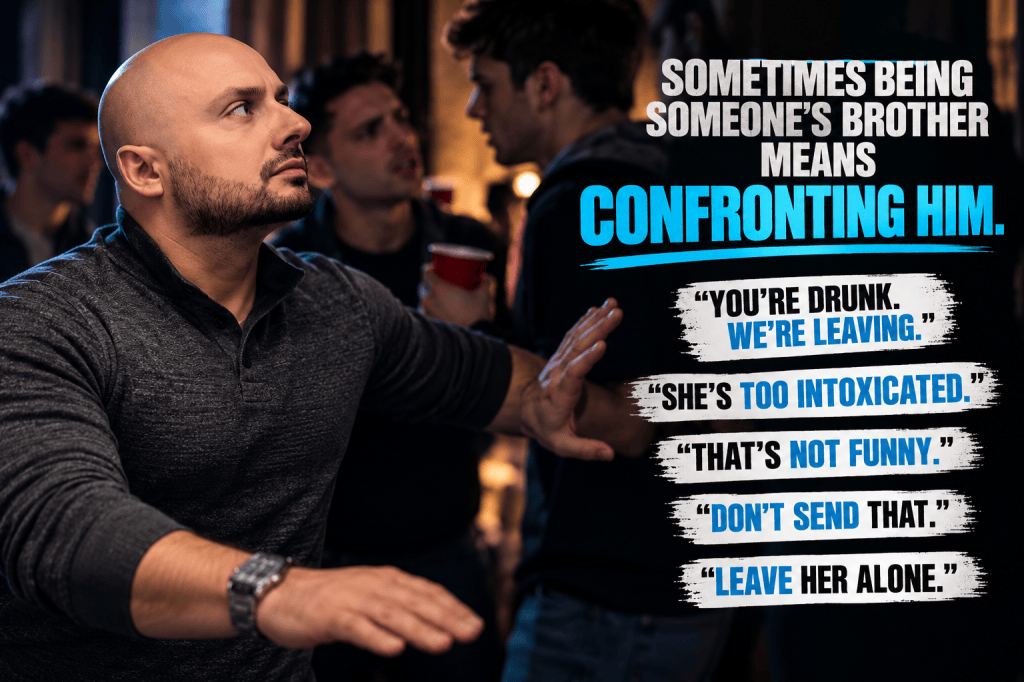
Sometimes being someone’s brother means confronting him.
“You’re drunk. We’re leaving.”
“She’s too intoxicated.”
“That’s not funny.”
“Don’t send that.”
“Leave her alone.”
Those sentences aren’t betrayals of brotherhood.
They may be exactly what brotherhood is supposed to look like.
We Also Have to Leave Room for Due Process

There is another principle that cannot disappear simply because allegations are disturbing.
People accused of serious crimes deserve due process.
The seven men named in the civil lawsuit have not been convicted of rape. At least one defendant, through his attorney, has publicly denied sexually assaulting the plaintiff.
That matters.
Supporting people who report sexual assault and respecting due process are not mutually exclusive ideas.
We can take allegations seriously without declaring guilt before evidence is tested.
We can acknowledge inconsistencies without automatically concluding someone is lying.
We can investigate aggressively while still protecting the rights of the accused.
A mature justice system has to be capable of holding those ideas simultaneously.
Universities Have Responsibilities Too
Cornell has faced criticism over its handling of the case, particularly after reports circulated suggesting that some students were merely required to write essays.
Cornell disputes that characterization.
The university says its investigation involved a hearing process and resulted in expulsions and suspensions, and that the Chi Phi chapter was closed and remains barred from campus.
That distinction is important because institutional accountability should be based on what actually happened—not whatever version travels fastest on social media.
At the same time, universities should expect scrutiny when allegations this serious arise.
Students need to know what happens when they report sexual violence.
Who investigates?
How quickly?
What support is provided?
What happens to the accused while the investigation takes place?
What standards are used?
And how do universities balance student safety with due process?
Those are difficult questions.
They are also necessary ones.
This Conversation Cannot Only Be About “Bad Men”
There is something else I don’t want us to miss.
Whenever a horrific allegation involving men becomes public, it is tempting for the rest of us to distance ourselves immediately.
Those guys are monsters.
And maybe distancing ourselves makes us feel safer.
Because if sexual violence is something committed exclusively by monsters, ordinary men don’t have to examine anything about ourselves or our communities.
But prevention requires more than identifying monsters.
It requires examining culture.
What jokes do we tolerate?
What happens when someone shares sexual pictures?
What happens when a woman is visibly intoxicated at a party?
What do we say when a friend talks about women as something he is entitled to obtain?
What happens when a teammate crosses a boundary?
Do we intervene?
Or do we convince ourselves that it isn’t our business?
Most men will never commit sexual violence.
But nearly every man will eventually encounter another man’s questionable behavior.
That moment matters.
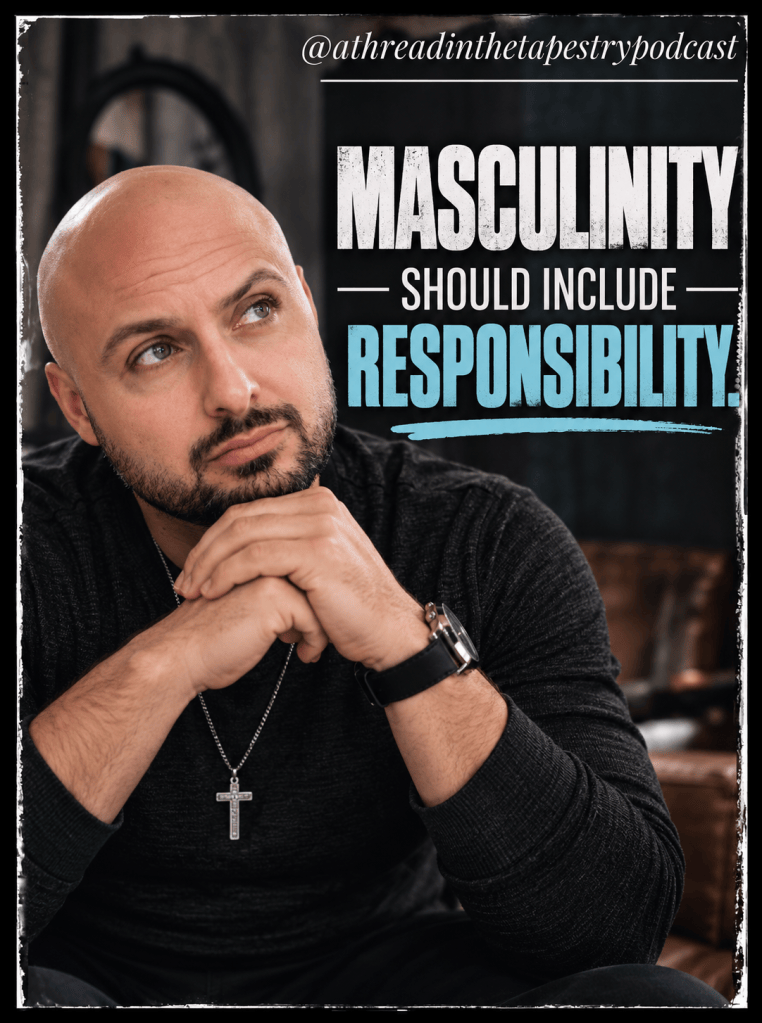
Masculinity Should Include Responsibility
I’ve spent a lot of time thinking and writing about masculinity.
Strength.
Protection.
Brotherhood.
Resilience.
Vulnerability.
Responsibility.
And stories like this remind me that those concepts aren’t theoretical.
If we tell boys that being a man means protecting people, then protection has to mean more than defending someone in a fight.
It can mean protecting the intoxicated person at the party.
It can mean protecting a woman from your friend.
It can even mean protecting your friend from becoming someone he never thought he could become.
Sometimes masculinity means stepping between someone vulnerable and someone dangerous.
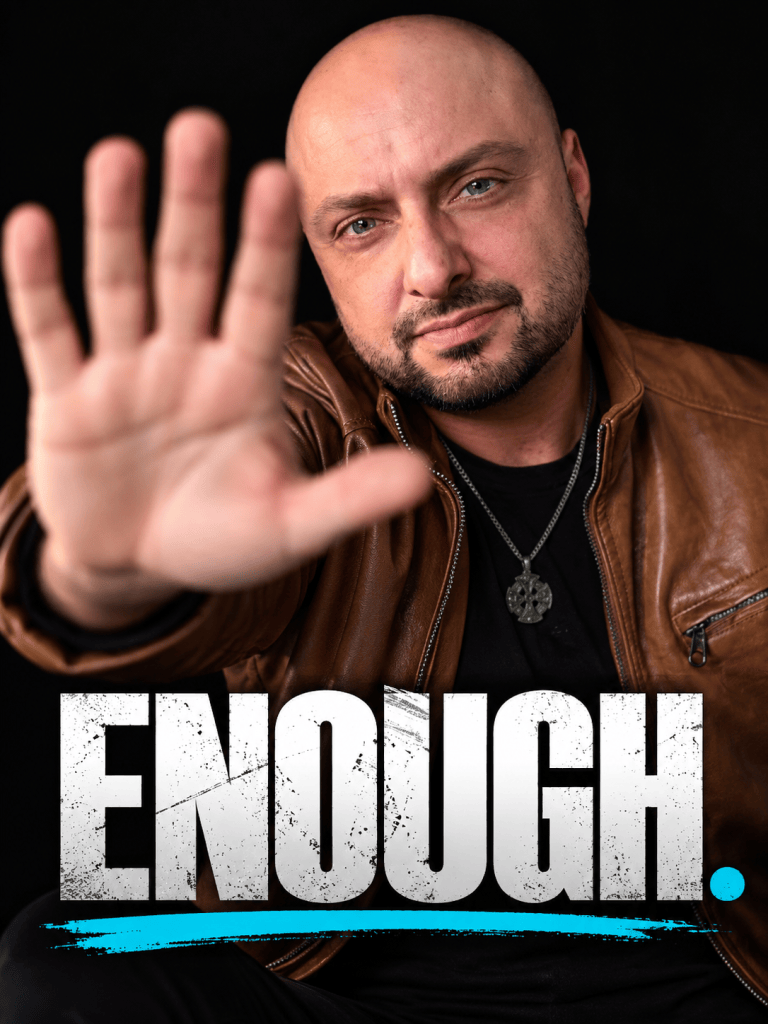
Sometimes it means saying one word:
Enough.
The Conversation Men Need to Have
The criminal investigation will determine what evidence exists in this particular case.
A grand jury may eventually decide whether criminal charges should follow.
Courts—not Instagram, TikTok, Reddit, or this article—are where individual criminal responsibility must ultimately be determined.
But we don’t need to wait for a verdict to talk to boys and men about consent.
We don’t need to wait to talk about alcohol and sexual decision-making.
We don’t need to wait to talk about intervening when our friends cross boundaries.
And we certainly don’t need to wait to redefine brotherhood.
Maybe one of the most important lessons we can teach young men is incredibly simple:
The character of a man isn’t only revealed by what he refuses to do.
It’s also revealed by what he refuses to stand by and watch.
ABOUT THE AUTHOR
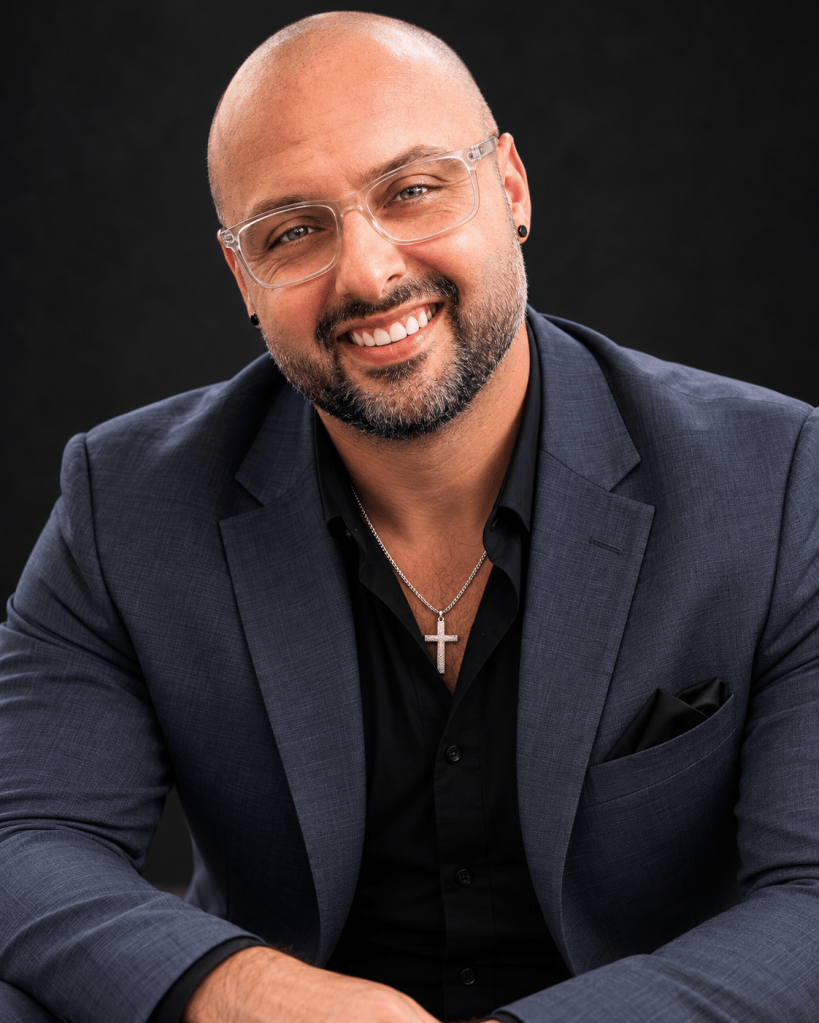
John J. Schessler, M.S., is a Mental Performance Coach, Behavior Interventionist, speaker, and founder of Athlete Mindset HQ—a high-performance coaching platform dedicated to helping athletes, professionals, and everyday individuals develop the mindset needed to thrive under pressure and perform at their highest potential.
John earned his Master of Science in Sport Psychology from Capella University and his Bachelor of Arts in Child & Adolescent Psychology from Southern New Hampshire University. His work bridges the gap between psychology, human performance, behavioral science, and personal development, combining evidence-based strategies with practical coaching that people can immediately apply in sport, work, and everyday life.
His passion for helping others is rooted in his own journey. As a child, John survived Guillain-Barré Syndrome, spending weeks in a coma before fighting through rehabilitation to reclaim his life. That experience shaped his belief that resilience isn’t something you’re born with—it’s something you build through adversity, discipline, and purpose.
Today, John works with individuals from all walks of life, helping them strengthen confidence, improve emotional resilience, overcome obstacles, and develop the habits that lead to lasting success. Whether coaching athletes, mentoring students, speaking to organizations, or creating educational content, his mission remains the same: to help people become mentally stronger than the challenges they face.
John is also the host of The Follow Through Podcast, where he explores sports psychology, leadership, men’s mental health, motivation, resilience, and human performance through practical conversations that inspire listeners to move beyond intention and into action.
His philosophy is simple:
Mental strength isn’t about never struggling. It’s about developing the confidence, discipline, and resilience to keep moving forward—especially when life gets difficult.
Because success isn’t built by what you intend to do.
It’s built by what you follow through on.
Personal Brand Statement
John J. Schessler, M.S. is dedicated to helping people unlock their potential by strengthening the one asset that influences every area of life—the mind. Through education, coaching, and authentic conversation, he empowers others to develop confidence, resilience, and the discipline to follow through on their goals.


Leave a comment