
by John J. Schessler, MS, CPT, SPC
There is something deeply appealing about being the person others can count on.
The guy who handles things.
The one who steps forward when something goes wrong.
The person who protects his family, his partner, his friends, his teammates, or the people he works with.
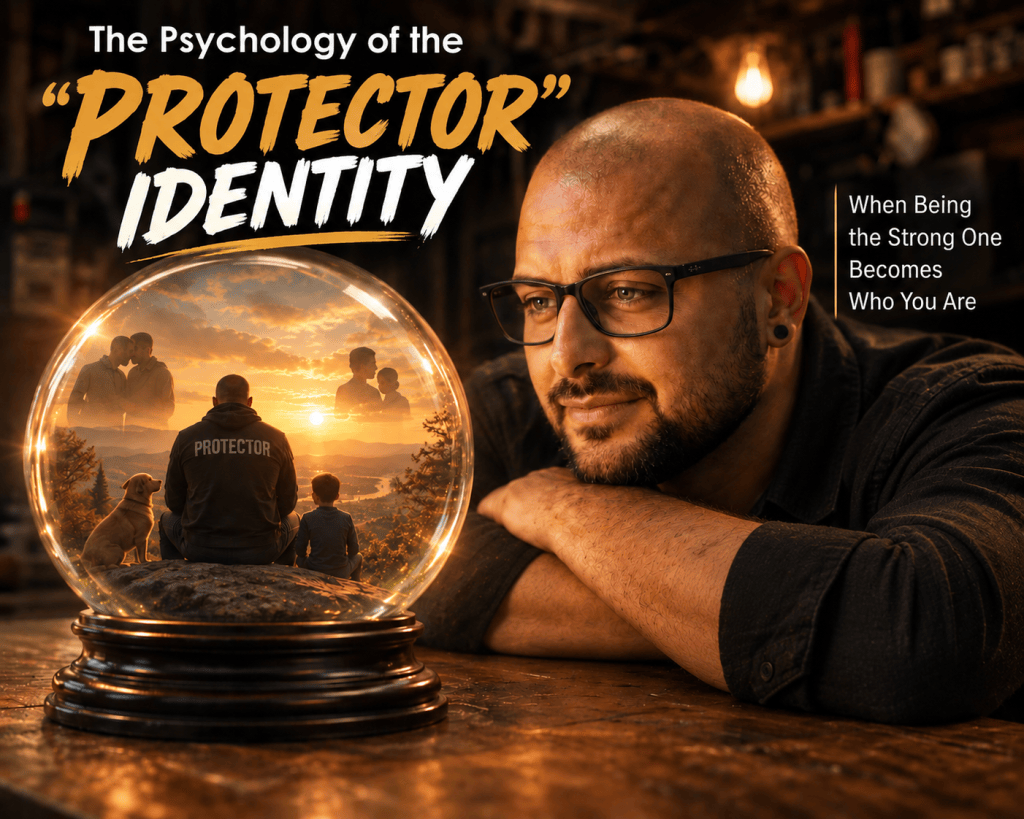
For many men, being a protector isn’t simply something they do.
It becomes part of who they believe they are.
“I take care of people.”
“I handle it.”
“If something happens, I’ve got it.”
There can be something genuinely meaningful about that identity. Protectiveness can grow from love, loyalty, responsibility, courage, empathy, and a desire to be useful to the people around us.
But psychologically, the protector identity has another side.
Because sometimes the man who becomes very good at protecting everyone else never learns what to do when he’s the one who needs protecting.
And that’s where things get interesting.
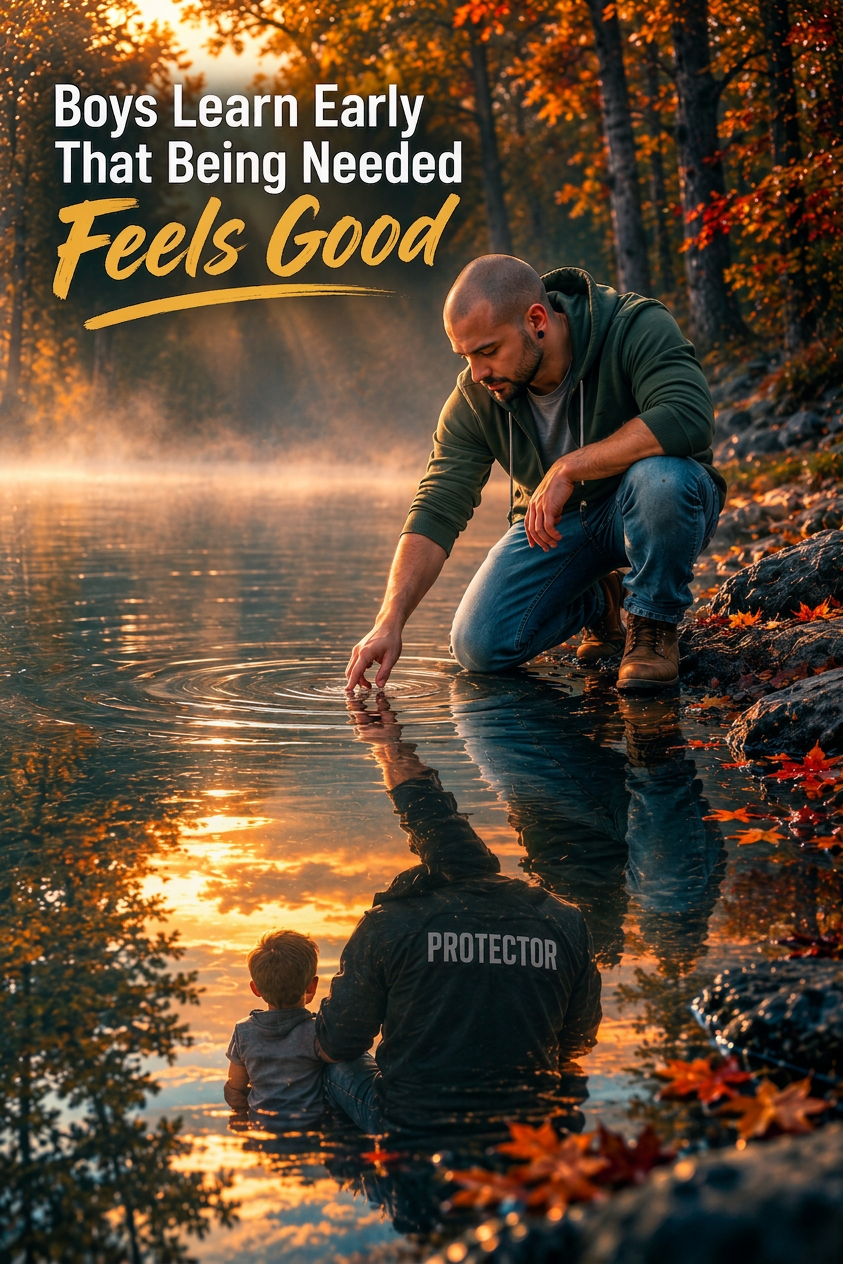
Boys Learn Early That Being Needed Feels Good
Think about some of the messages boys receive growing up.
Be strong.
Stand up for yourself.
Protect your brother or sister.
Take care of your family.
Don’t let anybody mess with your friends.
Walk her to the car.
Make sure everyone gets home safely.
If something happens, do something.
These aren’t inherently bad messages.
Many of them teach responsibility and care.
But underneath them can develop another message:
Your value comes from what you can provide when other people need you.
And that can become powerful.
Being needed gives us a role.
A role gives us purpose.
Purpose gives us identity.
Eventually, a boy can become a man who feels most comfortable when someone else needs something from him.
But ask him what he needs?
That’s sometimes a much harder question.
Protection Isn’t Always Physical
When we hear the word protector, we tend to imagine physical protection.
The guy who would step between someone he loves and danger.
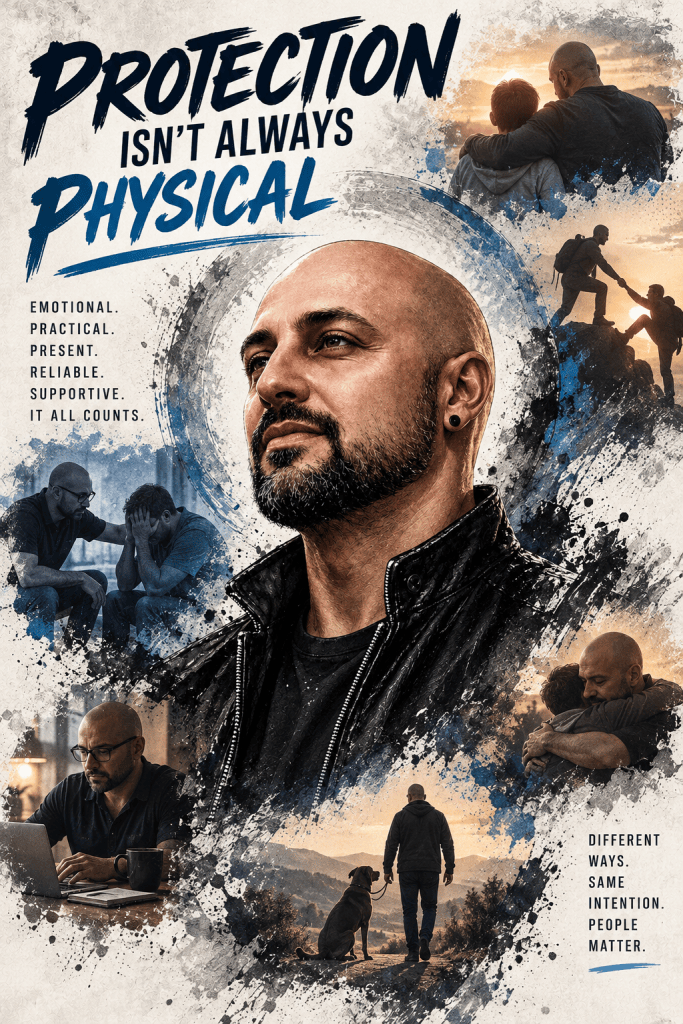
But most adult protection doesn’t look like that.
Sometimes protection means being financially dependable.
Sometimes it’s solving problems.
Sometimes it’s emotional.
Sometimes it’s being the person everyone calls during a crisis.
Sometimes it’s making sure the family stays together.
Sometimes it’s being the coach who notices the athlete struggling.
Sometimes it’s being the friend who answers the phone at 2:00 in the morning.
And sometimes it’s simply saying:
“I’ve got you.”
That’s an incredibly powerful thing to offer another human being.
The problem begins when “I’ve got you” quietly becomes “therefore, I can’t need you.”
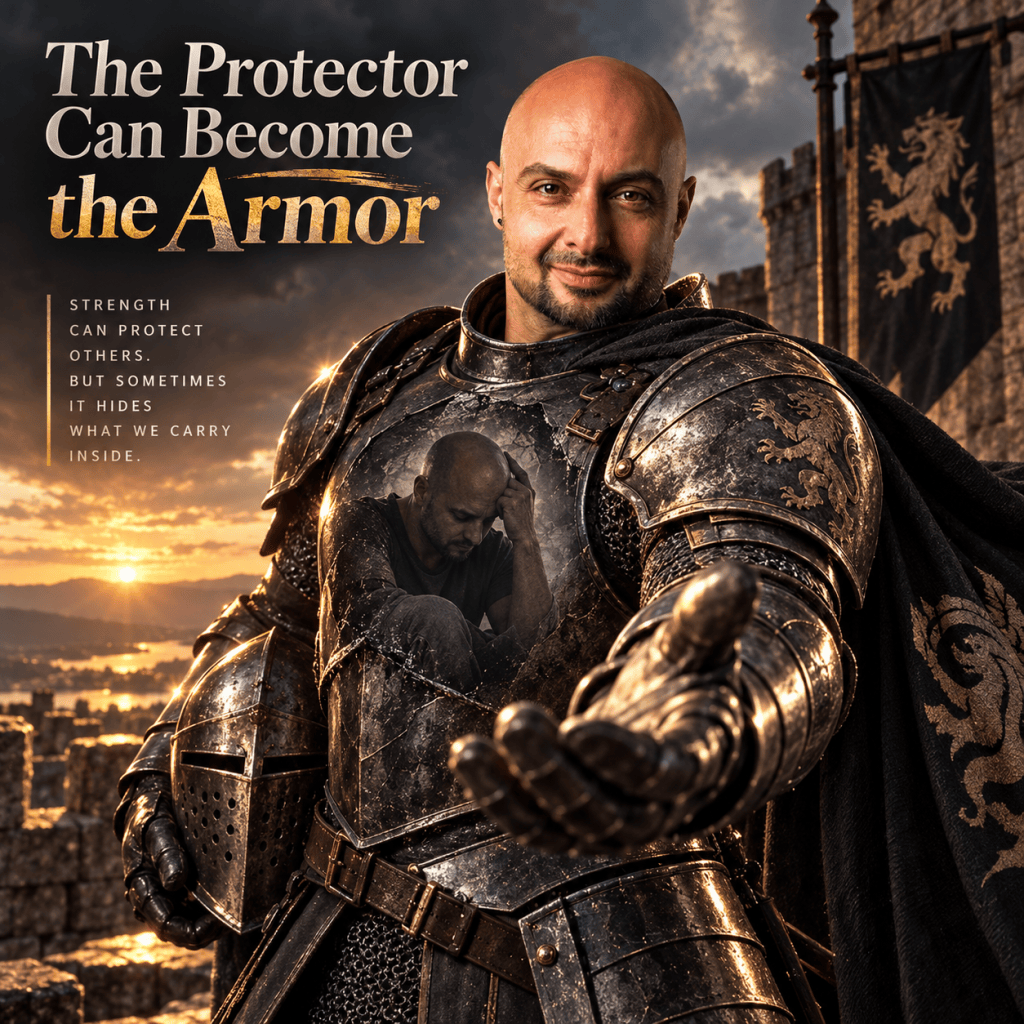
The Protector Can Become the Armor
For some men, competence becomes emotional armor.
If I’m useful, I’m valuable.
If I’m strong, I’m safe.
If everyone depends on me, nobody will see me struggling.
If I’m solving your problem, we don’t have to talk about mine.
That last one is especially interesting.
Helping other people can sometimes become a socially acceptable way of avoiding ourselves.
You can spend years being everybody else’s emergency contact while never admitting that you’re exhausted.
You can give excellent advice while ignoring your own pain.
You can be emotionally available to everyone around you while revealing very little about yourself.
From the outside, that looks like strength.
And sometimes it is strength.
But sometimes it’s also protection from vulnerability.
“I Don’t Want to Burden Anyone”
This is where the protector identity often shows itself.
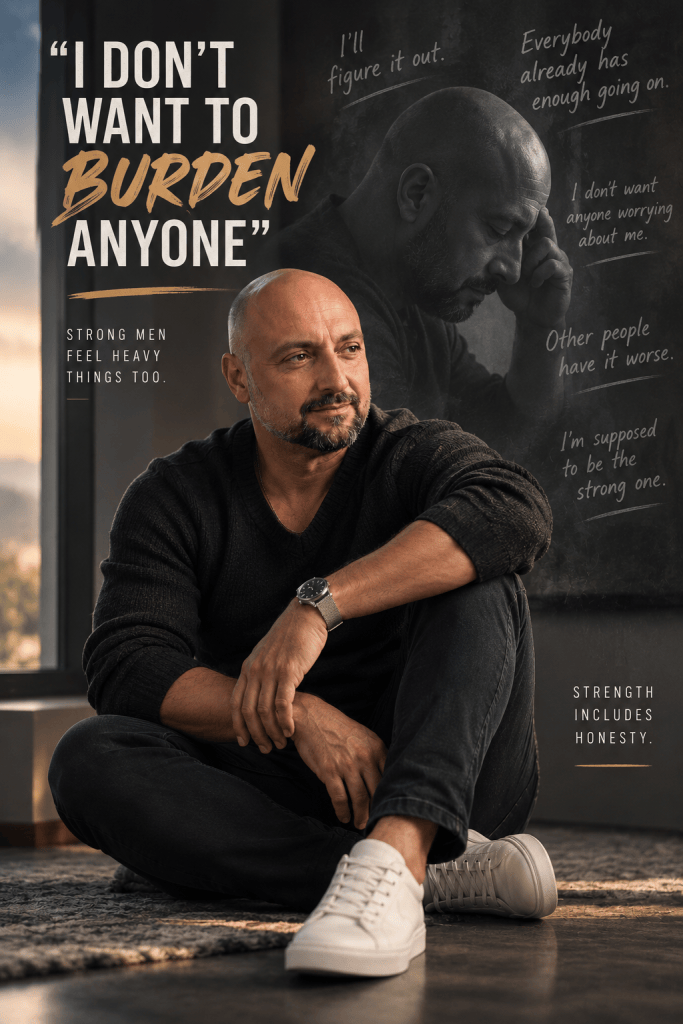
Ask some men why they don’t talk when they’re struggling, and you’ll hear versions of:
“Everybody already has enough going on.”
“I’ll figure it out.”
“I don’t want anyone worrying about me.”
“Other people have it worse.”
“I’m supposed to be the strong one.”
Notice what’s happening psychologically.
The man isn’t necessarily saying he doesn’t have emotions.
He’s saying that his emotions have been classified as somebody else’s burden.
So he protects people from them.
He protects his partner from his fear.
His family from his uncertainty.
His friends from his sadness.
His coworkers from his stress.
Sometimes he even protects himself from acknowledging what he’s feeling.
And eventually the protector becomes very good at looking okay.
Control Can Feel Like Safety
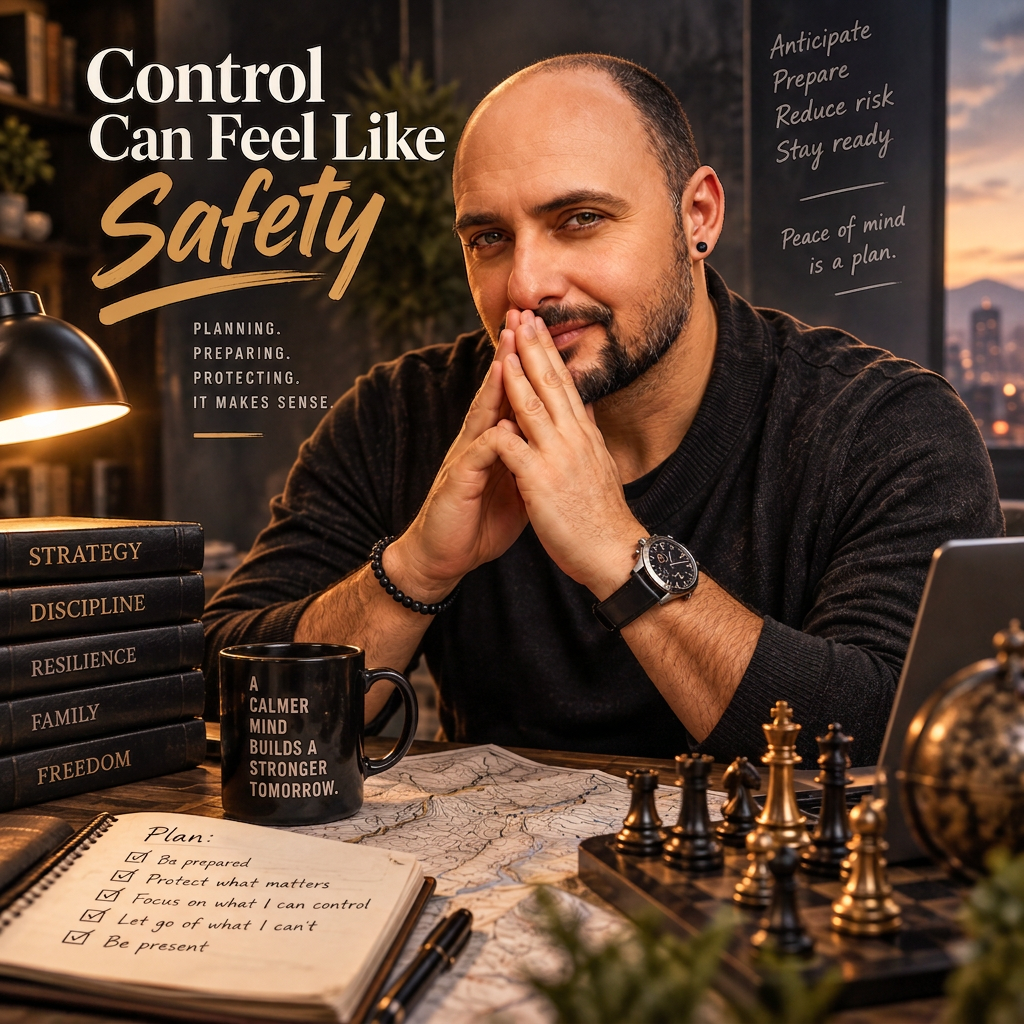
There is another piece of this identity that deserves attention.
Protectors often like being prepared.
They anticipate problems.
They think ahead.
They notice threats.
They make plans.
Those traits can be incredibly useful.
But when taken too far, protection can drift into control.
Now I’m not simply helping you.
I’m deciding for you.
I’m trying to prevent every possible mistake.
I’m taking responsibility for outcomes that aren’t actually mine to control.
I’m constantly scanning for what might go wrong.
And sometimes what looks like protectiveness from the outside is anxiety underneath.
“If I can control everything around me, maybe nothing bad can happen.”
Except life doesn’t offer that guarantee.
No matter how strong, prepared or responsible we become, we cannot protect everyone from everything.
Learning that can be incredibly difficult for someone whose identity is built around being the person who prevents bad things from happening.
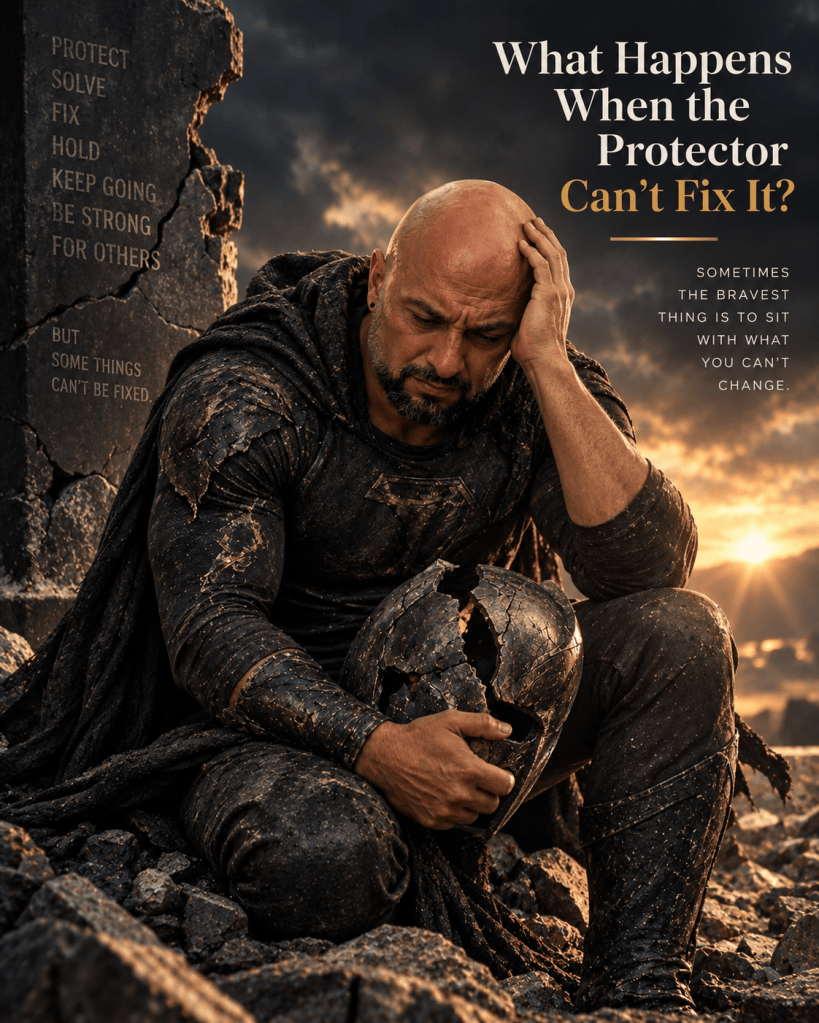
What Happens When the Protector Can’t Fix It?
This may be one of the hardest experiences for this kind of man.
Someone he loves gets sick.
A relationship ends.
A child struggles.
A friend develops an addiction.
A parent gets older.
Someone dies.
A teammate gets injured.
A person he loves is hurting emotionally.
And suddenly there isn’t anything to fix.
There is no plan.
No workout.
No amount of money.
No motivational speech.
No perfect decision.
Nothing he can physically do to make the situation disappear.
That can create a profound sense of helplessness.
Because if your identity says,
“My job is to protect the people I love,”
then situations you cannot control can feel like personal failure—even when they aren’t.
Sometimes love isn’t fixing.
Sometimes love is simply staying.
And for a problem-solver, that can be one of the hardest skills to learn.
Men Protect Other Men Too
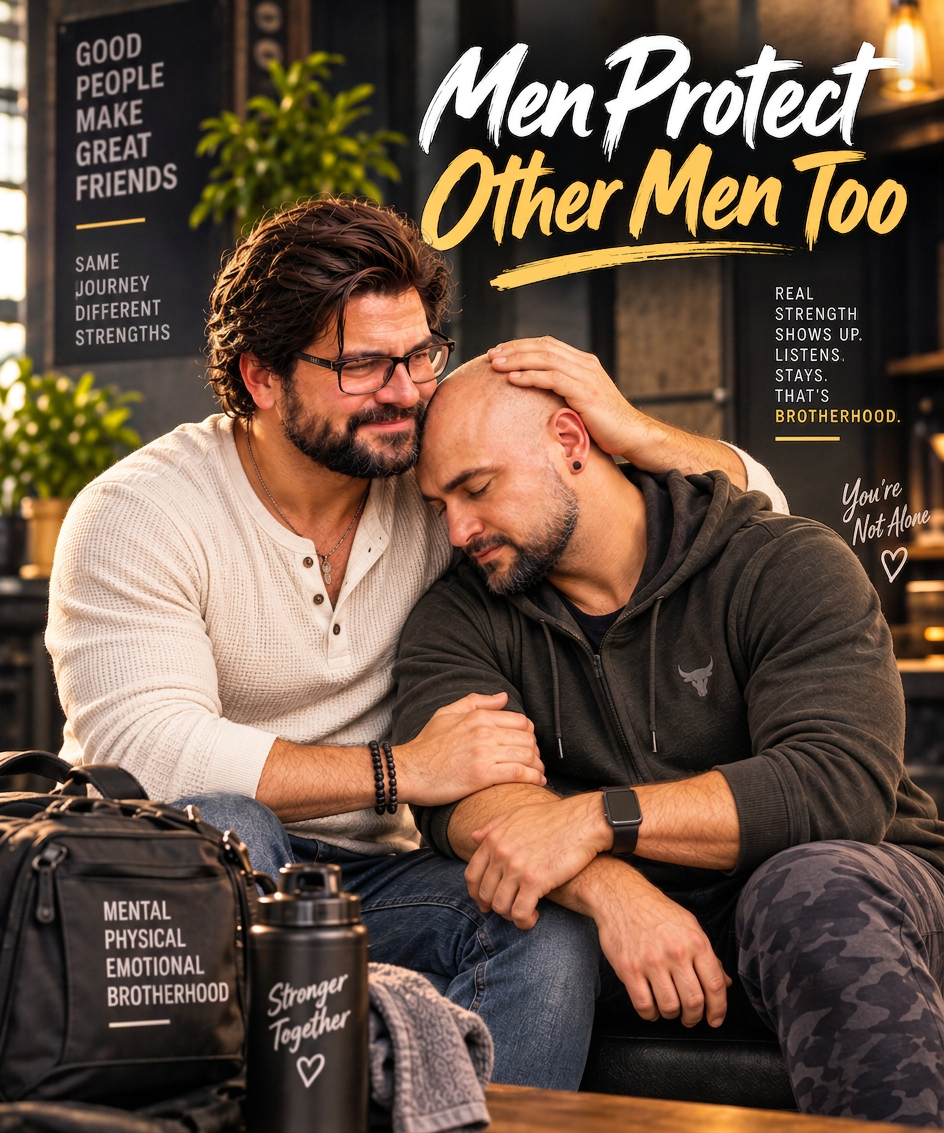
There’s another version of protection I think deserves more attention.
Men protecting other men emotionally.
Not fighting for them.
Not defending their honor.
Just being there.
The friend who notices you’ve gone quiet.
The teammate who checks in after everyone else leaves.
The guy who says:
“You don’t seem like yourself lately. What’s going on?”
The friend who doesn’t panic when another man admits he’s scared.
The man who doesn’t immediately make a joke when the conversation gets uncomfortable.
That is protection too.
Maybe one of the healthiest forms of male protectiveness isn’t:
“I’ll fight anyone who hurts you.”
Maybe it’s:
“You don’t have to pretend with me.”
That’s a different kind of strength.
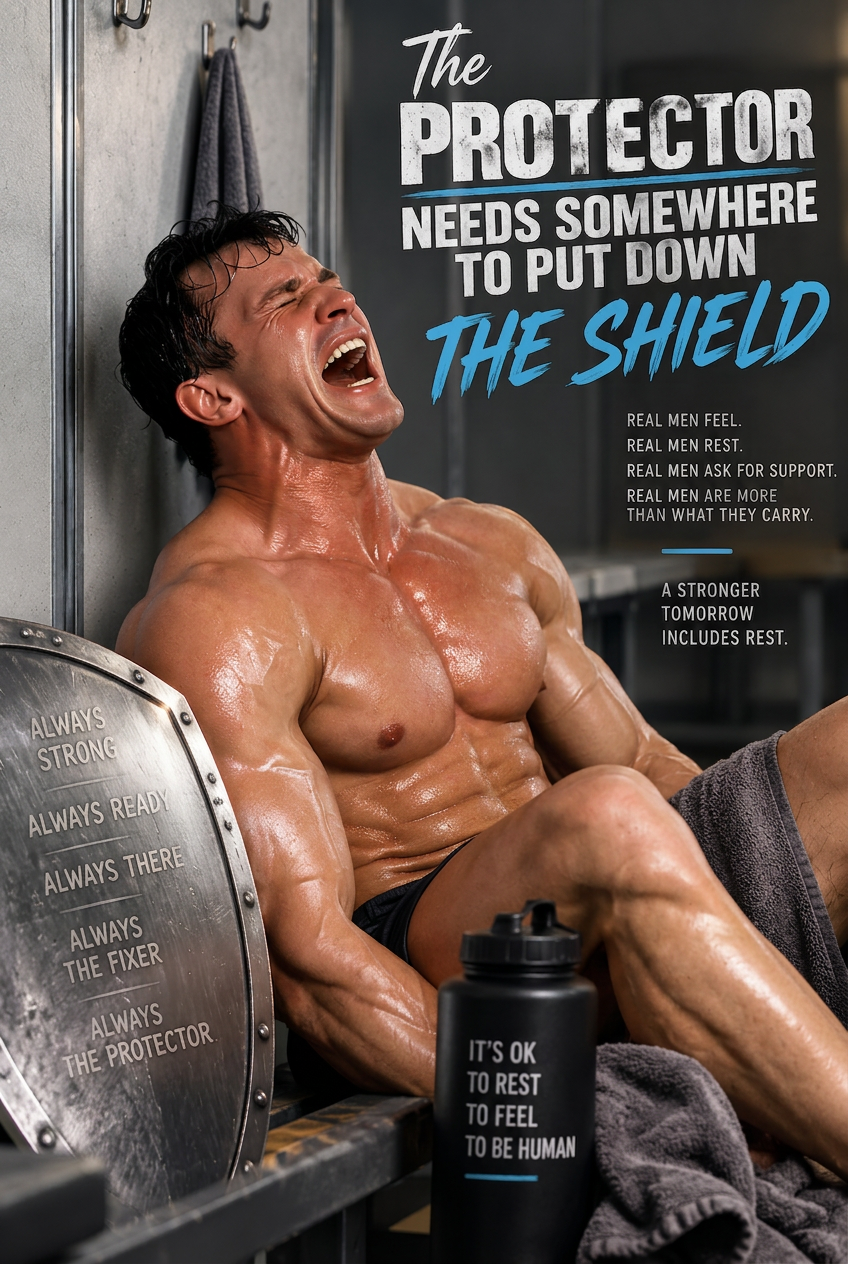
The Protector Needs Somewhere to Put Down the Shield
A healthy protector identity doesn’t have to disappear.
I actually think there is something beautiful about wanting the people you love to feel safe around you.
Keep that.
Be dependable.
Be loyal.
Stand up for people.
Help when you can.
Use your strength.
But understand something:
Strength that can only move outward eventually runs out of places to go.
The protector also needs relationships where he doesn’t have to perform strength.
Where someone else asks how he’s doing.
Where he can say:
“I don’t know.”
“I’m scared.”
“I’m exhausted.”
“I need help.”
“Can you stay with me for a while?”
And none of those sentences revoke his membership in masculinity.
If anything, they make his relationships more honest.
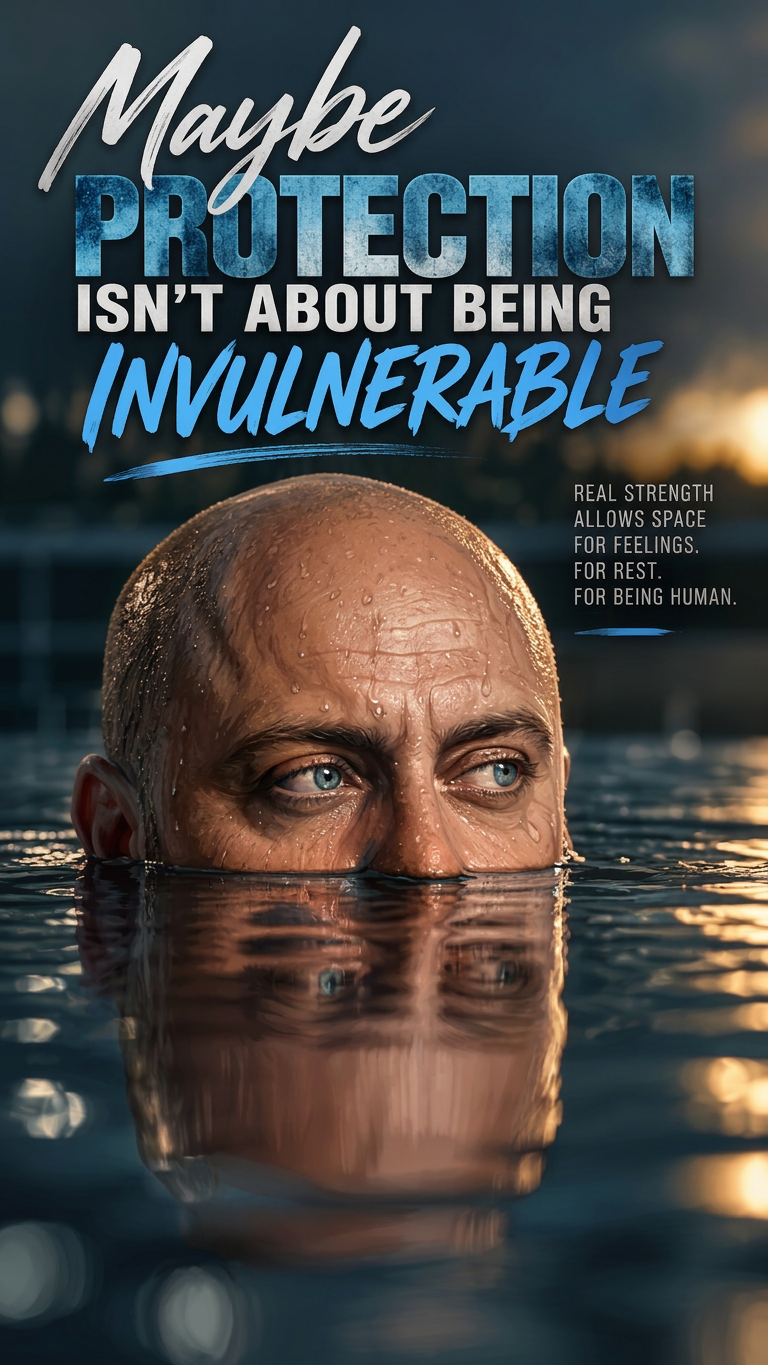
Maybe Protection Isn’t About Being Invulnerable
I think we sometimes misunderstand what makes someone feel safe.
We imagine the strongest person in the room.
The toughest.
The most confident.
The one who never breaks.
But the people who make us feel safest aren’t necessarily invulnerable.
They’re reliable.
They’re emotionally steady.
They listen.
They respect boundaries.
They don’t use strength to dominate.
They don’t confuse control with care.
They show up.
And they’re secure enough to admit when they need someone else to show up for them.
That’s a much more mature version of the protector.
Because ultimately, being a protector shouldn’t mean carrying everyone.
It should mean caring for people without disappearing inside the responsibility of caring for them.
You can be strong and need support.
You can be dependable and have bad days.
You can protect people and still let people protect you.
Maybe the strongest version of the protector isn’t the man standing alone in front of everyone else with his shield raised.
Maybe it’s the man who eventually realizes:
He doesn’t always have to stand in front.
Sometimes he can stand beside someone.
And sometimes, when life gets heavy enough, he can let someone stand beside him.
ABOUT THE AUTHOR – John J. Schessler, MS, CPT, SPC
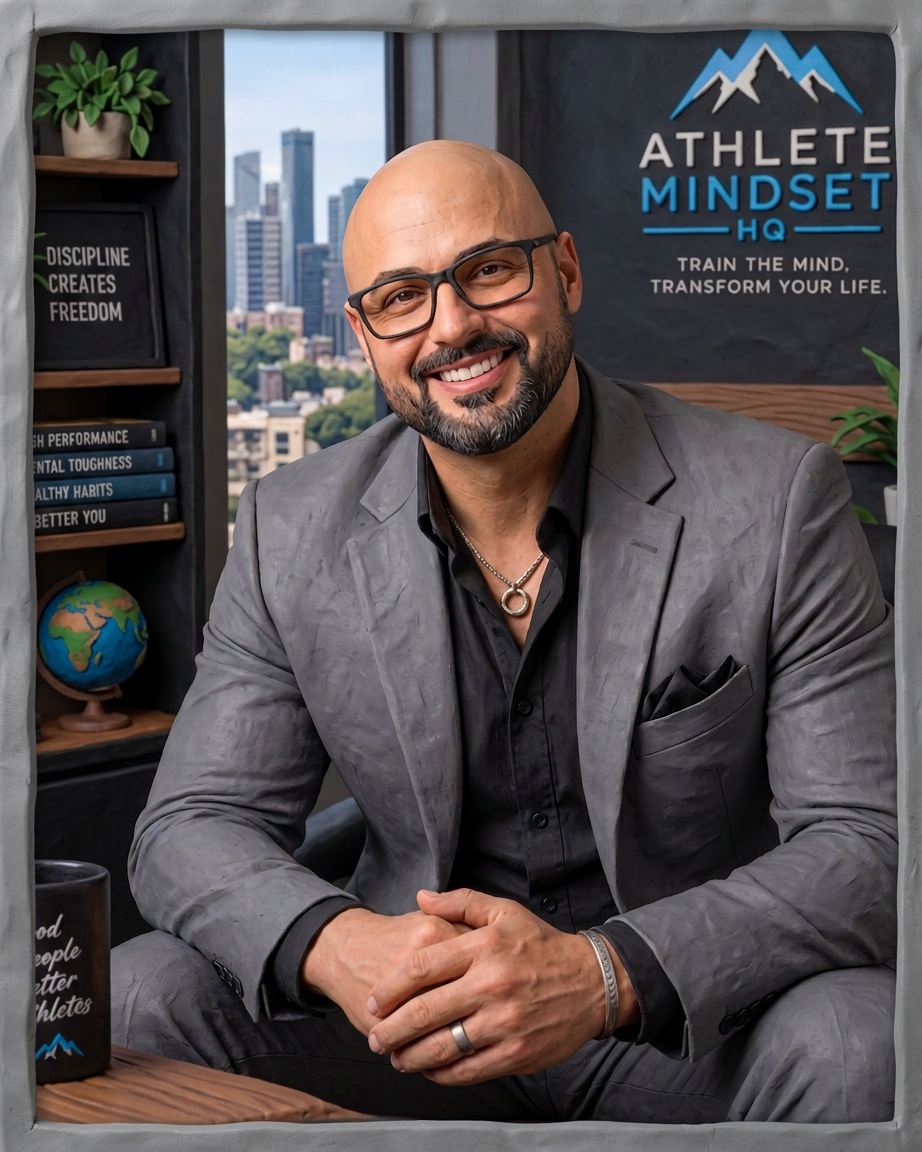
John J. Schessler, M.S., is a Mental Performance Coach, Behavior Interventionist, speaker, and founder of Athlete Mindset HQ—a high-performance coaching platform dedicated to helping athletes, professionals, and everyday individuals develop the mindset needed to thrive under pressure and perform at their highest potential.
John earned his Master of Science in Sport Psychology from Capella University in 2026 and his Bachelor of Arts in Child & Adolescent Psychology from Southern New Hampshire University in 2024. His work bridges the gap between psychology, human performance, behavioral science, and personal development, combining evidence-based strategies with practical coaching that people can immediately apply in sport, work, and everyday life.
His passion for helping others is rooted in his own journey. As a child, John survived Guillain-Barré Syndrome, spending weeks in a coma before fighting through rehabilitation to reclaim his life and eventually finding his purpose as a result. That experience shaped his belief that resilience isn’t something you’re born with—it’s something you build through adversity, discipline, and purpose.
Today, John works with individuals from all walks of life, helping them strengthen confidence, improve emotional resilience, overcome obstacles, and develop the habits that lead to lasting success. Whether it’s coaching athletes, mentoring students, speaking to organizations, or creating educational content, his mission remains the same: to help people become mentally stronger than the challenges they face.
John is also a co-host of The Follow Through Podcast and host of the new Men, Actually

podcast, currently in pre-production, where he explores sports psychology, leadership, men’s mental health, motivation, resilience, and human performance through practical conversations that inspire listeners to move beyond intention and into action.
His philosophy is simple:
Mental strength isn’t about never struggling. It’s about developing the confidence, discipline, and resilience to keep moving forward—especially when life gets difficult.
Because success isn’t built by what you intend to do.
It’s built by what you follow through on.
Personal Brand Statement
John J. Schessler, M.S., is dedicated to helping people unlock their potential by strengthening the one asset that influences every area of life—the mind. Through education, coaching, and authentic conversation, he empowers others to develop confidence, resilience, and the discipline to follow through on their goals.

 Athlete Mindset HQ Institute
Leave a comment