
by John J. Schessler, MS, CPT, SPC
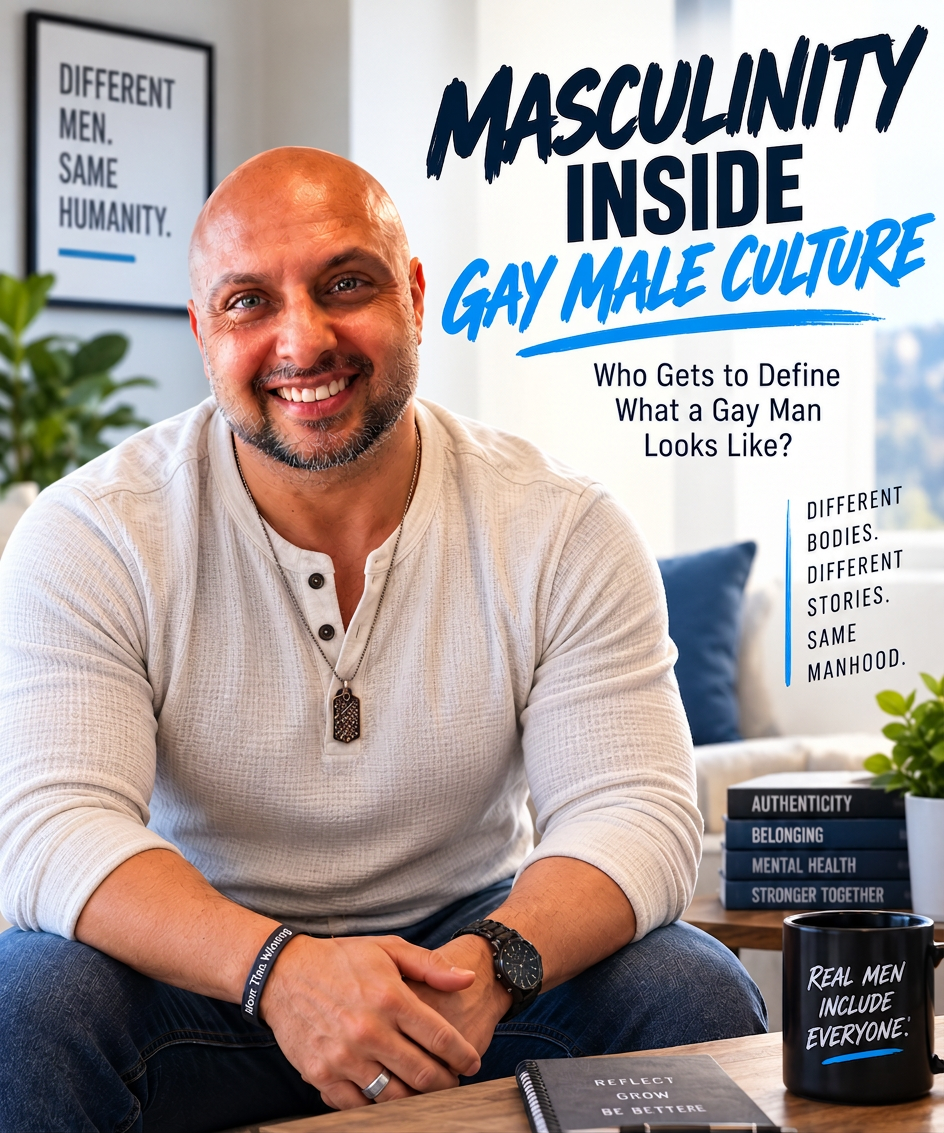
For a long time, masculinity felt like something gay men were supposedly standing outside of.
Growing up, many of us learned the rules before we ever understood why they existed.
Boys were supposed to be tough. Athletic. Interested in girls. Not too emotional. Not too feminine. Not too affectionate with other boys. And definitely not gay.
So when a boy eventually realizes that he is gay, there can be a complicated psychological question waiting for him:
If I don’t fit one of the biggest expectations of traditional masculinity, what does being a man mean for me?
I’ve thought about that question a lot.
And the older I’ve gotten, the more I’ve realized that coming out didn’t end my relationship with masculinity.
In some ways, it was when I finally got the opportunity to start defining it for myself.
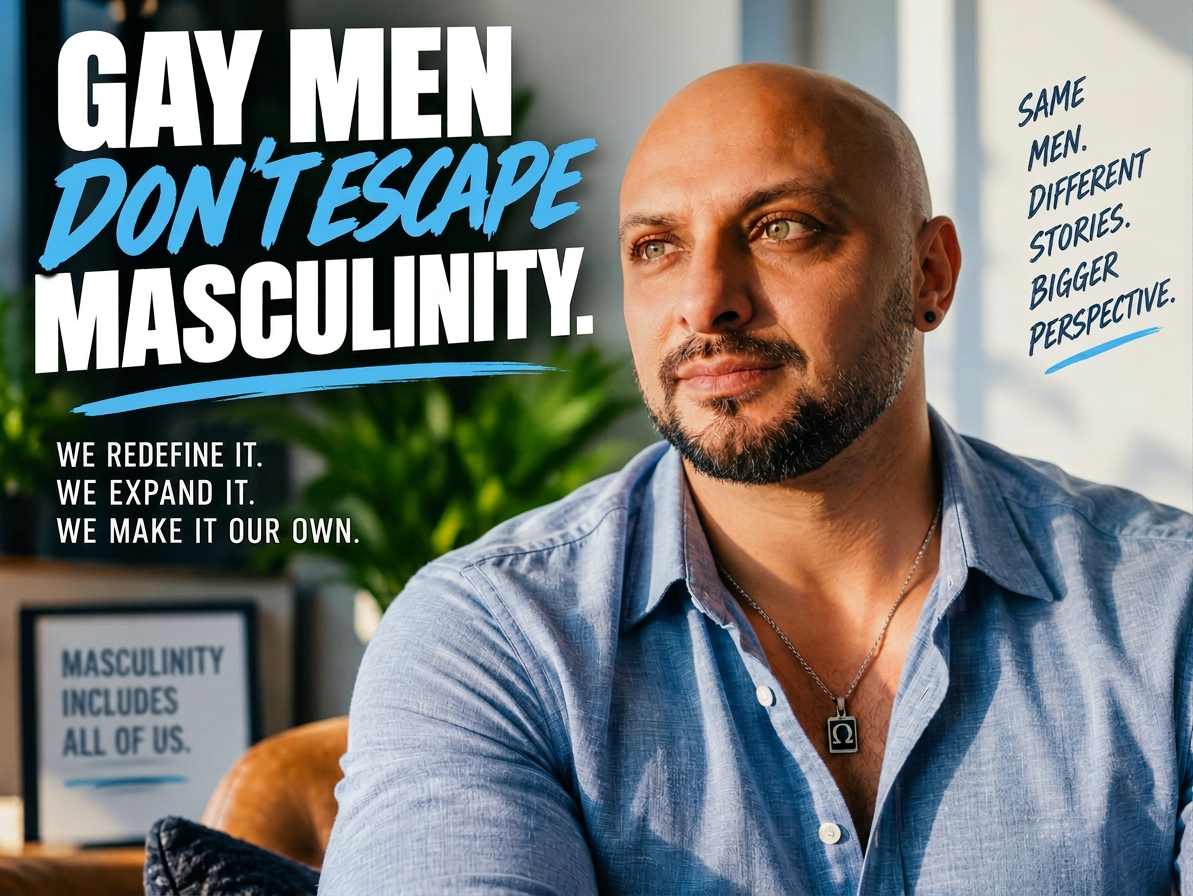
Gay Men Don’t Escape Masculinity
There’s sometimes an assumption that gay men have rejected traditional masculinity.
But gay men are still men.
We grow up surrounded by many of the same messages about strength, appearance, competition, status, sex, confidence, and emotional control as straight boys do.
Coming out doesn’t magically erase those messages.
If anything, it can make our relationship with them more complicated.
A gay man might reject certain expectations of masculinity while strongly identifying with others.
He might love football, bodybuilding, wrestling, or working with his hands.
He might love theater, fashion or dance.
He might love all of them.
And none of those interests determine how masculine he is.
Yet inside gay male culture, we sometimes recreate some of the same masculine hierarchies we once struggled against.
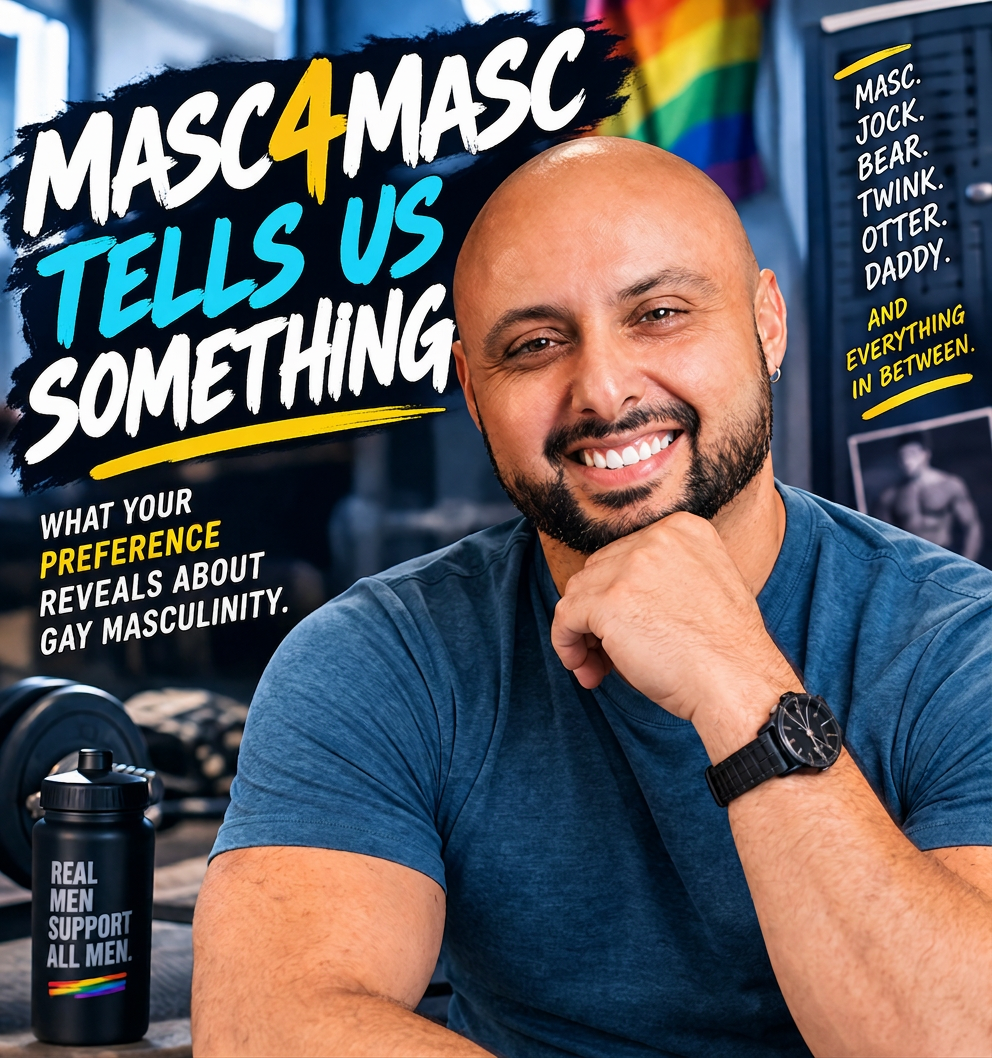
“Masc4Masc” Tells Us Something
Spend enough time in gay dating culture, and you’ll eventually encounter phrases like:
“Masc4Masc.”
On the surface, that’s a preference.
People are allowed to be attracted to masculine men.
The interesting psychological question is why masculinity can carry so much social currency in certain gay male spaces.
Words like masc, jock, bear, twink, otter, daddy, and countless others don’t simply describe appearance. They can become social categories carrying assumptions about attractiveness, personality, sexual roles, age, and status.
And sometimes there is an unspoken hierarchy underneath them.
Masculine can become associated with desirability.
Feminine can become associated with being undesirable.
That’s worth examining.
Because if gay boys grew up being punished for appearing feminine, some gay men may carry those lessons into adulthood—even after leaving the people who originally taught them.
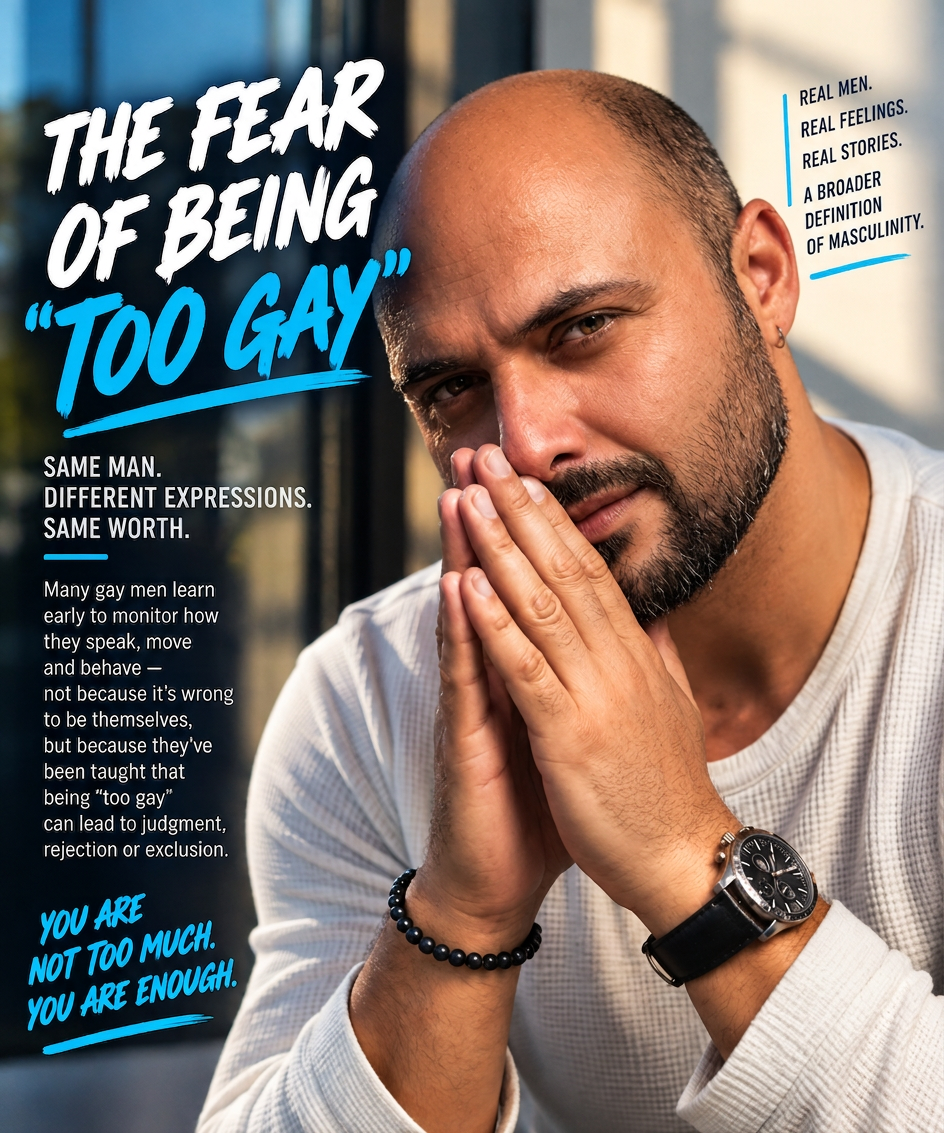
The Fear of Being “Too Gay”
Some gay men learn very early how to monitor themselves.
How am I standing?
How am I talking?
What are my hands doing?
Does my voice sound gay?
Will somebody notice?
For a closeted boy, that kind of self-monitoring can sometimes become a form of protection.
Then he comes out.
But the monitoring doesn’t necessarily disappear overnight.
A man can be completely comfortable saying “I’m gay” while still feeling uncomfortable with parts of himself that society taught him were too gay.
That’s an important distinction.
Coming out and completely unpacking years of masculine expectations aren’t necessarily the same psychological process.
Our Bodies Can Become Part of the Conversation
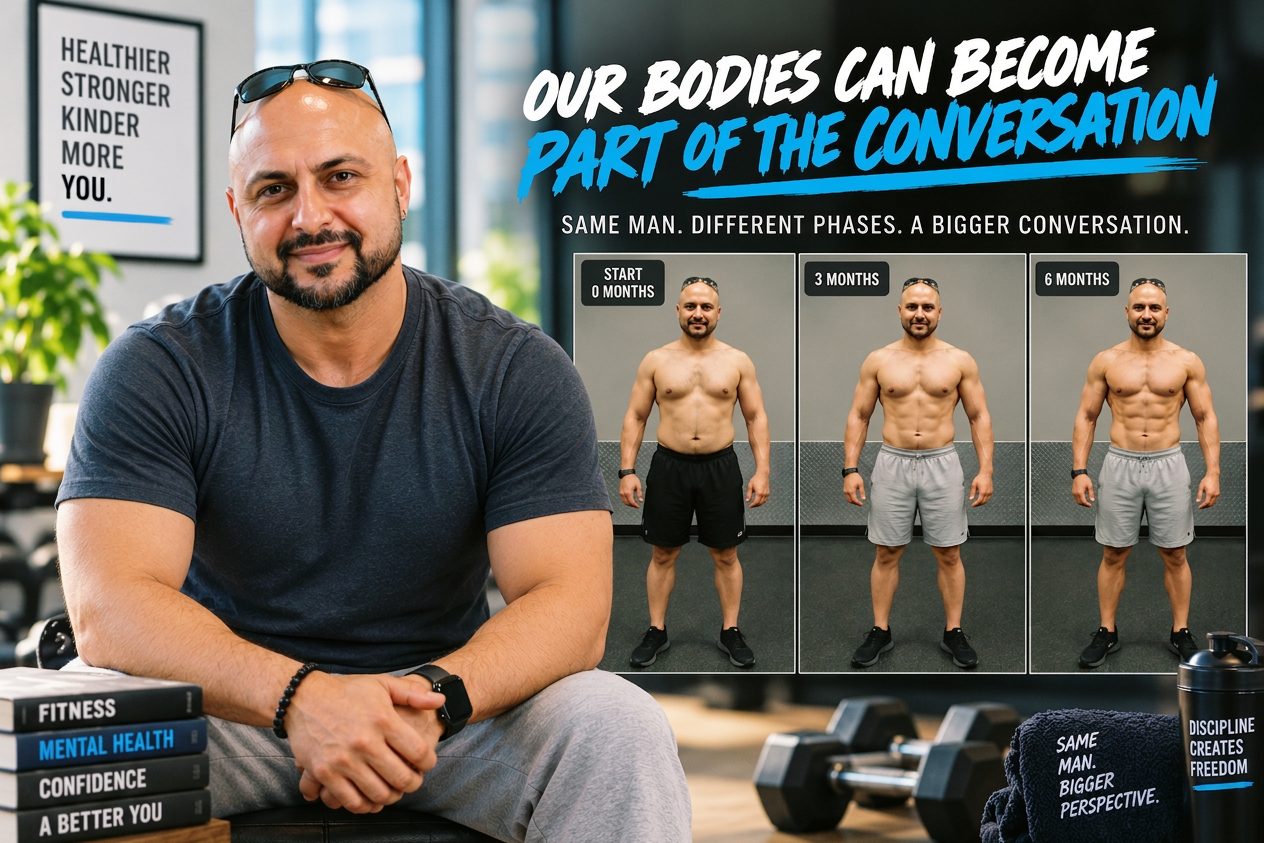
Then there’s the gay male relationship with the body.
Obviously, gay men aren’t a monolith. Body ideals differ enormously across communities and individuals.
But appearance can carry significant weight in some gay male spaces.
Muscularity.
Leanness.
Body hair.
Facial hair.
Youth.
Height.
Clothing.
And increasingly, the carefully curated body presented through social media and dating apps.
There’s an unusual dynamic here because gay men can potentially experience male beauty standards from both directions.
We can want the male body while also wanting to have the male body we find desirable.
The person you’re comparing yourself with may also be the type of person you’re attracted to.
That can create an interesting psychological feedback loop:
Do I want him?
Do I want to look like him?
Do I want him to want me?
Sometimes the answer might genuinely be all three.
And suddenly the gym isn’t just about fitness.
It can become tangled up with desirability, confidence, belonging, and masculinity.
Masculinity Can Become Armor
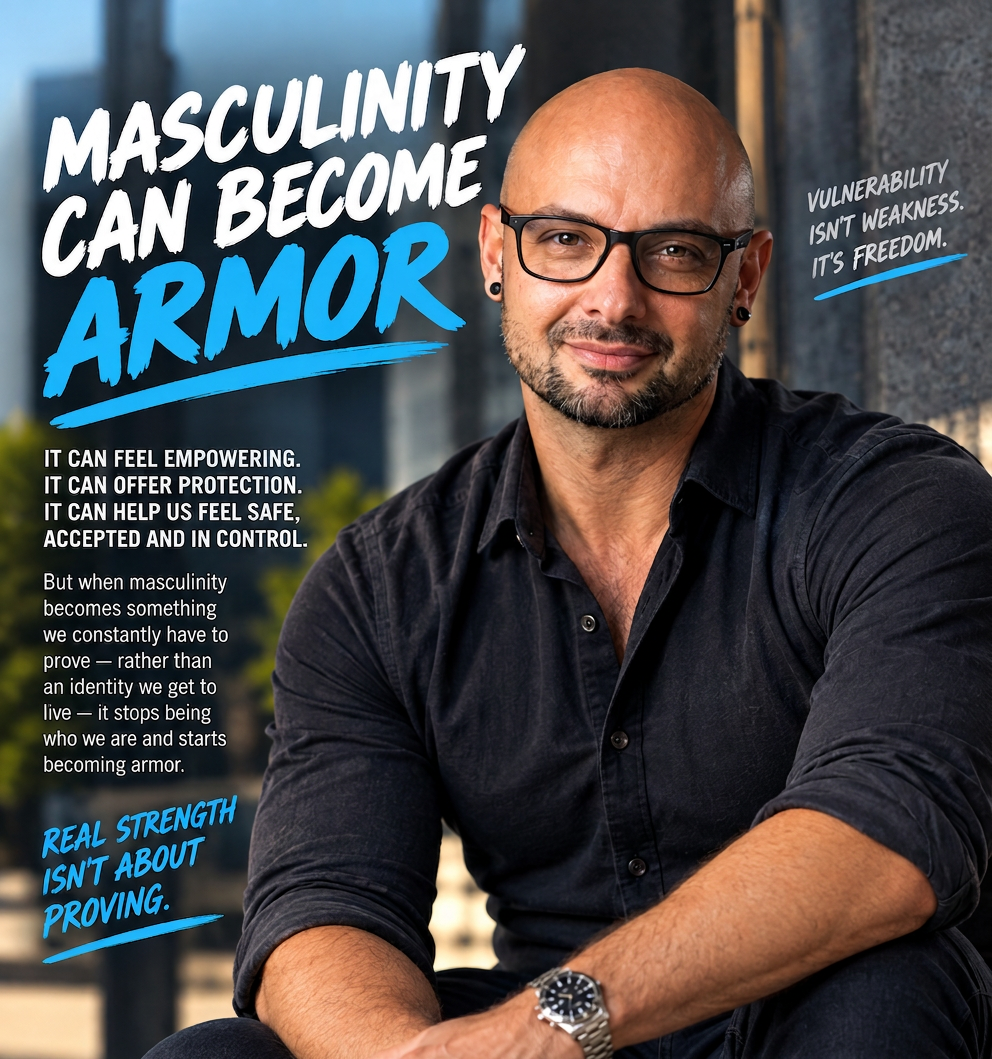
For some gay men, becoming more traditionally masculine can feel empowering.
And sometimes it genuinely is.
Building muscle can feel good.
Growing a beard can feel good.
Playing sports can feel good.
Being physically strong can feel good.
There’s nothing inherently unhealthy about any of that.
But there’s another question worth asking:
Am I expressing my masculinity—or proving it?
Those aren’t always the same thing.
If masculinity becomes something I constantly have to demonstrate so nobody associates me with femininity, then masculinity stops being an identity and starts becoming armor.
And armor is useful when you’re under attack.
It’s exhausting when you never take it off.
Then There Are Gay Men Who Embrace Femininity
This side of the conversation matters just as much.
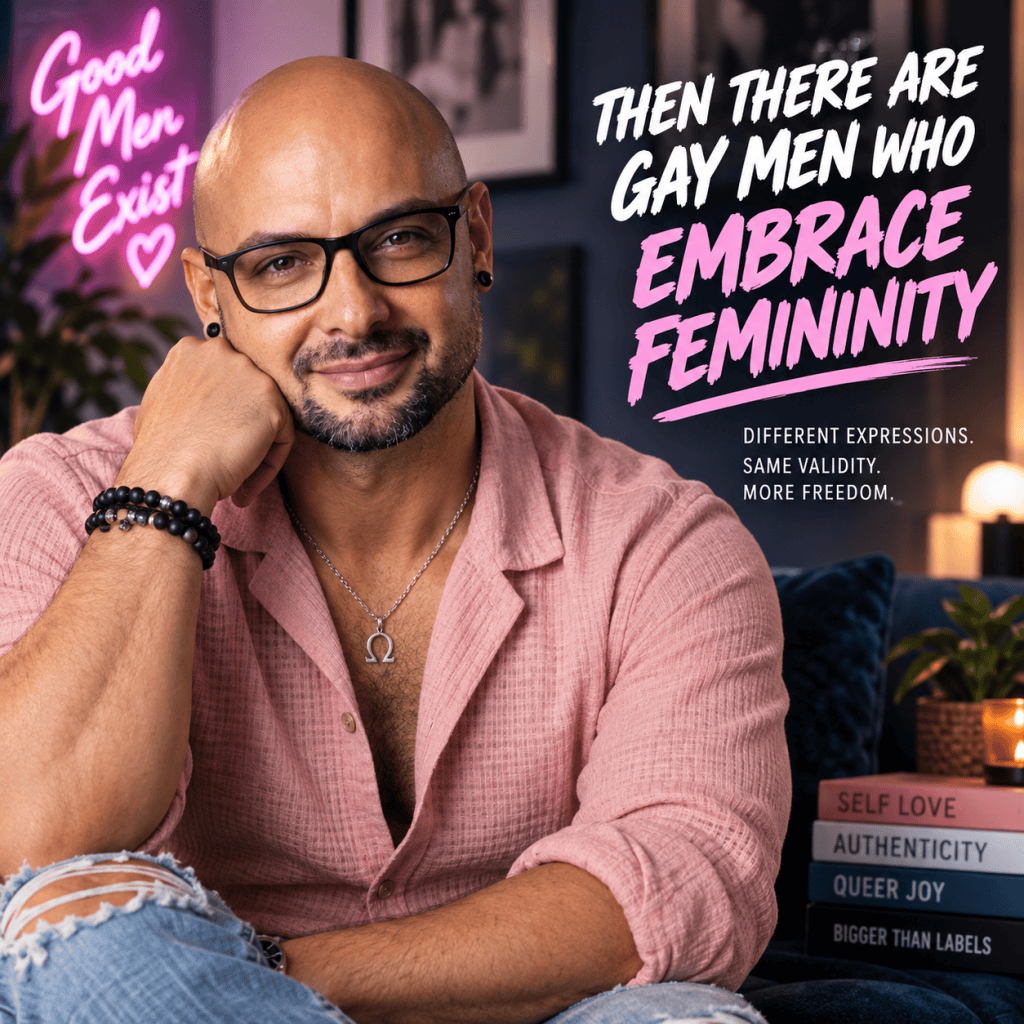
Some gay men are naturally more feminine.
Some intentionally play with masculinity and femininity.
Some love traditionally masculine spaces while expressing themselves flamboyantly.
Some don’t care about masculine expectations at all.
That doesn’t make them less male.
In fact, there’s something interesting about a man who has been told his entire life how a man is supposed to behave and eventually says:
No. I’ll decide that myself.
Maybe masculinity isn’t weakened when a man incorporates qualities traditionally labeled feminine.
Maybe his definition of manhood simply becomes bigger.
Gay Men Can Police Each Other Too
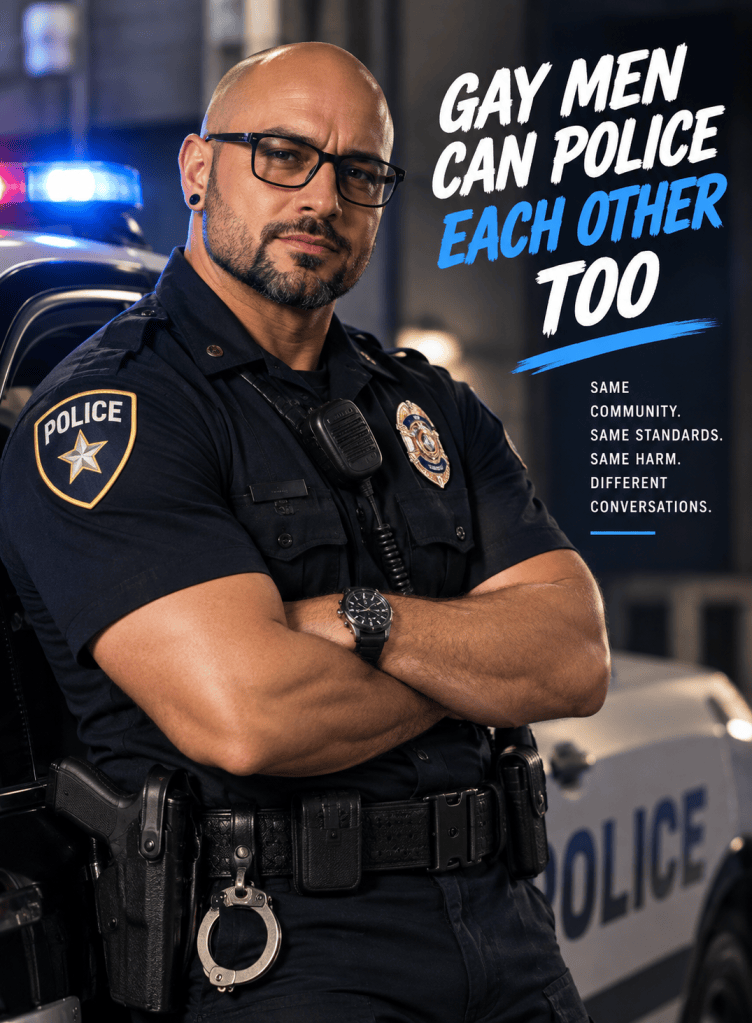
This is probably one of the more uncomfortable parts of the conversation.
Gay men can sometimes enforce masculinity against other gay men.
We can ridicule someone’s voice.
Mock someone’s mannerisms.
Dismiss someone for being too feminine.
Treat masculine-presenting men as trophies.
Make assumptions about sexual roles based on appearance.
Or decide someone isn’t the “right kind” of gay man.
It’s ironic when you think about it.
A community filled with people who know what it’s like to be judged for violating gender expectations can sometimes create another set of expectations once we’re inside the community.
Different rules.
Same psychological mechanism.
Belonging becomes conditional.
My Own Relationship With Masculinity Has Changed
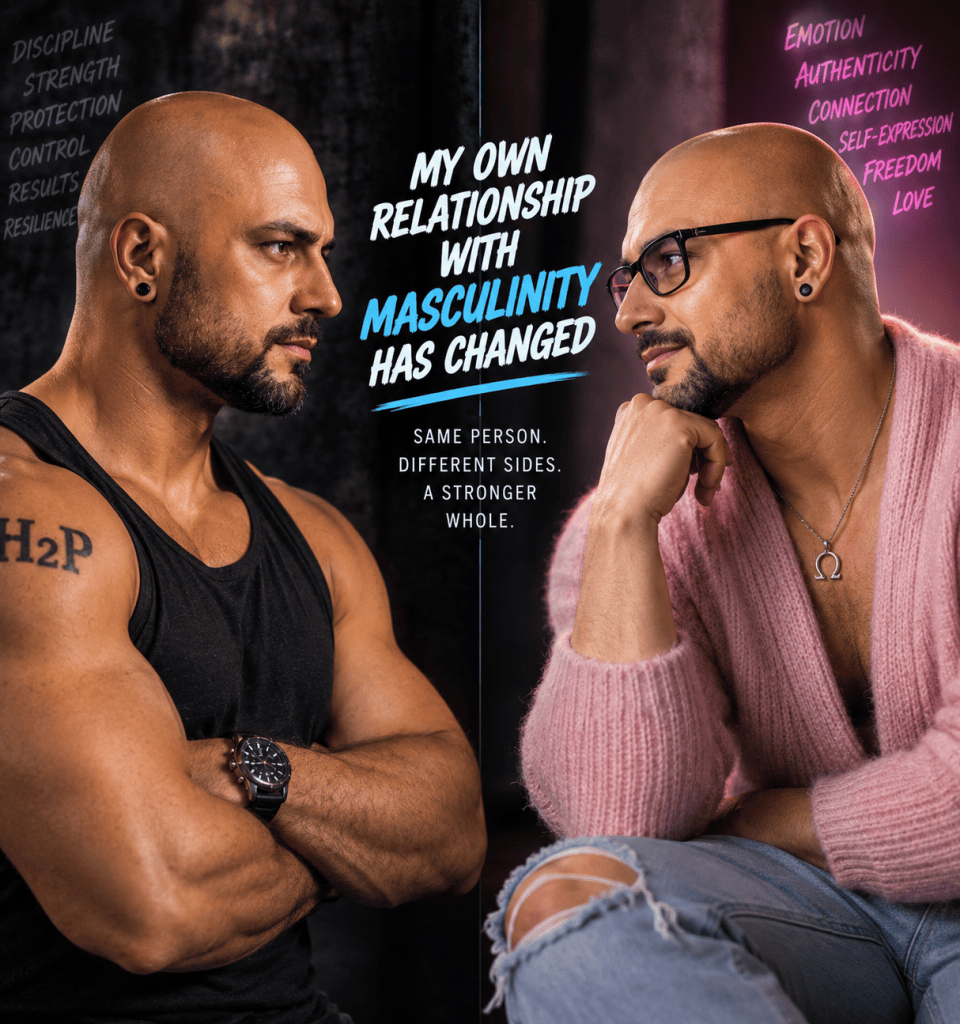
My relationship with masculinity has become much less about proving that I belong in the category of “man” and much more about deciding what kind of man I actually want to be.
I can value strength without pretending vulnerability doesn’t exist.
I can love sports, training, and competition without believing those things certify my masculinity.
I can have close friendships with straight men without needing to minimize the fact that I’m gay.
I can talk about male psychology while recognizing that there are countless legitimate ways of being male.
And I can be gay without believing that my sexuality somehow sits in opposition to my masculinity.
Those things don’t cancel one another out.
They’re all pieces of me.
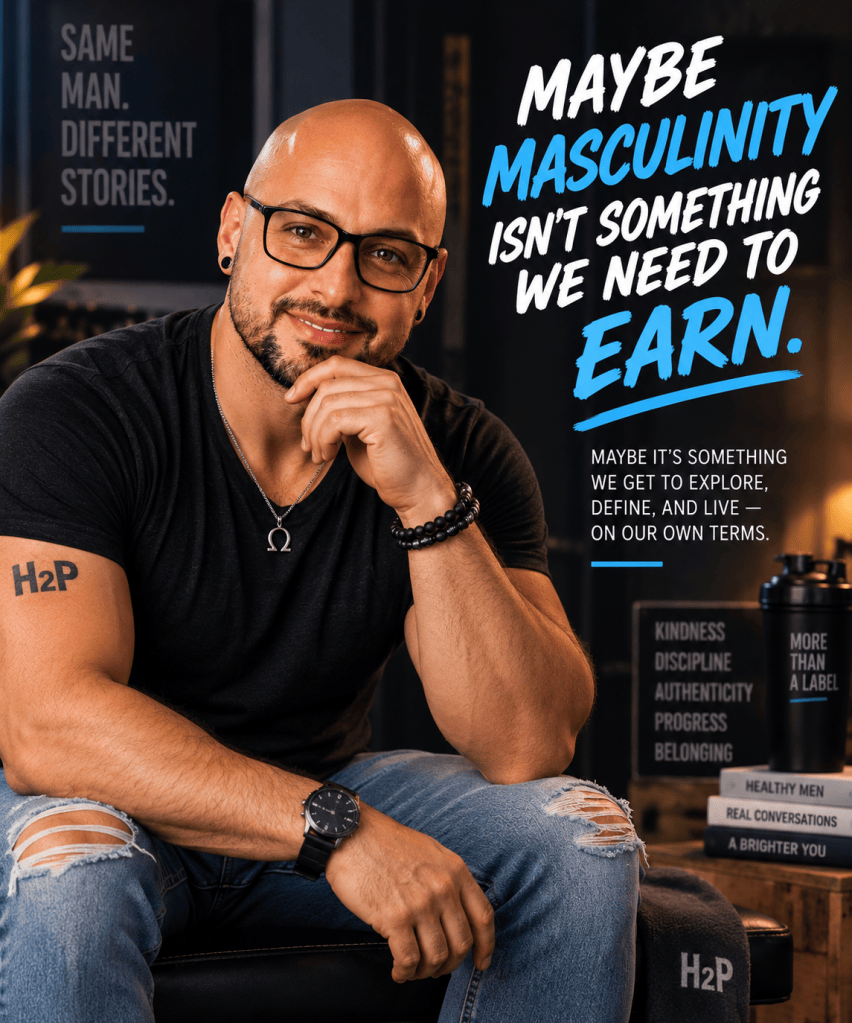
Maybe Masculinity Isn’t Something We Need to Earn
I think this is where the conversation ultimately lands for me.
For years, masculinity has often been treated like something men can lose.
Cry too much?
Lose points.
Not athletic?
Lose points.
Feminine voice?
Lose points.
Gay?
For generations, society practically removed you from the scoreboard entirely.
But what if masculinity doesn’t work like that?
What if being a man isn’t a performance that requires constant approval from other men?
Then a masculine gay man doesn’t need to apologize for being masculine.
A feminine gay man doesn’t need to apologize for being feminine.
A muscular gay man doesn’t have to prove that his body makes him more of a man.
And none of us have to distance ourselves from other gay men simply to demonstrate that we’re different from the stereotype.
Because perhaps one of the freedoms gay men have fought hardest to obtain is also one we don’t talk about enough:
the freedom to define ourselves.
Not every gay man will define masculinity the same way.
Good.
Maybe we’re not supposed to.
I don’t think coming out made me less connected to masculinity.
If anything, it eventually forced me to examine what masculinity actually meant to me.
And once you remove the performance, the stereotypes, and the need for approval, you can ask a much more interesting question than:
“Am I masculine enough?”
You can ask:
“What kind of man do I want to be?”
That’s a question worth spending a lifetime answering.
ABOUT THE AUTHOR
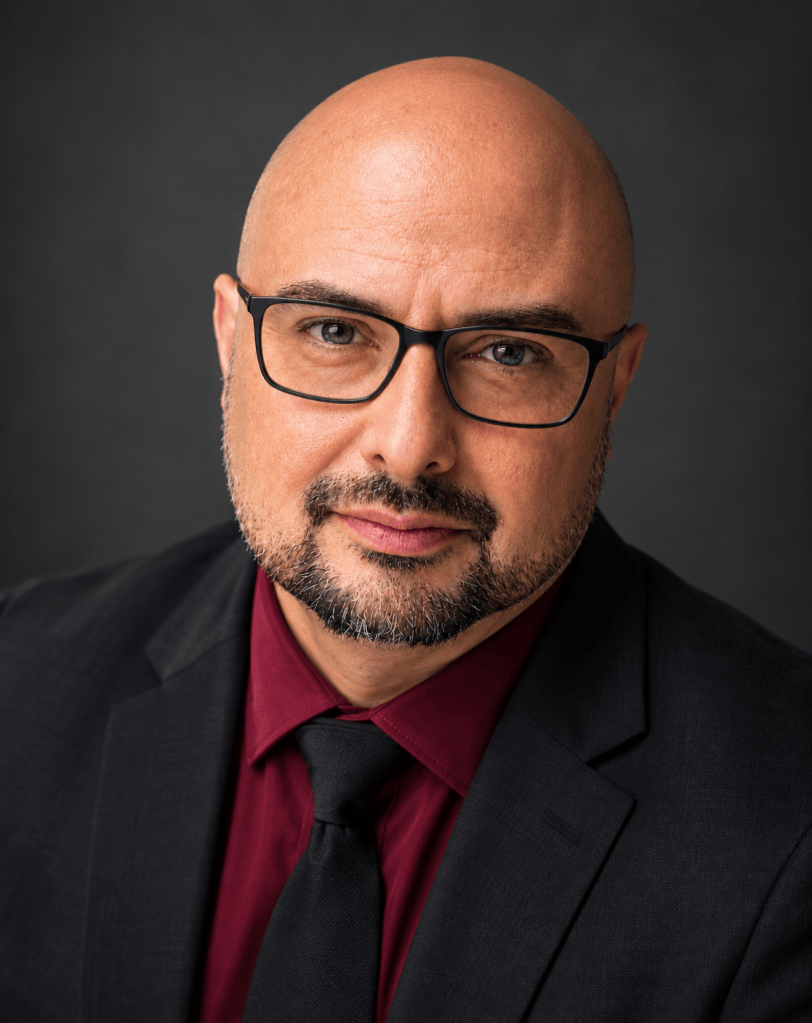
John J. Schessler, M.S., is a Mental Performance Coach, Behavior Interventionist, speaker, and founder of Athlete Mindset HQ—a high-performance coaching platform dedicated to helping athletes, professionals, and everyday individuals develop the mindset needed to thrive under pressure and perform at their highest potential.
John earned his Master of Science in Sport Psychology from Capella University and his Bachelor of Arts in Child & Adolescent Psychology from Southern New Hampshire University. His work bridges the gap between psychology, human performance, behavioral science, and personal development, combining evidence-based strategies with practical coaching that people can immediately apply in sport, work, and everyday life.
His passion for helping others is rooted in his own journey. As a child, John survived Guillain-Barré Syndrome, spending weeks in a coma before fighting through rehabilitation to reclaim his life. That experience shaped his belief that resilience isn’t something you’re born with—it’s something you build through adversity, discipline, and purpose.
Today, John works with individuals from all walks of life, helping them strengthen confidence, improve emotional resilience, overcome obstacles, and develop the habits that lead to lasting success. Whether coaching athletes, mentoring students, speaking to organizations, or creating educational content, his mission remains the same: to help people become mentally stronger than the challenges they face.
John is also the host of The Follow Through Podcast, where he explores sports psychology, leadership, men’s mental health, motivation, resilience, and human performance through practical conversations that inspire listeners to move beyond intention and into action.
His philosophy is simple:
Mental strength isn’t about never struggling. It’s about developing the confidence, discipline, and resilience to keep moving forward—especially when life gets difficult.
Because success isn’t built by what you intend to do.
It’s built by what you follow through on.
Personal Brand Statement
John J. Schessler, M.S. is dedicated to helping people unlock their potential by strengthening the one asset that influences every area of life—the mind. Through education, coaching, and authentic conversation, he empowers others to develop confidence, resilience, and the discipline to follow through on their goals.

 Athlete Mindset HQ Institute
Leave a comment