
by John J. Schessler, MS, SPC, CPT

The Three-Second Reset That Can Change an Athlete’s Next Play
Pressure changes what athletes notice.
The crowd becomes louder. The clock seems to move faster. Muscles tighten. Breathing becomes shallow. A mistake that lasted only a few seconds can continue playing in the athlete’s mind long after the action has ended.
That is one of the realities of competition: the athlete’s body may be standing in the present moment while their mind is still arguing with the previous one.
They are thinking about the missed shot, dropped pass, bad call, lost point, failed lift, or mistake that exposed them in front of everyone.
The next play is already beginning—but mentally, they have not arrived yet.
This is where a simple reset can become a powerful performance skill:
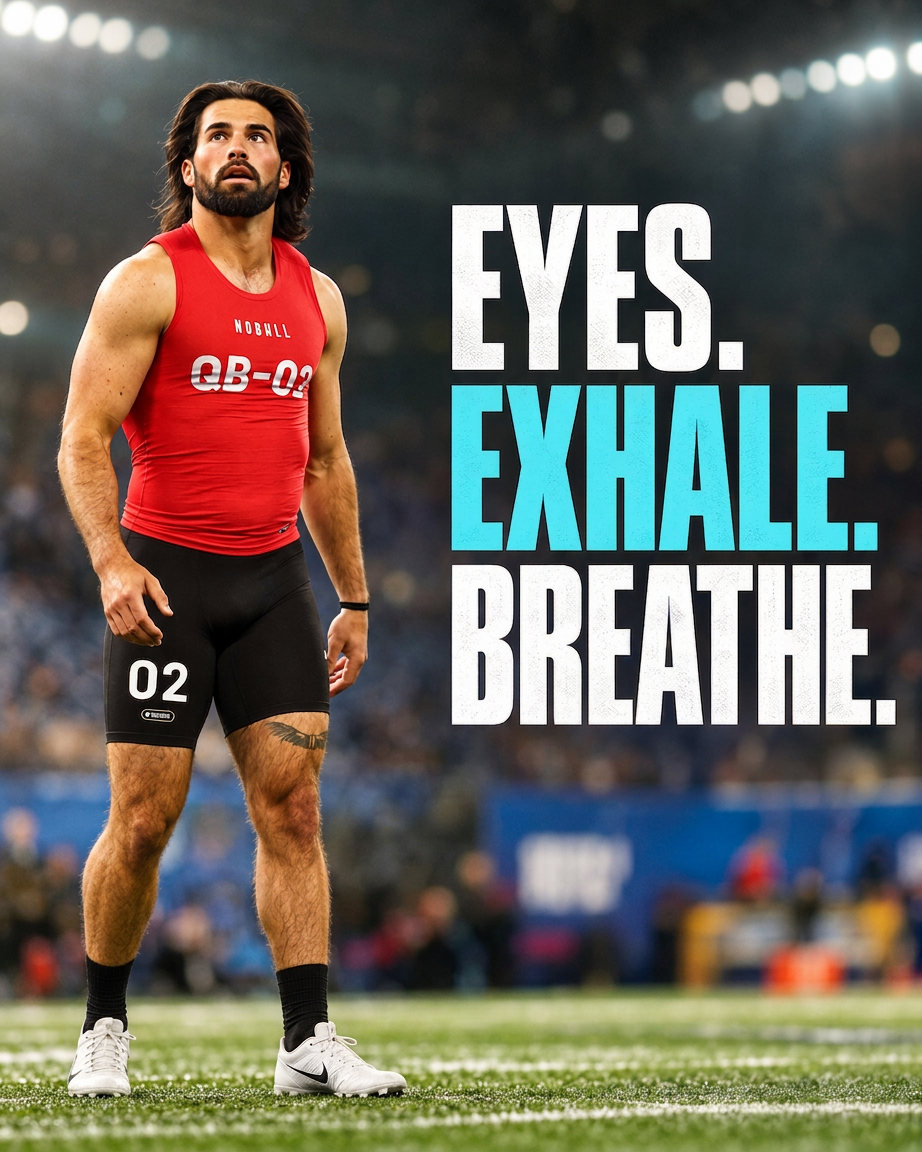
Eyes. Exhale. Breathe.
It is not a magic phrase. It will not eliminate pressure, erase mistakes, or guarantee success. It is a practical routine that helps athletes interrupt the stress response, redirect their attention, and reconnect with the next controllable action.
Eyes: Put Your Attention Somewhere Useful

When athletes feel threatened or overwhelmed, their attention often narrows.
Sometimes that narrowing is helpful. Competition requires focus. But under excessive pressure, athletes may begin staring at the wrong things—the scoreboard, the official, the opponent, the coach’s expression, or the mistake they just made.
“Eyes” is a reminder to deliberately choose a useful visual target.
Depending on the sport, that target might be:
- The ball
- The rim
- The pitcher’s release point
- The opponent’s hips
- The center of the mat
- A lane marker
- A teammate’s position
- A specific spot on the field

The goal is not simply to look somewhere different. The goal is to move attention away from the emotional story surrounding the moment and back toward information that can guide performance.
The athlete is asking:
What do I need to see right now?
That question brings the mind out of the past and back into the competitive environment.
Exhale: Release the Previous Moment
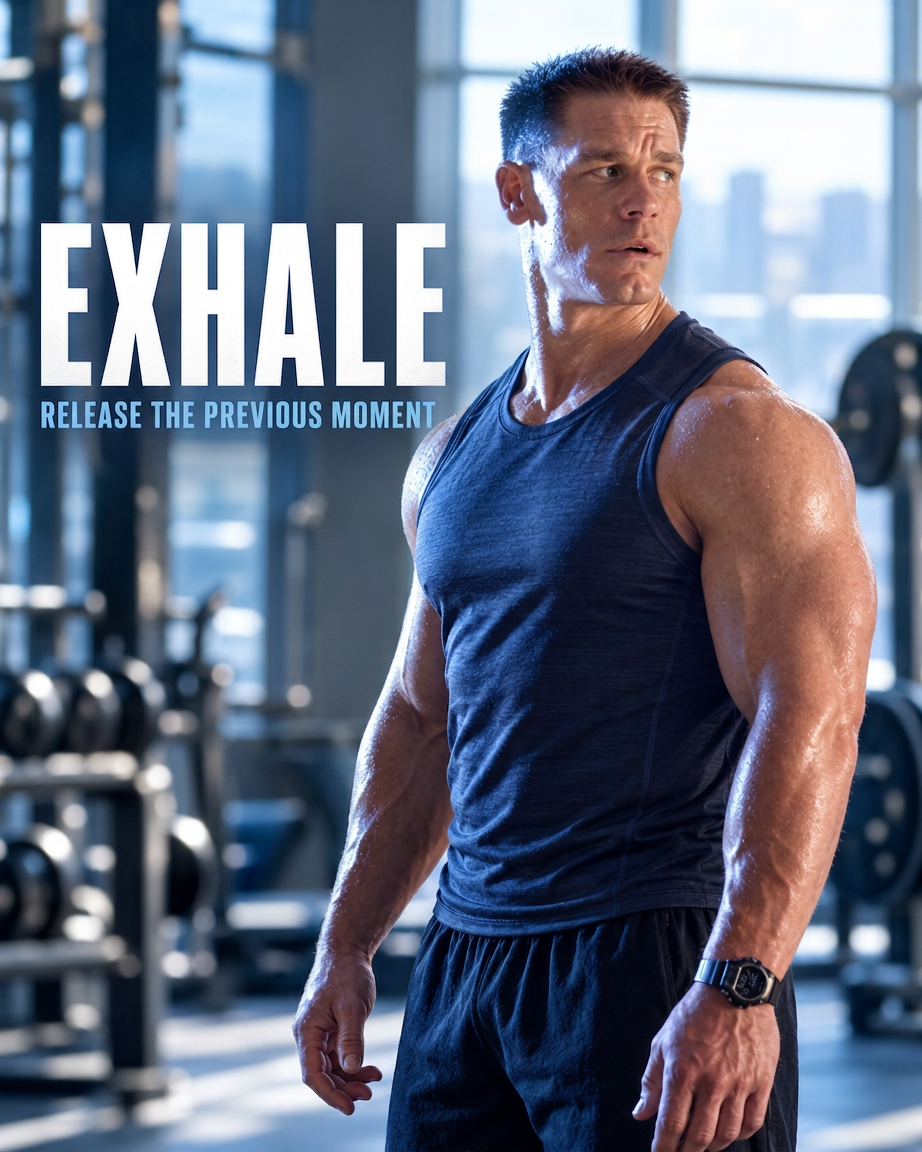
After a mistake, many athletes unconsciously hold their breath.
Their jaw tightens. Their shoulders rise. Their hands become tense. They begin moving with more force but less fluidity.
A deliberate exhale can act as a physical signal that the previous moment is over.
The athlete does not have to pretend the mistake did not matter. They simply need to stop carrying it into the next action.
A slow, controlled exhale may help reduce unnecessary muscular tension and interrupt the urge to react impulsively. It creates a small pause between what happened and what happens next.
That pause matters.
Inside it, the athlete has the opportunity to choose a response rather than be controlled by the first emotional reaction.
The exhale says:
Let it leave the body.
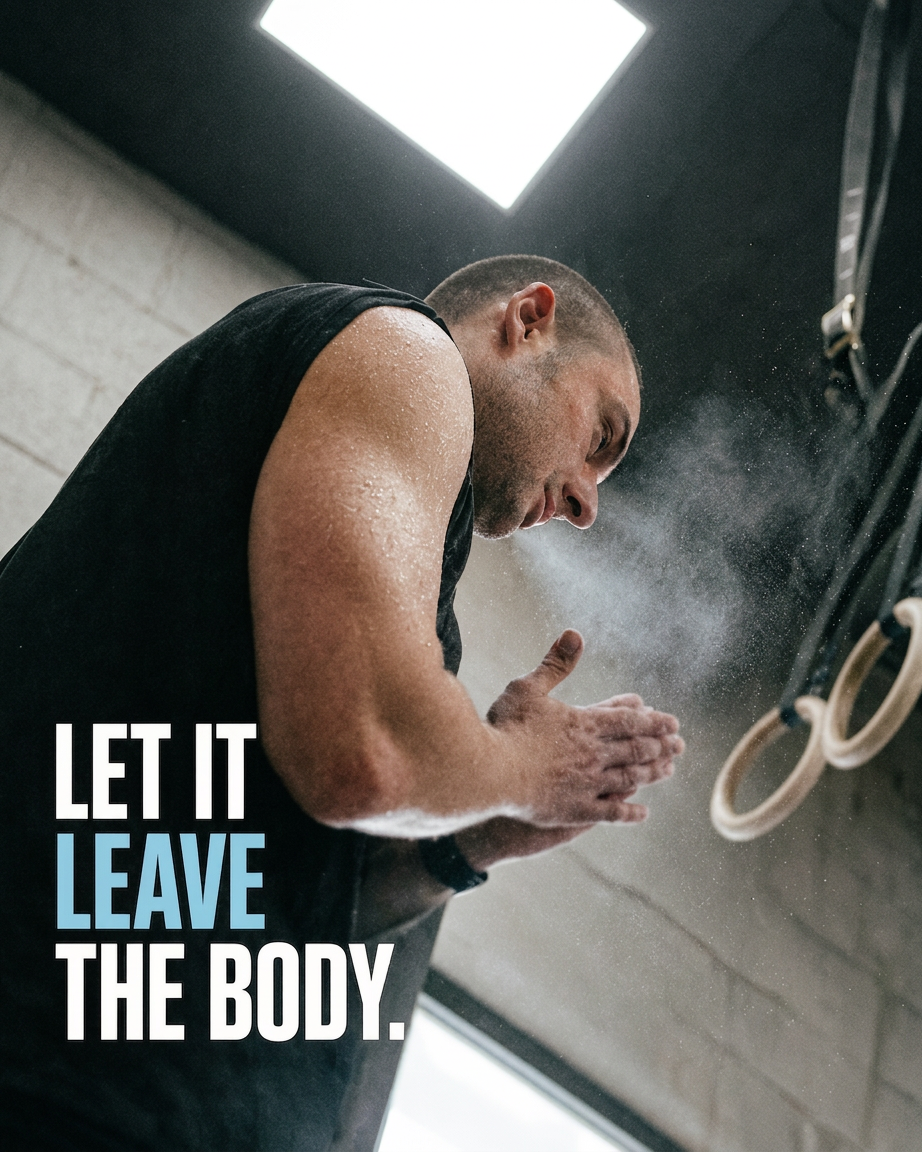
Not because the athlete does not care—but because caring about the next play requires releasing the last one.
Breathe: Prepare for the Next Action
The final step is one intentional breath.
This is not about taking ten deep breaths in the middle of competition or attempting to become completely relaxed. Athletes do not need to feel calm before they can perform effectively.
They need enough control to carry out the next task.
The breath becomes a transition:
Mistake → reset → next action
As the athlete breathes, they can pair the breath with one short performance cue:
- “Next play.”
- “Quick feet.”
- “Strong base.”
- “See the target.”
- “Finish through.”
- “Stay connected.”
- “One point.”
- “Do your job.”
The cue should be brief, specific, and connected to an action. Long motivational speeches are difficult to process when the nervous system is activated. A few useful words are often more effective than an entire internal conversation.
A Reset Is Not the Same as Avoidance

Some athletes believe mental toughness means ignoring frustration, fear, or disappointment.
It does not.

A reset is not an attempt to suppress emotion. The athlete can acknowledge what happened and still move forward.
They might internally say:
“I’m frustrated—and I can still execute the next play.”
That is psychological flexibility: the ability to experience difficult thoughts and feelings without allowing them to completely determine behavior.
The athlete does not have to win an argument with their mind. They only have to reconnect with the action that matters now.
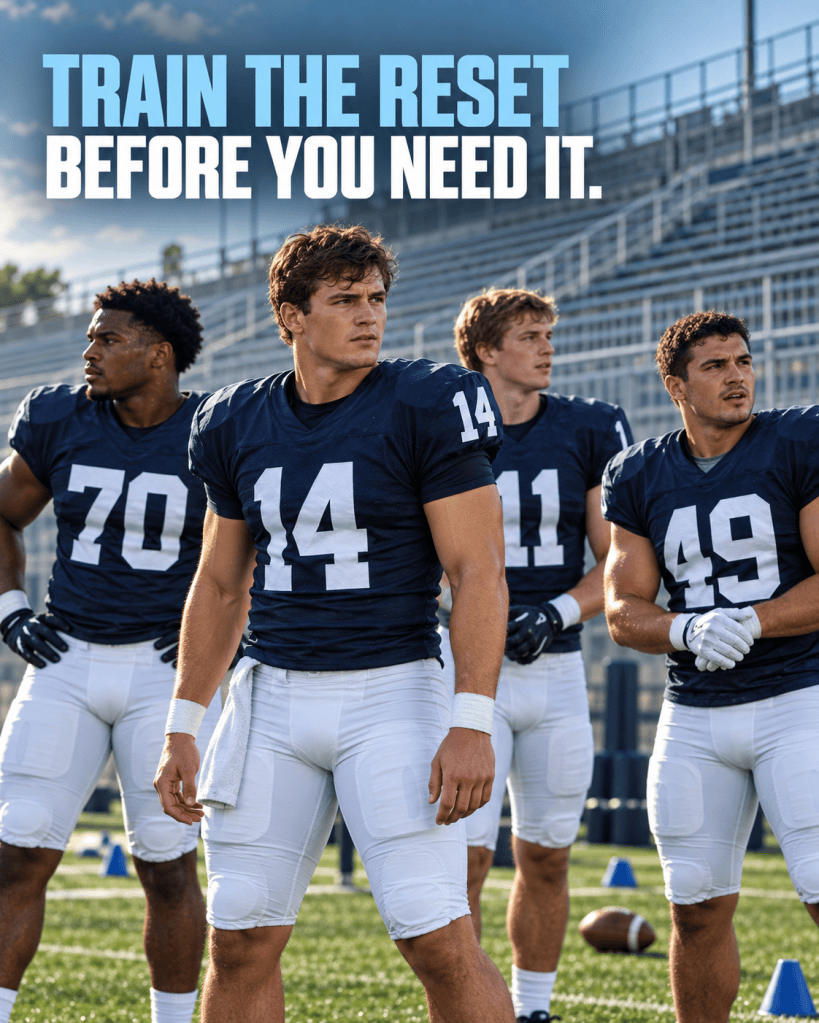
Train the Reset Before You Need It
Mental skills are most effective when they are practiced consistently—not introduced for the first time during the biggest moment of the season.
Coaches can build this reset into regular training.
After a mistake during practice, give the athlete three seconds:
- Eyes: Find the next relevant target.
- Exhale: Release unnecessary tension.
- Breathe: Pair one breath with a performance cue.
Then continue.
Over time, the routine can become automatic. The athlete begins to recognize the moment their attention drifts and knows exactly how to return.
The reset can also be practiced during warm-ups, visualization exercises, scrimmages, film review, and pressure simulations.
The goal is to create a familiar response that remains available when competition becomes emotionally demanding.
The Film Room Question
When we study athletic performance, we usually examine what happened on the field, court, mat, track, or ice.
But there is another layer worth studying:
What happened inside the athlete between the plays?
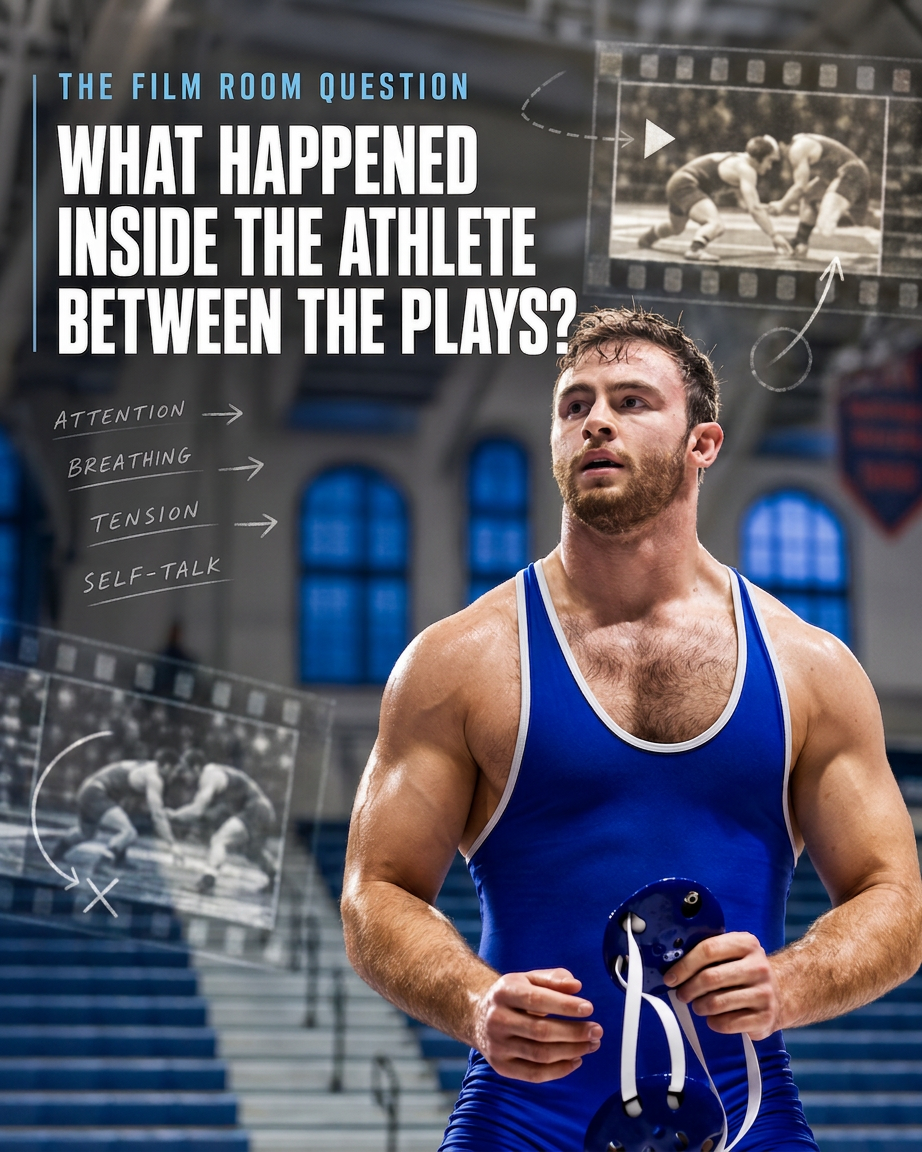
Where did their eyes go?
What happened to their breathing?
Did their body become tense?
What story did they begin telling themselves?
Did the mistake become information—or identity?
That is the purpose of The Film Room. We are not only studying the play. We are studying the athlete inside the play.
Because performance is not just the visible action.
It is also the athlete’s ability to manage attention, emotion, physical tension, and decision-making while the action is unfolding.
The Bottom Line

Athletes cannot always control the call, the conditions, the opponent, the crowd, or the outcome.
They can practice returning to the present.
Eyes. Exhale. Breathe.
Find the target.
Release the previous moment.
Prepare for the next action.
The reset may take only three seconds—but sometimes three seconds is all an athlete needs to stop competing against the last play and start competing in the next one.
What do you notice first when pressure hits?
The Film Room is an Athlete Mindset HQ series examining the psychological moments hidden inside athletic performance—because we study the athlete inside the play.
ABOUT THE AUTHOR – John J. Schessler, Jr. , MS, CPT, SPC

John J. Schessler, MS, SPC, CPT is a human performance professional, educator, certified personal trainer, and sport psychology coach whose work explores the intersection of physical performance, psychology, resilience, and human development.
With a Master of Science in Sport Psychology from Capella University and a bachelor’s degree in Child & Adolescent Psychology, John brings a multidisciplinary perspective to performance and well-being. His professional experience spans fitness coaching, adaptive and special-needs education, behavior intervention, athlete mindset development, and health and physical education.
John is the founder of Athlete Mindset HQ, an education and media platform dedicated to helping athletes and everyday people better understand the psychological side of performance. His work examines topics including confidence, motivation, identity, resilience, self-talk, mental skills, personal growth, and the often-overlooked relationship between mental and physical performance.
Beyond athletics, John has developed a growing interest in men’s psychology and male development, particularly the ways men experience identity, friendship, loneliness, masculinity, aging, emotional expression, purpose, and mental health. His approach rejects the idea that strength and vulnerability are opposites. Instead, he encourages conversations that allow people—especially men—to develop resilience without believing they must struggle silently.
As an educator and behavior interventionist working with autistic children and adolescents, John also brings years of experience translating psychological and behavioral concepts into practical, accessible strategies. That same philosophy shapes his public-facing work: psychology should not remain trapped in textbooks and research papers—it should be understandable and useful in everyday life.
Whether discussing an athlete struggling with confidence, a beginner walking into a gym for the first time, a man learning how to ask for help, or a young person developing the skills to navigate the world more independently, John’s work centers on one fundamental idea:
Human performance is about more than what people can do. It’s about helping people understand who they are becoming.


Leave a Reply