
by John J. Schessler, MS Sports Psychology
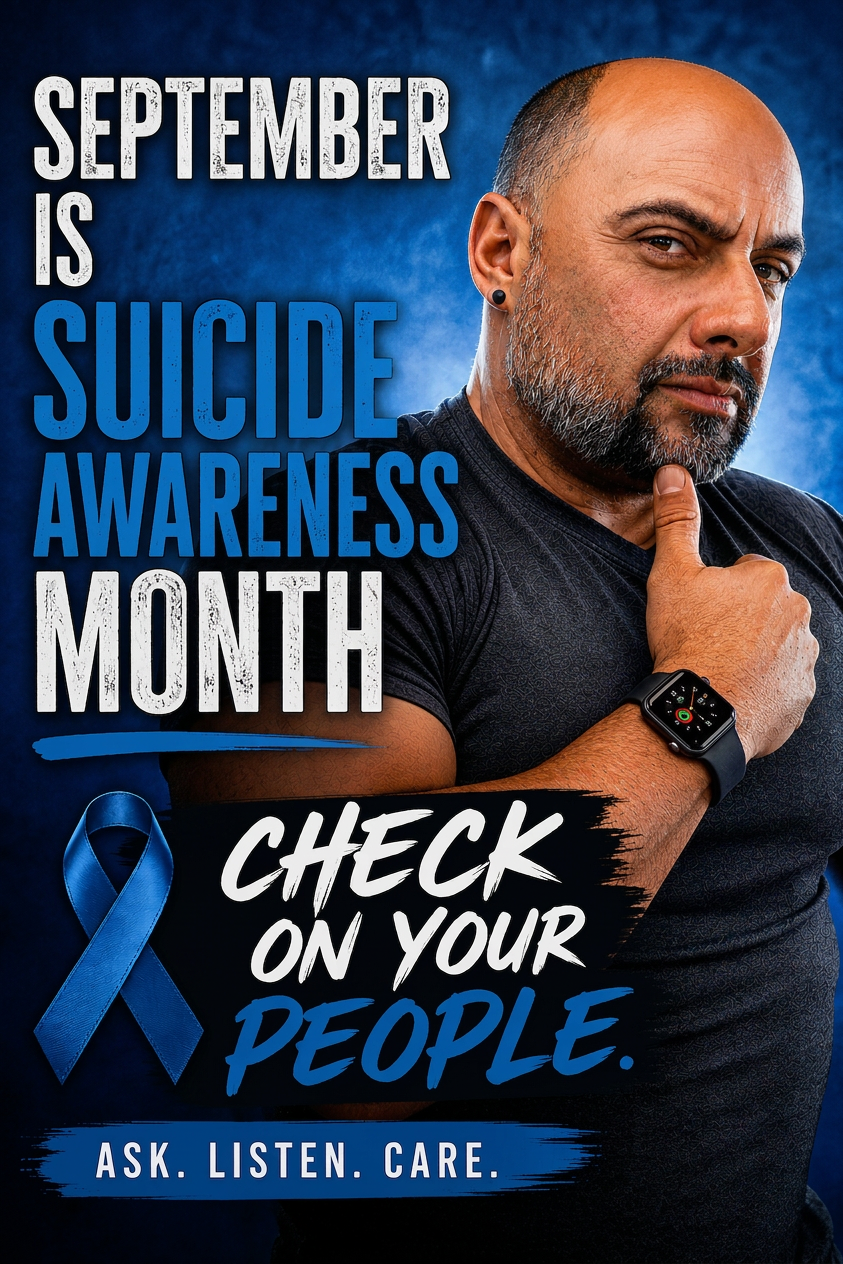
It happens between friends.
Between brothers and sisters.
Between teammates.
Between coworkers.
Between parents and children.
Sometimes it happens through nothing more complicated than a text message that says:
“Hey. You’ve been on my mind. How are you really doing?”
One of the most dangerous assumptions we can make about another person is that because they look okay, they are okay.
Struggling Doesn’t Always Look Like Struggling
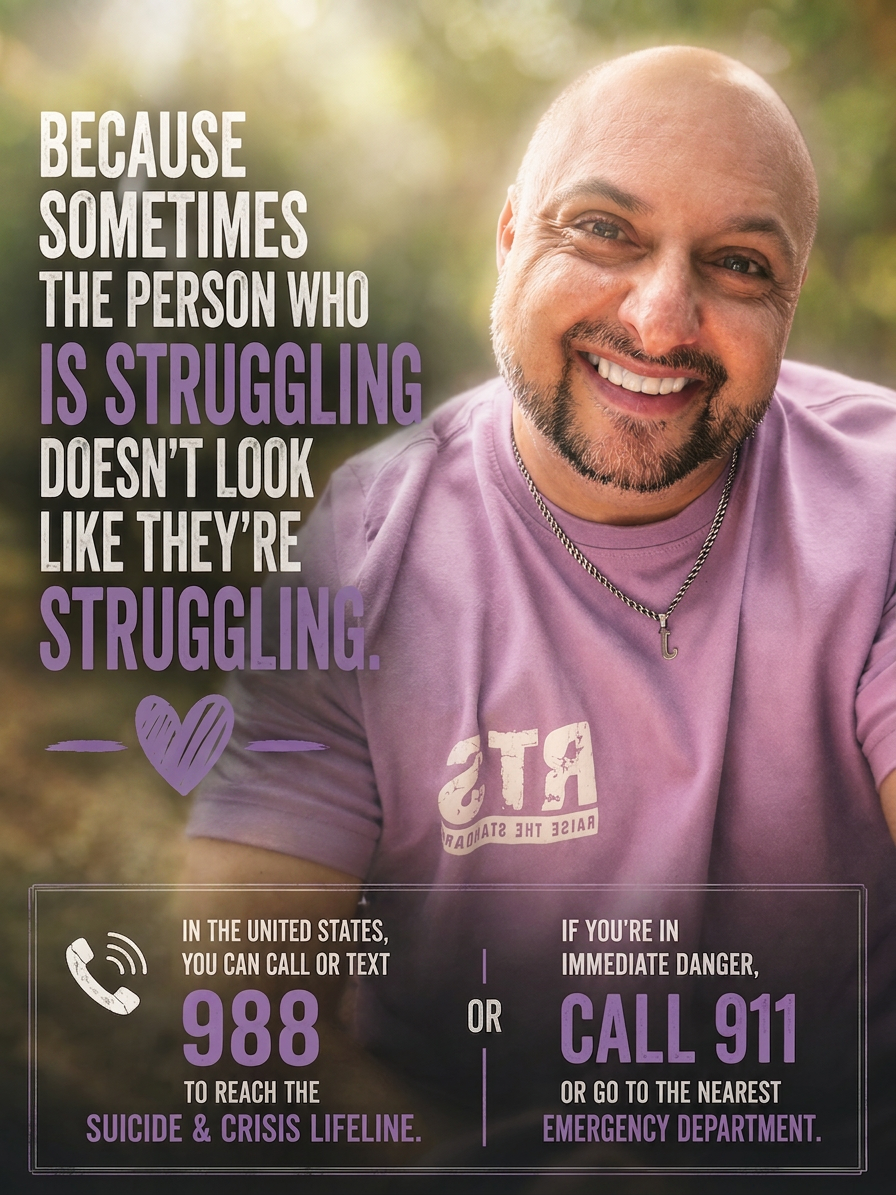
We tend to have an image in our minds of what serious emotional distress looks like.
Someone can’t get out of bed.
They stop going to work.
They isolate themselves.
They cry constantly.
They look visibly overwhelmed.
And yes, sometimes emotional distress looks exactly like that.
But sometimes it doesn’t.
Sometimes the person struggling is still getting up every morning.
They’re still going to work.
They’re still taking care of their family.
They’re still training at the gym.
They’re still posting pictures.
They’re still making everyone laugh.
They’re still asking everyone else:
“How are you doing?”
And when someone finally asks them the same question?
They smile.
“I’m fine.”
That is why we have to be careful about using outward appearance as a measure of someone’s internal world.
A smile tells us someone smiled.
It doesn’t necessarily tell us what happened five minutes before the picture was taken—or what they’re going home to afterward.
“I’m Fine” Can Mean a Lot of Things
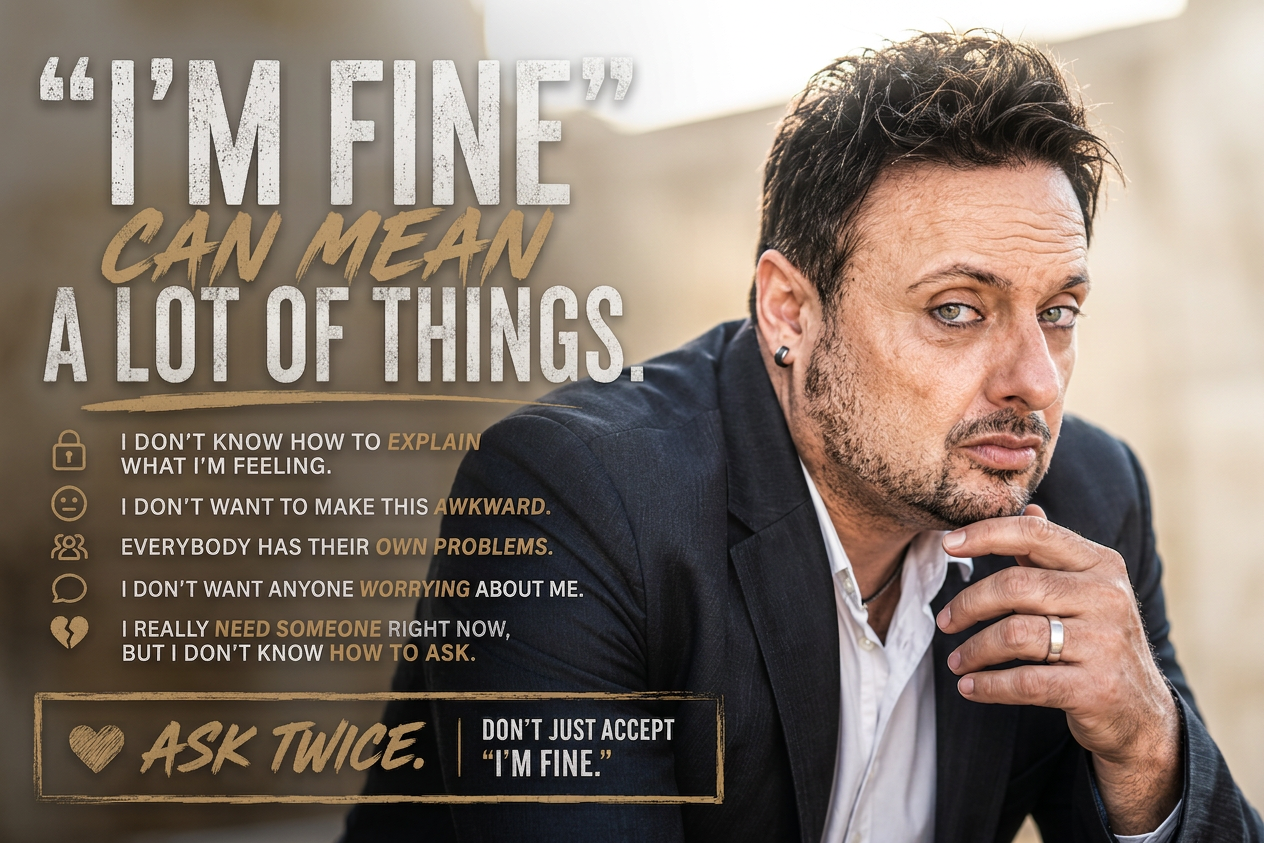
Most of us have said it.
Someone asks how we’re doing, and almost automatically:
“Good.”
“Fine.”
“Can’t complain.”
Sometimes that’s completely true.
Other times, “I’m fine” is shorthand for something much more complicated.
Maybe it’s:
I don’t know how to explain what I’m feeling.
Maybe it’s:
I don’t want to make this awkward.
Maybe it’s:
Everybody has their own problems.
Or:
I don’t want anyone worrying about me.
And sometimes it’s:
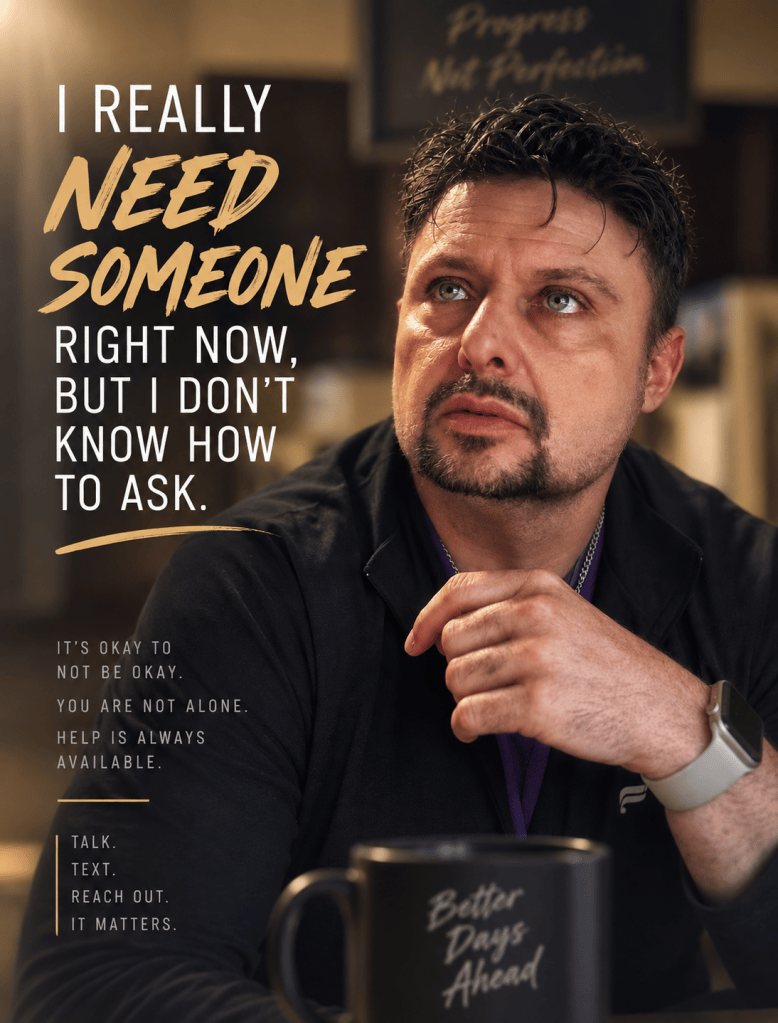
I really need someone right now, but I don’t know how to ask.
That’s why checking on someone occasionally requires asking twice.
Not interrogating them.
Not forcing them to disclose something they’re not ready to discuss.
Just creating enough space for a different answer.
Instead of only:
“How are you?”
Try:
“No, really. How have you been lately?”
That tiny change communicates something important:
I’m not just being polite. I’m actually asking.
Check on the Strong Ones, Too
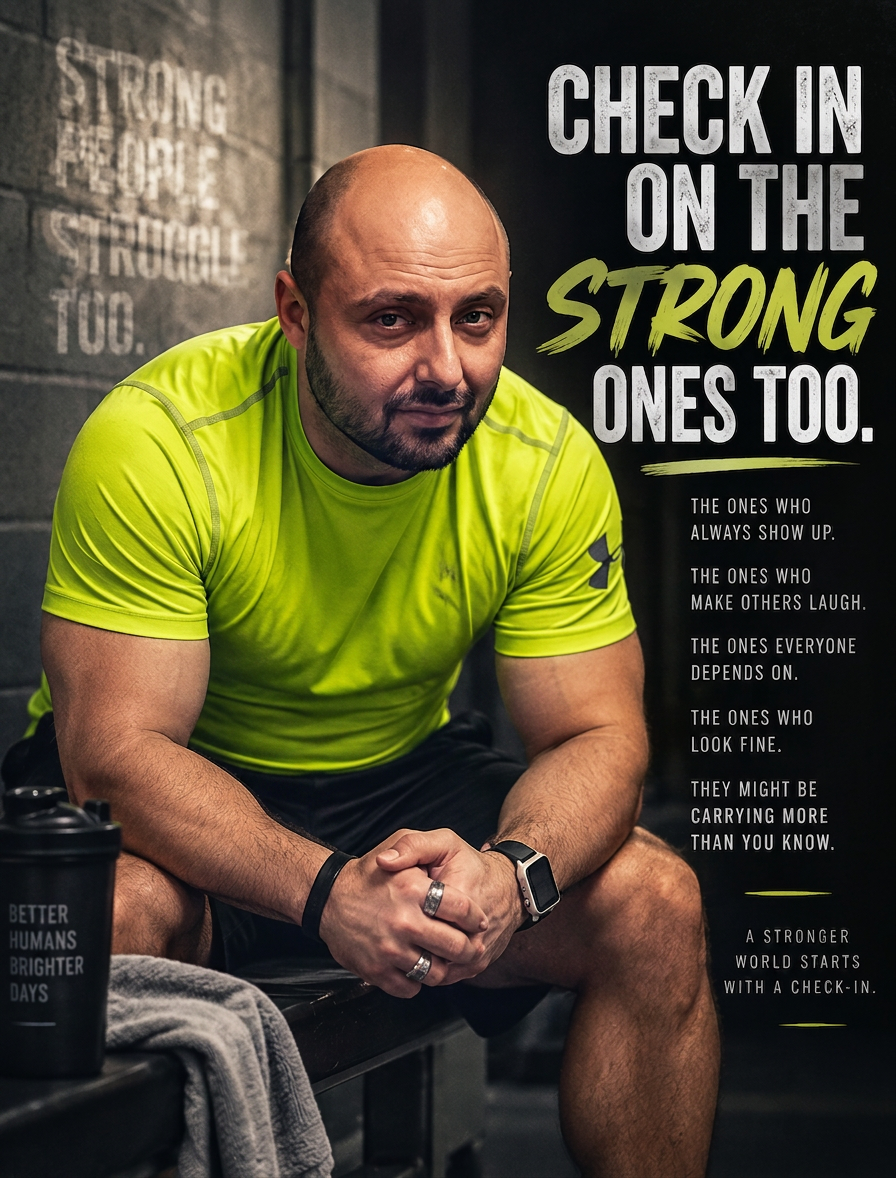
There is a particular group of people we sometimes forget to check on:
the people everybody else depends on.
The caretaker.
The coach.
The father.
The mother.
The teacher.
The dependable friend.
The person who fixes everything.
The one who seems almost impossible to knock down.
People can become so good at being strong for everyone else that nobody thinks to ask whether being strong is exhausting them.
And this is particularly important when we talk about men.
Many boys grow up receiving messages—sometimes directly and sometimes indirectly—that emotional control is part of being a man.
Don’t cry.
Don’t complain.
Handle it.
Push through.
Figure it out.
Be strong.
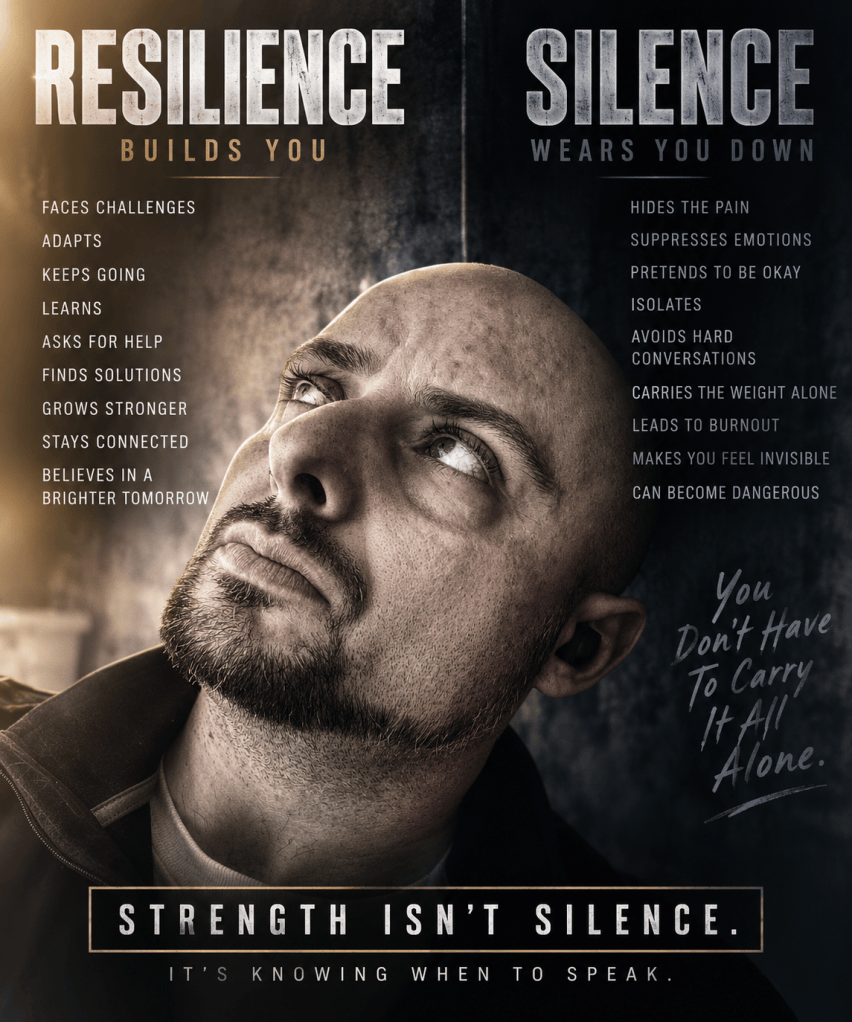
There can be positive qualities within those messages: perseverance, responsibility, courage, resilience.
But there’s a huge difference between resilience and silence.
A man can be strong and still say:
“I’m not doing well.”
He can be dependable and still need someone else to depend on.
He can be the protector and still occasionally need protecting.
Needing another human being does not cancel out strength.
It’s part of being one.
You Don’t Need the Perfect Words
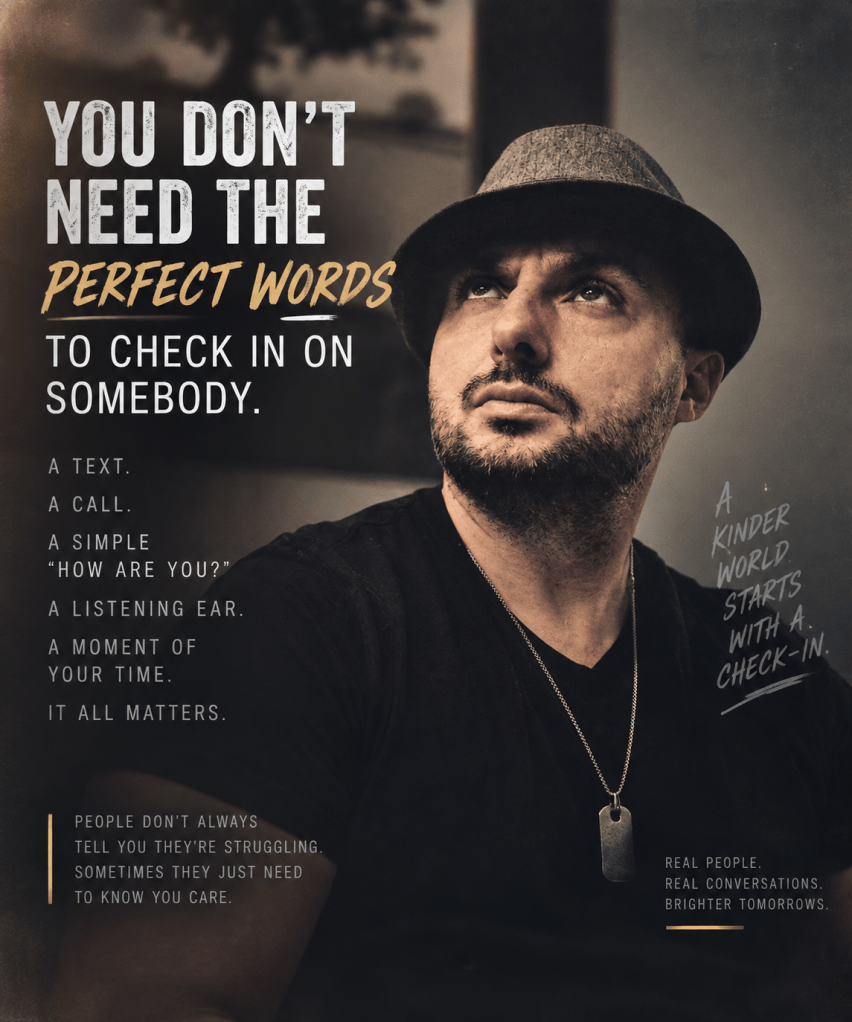
People sometimes hesitate to check on someone because they don’t know what to say.
What if I make it awkward?
What if they get upset?
What if I don’t know how to respond?
Here’s something worth remembering:
You don’t need the perfect words to check on somebody.
You aren’t being asked to become someone’s therapist.
You don’t have to diagnose anything.
You don’t need a motivational speech.
You don’t need to solve their life.
You can simply say:
“Hey, I haven’t heard from you lately. I wanted to check in.”
Or:
“You haven’t seemed quite like yourself. Is everything okay?”
Or even:
“I don’t really know what to say, but I care about you and wanted to make sure you’re okay.”
That last sentence might not sound profound.
But imagine hearing it during one of the worst periods of your life.
Suddenly, two things become true:
Somebody noticed me.
Somebody cares whether I’m here tomorrow.
Never underestimate the importance of those realizations.
When Someone Actually Opens Up, Listen
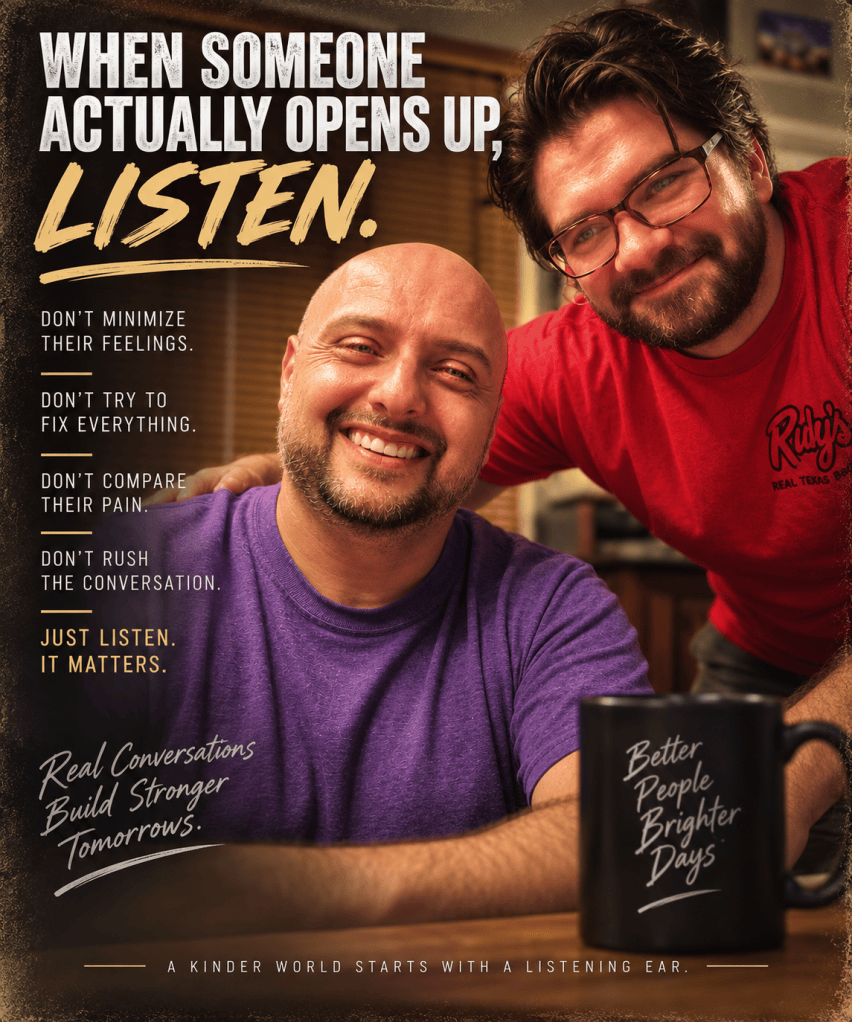
This may be the harder part.
You checked in.
And instead of saying “I’m fine,” they actually tell you they’re not.
Our instinct is often to immediately fix it.
“Look at everything you have going for you.”
“Don’t think like that.”
“You’ll be okay.”
“Other people have it worse.”
Usually, those statements come from a good place. We’re uncomfortable seeing someone we care about hurting, so we desperately want to make the hurt disappear.
But listening can be more valuable than immediately trying to manufacture optimism.
Give the person room to talk.
Take what they’re telling you seriously.
And if someone tells you they’re thinking about suicide, don’t treat it as attention-seeking or something you have to handle alone.
Help them connect with appropriate professional or crisis support.
If You’re the Person Who Isn’t Okay
Maybe you’re reading this article and realizing that you’re not the person who needs to check on somebody.
You’re the person who needs somebody to check on you.
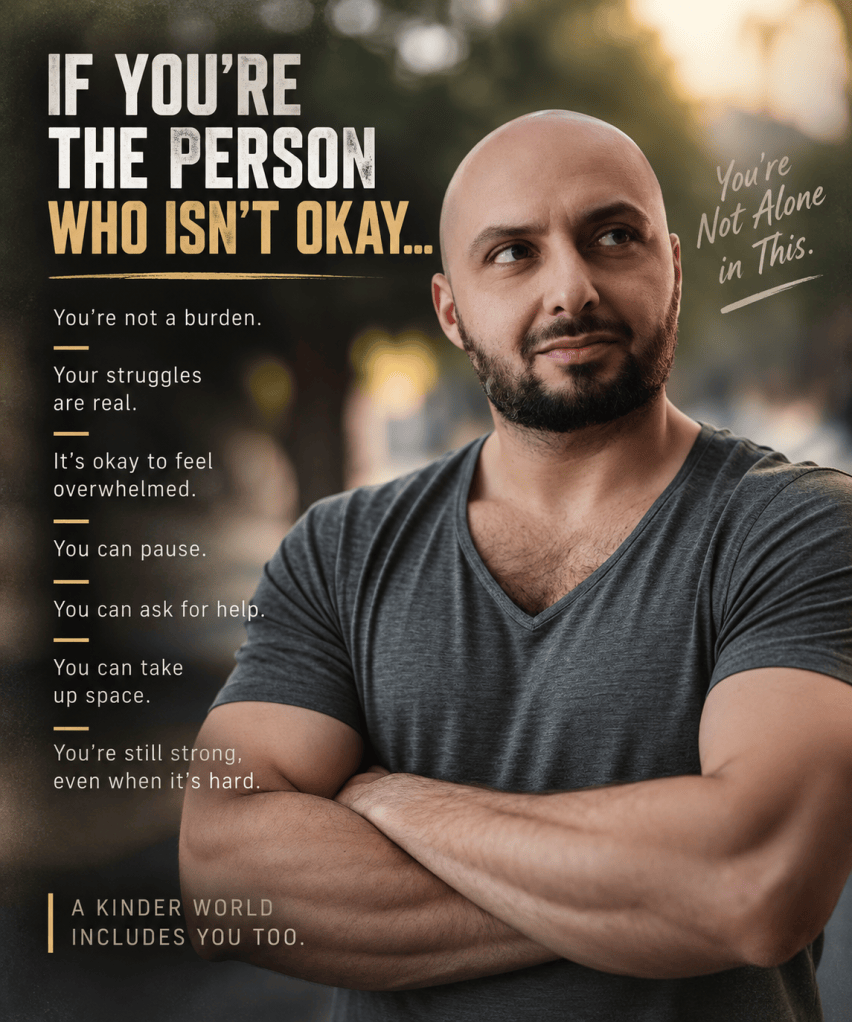
Then I want to speak directly to you.
You don’t have to solve the rest of your life today.
You don’t need to suddenly feel hopeful.
And you don’t have to explain everything perfectly.
Your next step can be much smaller.
Tell one person.
You can literally say:
“I’m having a really hard time.”
Or:
“I don’t feel safe being by myself right now.”
Or:
“I don’t know what I need. I just don’t want to be alone.”
That’s enough to begin.
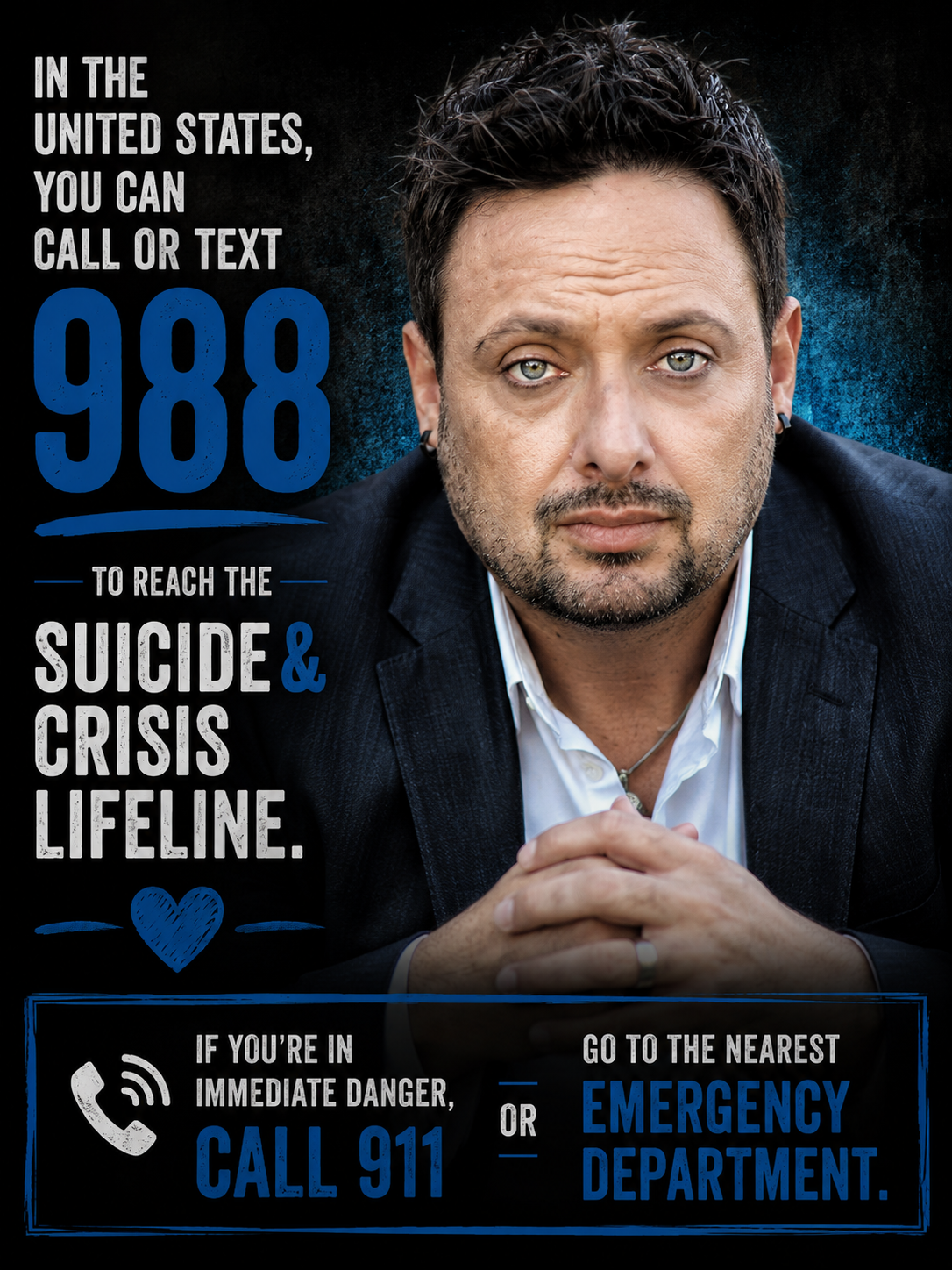
In the United States, you can call or text 988 to reach the Suicide & Crisis Lifeline. If you’re in immediate danger, call 911 or go to the nearest emergency department.
Suicide Prevention Happens Between Septembers
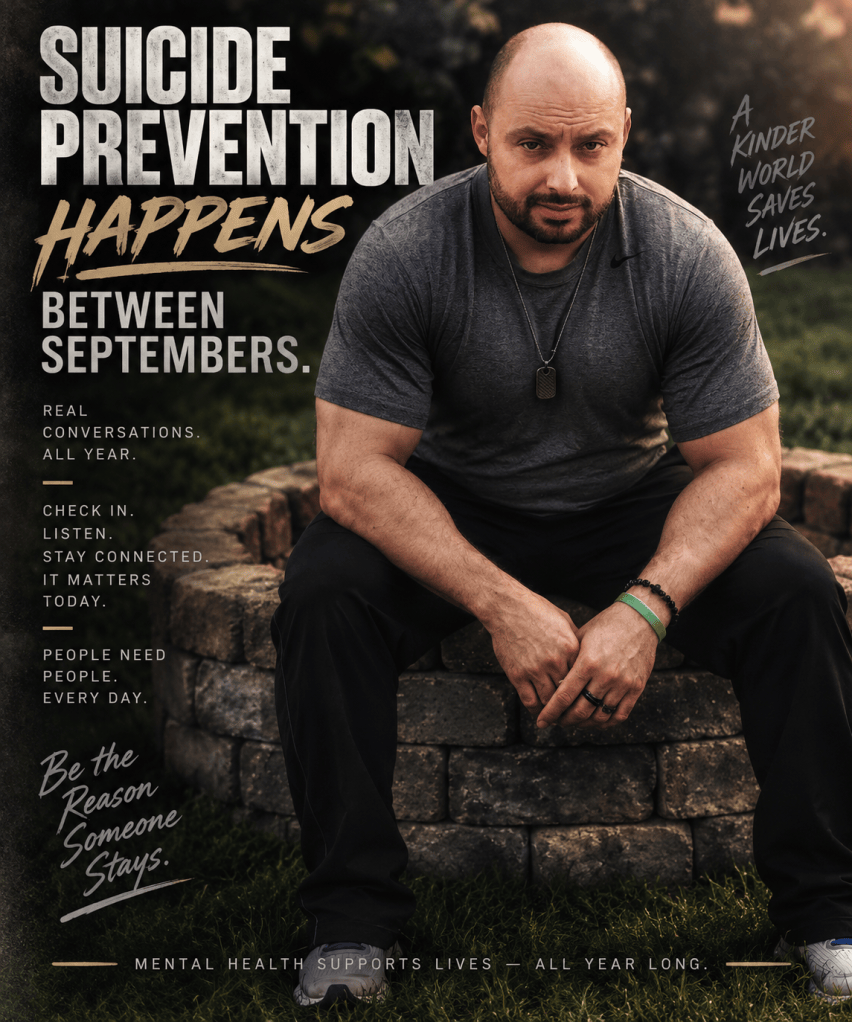
Awareness months matter.
They give us opportunities to talk about subjects we might otherwise avoid.
But October will eventually arrive.
The graphics will disappear.
Social media will move on to something else.
People will still be struggling.
That’s why the real goal shouldn’t simply be suicide awareness.
It should be creating a culture where asking for help becomes ordinary.
Where a friend can say, “I’m having a rough time,” without feeling embarrassed.
Where men don’t have to reach complete emotional collapse before they’re permitted to admit something hurts.
Where checking on somebody isn’t considered intrusive.
Where asking twice becomes normal.
Where listening becomes something we actually practice.
Check on Your People

So sometime today, think about your circle.
Who haven’t you heard from?
Who recently went through something difficult?
Who seems a little different lately?
Who is always helping everyone else?
Who is the person everyone assumes is fine?
Send the text.
Make the call.
Grab coffee.
Sit beside them.
You don’t need a psychology degree.
You don’t need a script.
And you definitely don’t need the perfect words.
Sometimes four are enough:
“Hey. How are you?”
And occasionally four more make all the difference:
“No—how are you really?”
Because suicide prevention isn’t only about recognizing someone standing at the edge of a crisis.
Sometimes it’s about reaching them much earlier.
It’s noticing.

It’s asking.
It’s listening.
It’s reminding another human being:
I see you.
You matter to me.
And you don’t have to carry everything alone.
If You or Someone You Know Needs Immediate Support
In the United States, call or text 988 to reach the Suicide & Crisis Lifeline. If you believe you or someone else is in immediate danger, call 911 or go to the nearest emergency department.
September is Suicide Prevention Month.
But checking on our people should never be limited to September. 💙
ABOUT THE AUTHOR – John J. Schessler, MS, SPC, CPT
John J. Schessler, MS, SPC, CPT is a human performance professional, educator, certified personal trainer, and sport psychology coach residing in Pittsburgh, PA, whose work explores the intersection of physical performance, psychology, resilience, and human development.

With a Master of Science in Sport Psychology from Capella University and a bachelor’s degree in Child & Adolescent Psychology, John brings a multidisciplinary perspective to performance and well-being. His professional experience spans fitness coaching, adaptive and special-needs education, behavior intervention, athlete mindset development, and health and physical education.
John is the founder of Athlete Mindset HQ, an education and media platform dedicated to helping athletes and everyday people better understand the psychological side of performance. His work examines topics including confidence, motivation, identity, resilience, self-talk, mental skills, personal growth, and the often-overlooked relationship between mental and physical performance.
Beyond athletics, John has developed a growing interest in men’s psychology and male development, particularly the ways men experience identity, friendship, loneliness, masculinity, aging, emotional expression, purpose, and mental health. His approach rejects the idea that strength and vulnerability are opposites. Instead, he encourages conversations that help people—especially men—develop resilience without believing they must struggle in silence.
As an educator and behavior interventionist working with autistic children and adolescents, John also brings years of experience translating psychological and behavioral concepts into practical, accessible strategies. That same philosophy shapes his public-facing work: psychology should not remain trapped in textbooks and research papers—it should be understandable and useful in everyday life.
Whether discussing an athlete struggling with confidence, a beginner walking into a gym for the first time, a man learning how to ask for help, or a young person developing the skills to navigate the world more independently, John’s work centers on one fundamental idea:
Human performance is about more than what people can do. It’s about helping people understand who they are becoming.
#suicideawareness #menshealth #womenshealth #coaching #personaltraining #humanperformance #athletedevelopment


Leave a Reply