
by John J. Schessler, MS, CPT, SPC
There’s a phrase in fitness culture that I’ve never particularly loved:
“Cheat meal.”
You know the routine.
You eat well all week. You get your workouts in. You drink your water. You prep your chicken, rice, vegetables, protein shakes, and whatever else fits your nutrition plan.
Then Saturday night comes.
You order pizza.
Or wings.
Or a burger and fries.
Maybe you go out for Mexican food and absolutely destroy the chips and salsa before your meal even arrives.
And suddenly you feel like you’ve done something wrong.
“I blew my diet.”
“I was doing so well.”
“I guess I’ll start over Monday.”
But here’s something I want more people to understand:
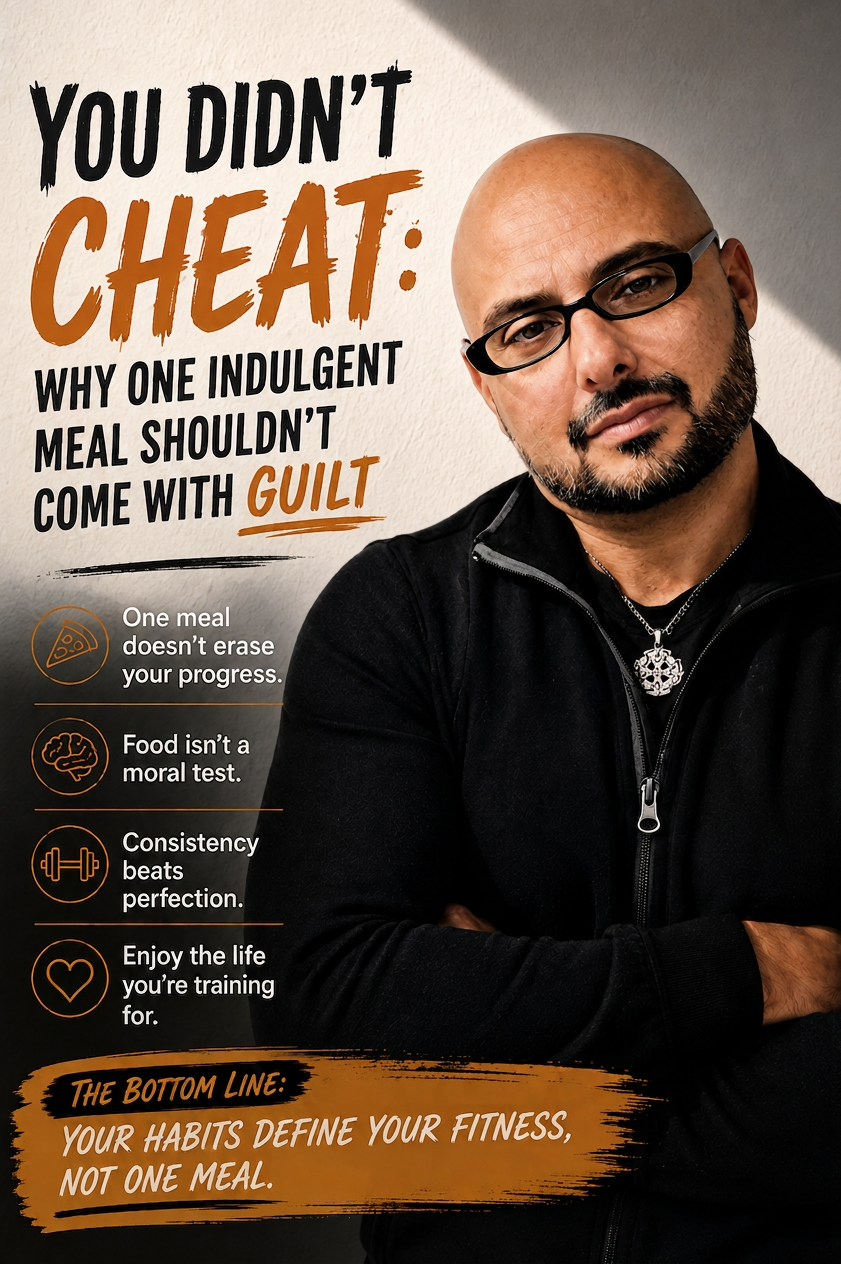
You didn’t cheat. You ate food.
And one meal does not erase everything you’ve been doing.
Food Isn’t a Moral Test
Somewhere along the way, fitness culture became very good at assigning morality to food.
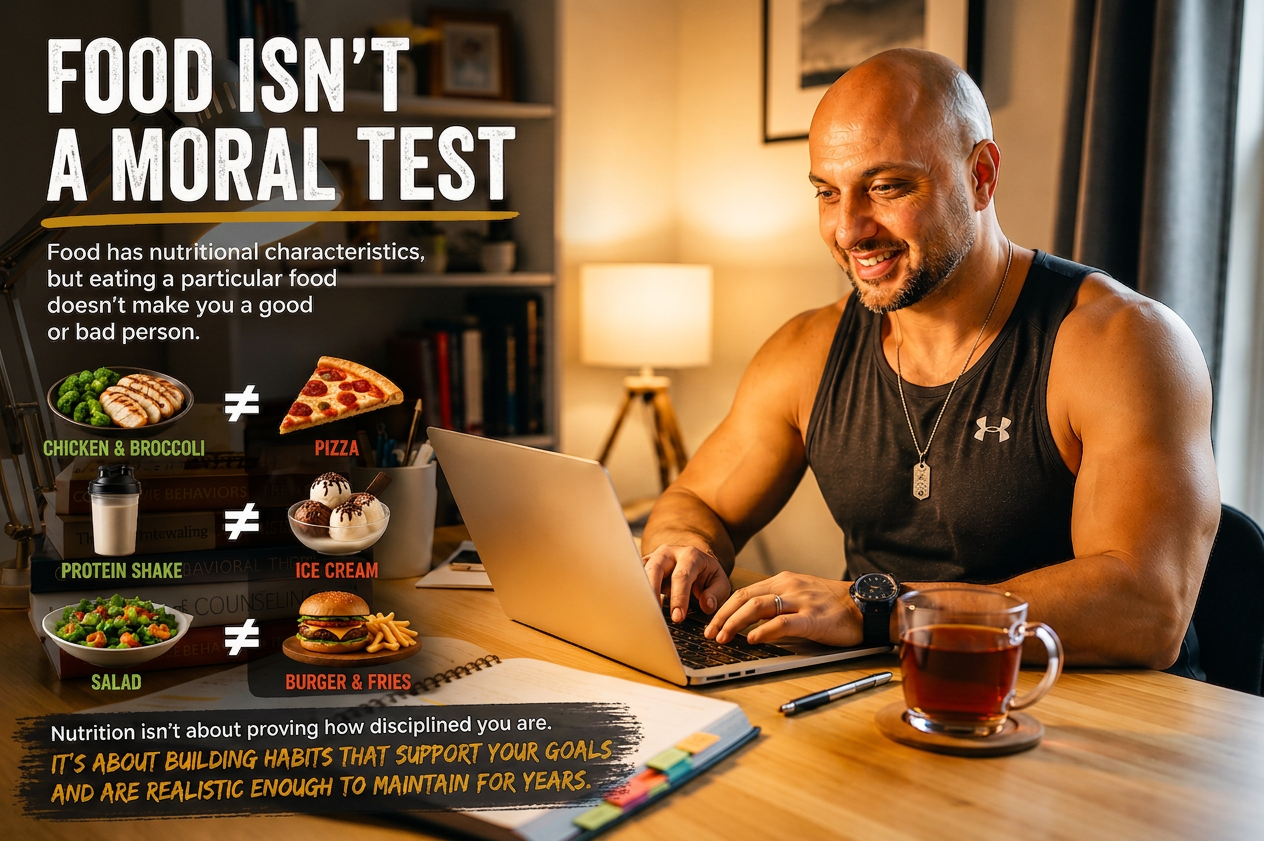
Chicken and broccoli? Good.
Pizza? Bad.
Protein shake? Disciplined.
Ice cream? Weak.
Salad for lunch? You’re crushing it.
Burger and fries? Apparently, you’ve disappointed the fitness gods.
That’s ridiculous.
Food has nutritional characteristics, but eating a particular food doesn’t make you a good or bad person.
Some foods provide more protein.
Some provide more fiber.
Some are more calorie-dense.
Some provide more vitamins and minerals.
And some foods are simply incredibly enjoyable.
Those things can all exist in the same diet.
Nutrition isn’t about proving how disciplined you are every time you sit down to eat. It’s about creating eating habits that support your goals and are realistic enough to maintain for years.
One Meal Doesn’t Ruin Your Progress
People dramatically overestimate what one meal can do to their body.
Let’s say you’ve been consistently exercising and eating according to your goals for several weeks.
Then Friday night you go out with friends.
You have a burger.
You eat fries.
You have dessert.
Maybe you even have a couple of drinks.
Did you suddenly lose all your progress?
Of course not.
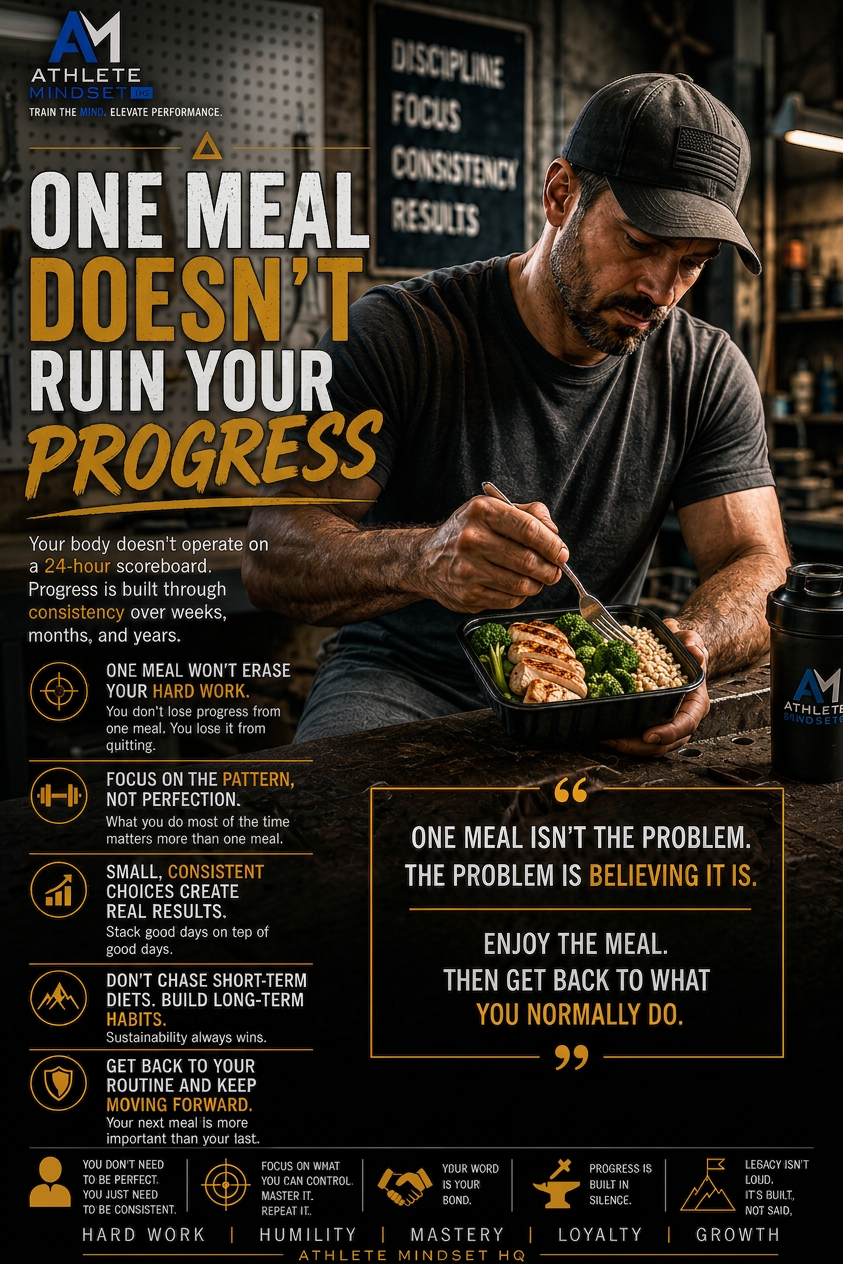
Your body doesn’t operate on a 24-hour fitness scoreboard.
What matters much more is the pattern created over weeks, months, and years.
If most of your meals support your goals, occasionally eating something simply because you enjoy it isn’t going to destroy your progress.
In fact, learning how to comfortably include those meals may actually make your overall nutrition plan more sustainable.
The Real Problem Is Often What Happens Afterward
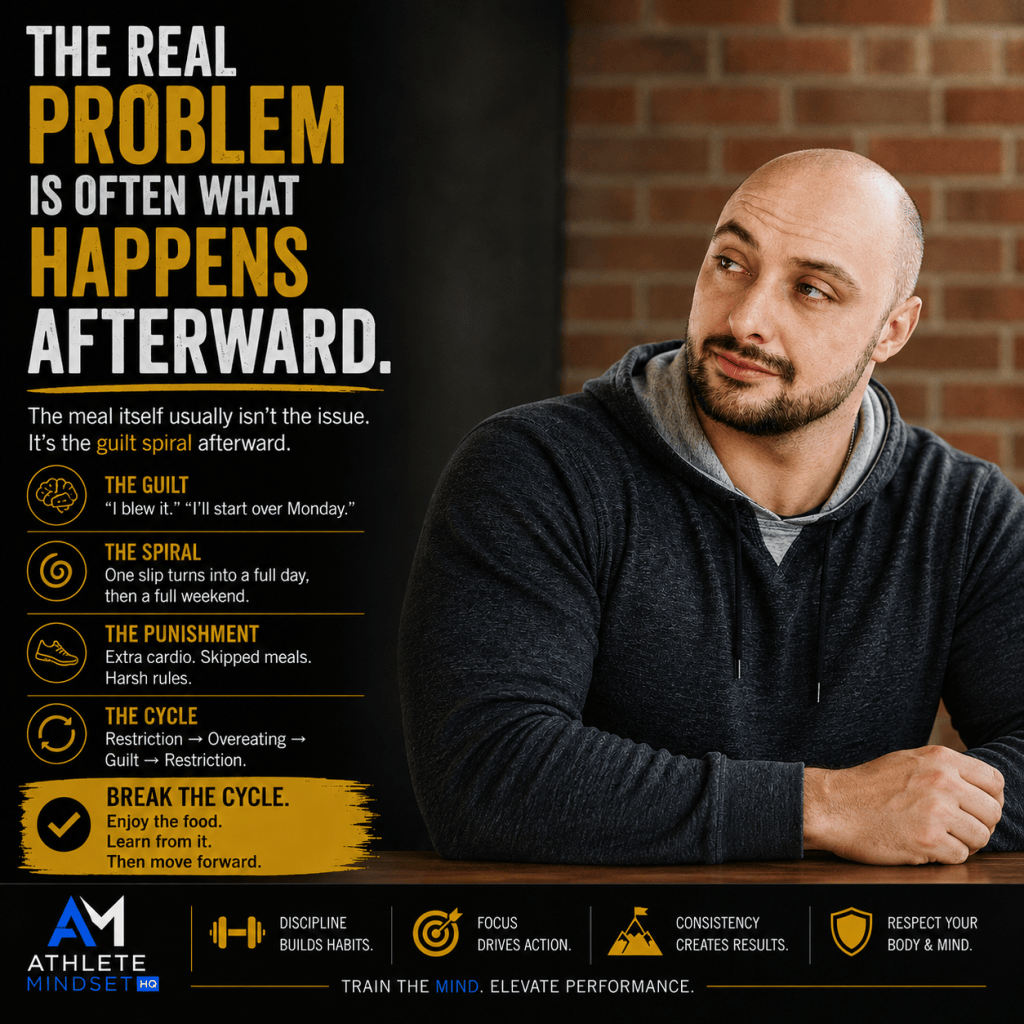
The meal itself frequently isn’t the biggest problem.
The guilt spiral afterward is.
Someone eats more than they planned and thinks:
“Well, I already ruined today.”
So the pizza becomes dessert.
Dessert becomes late-night snacking.
Then Sunday becomes another free-for-all because Monday is going to be the official restart.
Monday arrives, and suddenly we’re back to extreme restriction.
And the cycle begins again.
Restriction → overeating → guilt → restriction.
That’s exhausting.
Instead, imagine having the pizza Friday night, enjoying it, waking up Saturday morning and simply continuing your normal routine.
No punishment.
No starvation.
No two-hour cardio session designed to “burn it off.”
No dramatic Monday restart.
Just breakfast.
That’s a much healthier approach to long-term fitness.
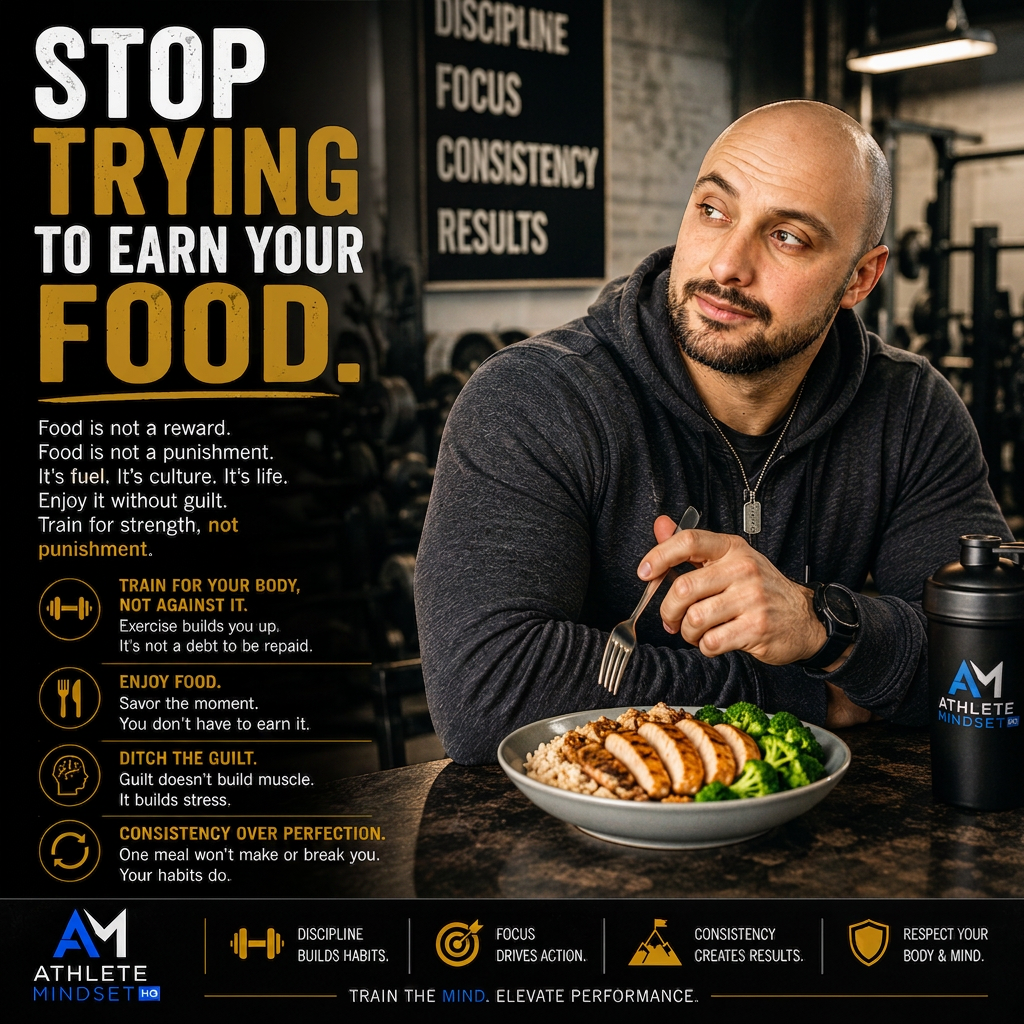
Stop Trying to Earn Your Food
Exercise should never become punishment for eating.
You don’t need to run five miles because you had cake.
You don’t need to skip breakfast because you ate too much yesterday.
And you don’t need to add an extra workout because you went out for dinner.
Your workout is something you’re doing for your body, not something you’re doing to your body because you ate.
That distinction matters.
Training builds strength, endurance, mobility, confidence, health, and capability.
It shouldn’t become a transaction where calories consumed create a debt that exercise has to repay.
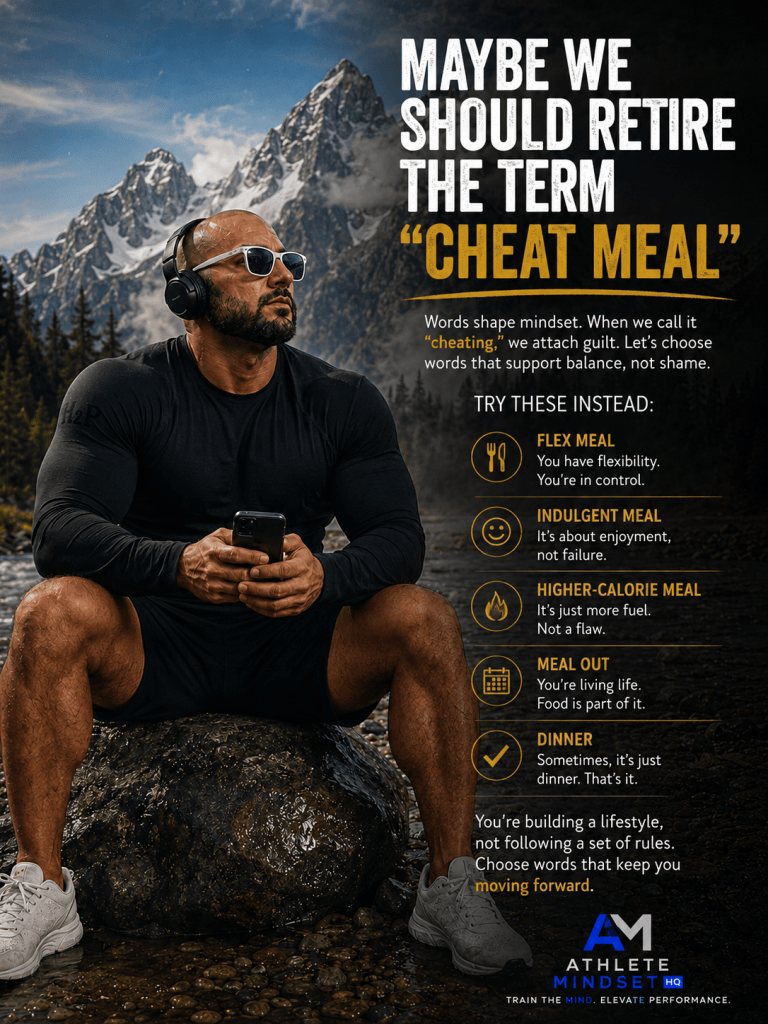
Maybe We Should Retire the Term “Cheat Meal”
Think about what the word cheating implies.
You broke a rule.
You did something dishonest.
You failed.
That’s a pretty heavy psychological load to attach to a cheeseburger.
Instead, I prefer terms like:
flex meal
indulgent meal
higher-calorie meal
meal out
Or my personal favorite:
dinner.
Because sometimes that’s literally all it is.
You went to a restaurant.
You ordered something you wanted.
You enjoyed it.
Life continued.
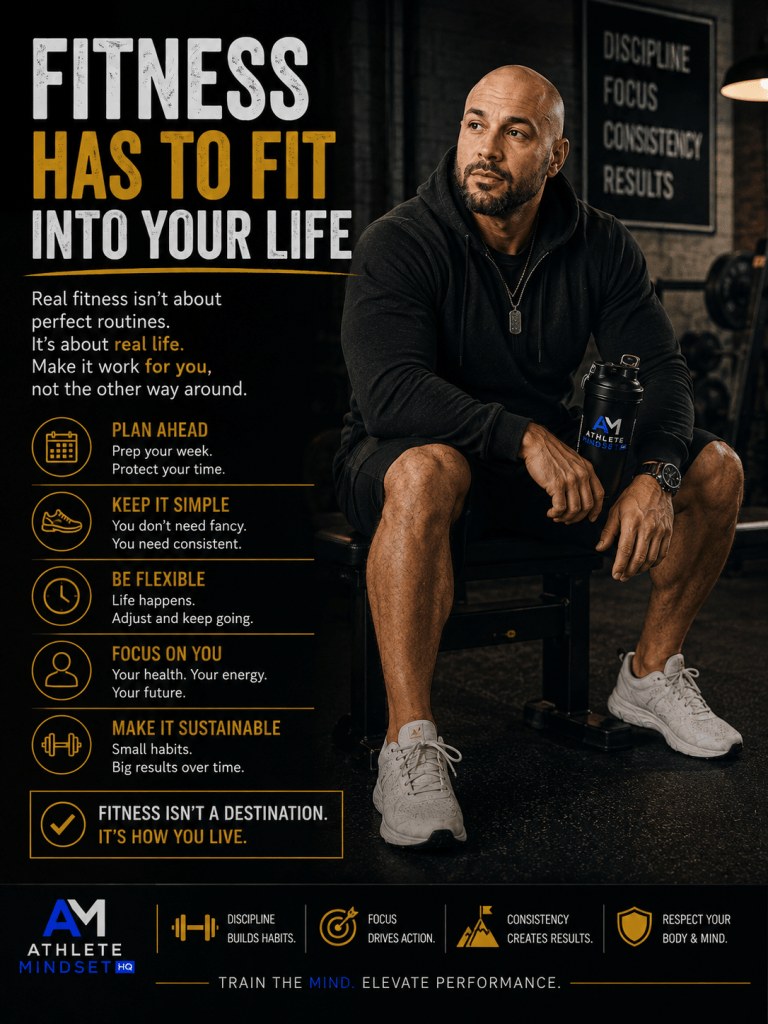
Fitness Has to Fit Into Your Life
This is one of the biggest lessons I’ve learned about fitness:
The best program isn’t the one you can follow perfectly for six weeks. It’s the one you can realistically live with.
And real life contains food.
Birthday cake.
Pizza nights.
Cookouts.
Thanksgiving dinner.
Christmas cookies.
Vacations.
Restaurants.
Baseball games.
Date nights.
Family recipes.
Ice cream on a hot summer night.
You could theoretically avoid all of those things in the pursuit of the “perfect” diet.
But what exactly are we trying to become healthy enough to do?
Hopefully, live.
Nutrition should support your life—not make you afraid of participating in it.
Think in Percentages, Not Perfection
Imagine someone eats four times per day.
That’s roughly 28 eating opportunities every week.
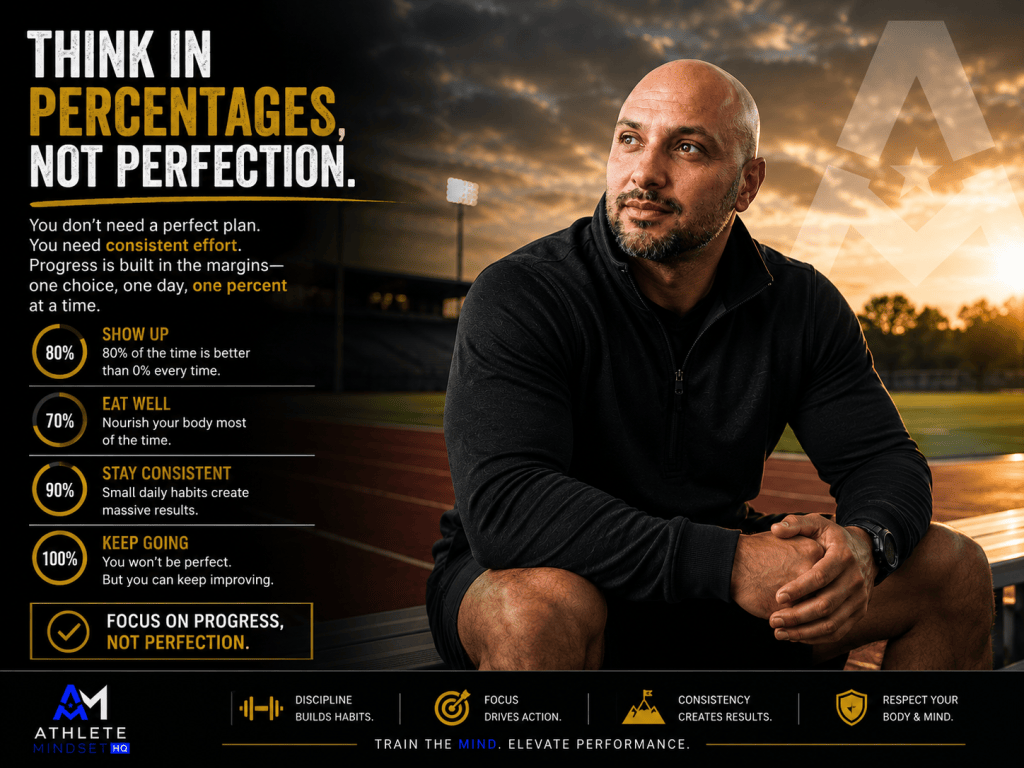
If 23 or 24 of those generally support their nutrition goals and a few are more indulgent, does that
person have a terrible diet?
Probably not.
They probably have a pretty normal, sustainable one.
Consistency does not mean perfection.
It means your overall behaviors tend to point in the direction you’re trying to go.
That’s a very different standard.
And it’s one that people can actually maintain.
The Scale Might Go Up—Don’t Panic
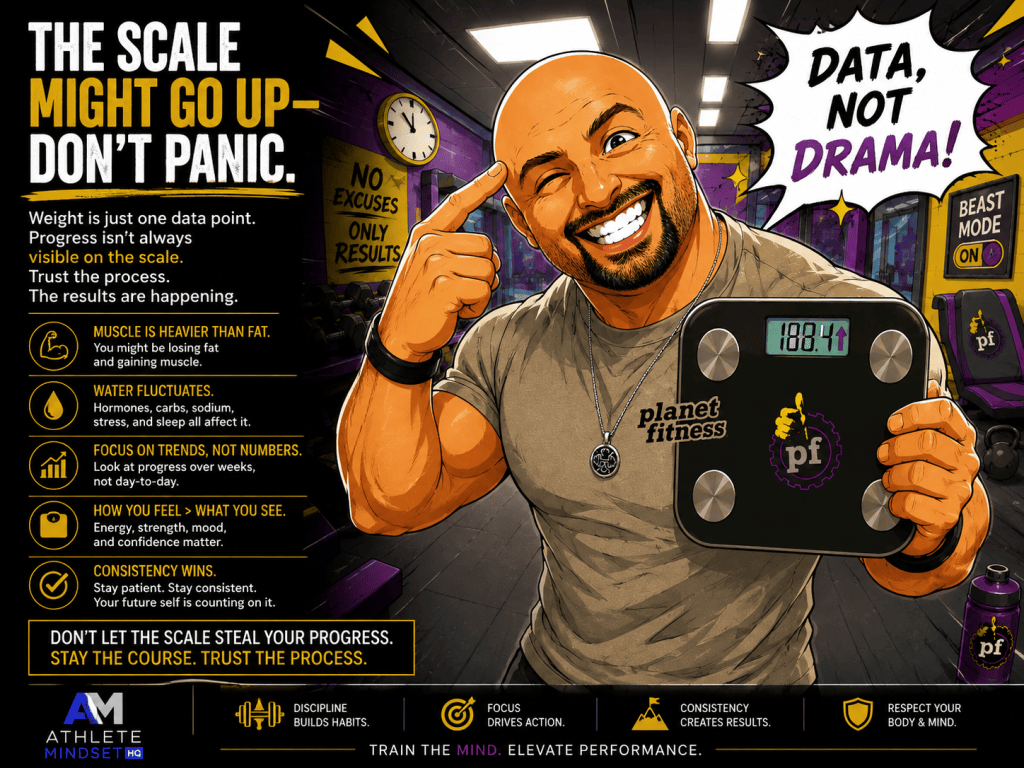
There’s another reason people feel guilty after a larger meal.
They step on the scale the next morning.
“OH MY GOD. I GAINED THREE POUNDS.”
Probably not three pounds of body fat.
A restaurant meal may contain considerably more sodium and carbohydrates than you’re accustomed to eating. You may also simply have more food moving through your digestive system.
That can temporarily increase scale weight because of water retention, glycogen storage, and food volume.
Give your body a little time.
Return to your normal habits.
The scale will often settle back down.
Don’t turn a temporary fluctuation into a three-day punishment.
Enjoy the Meal
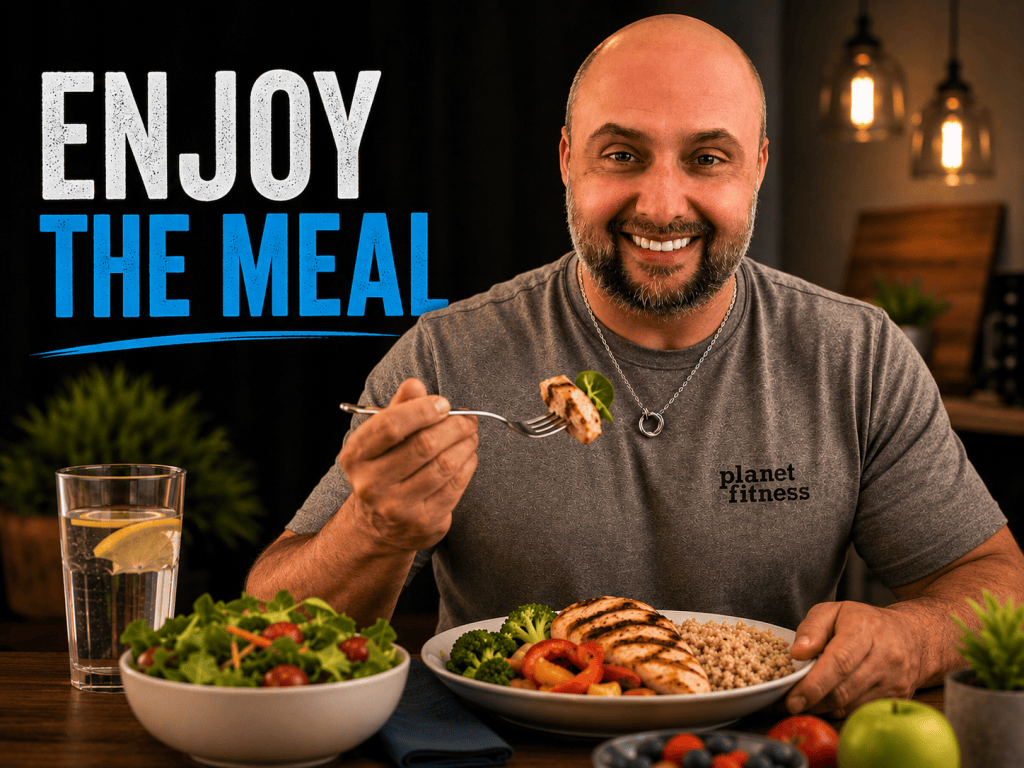
Here’s another concept fitness culture sometimes struggles with:
If you’re going to eat something you love…
actually enjoy it.
Don’t eat pizza while mentally calculating how many minutes you’ll have to spend on the treadmill tomorrow.
Don’t eat birthday cake while telling everyone how “bad” you’re being.
Don’t order dessert and spend the entire time apologizing for ordering dessert.
Taste it.
Enjoy the people you’re with.
Enjoy the experience.
Then move on.
Ironically, removing the guilt around these foods can sometimes make them feel less powerful.
When pizza isn’t forbidden, you don’t necessarily need to eat half the pizza because “I won’t be allowed to have this again for three weeks.”
You know you can have pizza again.
That changes the relationship entirely.
Your Next Meal Is More Important Than Your Last One
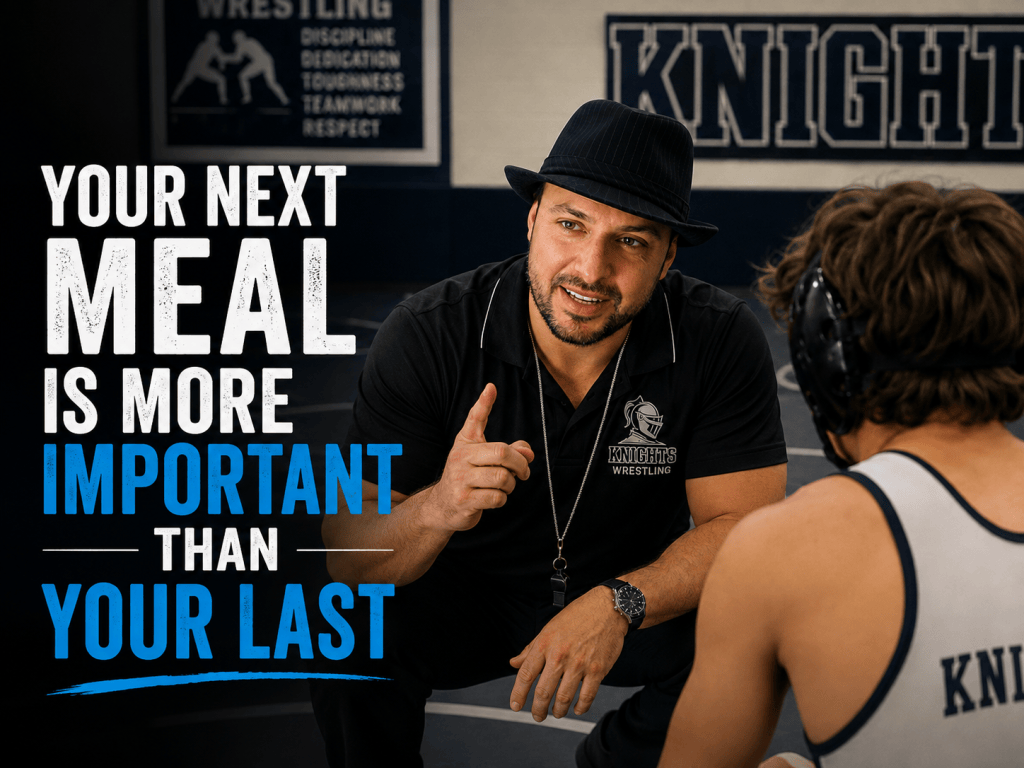
If you remember nothing else from this article, remember this:
You don’t need to compensate for an indulgent meal. You simply need to continue.
Had pizza last night?
Great.
What’s for breakfast?
Had cake at a birthday party?
Hope it was good.
What’s for dinner?
Went on vacation and ate differently for five days?
Welcome home.
What’s your workout tomorrow?
That’s what sustainable fitness looks like.
Not constantly starting over.
Continuing.
The Bottom Line
Your health isn’t determined by the occasional meal you enjoy.
It’s built through thousands of ordinary decisions repeated over time.

Strength training.
Walking.
Sleeping.
Eating enough protein.
Eating fruits and vegetables.
Managing portions.
Drinking water.
Managing stress.
Staying active.
And yes…
sometimes eating the damn pizza. 🍕
Fitness should make your life bigger, not smaller.
So the next time you’re sitting across from a burger, a plate of wings, a slice of cake, or a bowl of ice cream, you don’t need to call it cheating.
You didn’t betray your fitness program.
You didn’t lose your discipline.
And you certainly don’t need to punish yourself tomorrow.
Enjoy the meal.
Then get back to doing what you normally do.
Because one meal doesn’t define your fitness.
Your habits do.
ABOUT THE AUTHOR – John J. Schessler, MS, NPTI-CPT, AFAA-SPC

John J. Schessler, MS, SPC, CPT is a sport psychology professional, certified personal trainer, behavior interventionist, educator, and founder of Athlete Mindset HQ, an education and performance platform dedicated to helping people better understand the connection between mindset, movement, performance, and everyday life.
John holds a Master of Science in Sport Psychology from Capella University and a Bachelor of Arts in Child & Adolescent Psychology from Southern New Hampshire University. His professional background spans behavioral health and developmental services, physical education, adaptive fitness, strength and conditioning, rehabilitation support, and one-on-one personal training.
That combination has shaped a philosophy that goes beyond workouts, motivation, or winning.
John believes human performance is built at the intersection of physical strength, psychological skills, behavior, confidence, resilience, and self-understanding. Whether working with an athlete trying to perform under pressure, an adult rebuilding strength, or a young person learning how to navigate their environment, his approach starts with meeting people where they are and helping them move forward from there.
As the founder of Athlete Mindset HQ, John develops educational content, workshops, performance resources, and athlete-development programming centered on the idea that sport can teach skills that extend far beyond competition. His work explores topics including mental performance, confidence, psychological flexibility, resilience, athlete well-being, fitness, personal development, and the realities of being human in a performance-driven culture.
John is also an AFAA Certified Sports Psychology Coach, NPTI Certified Personal Trainer, and USAW Certified Wrestling Coach, bringing both academic preparation and hands-on experience to his work.
His blog reflects that same multidisciplinary perspective. Rather than treating fitness, psychology, mental health, and performance as separate conversations, John explores how they continually influence one another—from the weight room and playing field to the classroom, workplace, and everyday life.
At the heart of his work is a simple belief:
Performance matters. But the person behind the performance matters more.
Through his writing, coaching, education, and Athlete Mindset HQ, John hopes to help people become stronger without believing they have to be perfect, more confident without pretending they never struggle, and more capable of pursuing meaningful goals while still enjoying the life they’re building.
John J. Schessler, MS, SPC, CPT
Founder, Athlete Mindset HQ | Sport Psychology & Human Performance Professional
#nutritionbasics #fitness #personaltraining #sportspsychology #education #themoreyouknow #coaching #athletemindsethq #stronger #menshealth #womenshealth #humanperformance #wrestlingcoach


Leave a Reply