
by John J. Schessler, MS, CPT, SPC
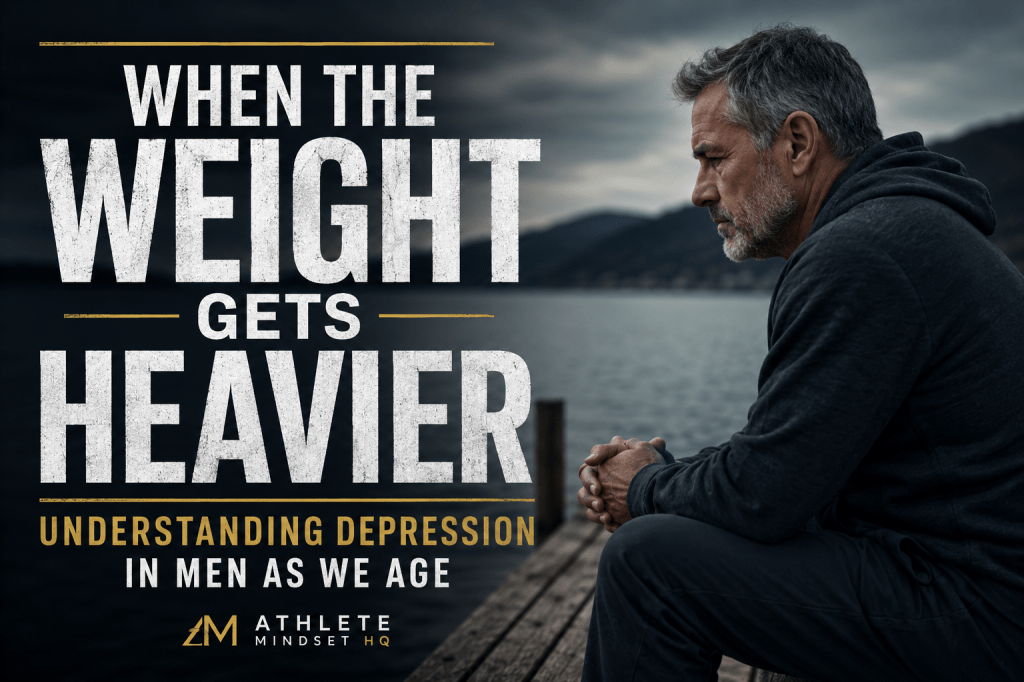
There is a version of depression that doesn’t always look like depression.
It gets up in the morning.
It goes to work.
It pays the bills.
It cuts the grass.
It answers, “I’m good,” when somebody asks how things are going.
It laughs at the right moments, handles responsibilities, and keeps moving.
From the outside, everything may appear perfectly normal.
Inside, something has changed.
Life feels flatter.
Things that once mattered don’t hit the same way anymore.
You’re more tired.
More irritated.
Less patient.
You don’t really want to see anybody.
Maybe you don’t even feel particularly sad.
You just don’t feel much of anything.
For many men, this can become part of the experience of depression as they move through adulthood.
And because it doesn’t always match the stereotypical picture of depression, it can be incredibly easy to miss.
Depression Doesn’t Always Look Like Sadness
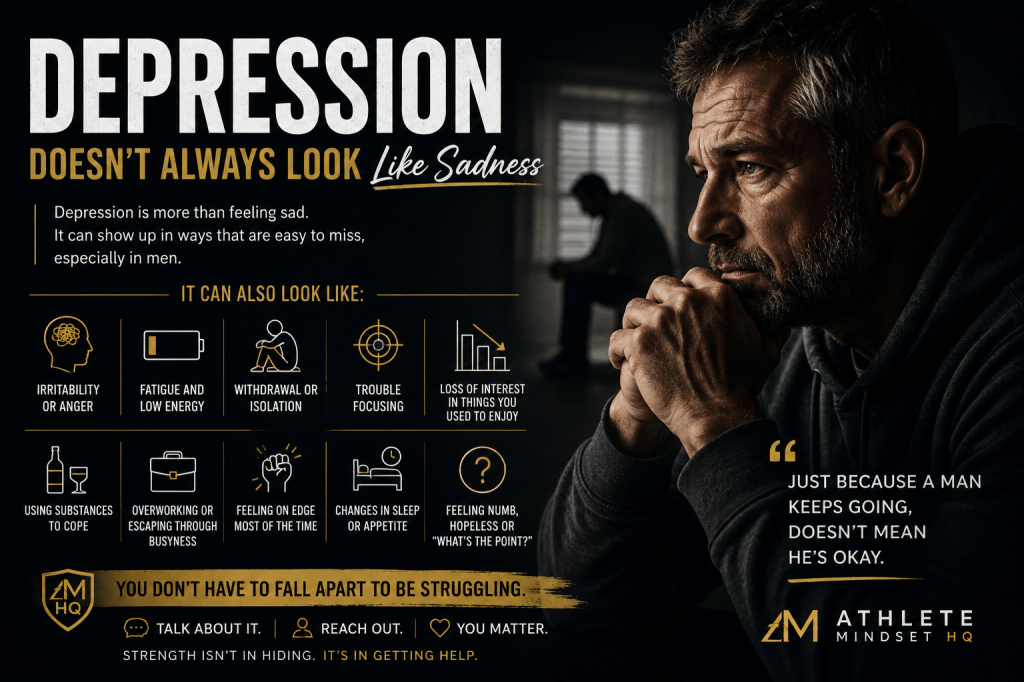
When we picture depression, we often imagine someone visibly sad, crying, or unable to get out of bed.
Those experiences are real.
But depression can also involve changes in motivation, concentration, sleep, appetite, energy, pleasure, and our ability to function.
For some men, emotional distress may show itself through irritability, anger, withdrawal, risk-taking, substance use, overworking, or emotional numbness rather than obvious sadness.
A man may never say:
“I think I’m depressed.”
He might say:
“I’m just tired.”
“People annoy me anymore.”
“I don’t feel like doing anything.”
“I just want everybody to leave me alone.”
“What’s the point?”
Or maybe:
“I don’t know. I just don’t feel like myself anymore.”
That last sentence deserves more attention than we sometimes give it.
Getting Older Can Quietly Change the Psychological Landscape
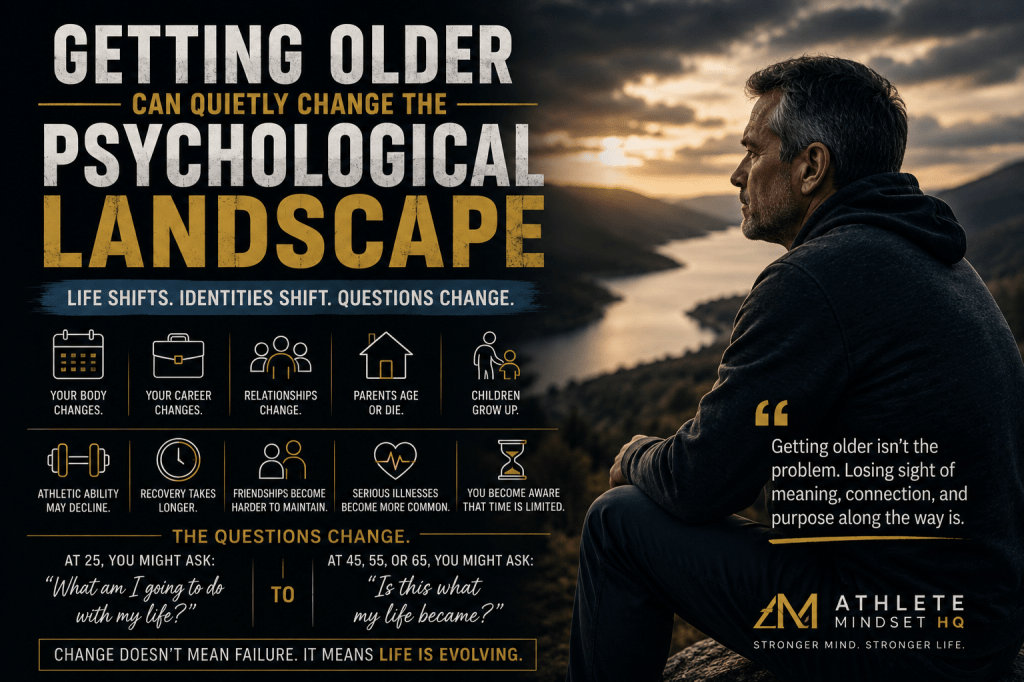
Aging doesn’t automatically cause depression.
But getting older can bring transitions that challenge some of the psychological structures we’ve relied upon for years.
Your body changes.
Your career changes.
Relationships change.
Parents age or die.
Children grow up.
Friendships become harder to maintain.
Athletic ability may decline.
Recovery takes longer.
People you grew up with begin experiencing serious illnesses.
You become increasingly aware that time isn’t unlimited.
And somewhere along the way, the questions change.
At 25, you might ask:
“What am I going to do with my life?”
At 45, 55 or 65, another question can appear:
“Is this what my life became?”
That’s a very different psychological conversation.
The Identity Problem Nobody Warns Men About
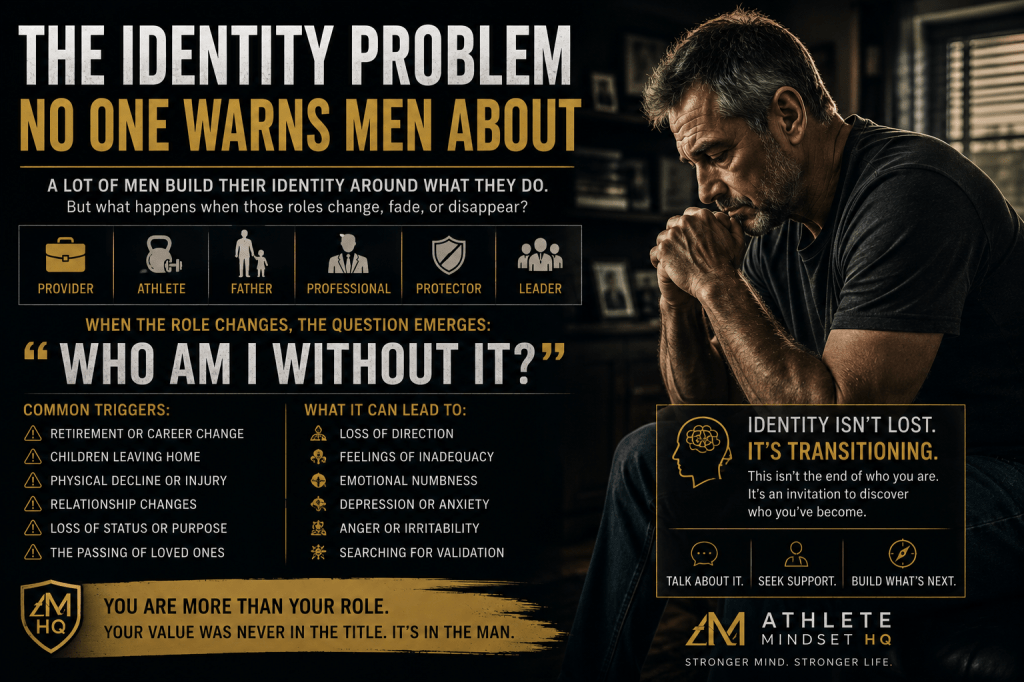
A lot of men build identity around what they do.
Provider.
Coach.
Athlete.
Father.
Husband.
Professional.
Leader.
Protector.
Problem-solver.
Those roles aren’t inherently unhealthy. They can provide enormous meaning and purpose.
The problem comes when:
What I do becomes the entirety of who I am.
Because eventually roles change.
You retire.
The kids leave.
Your body can’t perform the way it once did.
A relationship ends.
Your career stalls.
You lose someone.
You experience an injury.
Someone else takes your position.
Suddenly, the role that provided structure, recognition, and meaning is gone.
And underneath the loss can be a frightening question:
Who am I without it?
Psychology often talks about role identity—the way our social roles become integrated into our sense of self.
When an important role changes or disappears, the psychological adjustment can be significant.
Sometimes what looks like laziness, bitterness or withdrawal may actually involve something deeper:
A man grieving a version of himself that no longer exists.
Then There’s the Body
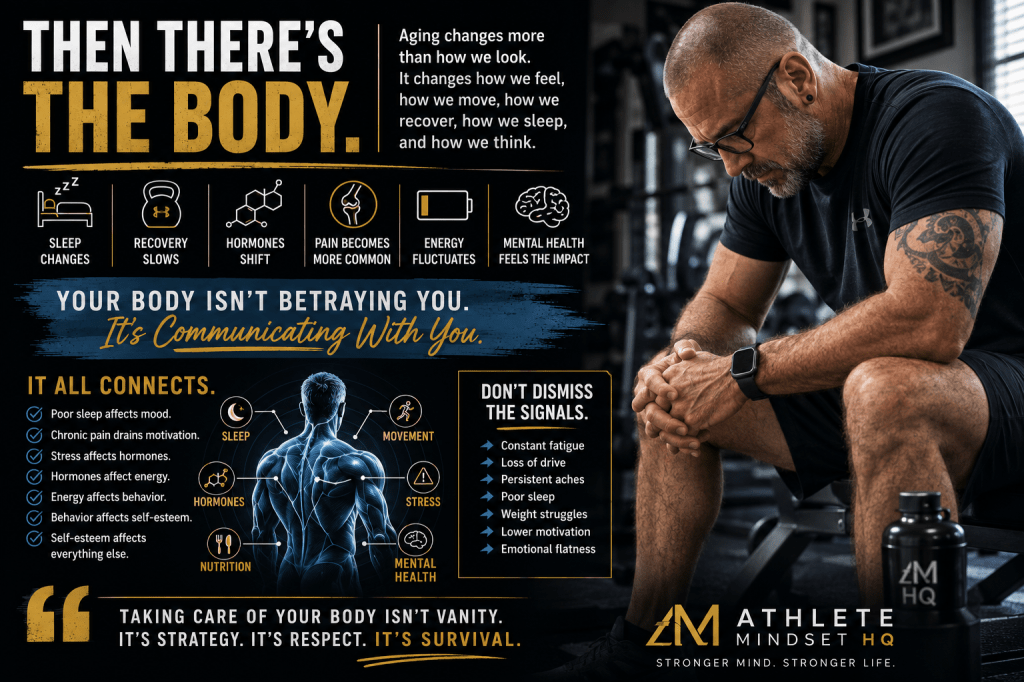
Men also experience biological changes as they age.
Sleep patterns can change. Energy can fluctuate. Chronic health problems become more common. Pain may increase. Physical recovery may slow. Hormonal changes can occur.
And mental and physical health aren’t separate systems.
They constantly interact.
Poor sleep affects mood.
Chronic pain affects motivation.
Stress affects sleep.
Isolation affects mental health.
Mental health affects physical activity.
Physical inactivity can affect mood.
The cycle can reinforce itself.
That’s why persistent changes in mood, energy, sleep or motivation shouldn’t automatically be dismissed as:
“I’m just getting old.”
Sometimes there is more going on.
And sometimes the first conversation shouldn’t only be with a mental-health professional. A medical evaluation can also matter because physical conditions, medications, and other health factors can contribute to depressive symptoms.
The Dangerous Power of “I’m Fine”
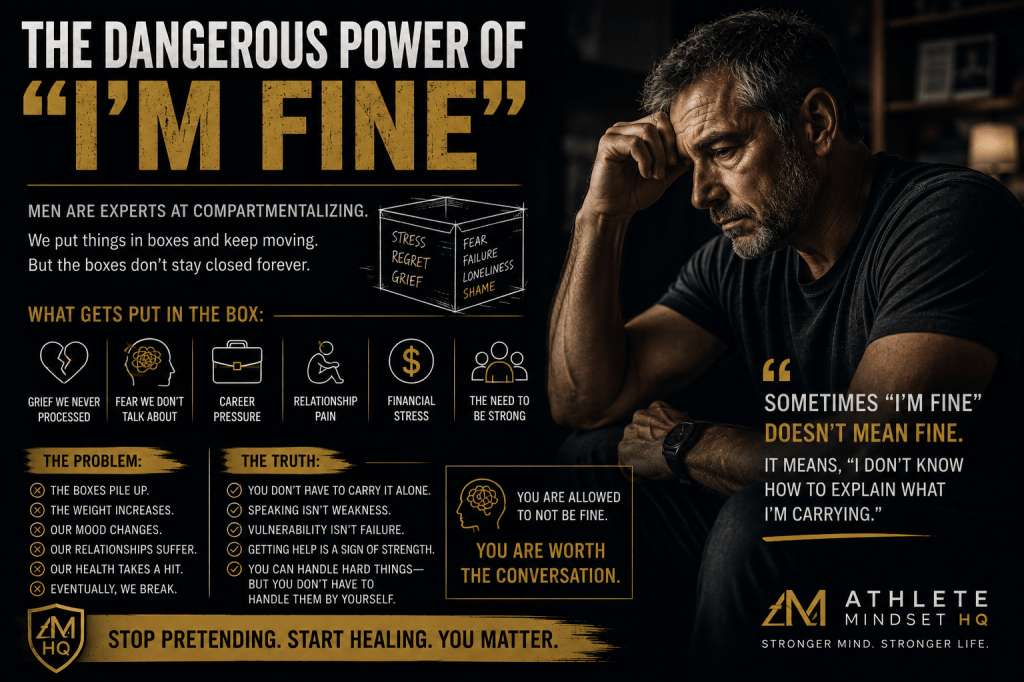
Many men become incredibly good at compartmentalization.
There’s a problem?
Put it in a box.
There’s another problem?
Different box.
Keep moving.
That strategy can be useful temporarily.
You can’t process every emotion in the middle of a crisis.
Sometimes you genuinely do need to put something aside and handle the situation in front of you.
The problem is when temporary emotional containment becomes a permanent lifestyle.
The boxes start piling up.
Grief you never processed.
A relationship that hurt more than you admitted.
Fear about getting older.
Career disappointment.
Financial pressure.
Loneliness.
Regret.
Questions about whether you’ve done enough with your life.
Eventually, the psychological storage room gets pretty crowded.
Yet someone asks:
“How are you doing?”
And almost automatically:
“I’m fine.”
Sometimes fine doesn’t mean fine.
Sometimes it means:
“I don’t know how to explain what I’m carrying.”
Loneliness Can Exist in a Crowded Room
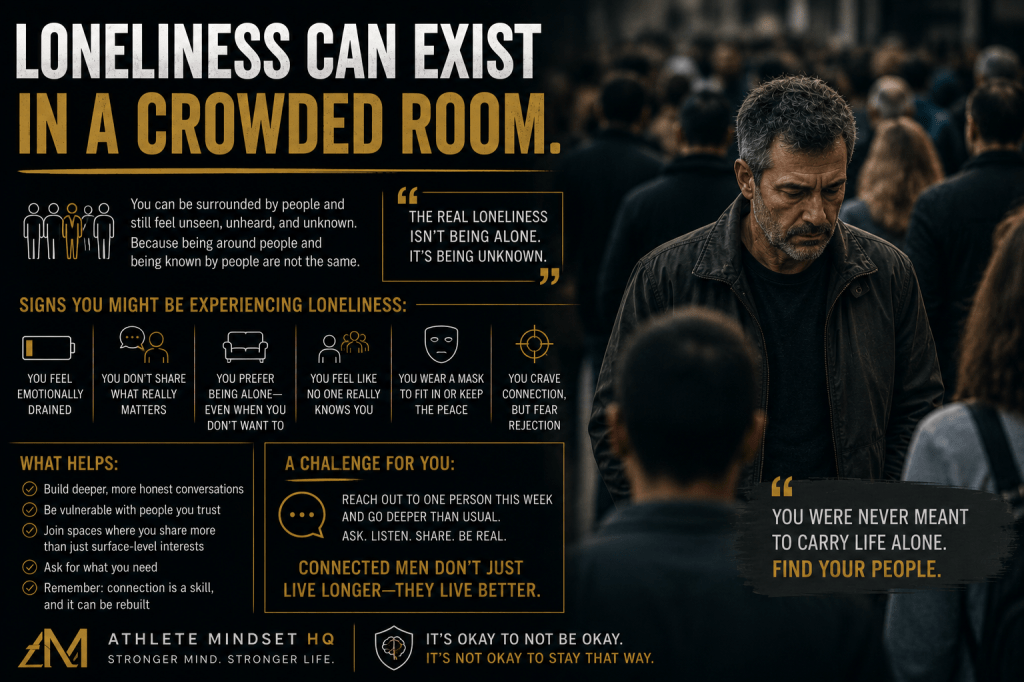
One of the strangest parts of male loneliness is that a man doesn’t necessarily have to be physically alone to experience it.
You can have coworkers.
Friends.
A partner.
Children.
Gym buddies.
Thousands of social-media followers.
And still feel psychologically isolated.
Because being around people and being known by people aren’t the same thing.
A man can have twenty people he talks sports with and nobody he talks fear with.
He can have friends he would help move a refrigerator at midnight but still struggle to tell those same friends:
“I’m having a hard time.”
Connection isn’t simply proximity.
It requires some degree of psychological openness.
And as men get older—especially when work, family responsibilities, and geography separate friendships—that kind of connection may require intentional effort.
Depression Can Steal Pleasure Before It Steals Function
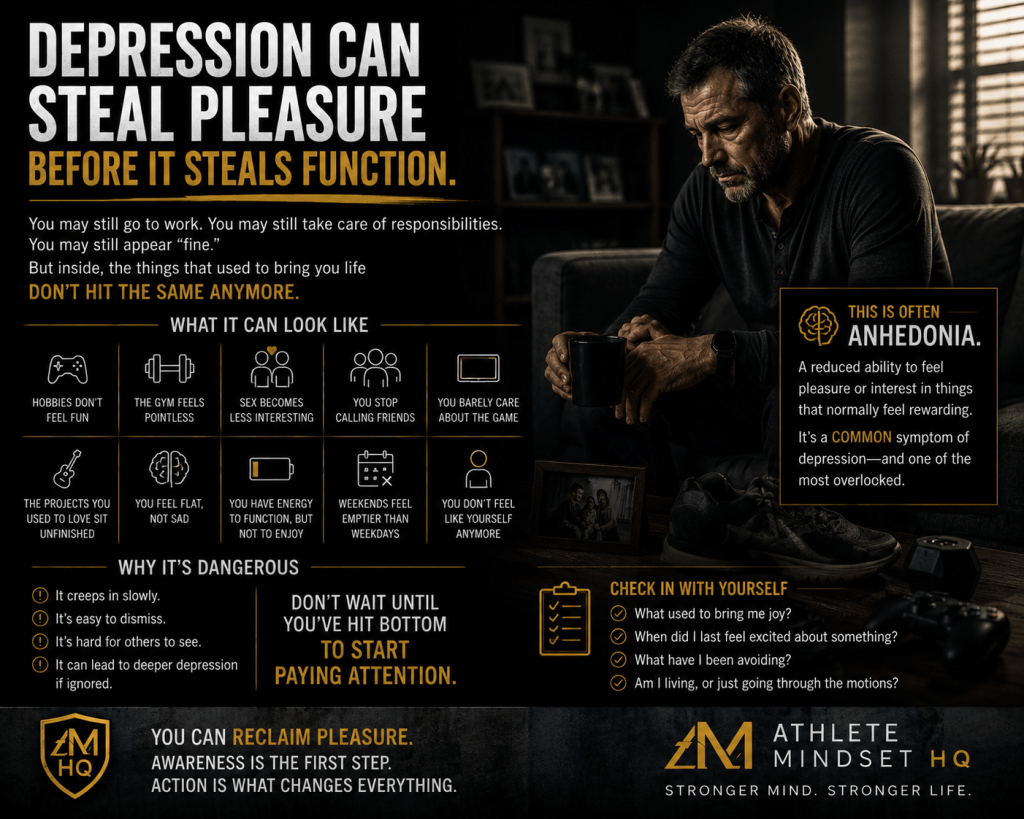
There’s a psychological term worth knowing:
Anhedonia.
It refers to a reduced ability to experience pleasure or interest in things that normally feel rewarding.
The hobbies stop sounding fun.
The gym feels pointless.
Sex becomes less interesting.
You stop calling friends.
The game is on, but you barely care.
The projects you used to get excited about sit unfinished.
You aren’t necessarily miserable.
You’re just…
flat.
And because you’re still functioning, nobody notices.
Sometimes you don’t notice either.
You simply assume this is adulthood now.
It doesn’t have to be.
Men Need Purpose—but Purpose Can Change
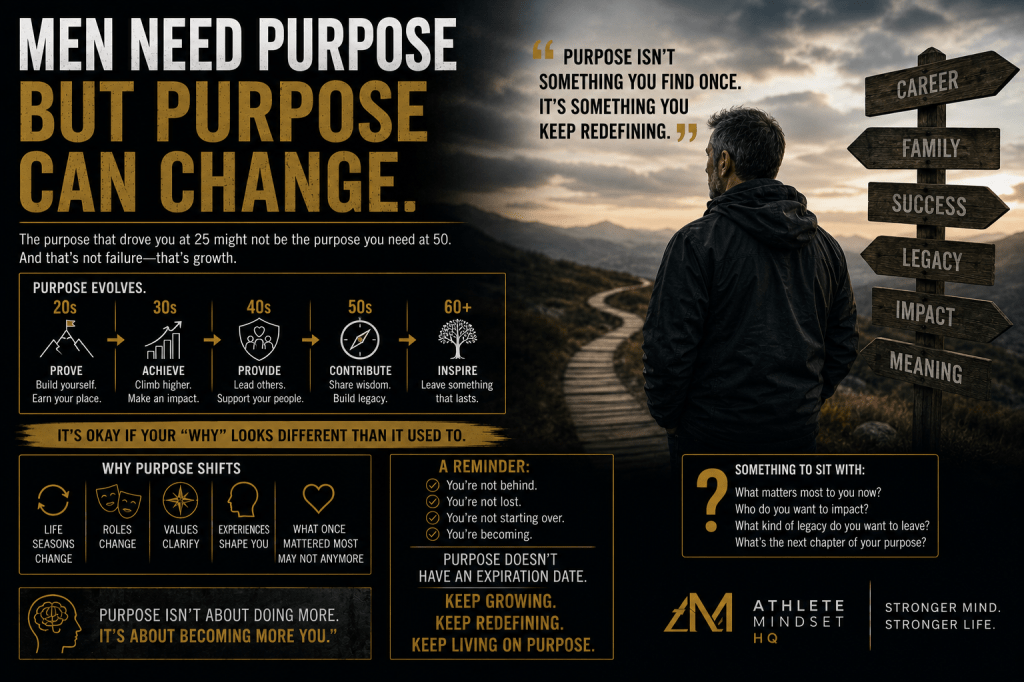
One of the biggest psychological transitions of aging is realizing that purpose isn’t something you discover once.
It evolves.
The purpose that drove you at 25 might not be the purpose you need at 50.
Maybe when you were younger, you needed achievement.
Older you needs contribution.
Maybe when you were younger, you wanted recognition.
Older you wants connection.
Maybe when you were younger, you wanted to prove something.
Older you wants to build something that outlives you.
There is nothing wrong with that shift.
In fact, developmental psychology suggests adulthood involves continuing changes in identity, meaning, relationships, and contribution across the lifespan.
The mistake is assuming that because one chapter ended, the story did too.
Ask Yourself the Questions Men Avoid
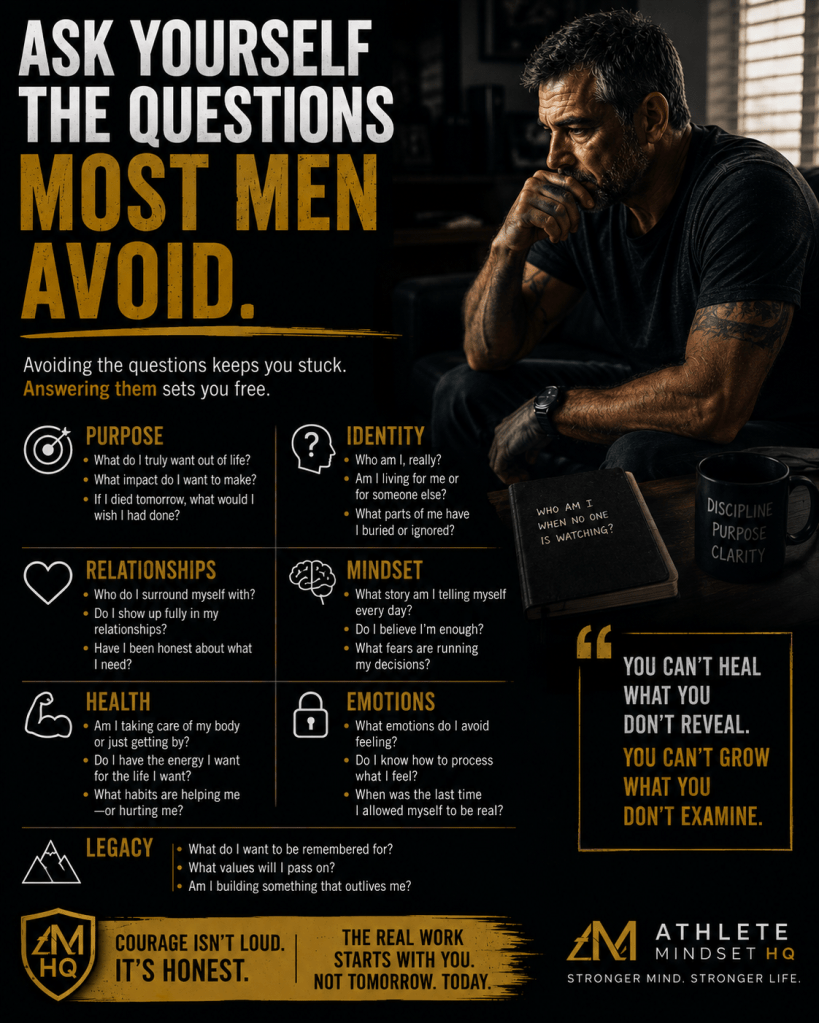
This isn’t a diagnosis.
It’s a conversation with yourself.
Take ten quiet minutes and answer these questions without trying to sound tough, successful, or put together.
What have I stopped enjoying?
When did I last feel genuinely excited about something?
Am I becoming more isolated?
Have I been more angry or irritable lately?
How am I sleeping?
Do I feel mentally exhausted even when I haven’t done much physically?
What am I currently worried about that I haven’t told anyone?
What part of getting older scares me?
What version of myself am I still trying to hold onto?
Who actually knows how I’m doing?
And perhaps the biggest one:
Am I living my life—or simply maintaining it?
Don’t rush through that last question.
Strength Has to Evolve Too
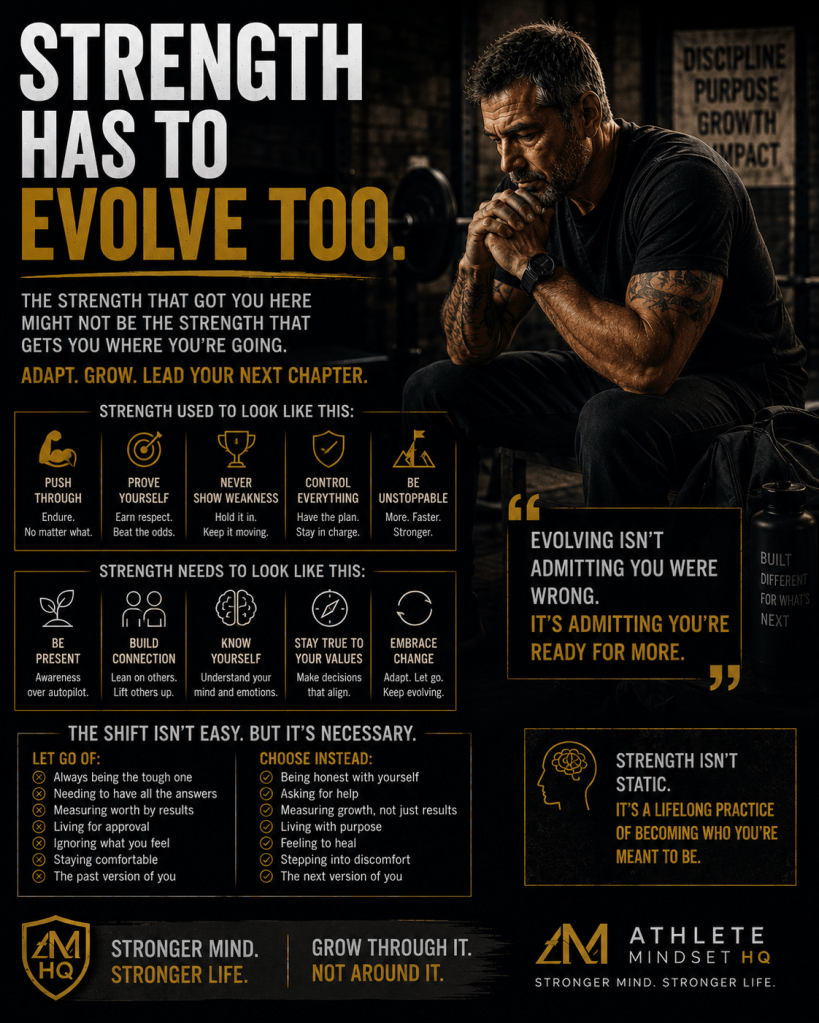
At 20, strength might mean pushing through.
At 30, strength might mean carrying responsibility.
At 40, strength might mean admitting something isn’t working.
At 50, strength might mean changing direction.
At 60, strength might mean letting other people help.
At 70, strength might mean accepting what has changed without surrendering curiosity about what comes next.
There is no single definition.
But eventually, “I’ll handle everything myself” stops being strength and starts becoming isolation.
Self-awareness isn’t weakness.
Neither is therapy.
Neither is calling your doctor.
Neither is telling a friend you’ve been struggling.
Neither is saying:
“Something feels different, and I think I need some help figuring out what it is.”
That’s action.
If You Recognize Yourself Here
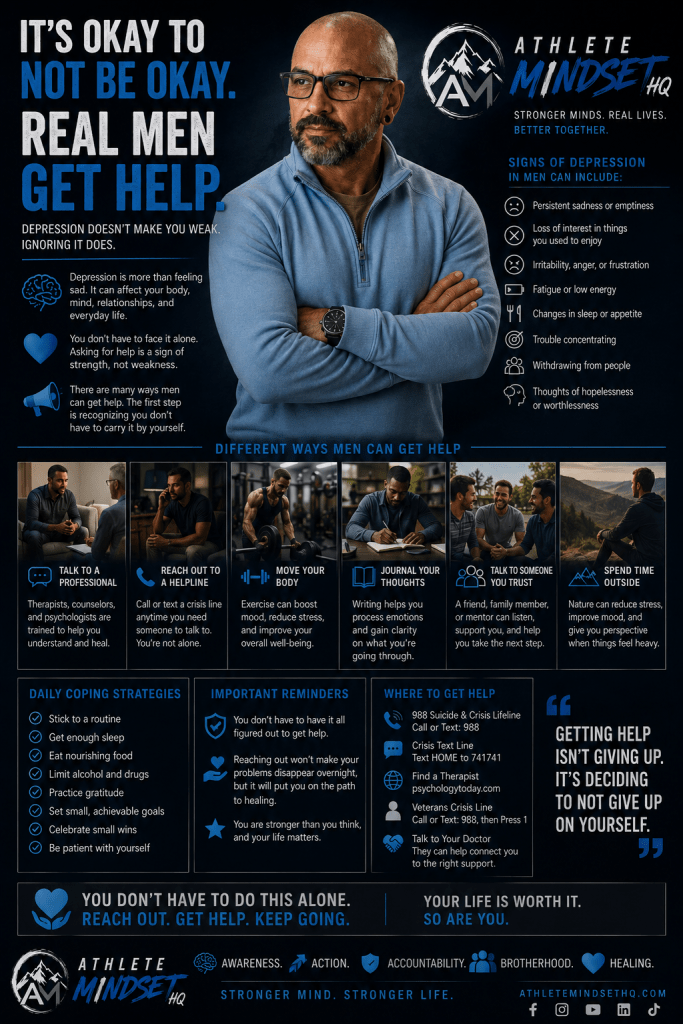
Don’t try to overhaul your entire life tonight.
Start smaller.
Schedule the appointment you’ve been putting off.
Call the friend you’ve slowly stopped talking to.
Go outside.
Move your body.
Return to something you used to enjoy.
Tell somebody the truth when they ask how you’re doing.
Consider talking with a qualified mental-health professional if these feelings have persisted or are interfering with your life.
And pay attention to yourself.
Not obsessively.
Curiously.
Because getting older doesn’t mean becoming a smaller version of who you used to be.
It can mean becoming a more intentional version of who you are now.
There may be grief in that process.
There may be uncertainty.
There may even be periods when you don’t recognize yourself.
But there can also be reinvention.
Connection.
Meaning.
Purpose.
And growth.
One Final Question
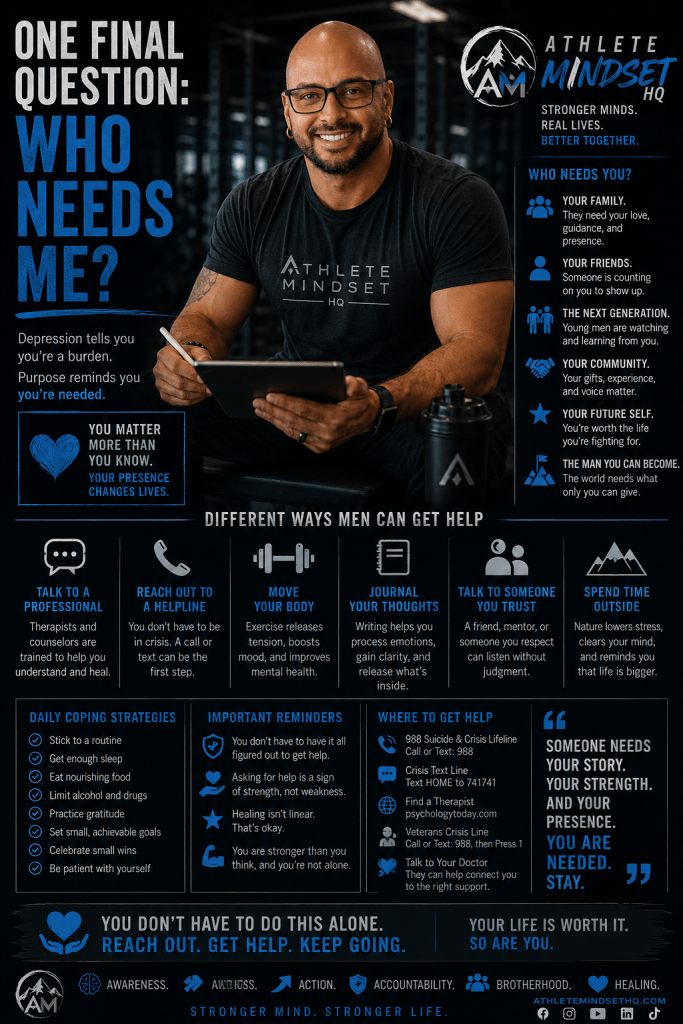
Men spend enormous amounts of their lives asking:
“Who needs me?”
My family?
My employer?
My athletes?
My partner?
My children?
My friends?
That’s an important question.
But as you get older, there is another one worth asking:
“What do I need?”
Maybe you haven’t asked yourself that question in years.
Maybe you’ve never asked it at all.
Today might be a good day to start.
Athlete Mindset HQ
Performance isn’t only about becoming stronger.
Sometimes it’s about understanding what you’ve been carrying.
ABOUT JOHN J. SCHESSLER, MS, CPT, SPC
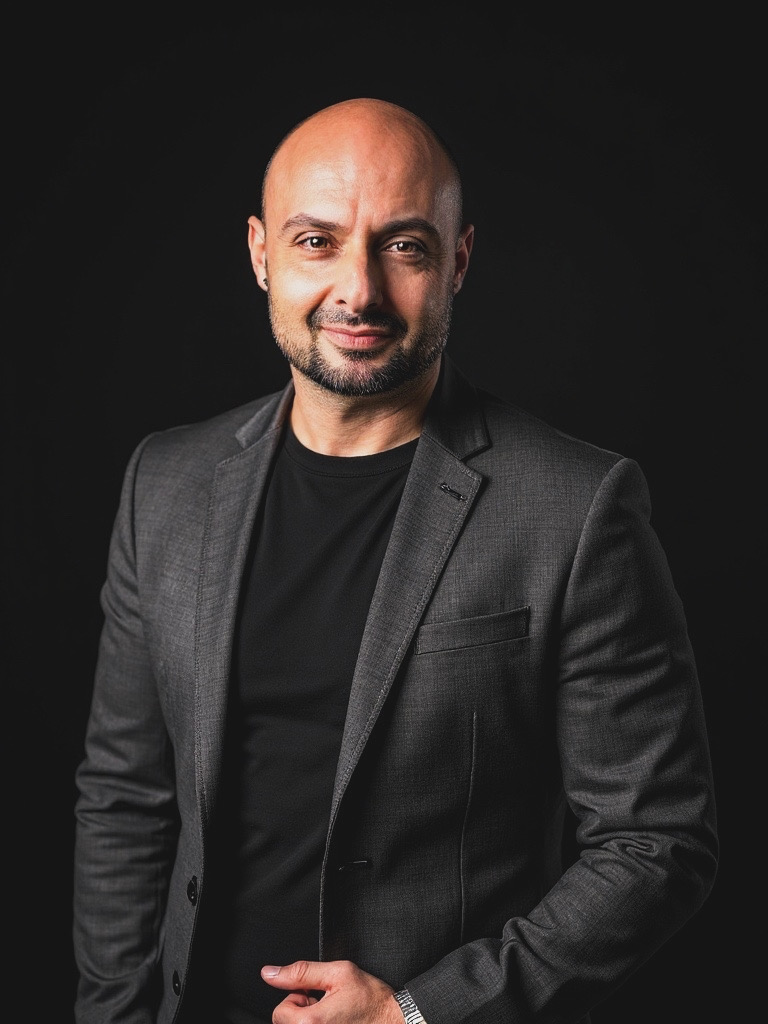
John J. Schessler, is a Mental Performance Coach, Behavior Interventionist, speaker, and founder of Athlete Mindset HQ—a high-performance coaching platform dedicated to helping athletes, professionals, and everyday individuals develop the mindset needed to thrive under pressure and perform at their highest potential.
John earned his Master of Science in Sport Psychology from Capella University and his Bachelor of Arts in Child & Adolescent Psychology from Southern New Hampshire University. His work bridges the gap between psychology, human performance, behavioral science, and personal development, combining evidence-based strategies with practical coaching that people can immediately apply in sport, work, and everyday life.
His passion for helping others is rooted in his own journey. As a child, John survived Guillain-Barré Syndrome, spending weeks in a coma before fighting through rehabilitation to reclaim his life. That experience shaped his belief that resilience isn’t something you’re born with—it’s something you build through adversity, discipline, and purpose.
Today, John works with individuals from all walks of life, helping them strengthen confidence, improve emotional resilience, overcome obstacles, and develop the habits that lead to lasting success. Whether coaching athletes, mentoring students, speaking to organizations, or creating educational content, his mission remains the same: to help people become mentally stronger than the challenges they face.
John is also the host of The Follow Through Podcast, where he explores sports psychology, leadership, men’s mental health, motivation, resilience, and human performance through practical conversations that inspire listeners to move beyond intention and into action.
His philosophy is simple:
Mental strength isn’t about never struggling. It’s about developing the confidence, discipline, and resilience to keep moving forward—especially when life gets difficult.
Because success isn’t built by what you intend to do.
It’s built by what you follow through on.


Leave a comment