
by John J. Schessler, MS
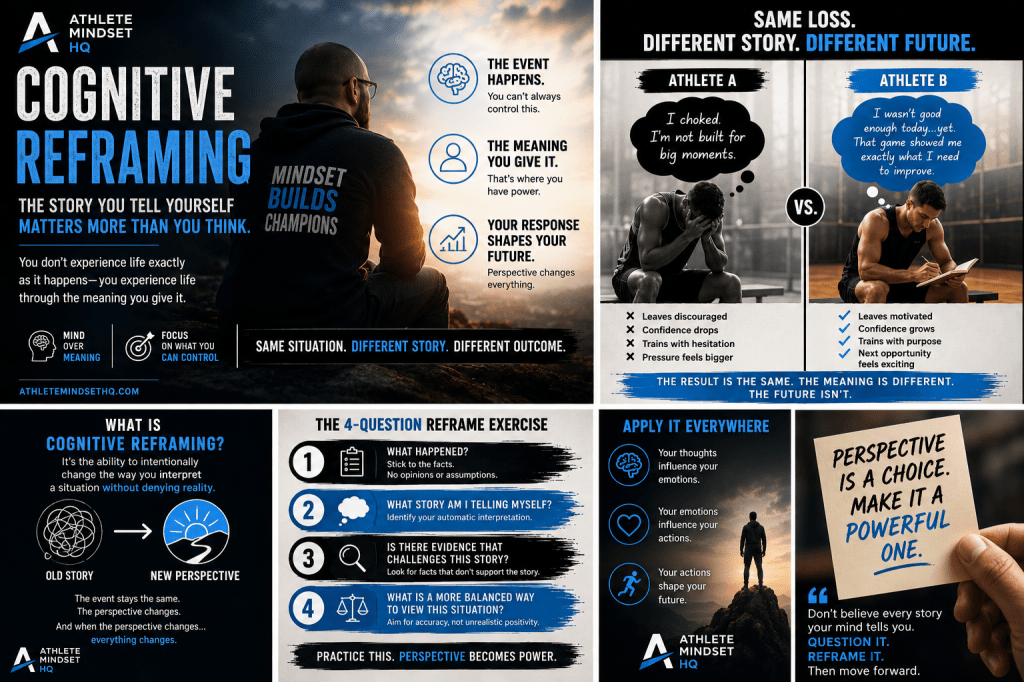
“You don’t experience life exactly as it happens—you experience life through the meaning you give it.”
Every single day, your brain is telling you a story.
You miss a shot in the final seconds.
“I let everyone down.”
You don’t get the promotion.
“I’m obviously not good enough.”
Your relationship ends.
“I’ll never find someone else.”
The event isn’t what determines how you feel.
The meaning you assign to the event does.
That process is called cognitive reframing, and it’s one of the most powerful psychological skills available—not just for athletes, but for anyone trying to perform, grow, and navigate life’s inevitable challenges.
What Is Cognitive Reframing?
Cognitive reframing is the ability to intentionally change the way you interpret a situation without denying reality.
Notice what it isn’t.
It isn’t pretending everything is fine.
It isn’t toxic positivity.
It isn’t convincing yourself something bad is actually good.
Instead, cognitive reframing asks one simple question:
“Is there another way to look at this?”
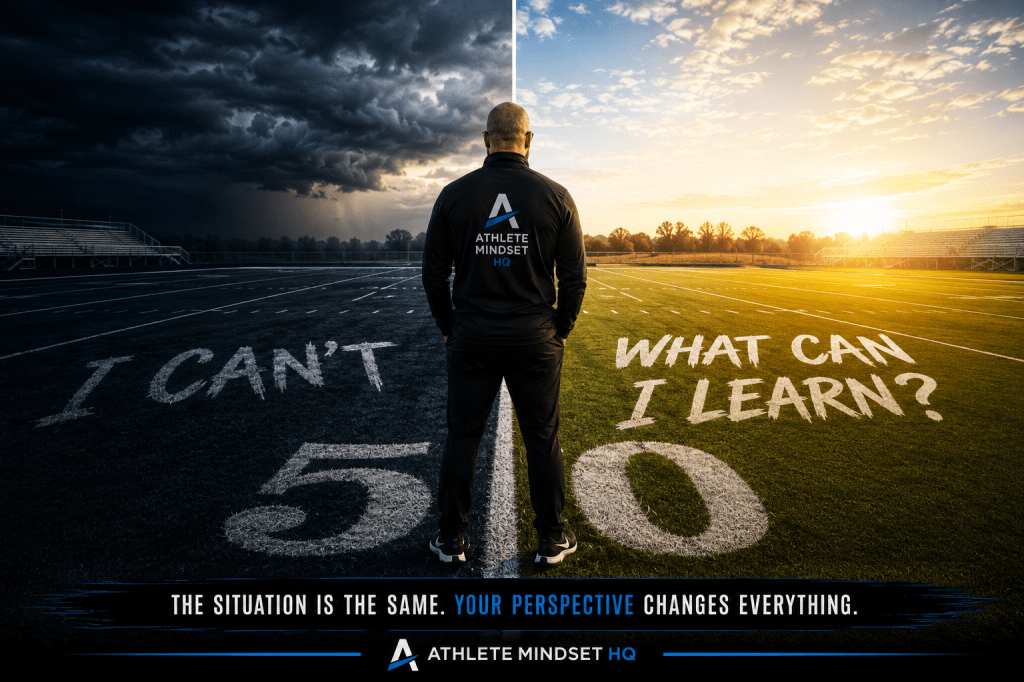
The event stays the same.
The perspective changes.
And when the perspective changes…
Your emotions change.
Your behaviors change.
Your outcomes often change.
The Brain Believes the Story It Repeats
Our brains are incredible prediction machines.
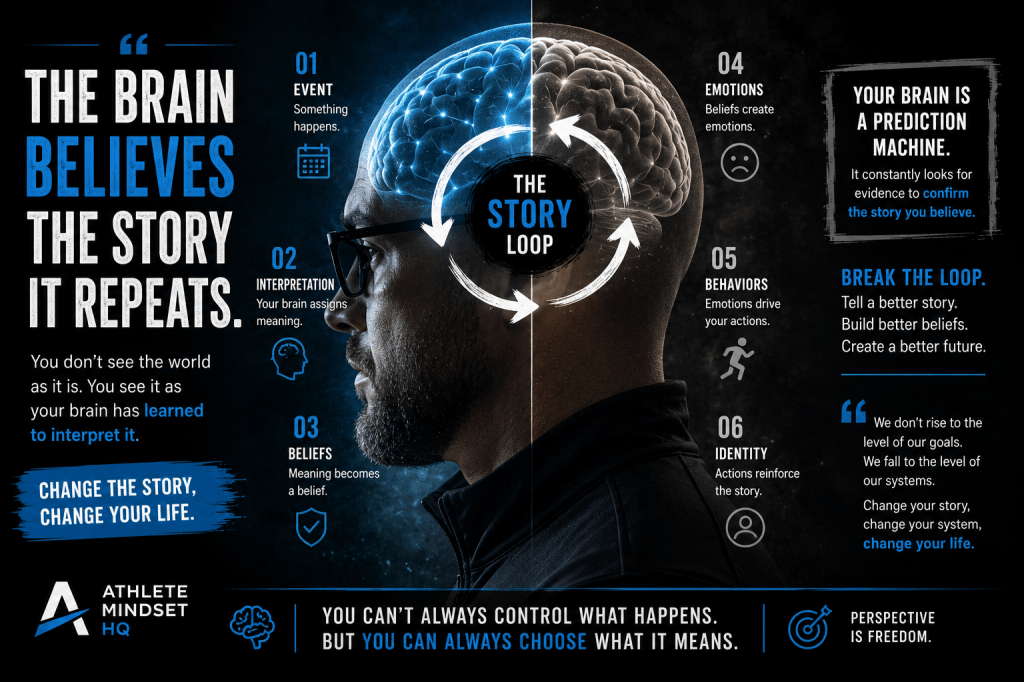
When something happens, your brain immediately tries to explain it.
Those explanations become beliefs.
Those beliefs influence emotions.
Those emotions influence behavior.
Behavior eventually becomes identity.
It often happens so quickly that we never question the story in the first place.
Imagine two athletes who both lose a championship game.
Athlete A says:
“I choked. I’m not built for big moments.”
He leaves discouraged.
His confidence drops.
He trains with hesitation.
The next pressure moment feels even bigger.
Athlete B says:
“I wasn’t good enough today…yet. That game exposed exactly what I need to improve.”
Same loss.
Completely different future.
Neither athlete changed the result.
They changed the meaning.
Reframing Isn’t About Lying to Yourself
One of the biggest misconceptions in psychology is that reframing means replacing every negative thought with a positive one.
That’s not accurate.
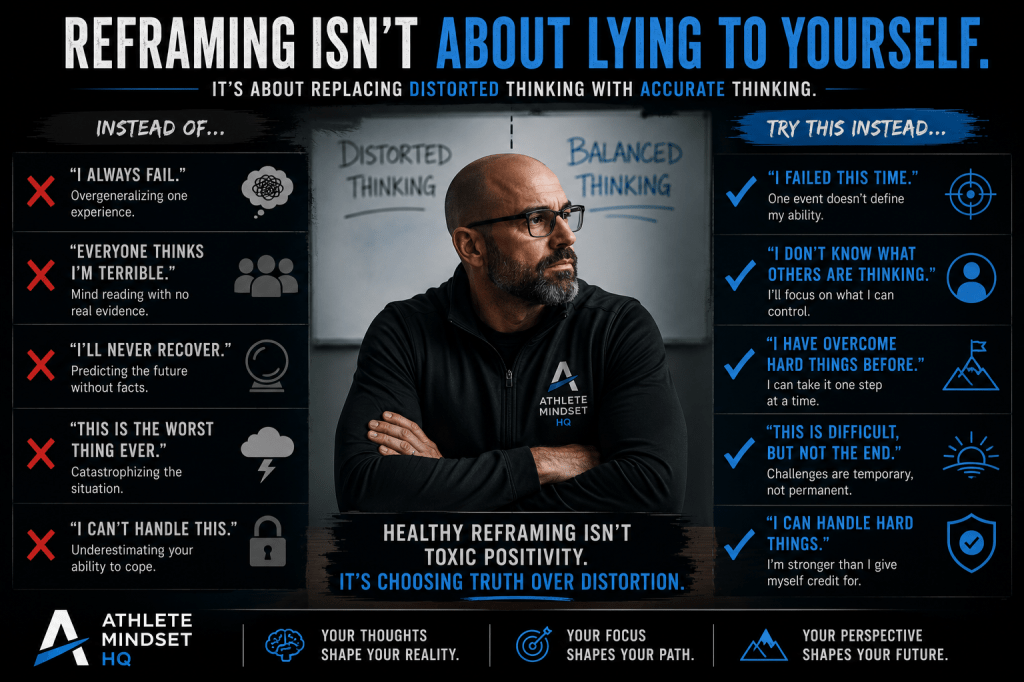
Healthy reframing replaces distorted thinking with accurate thinking.
Instead of:
“I always fail.”
You recognize:
“I failed this time.”
Instead of:
“Everyone thinks I’m terrible.”
You ask:
“What evidence do I actually have for that?”
Instead of:
“I’ll never recover.”
You remind yourself:
“I’ve overcome difficult things before.”
That’s not optimism.
That’s perspective.
Why Athletes Benefit So Much
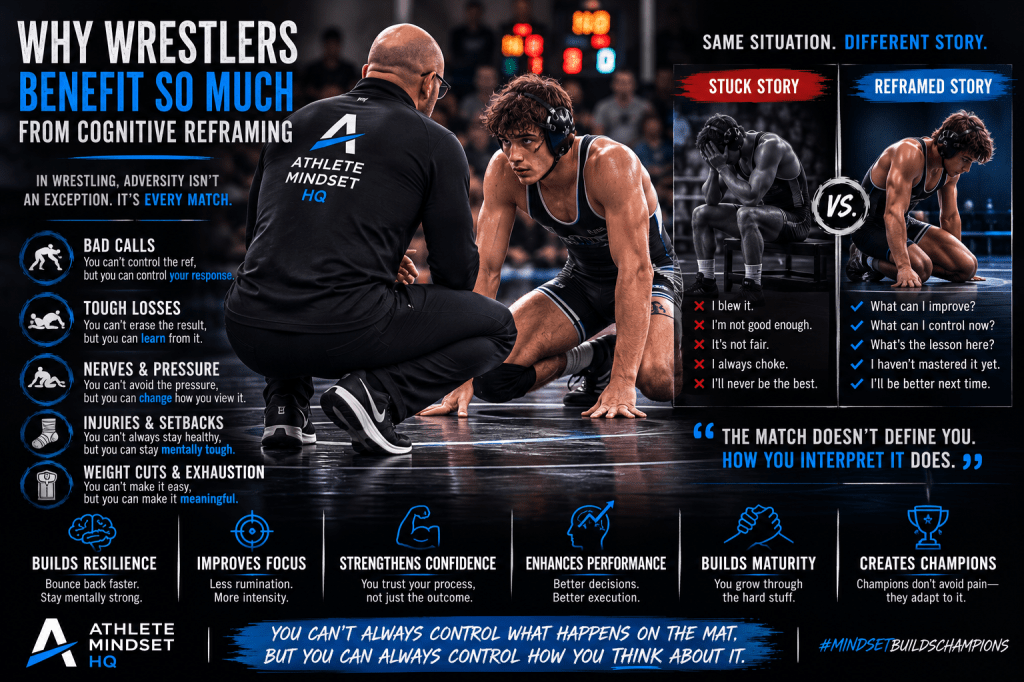
In sports, mistakes are guaranteed.
Missed tackles.
Dropped passes.
Turnovers.
Bad calls.
Injuries.
Losing streaks.
Championship losses.
If athletes attach catastrophic meaning to every setback, performance becomes fragile.
The best competitors aren’t fearless.
They’re adaptable.
Elite performers don’t spend less time facing adversity.
They spend less time getting stuck in it.
They learn to ask:
- What can this teach me?
- What is still under my control?
- How do I respond next?
- What opportunity exists because of this challenge?
Those questions shift the brain from emotional reaction to intentional action.
Cognitive Reframing Outside of Sports
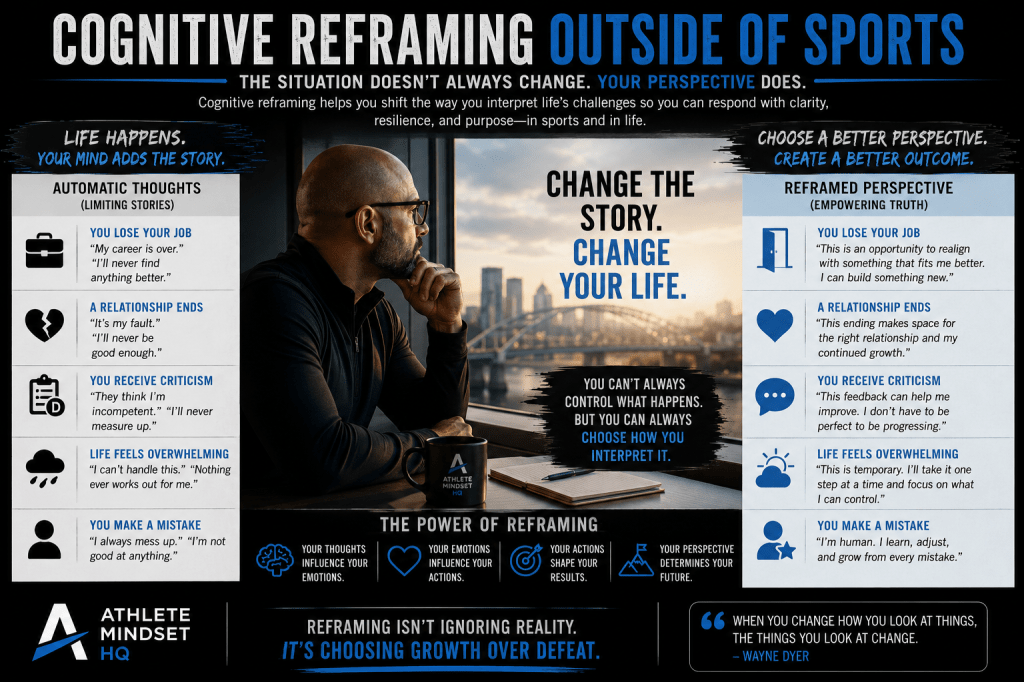
This skill extends far beyond athletics.
Maybe your child is struggling in school.
Instead of thinking:
“I’m failing as a parent.”
Try asking:
“What support does my child need right now?”
Maybe you’re laid off.
Instead of:
“My career is over.”
Consider:
“What doors does this unexpectedly open?”
Maybe you’re facing anxiety.
Instead of:
“Something is wrong with me.”
Try:
“My mind is trying to protect me—even if it’s overestimating the danger.”
That single shift changes everything.
Your Brain Has a Negativity Bias
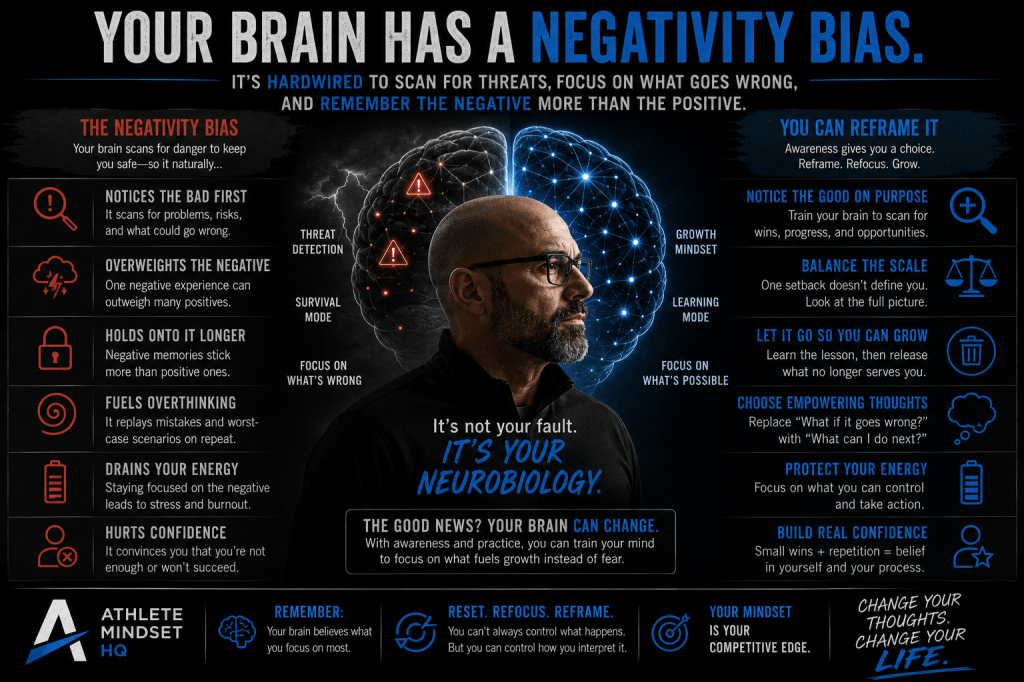
Here’s something important to understand.
Your brain is designed to notice threats before opportunities.
Thousands of years ago, that kept humans alive.
Today?
It often keeps us anxious.
We naturally remember criticism longer than compliments.
Failures longer than successes.
Embarrassing moments longer than achievements.
Your brain isn’t broken.
It’s doing what evolution designed it to do.
Cognitive reframing teaches your brain to slow down long enough to ask:
“Is my first interpretation the only interpretation?”
Usually…
It isn’t.
A Simple Exercise You Can Use Today
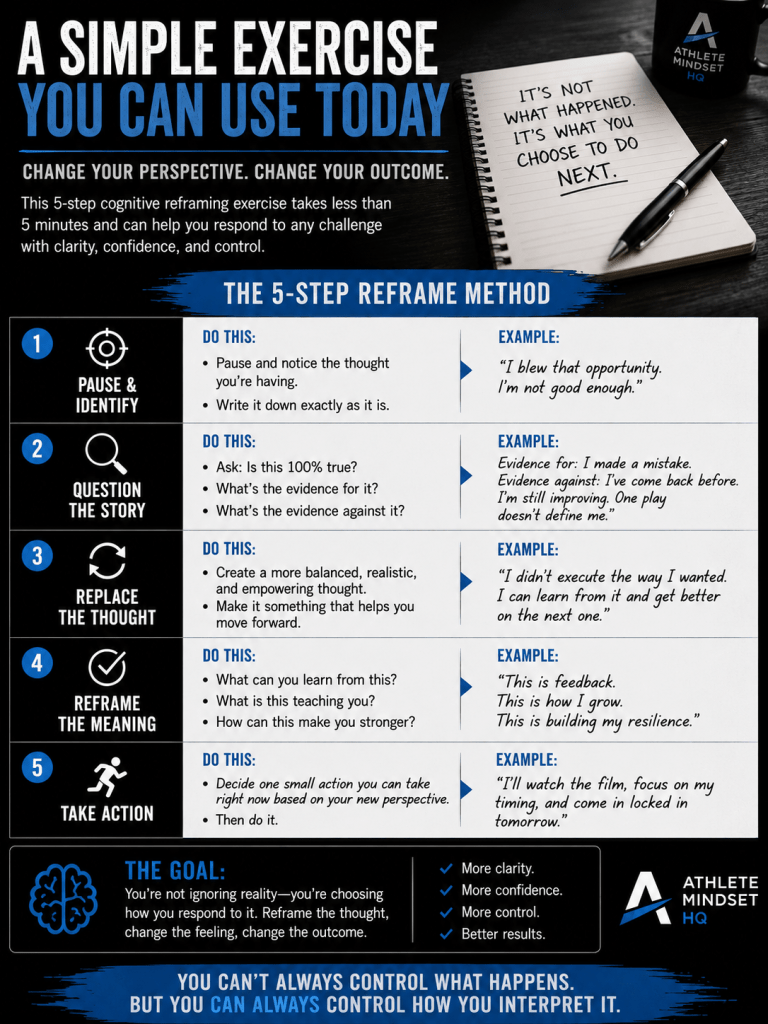
The next time something frustrating happens, write down these four questions.
1. What happened?
Just the facts.
No opinions.
No assumptions.
2. What story am I telling myself?
This is where you’ll discover your automatic interpretation.
3. Is there evidence that challenges this story?
Most of the time, there is.
4. What is a more balanced way to view this situation?
Not unrealistically positive.
Simply more accurate.
Practice this consistently, and you’ll begin catching negative thought patterns before they become negative identities.
Growth Begins With Perspective
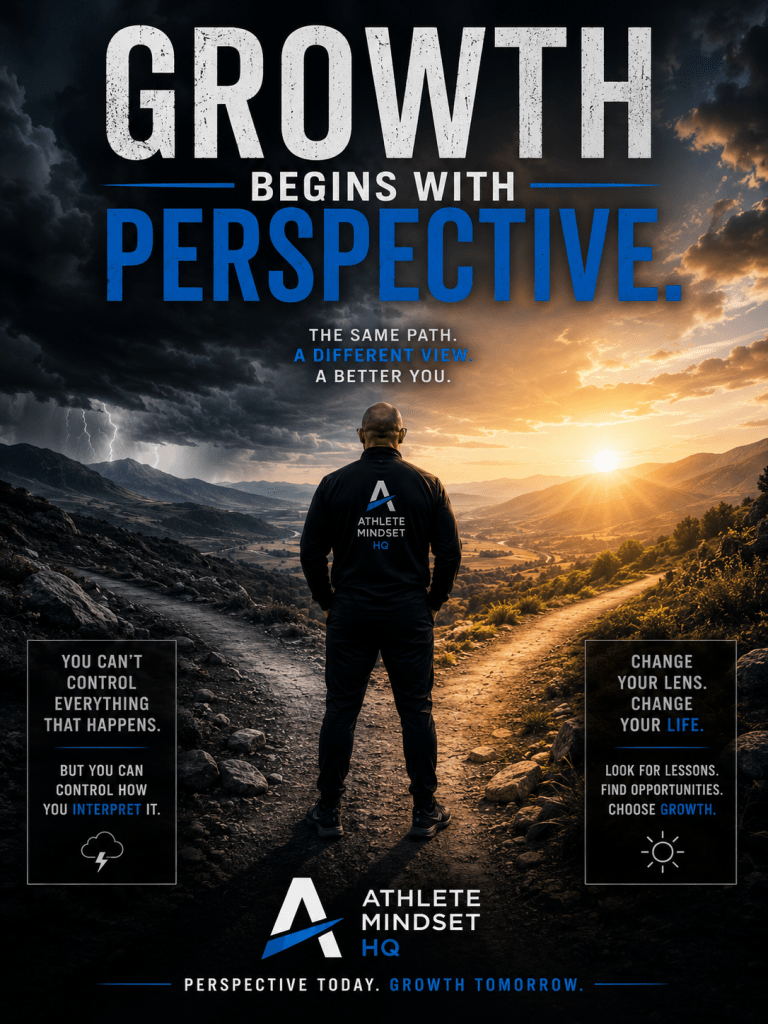
Some of the strongest people I’ve ever met weren’t the ones who avoided hardship.
They were the ones who learned to reinterpret hardship.
Failure became feedback.
Criticism became information.
Pressure became privilege.
Setbacks became preparation.
Adversity became opportunity.
The circumstance didn’t always change.
But the meaning did.
And that changed everything.
Final Thoughts
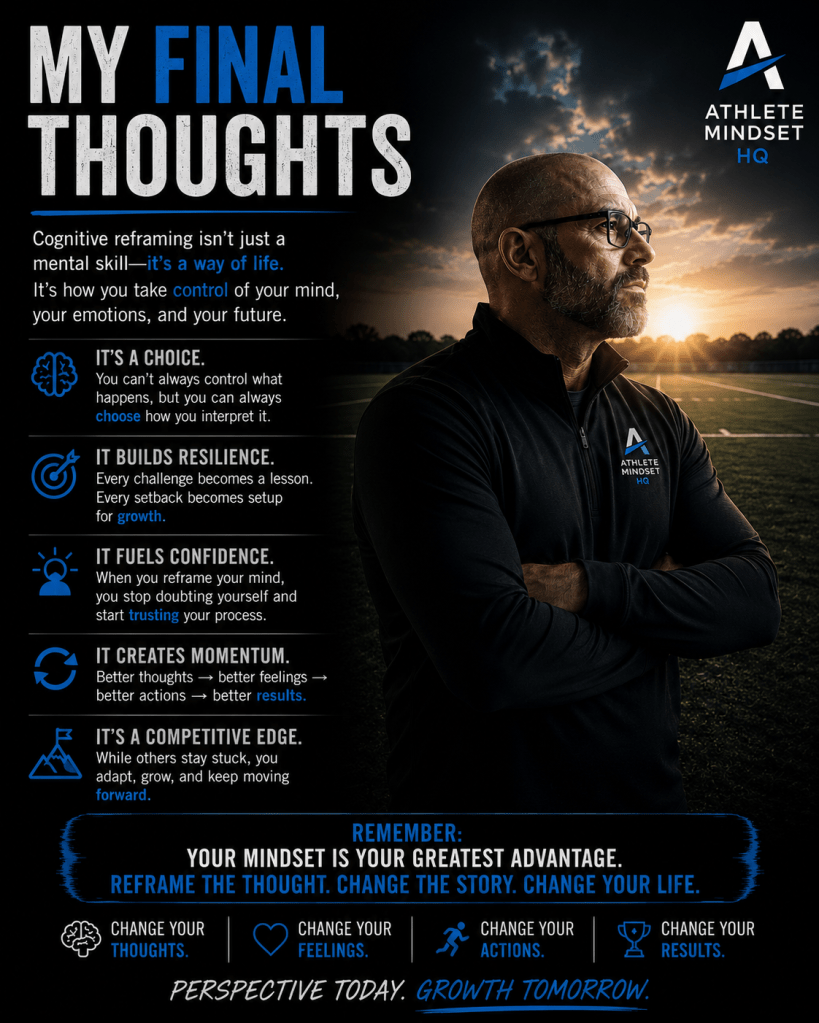
Life will continue throwing obstacles in your path.
That’s inevitable.
What isn’t inevitable is the story you choose to tell yourself afterward.
Your thoughts influence your emotions.
Your emotions influence your actions.
Your actions shape your future.
So the next time life doesn’t go according to plan, pause before accepting your first interpretation as truth.
Ask yourself:
“Is there another way to see this?”
That single question may become the difference between staying stuck and moving forward.
Because sometimes the most powerful change you can make isn’t changing your circumstances—
it’s changing the lens through which you see them.
At Athlete Mindset HQ, we believe mental strength isn’t about avoiding adversity. It’s about developing the skills to face it with clarity, resilience, and purpose. Cognitive reframing is one of those skills—and it’s one that can transform not only how you perform, but how you live.
About John J. Schessler, M.S.
John J. Schessler, M.S., is a Mental Performance Coach, Behavior Interventionist, speaker, and founder of Athlete Mindset HQ—a high-performance coaching platform dedicated to helping athletes, professionals, and everyday individuals develop the mindset needed to thrive under pressure and perform at their highest potential.

John earned his Master of Science in Sport Psychology from Capella University and his Bachelor of Arts in Child & Adolescent Psychology from Southern New Hampshire University. His work bridges the gap between psychology, human performance, behavioral science, and personal development, combining evidence-based strategies with practical coaching that people can immediately apply in sport, work, and everyday life.
His passion for helping others is rooted in his own journey. As a child, John survived Guillain-Barré Syndrome, spending weeks in a coma before fighting through rehabilitation to reclaim his life. That experience shaped his belief that resilience isn’t something you’re born with—it’s something you build through adversity, discipline, and purpose.
Today, John works with individuals from all walks of life, helping them strengthen confidence, improve emotional resilience, overcome obstacles, and develop the habits that lead to lasting success. Whether coaching athletes, mentoring students, speaking to organizations, or creating educational content, his mission remains the same: to help people become mentally stronger than the challenges they face.
John is also the host of The Follow Through Podcast, where he explores sports psychology, leadership, men’s mental health, motivation, resilience, and human performance through practical conversations that inspire listeners to move beyond intention and into action.
His philosophy is simple:
Mental strength isn’t about never struggling. It’s about developing the confidence, discipline, and resilience to keep moving forward—especially when life gets difficult.
Because success isn’t built by what you intend to do.
It’s built by what you follow through on.
#sportspsychology #rebuildyourlife #athletemindsethq #mentalperformance #moveforward


Leave a Reply