
By John J. Schessler Jr., M.S.
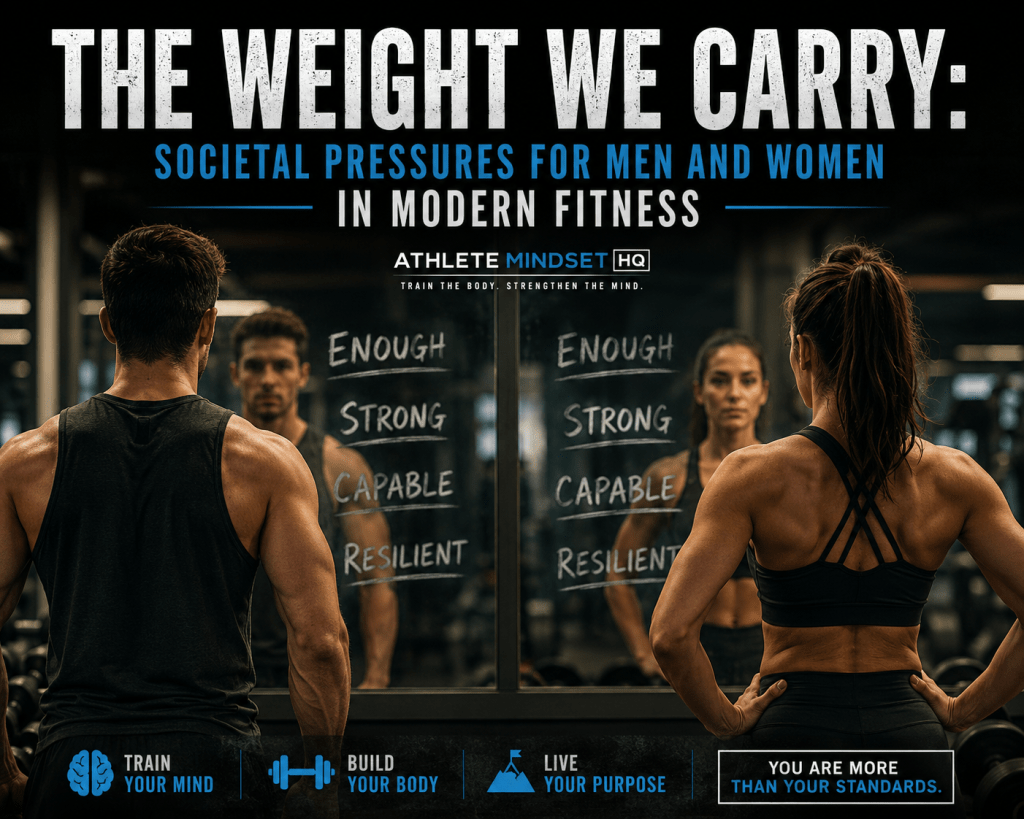
Walk into almost any gym today, scroll through social media for five minutes, or open your favorite fitness app, and you’ll notice something.
Everyone is chasing an ideal.
For some, it’s six-pack abs. For others, it’s a smaller waist, bigger glutes, broader shoulders, or an impossibly lean physique that seems effortless. The fitness industry has never had more information, more technology, or more opportunities to improve our health. Yet, despite all of these advances, many people have never felt worse about their bodies.
The question isn’t whether societal pressure exists.
The question is whether we’re allowing it to define our worth.
Different Pressures, Same Weight
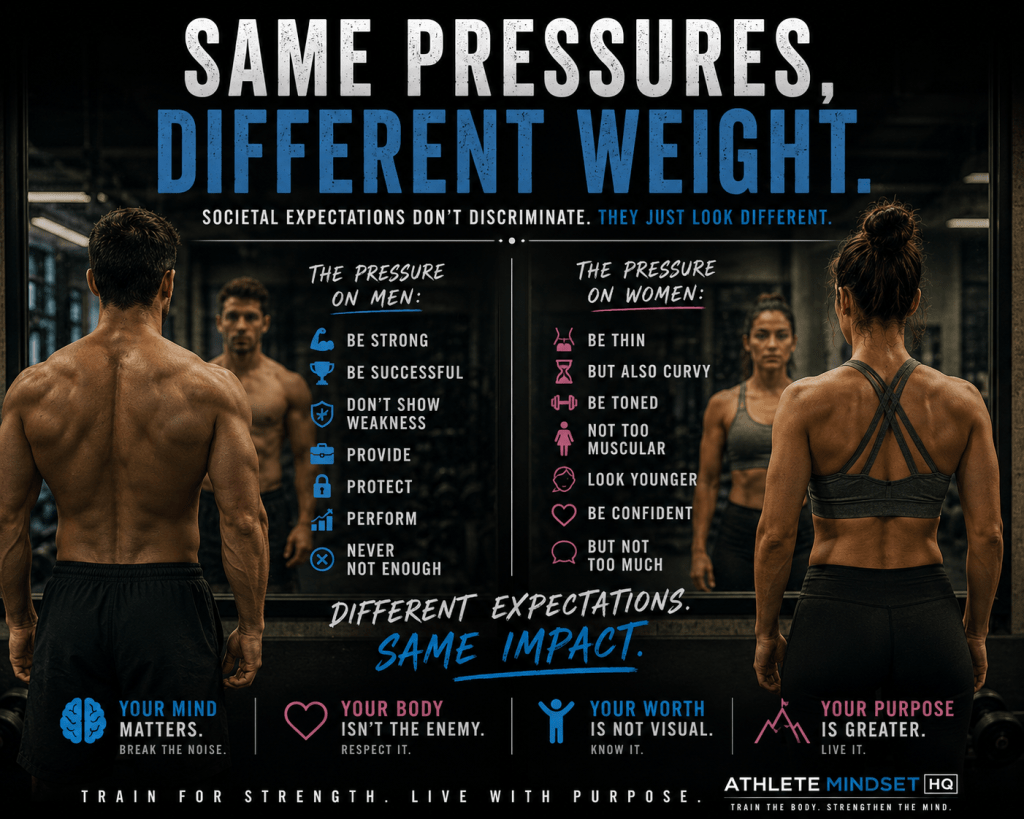
Men and women often experience different expectations, but the emotional burden is remarkably similar.
The Pressure on Men
Men are frequently taught that strength equals value.
Be muscular.
Be confident.
Never show weakness.
Always be productive.
Provide.
Protect.
Perform.
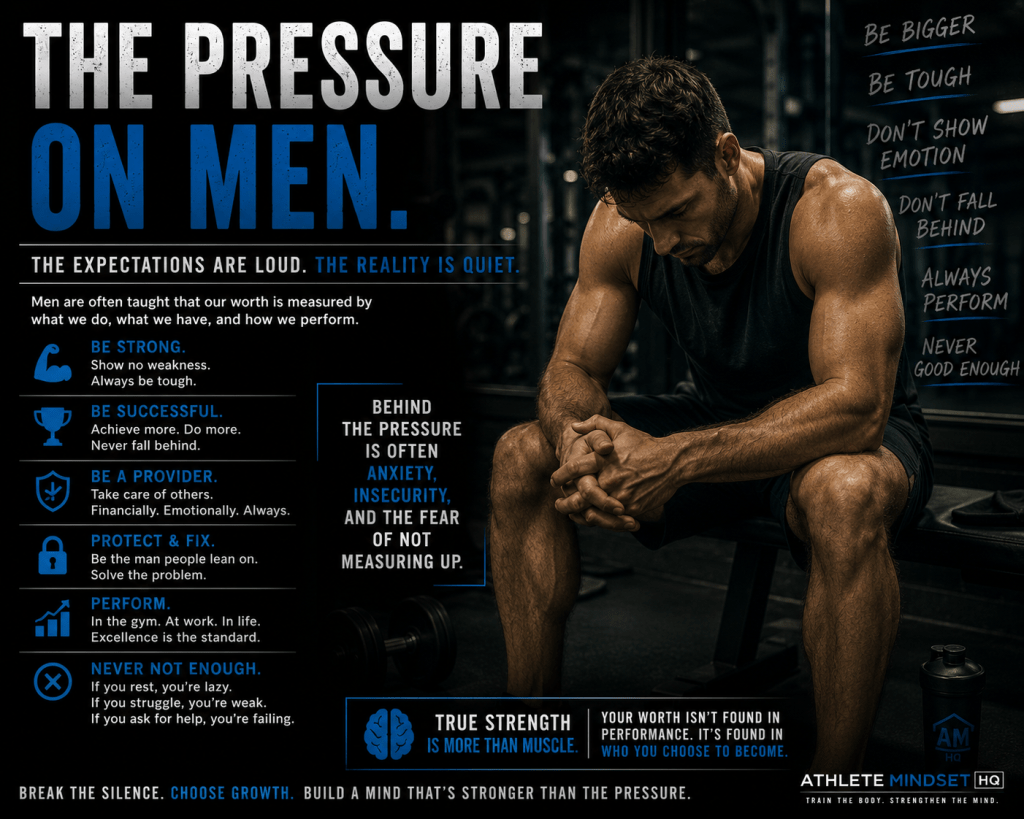
The message is subtle but constant: if you’re not getting bigger, stronger, richer, or more successful, you’re falling behind.
Many men begin lifting weights because they want to improve their health. Somewhere along the way, that healthy goal can become an obsession with looking “big enough.”
Social media only amplifies the comparison.
Every scroll showcases professional lighting, perfect angles, enhanced physiques, filters, and sometimes performance-enhancing drugs presented as “hard work.” Young men compare themselves to unrealistic images, wondering why years of dedication don’t produce the same results.
Behind many impressive physiques are anxiety, body dysmorphia, restrictive eating, overtraining, poor self-esteem, or the constant fear of not measuring up.
Strength should build confidence—not become the source of insecurity.
The Pressure on Women
Women often face a different—but equally exhausting—set of expectations.
Be thin.
But also be curvy.
Be toned.
Don’t get “too muscular.”
Look youthful.
Age gracefully.
Eat healthy—but don’t obsess.
Be confident—but stay humble.
The standard seems to change every few years.
One decade celebrates ultra-thin physiques.
The next celebrates curves.
Then athletic bodies.
Then “clean girl” aesthetics.
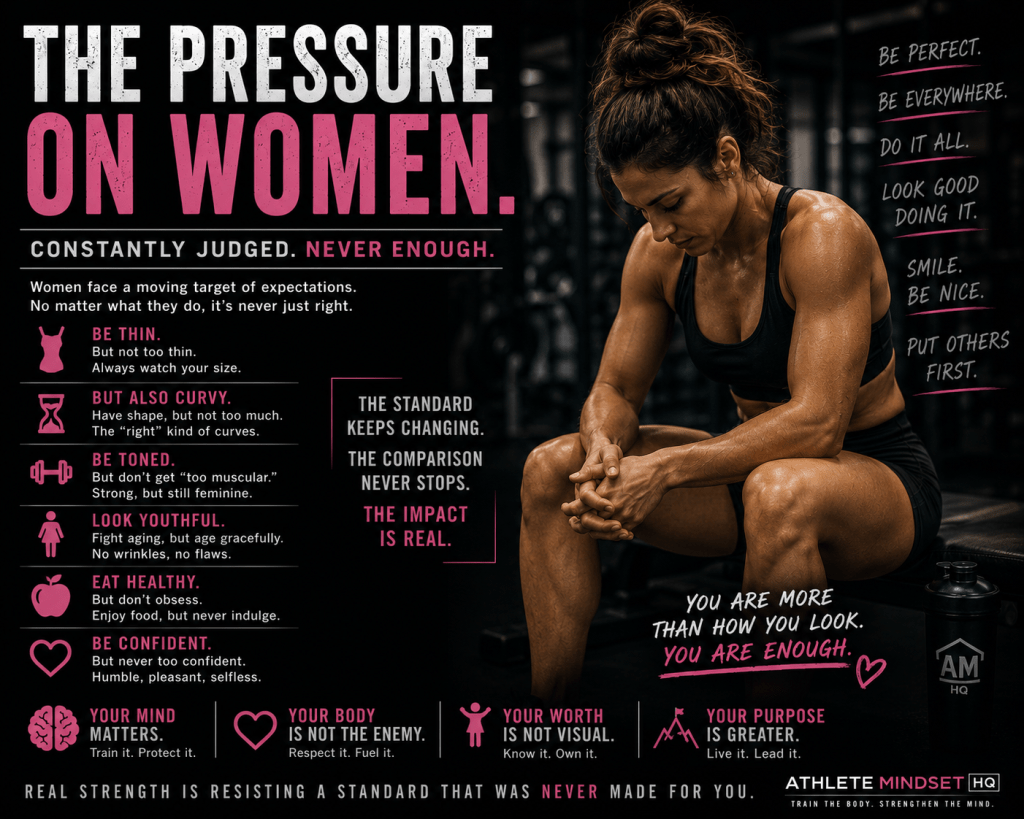
The target keeps moving, leaving many women feeling like they’re constantly chasing an impossible finish line.
It’s no surprise that many women develop an unhealthy relationship with exercise—not because they dislike movement, but because every workout feels tied to appearance instead of health.
Exercise becomes punishment instead of celebration.
Food becomes guilt instead of fuel.
The body becomes something to fix instead of something to appreciate.
Social Media Changed the Game
Comparison has always existed.
Today, it’s available 24 hours a day.
Algorithms reward perfection.
People post highlights, not struggles.
They share transformations, not setbacks.
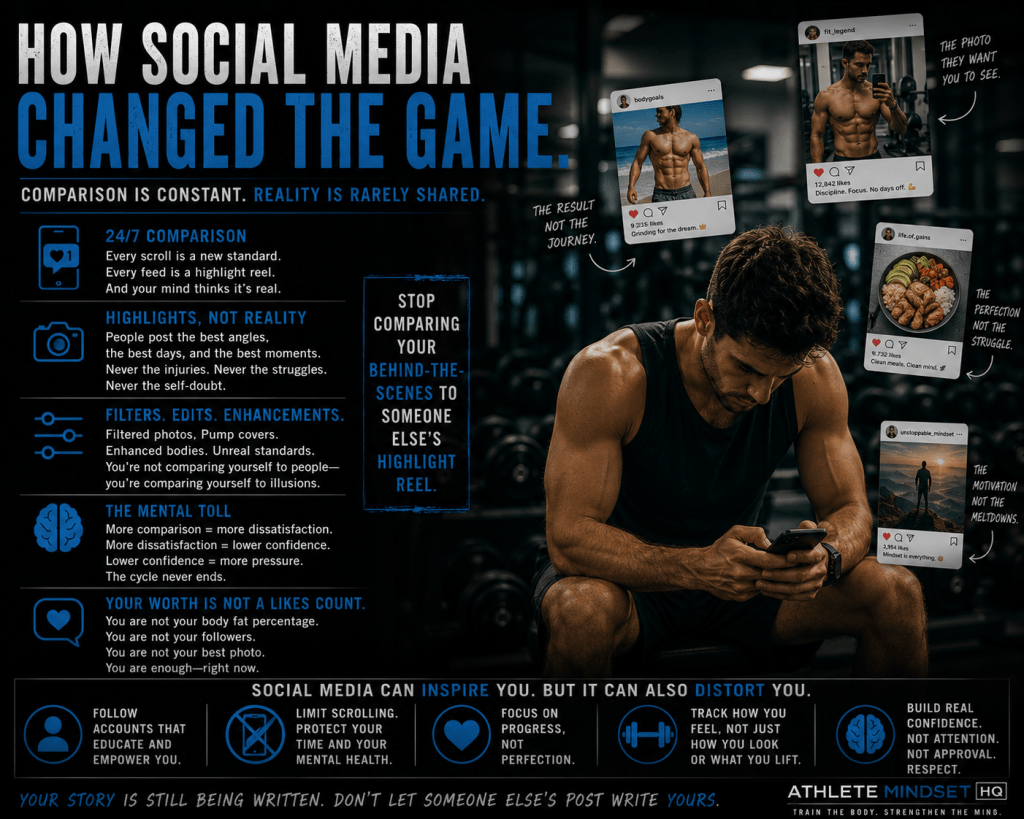
They celebrate victories while hiding injuries, burnout, failed diets, and the countless ordinary days in between.
We compare our behind-the-scenes reality to someone else’s carefully edited highlight reel.
That isn’t motivation.
That’s a recipe for chronic dissatisfaction.
The Hidden Cost of Chasing Perfection
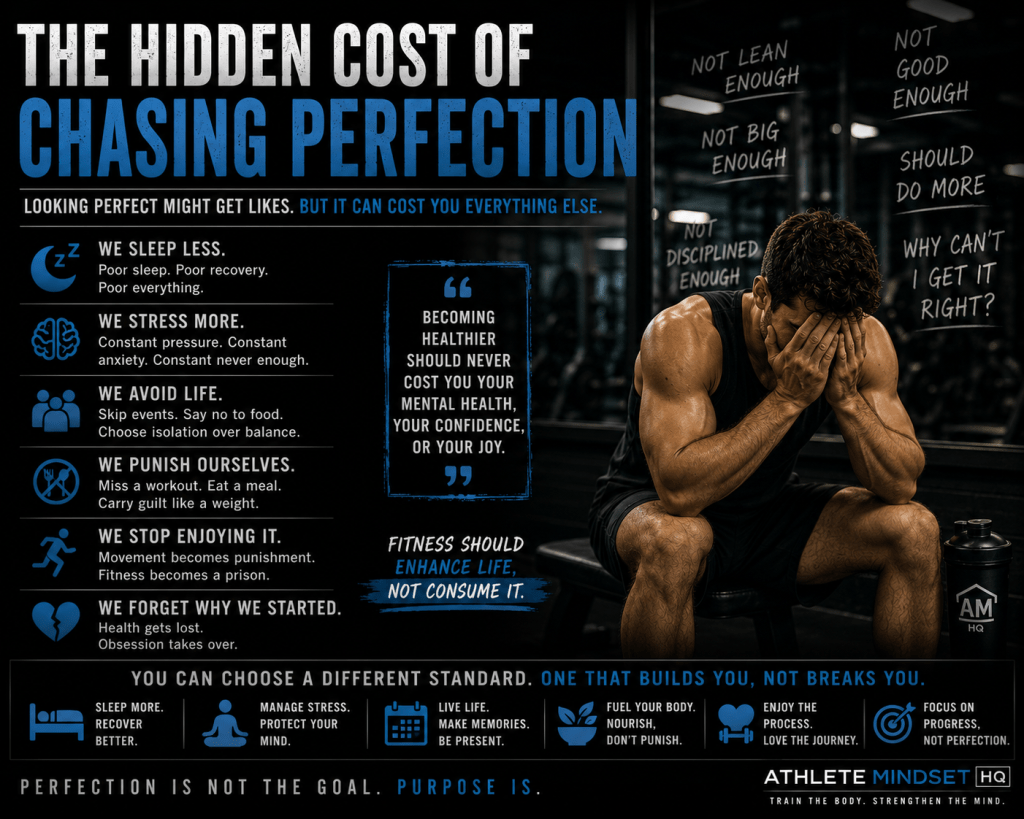
When appearance becomes our primary goal, we often sacrifice the very things fitness was supposed to improve.
We sleep less.
We stress more.
We avoid social events because of food.
We punish ourselves after eating.
We stop enjoying movement.
We forget why we started.
Ironically, becoming healthier can begin to make us mentally less healthy.
Fitness should enhance life—not consume it.
Redefining Success
At Athlete Mindset HQ, I believe fitness should first answer one simple question:
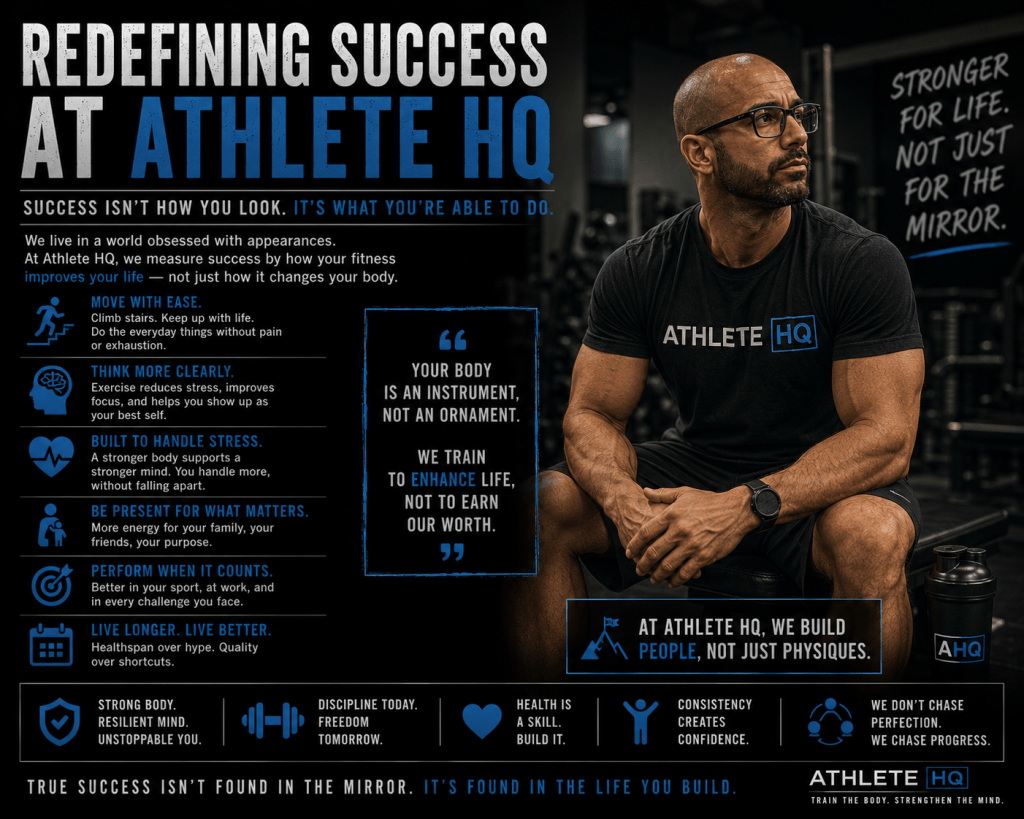
What does this allow you to do?
Can you play with your kids without getting winded?
Can you climb stairs comfortably?
Can you recover from stress more effectively?
Can you perform better in your sport?
Can you think more clearly?
Can you live longer and feel better doing it?
Those outcomes matter far more than whether your abs show in perfect lighting.
Your body is an instrument—not an ornament.
The Psychology of Self-Worth
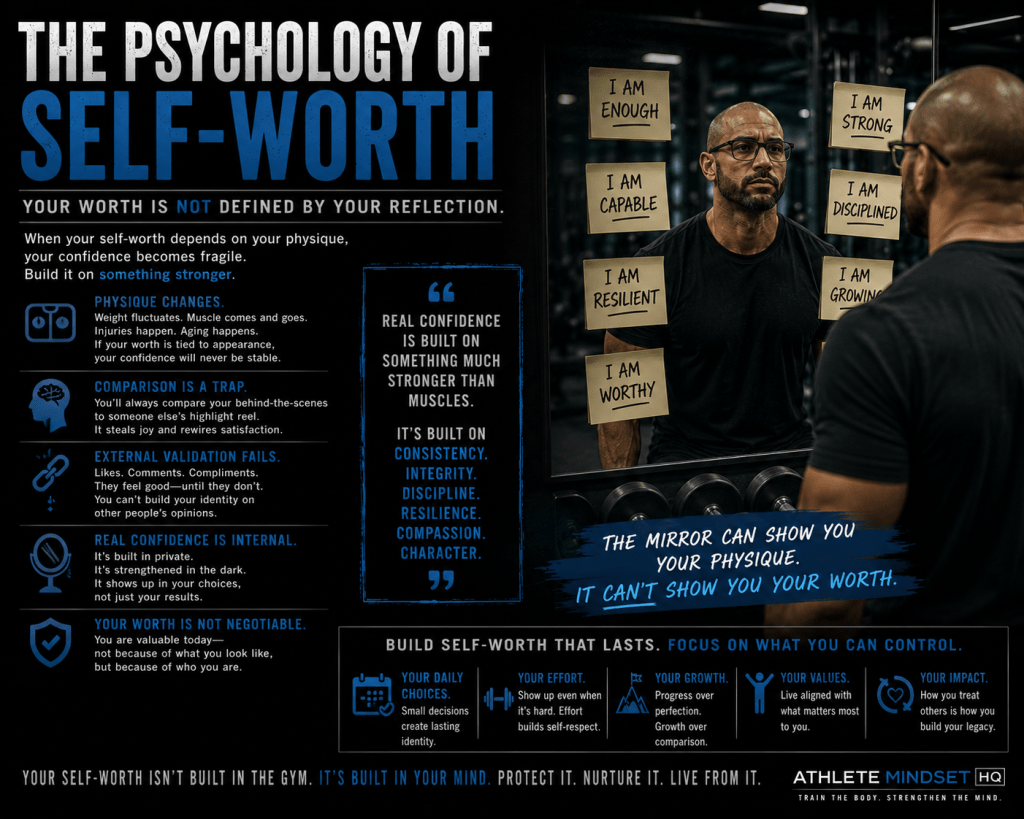
One of the most dangerous beliefs we can adopt is attaching our value to our appearance.
When our identity depends entirely on how we look, confidence becomes fragile.
Gain five pounds?
Confidence drops.
Miss the gym for a week?
You feel like a failure.
Get injured?
Your identity crumbles.
Real confidence is built on something much stronger.
It’s built through consistency.
Integrity.
Discipline.
Resilience.
Compassion.
Character.
These qualities don’t disappear when your physique changes.
What We Should Be Teaching
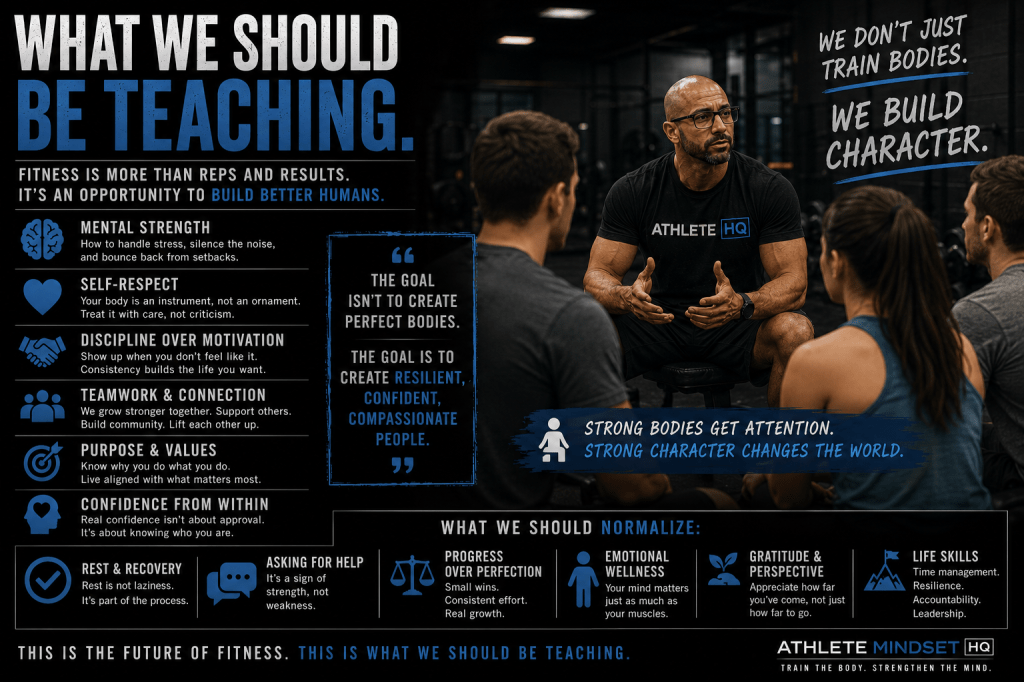
Imagine if we praised effort as much as aesthetics.
Imagine complimenting someone’s discipline before their abs.
Imagine celebrating consistency instead of perfection.
Imagine teaching children that movement is something to enjoy—not something to earn.
The healthiest people I know aren’t obsessed with looking perfect.
They’re committed to feeling capable.
My Challenge to You
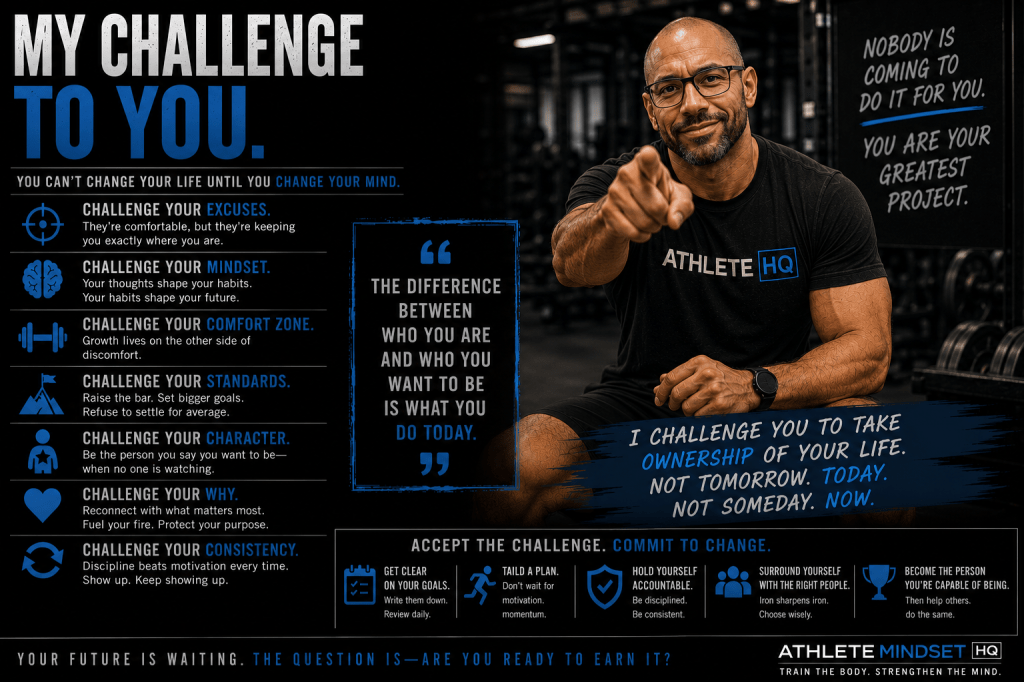
The next time you step into the gym, ask yourself one question:
Am I training because I love my body—or because I hate it?
That single question can completely change your relationship with fitness.
Move because your body deserves care.
Eat because your body deserves fuel.
Rest because your body deserves recovery.
Grow because your future self deserves your effort.
Final Thoughts
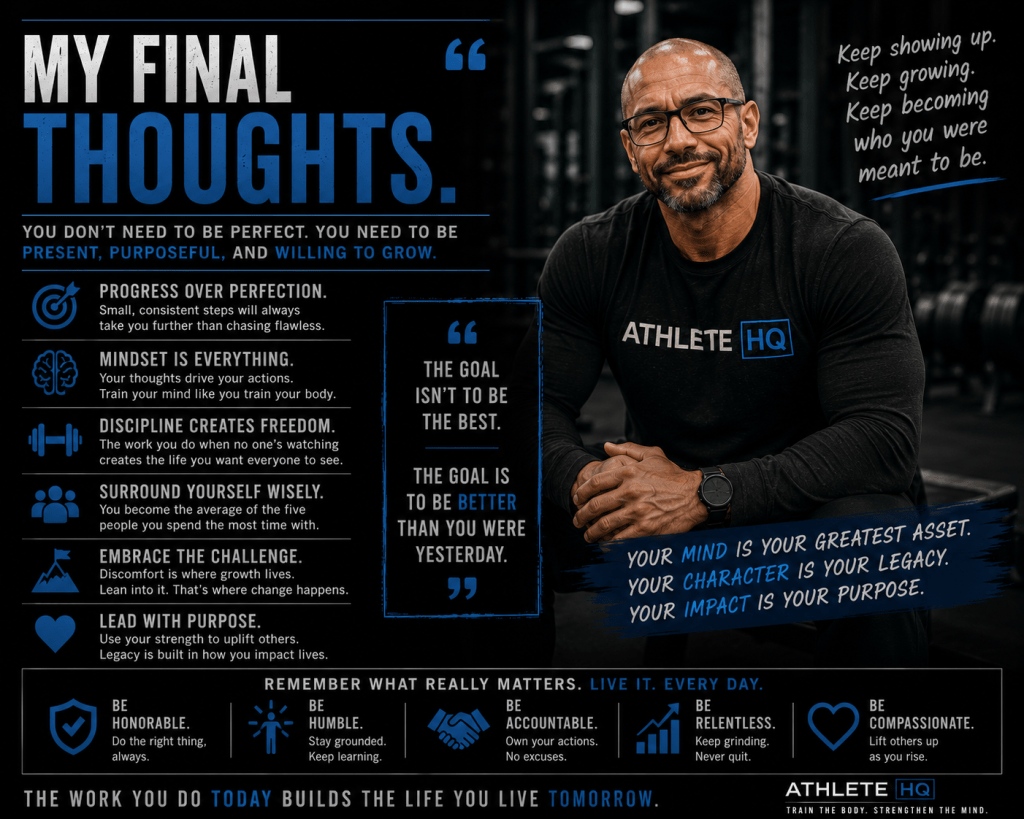
The mirror can tell you what you look like.
It cannot tell you your worth.
Your value isn’t measured by body fat percentage, clothing size, bench press numbers, or the opinions of strangers online.
Fitness should never become another prison built from unrealistic expectations.
It should become one of the greatest expressions of self-respect.
Train hard.
Take care of yourself.
Support others.
And remember…
The strongest people aren’t always the ones with the biggest muscles.
They’re the ones who know their worth long before anyone notices their physique.
About John J. Schessler, M.S.
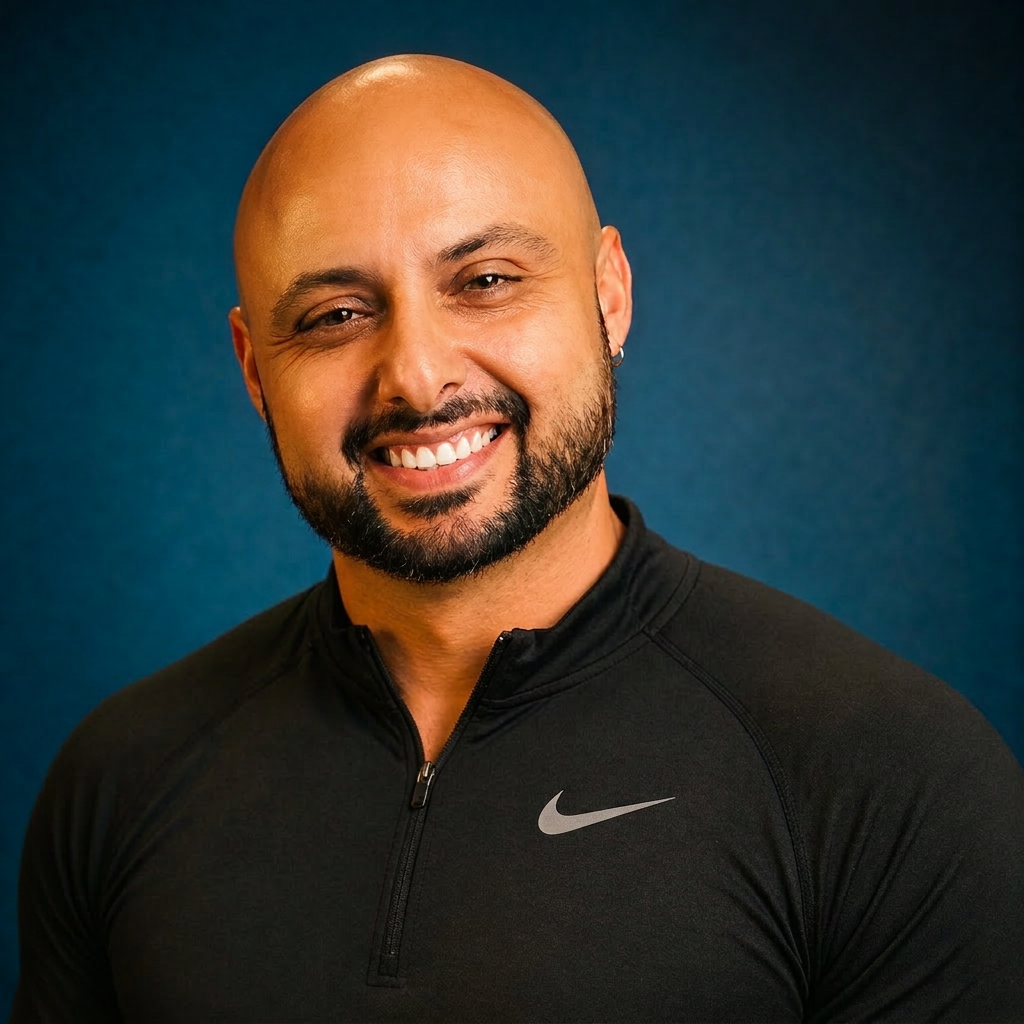
John J. Schessler, M.S. is a Human Performance Specialist, Behavior Interventionist, speaker, and founder of Athlete Mindset HQ, a high-performance platform dedicated to helping people become the strongest version of themselves—mentally, emotionally, and physically.
John earned his Master of Science in Sport Psychology from Capella University and his Bachelor of Arts in Child & Adolescent Psychology from Southern New Hampshire University. His work combines evidence-based psychology with practical coaching to help athletes, students, professionals, and individuals facing life’s challenges develop resilience, confidence, discipline, and lasting mental strength.
His passion for this work is deeply personal. Having overcome significant adversity early in life, John understands that real strength isn’t measured by what happens to us—it’s measured by how we respond. That perspective shapes every conversation, coaching session, presentation, and piece of content he creates.
Through Athlete Mindset HQ and The Follow Through Podcast, John shares practical strategies, meaningful conversations, and real-world tools that empower people to perform at their best—not only in competition, but in everyday life. Whether discussing sports psychology, behavioral health, leadership, men’s mental health, or personal growth, his goal remains the same: to educate, encourage, and equip others with the mindset needed to overcome obstacles and pursue excellence with purpose.
Because success isn’t built by what you intend to do.
It’s built by what you follow through on.
#sportspsychology #athletemindsethq @thefollowthroughpodcast @athletemindsethq #behavioralhealth #personalgrowth #mensmentalhealth #womensmentalhealth


Leave a Reply