
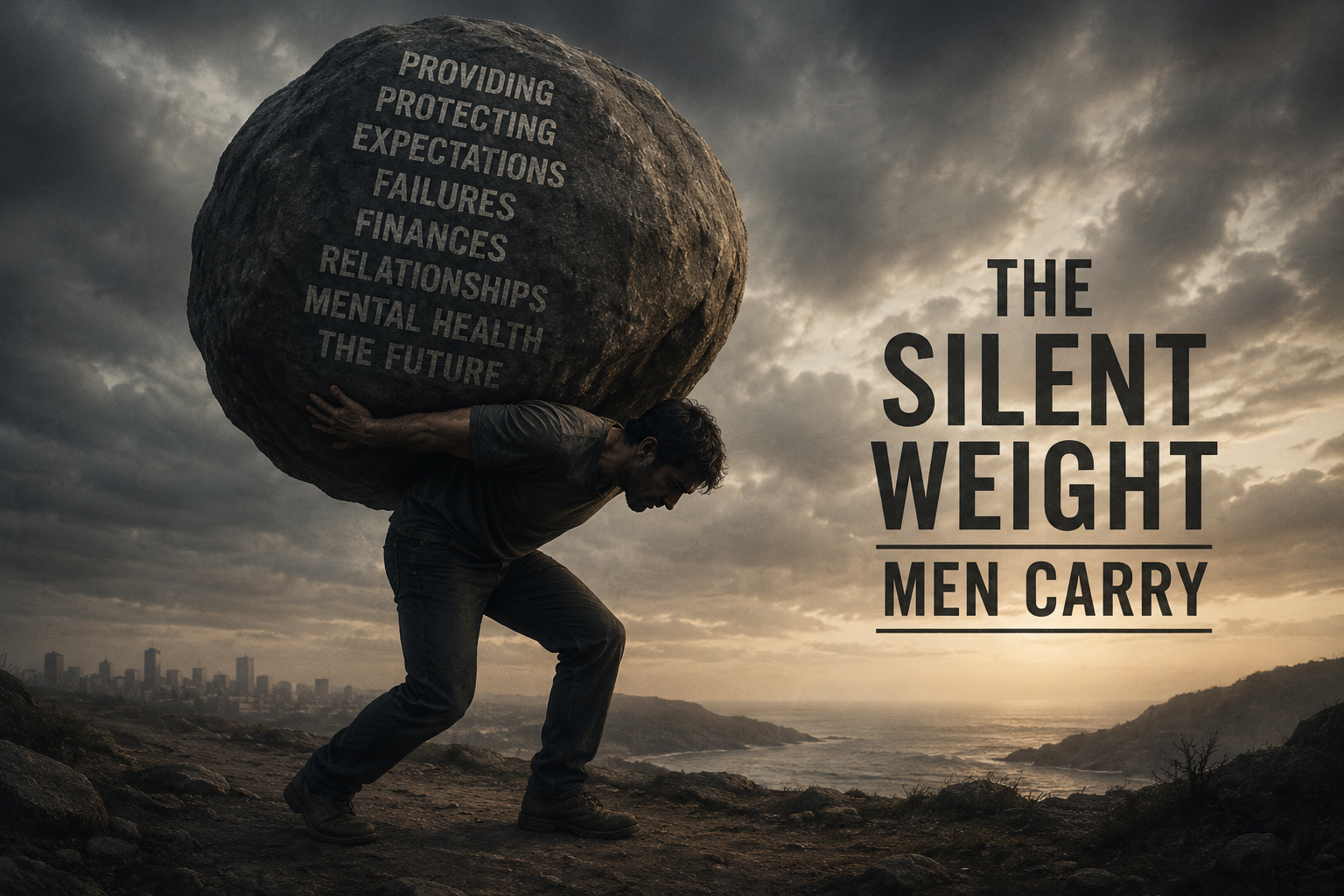
If you ask many men how they’re doing, you’ll likely hear the same familiar response:
“I’m good.”
“I’m fine.”
“Can’t complain.”
Sometimes those words are true.
Many times, they aren’t.
For countless men, those phrases have become less of an honest answer and more of a survival strategy. They end the conversation before anyone asks a second question. They keep the focus off the internal battles that so often remain hidden from the people closest to them.
The truth is, many men become experts at carrying heavy things.
Not just physically.
Emotionally.
Financially.
Mentally.
Spiritually.
And they often carry those burdens without ever believing they have permission to set them down.
The Provider Mindset
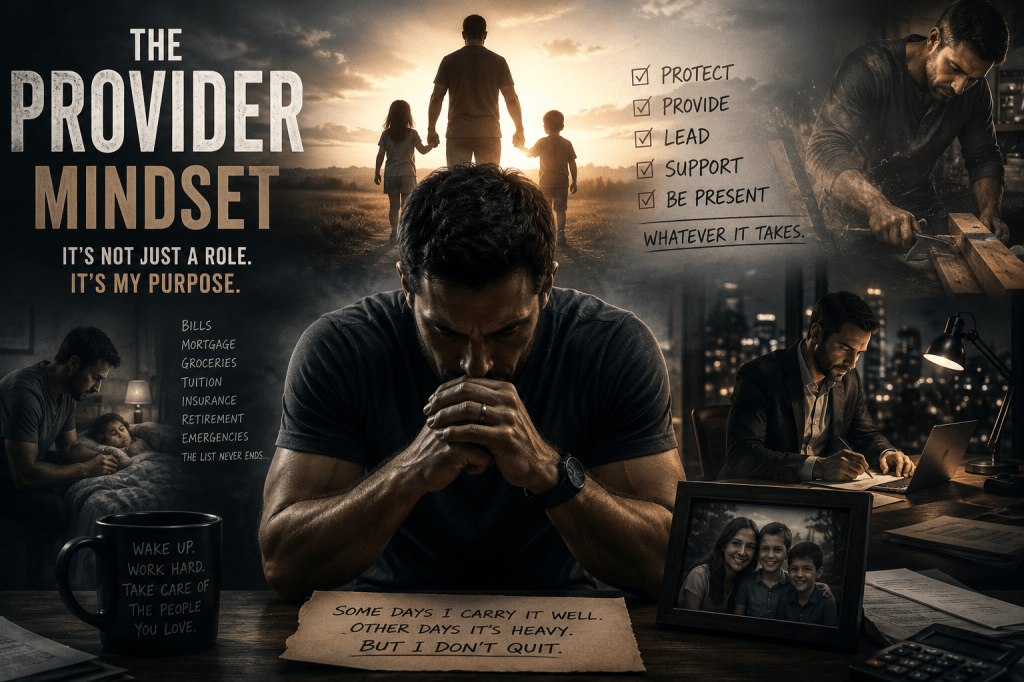
For much of human history, survival depended on division of labor. Men often hunted, defended territory, built shelter, and accepted physically dangerous work because those roles increased the chances of survival for their families and communities. While society has changed dramatically, many of those deeply rooted psychological drives remain.
Many men still instinctively ask themselves questions like:
“Can I protect the people I love?”
“Can I provide enough?”
“Am I useful?”
“Would my family be better off without me if I can’t fulfill those responsibilities?”
Those questions aren’t always spoken aloud. In fact, many men have never consciously recognized them. Yet they quietly influence confidence, relationships, career choices, and mental health.
This is one reason why job loss, financial instability, or an inability to work can be so devastating. To many men, it isn’t simply a paycheck that’s disappearing.
It’s purpose.
It’s identity.
It’s the feeling that they matter.
The Loneliness Nobody Talks About
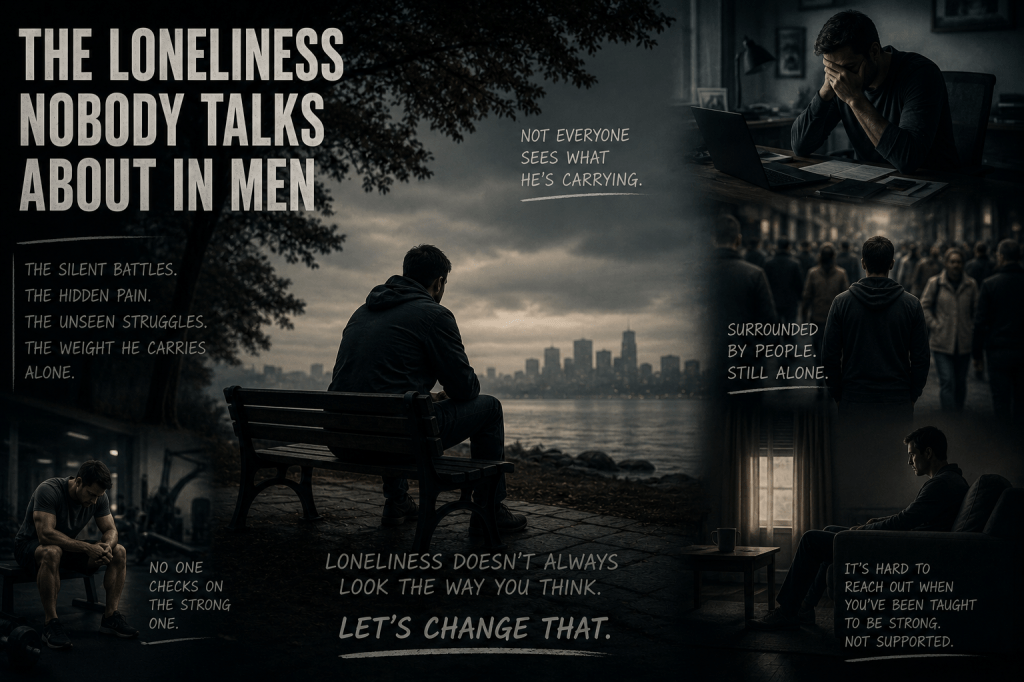
Here’s an uncomfortable reality:
Many adult men are profoundly lonely.
As boys, friendships often revolve around activities—sports, school, video games, hobbies, or shared adventures. As adulthood arrives, careers expand, marriages begin, children are born, responsibilities multiply, and those friendships slowly fade into occasional text messages or holiday greetings.
Years pass.
Without realizing it, many men find themselves with very few people they can call when life falls apart.
Not because nobody cares.
But because they’ve spent decades becoming the person everyone else depends on.
The dependable one.
The fixer.
The protector.
The strong one.
Ironically, the stronger a man appears on the outside, the less likely others are to ask whether he’s struggling on the inside.
Strength can become its own kind of invisibility.
When Stress Has Nowhere to Go
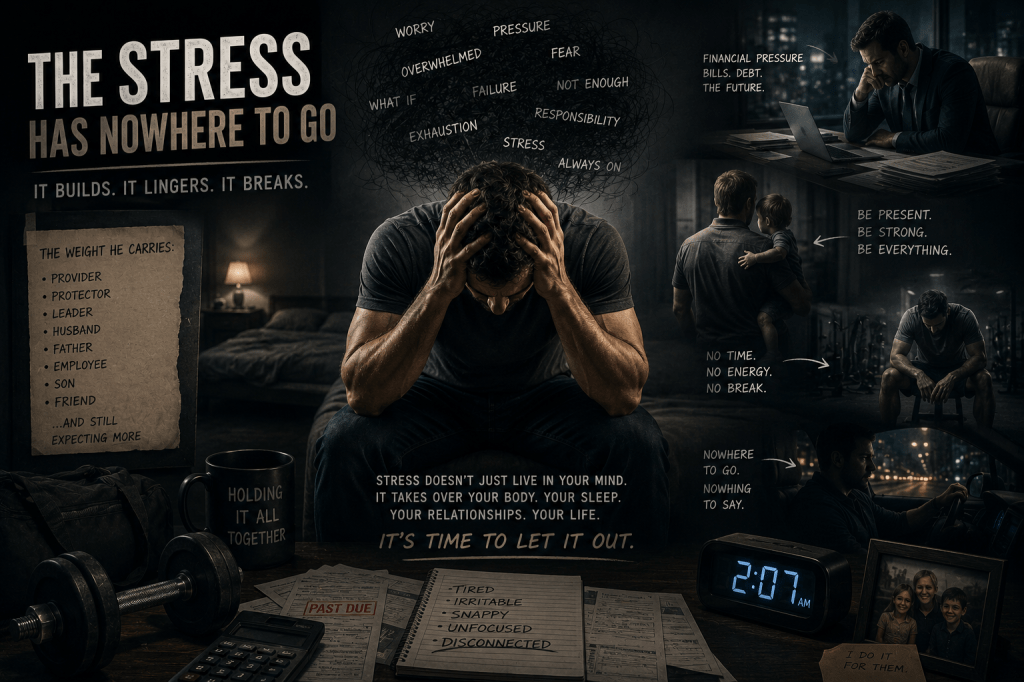
The human body was never designed to remain under constant stress.
When challenges arise, the brain activates a survival response. Heart rate increases. Muscles tighten. Stress hormones flood the bloodstream. In short bursts, this response is remarkably effective.
The problem is that many men never truly leave survival mode.
They worry about paying bills.
Taking care of aging parents.
Being a good husband.
Being a present father.
Keeping their career afloat.
Maintaining their health.
Meeting expectations that seem to grow larger every year.
Eventually, the body begins paying the price.
Sleep suffers.
Blood pressure rises.
Weight increases.
Motivation disappears.
Patience shortens.
Joy becomes harder to find.
Many men don’t recognize these as signs of emotional distress. Instead, they assume they’re simply exhausted, overworked, or “getting older.”
In reality, chronic stress doesn’t just affect the mind—it changes the body. Left unchecked, it can contribute to cardiovascular disease, weakened immunity, chronic pain, depression, anxiety, and burnout.
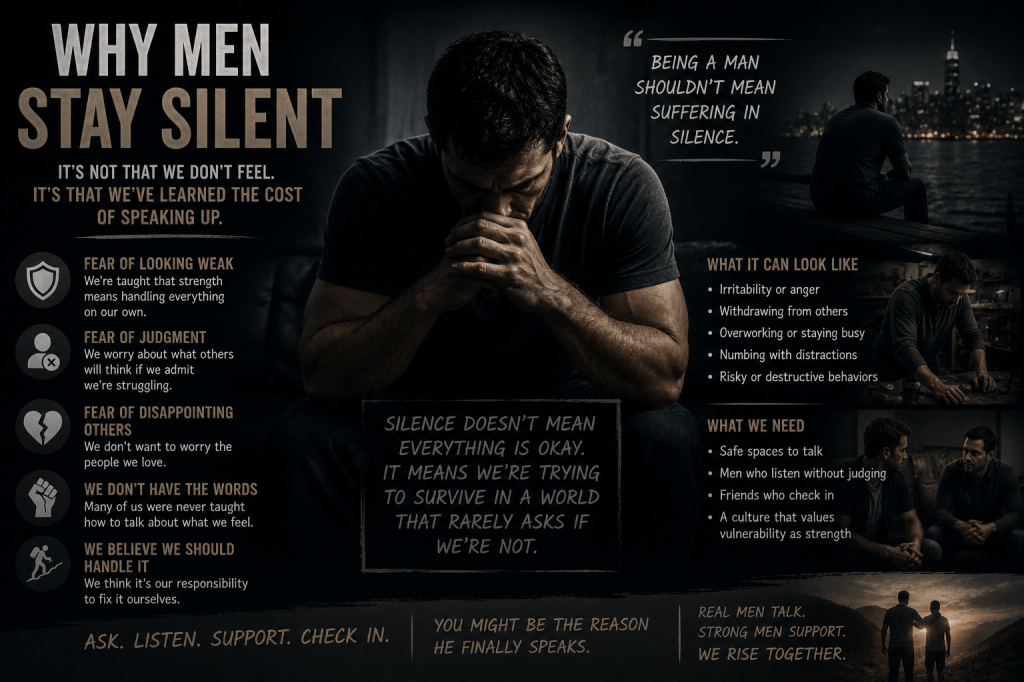
Why Men Stay Silent
Perhaps the most misunderstood question is this:
“If he’s struggling, why doesn’t he just ask for help?”
The answer is rarely simple.
For some men, asking for help feels like admitting failure.
For others, it feels like becoming a burden.
Some fear they’ll disappoint the people counting on them.
Others simply don’t have the language to describe what they’re feeling because no one ever taught them how.
Silence, then, becomes a learned form of protection.
It protects pride.
It protects identity.
It protects the image they’ve spent years building.
Unfortunately, it also protects pain.
Pain hidden long enough rarely disappears.
It simply changes shape.
Sometimes it becomes irritability.
Sometimes emotional distance.
Sometimes perfectionism.
Sometimes compulsive work.
Sometimes substance use.
Sometimes reckless behavior.
And sometimes, it becomes despair that no one ever sees coming.
A Different Definition of Strength
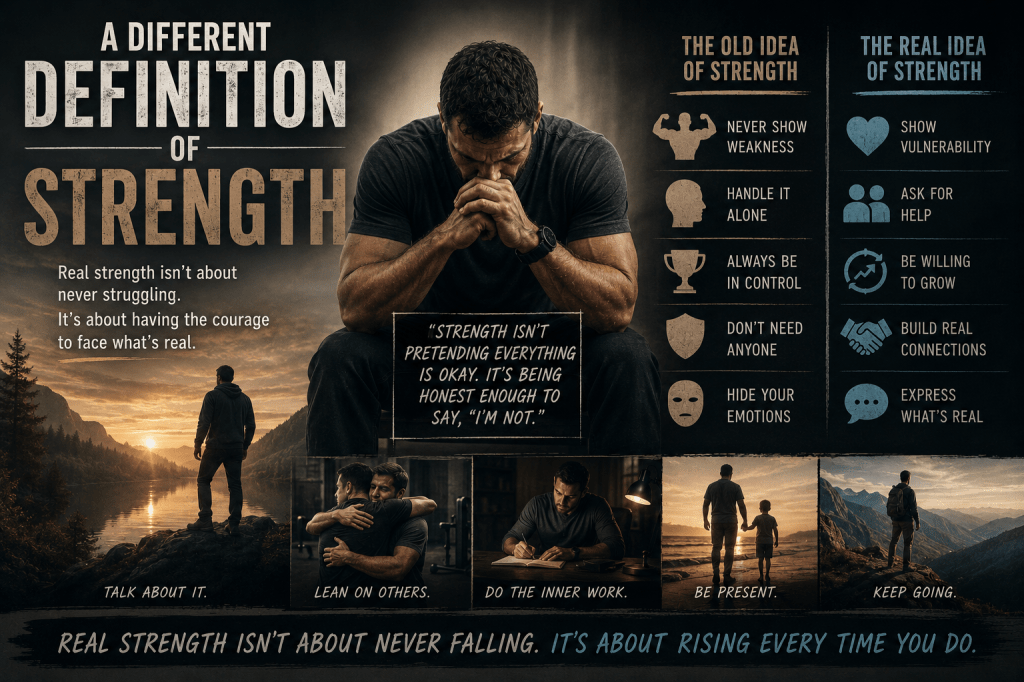
Perhaps it’s time we redefine strength.
Real strength isn’t pretending everything is okay.
Real strength is having the courage to admit when it isn’t.
It’s asking for help before a crisis develops.
It’s allowing trusted people to carry part of the burden.
It’s understanding that vulnerability and courage are not opposites—they often walk hand in hand.
The strongest men I’ve ever known weren’t the ones who never struggled.
They were the ones who chose to keep growing despite their struggles.
Maybe that’s the kind of strength our sons need to witness.
Maybe that’s the kind of strength our daughters deserve to recognize.
And maybe that’s the kind of strength our culture has been waiting to celebrate all along.
About Me — Coach John Schessler Jr.
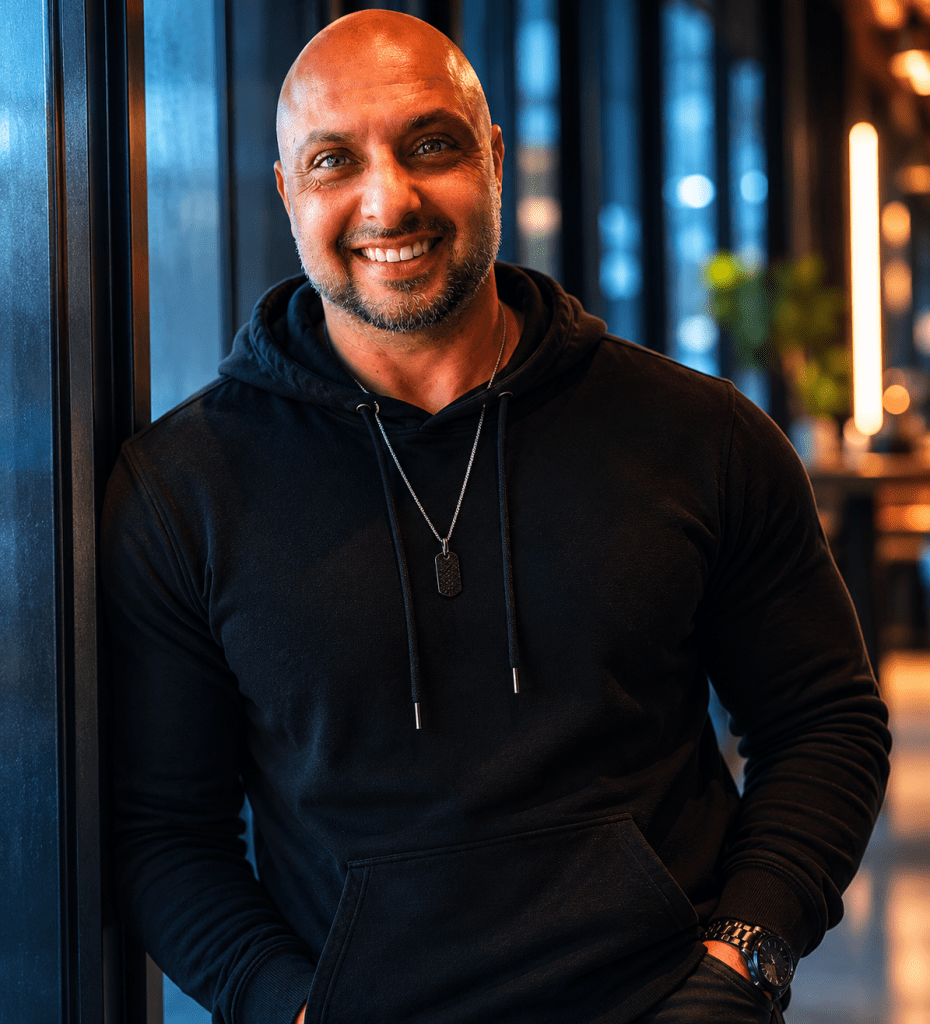
I’m Coach John — the mind behind AthleteMindsetHQ — and my mission is simple: help athletes build the kind of mental toughness, confidence, and resilience that shows up long after the final whistle blows.
I coach from experience, education, and heart. As a Sports Psychology Coach and Behavior Interventionist, I’ve spent years working with athletes and students who carry big potential but also big pressure. My job? Teach them how to channel that pressure into power.
As a recent I can support athletes at an even higher level. Every day, I study how mindset, emotion, and performance work together — and every day, I bring that knowledge straight to the athletes and readers who trust me.
This blog is your locker room talk for the mind.
Here, we break limits.
We train confidence.
We learn how to stay locked in when it matters most.
Because winning isn’t just physical — it’s mental.
And when you master your mind, the rest follows.
If you’re ready to grow, challenge yourself, and build an unshakeable mental edge… welcome to the team. Let’s get to work.


Leave a Reply