
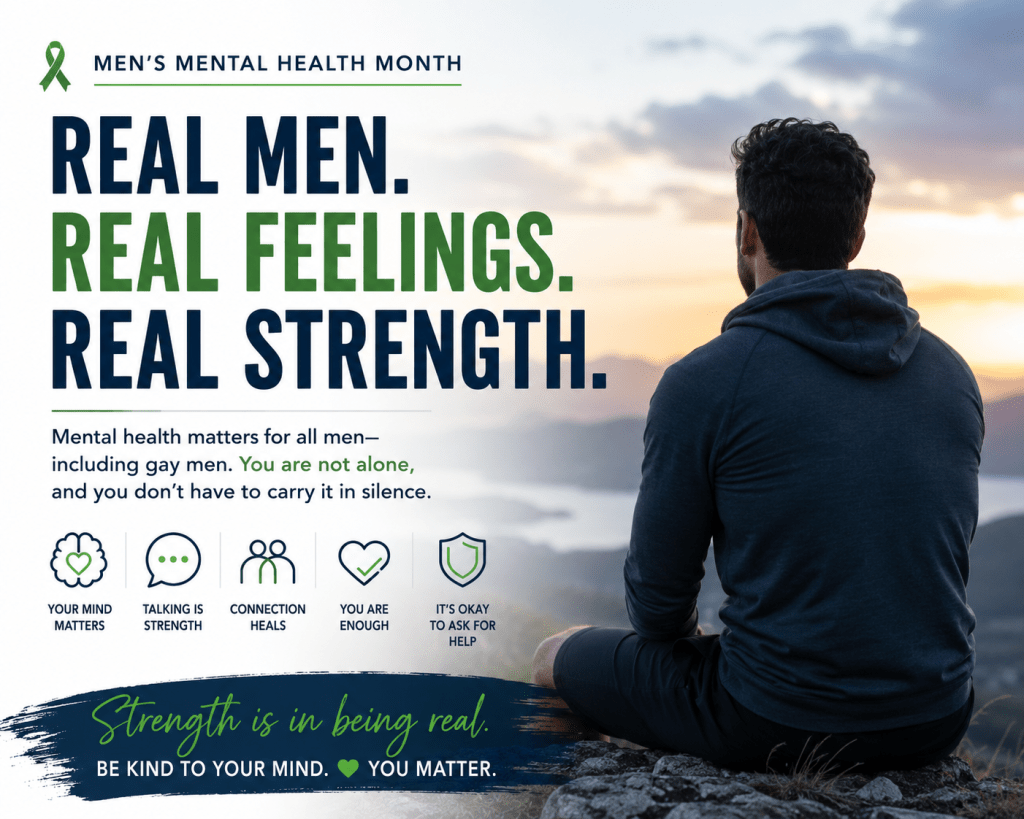
June is Men’s Mental Health Month, a time dedicated to bringing awareness to the emotional struggles, psychological challenges, and silent battles that many men face every day.
For gay men, however, mental health often carries an additional layer of complexity.
Long before many gay men begin navigating careers, relationships, finances, or aging, they are often navigating something much deeper: acceptance.
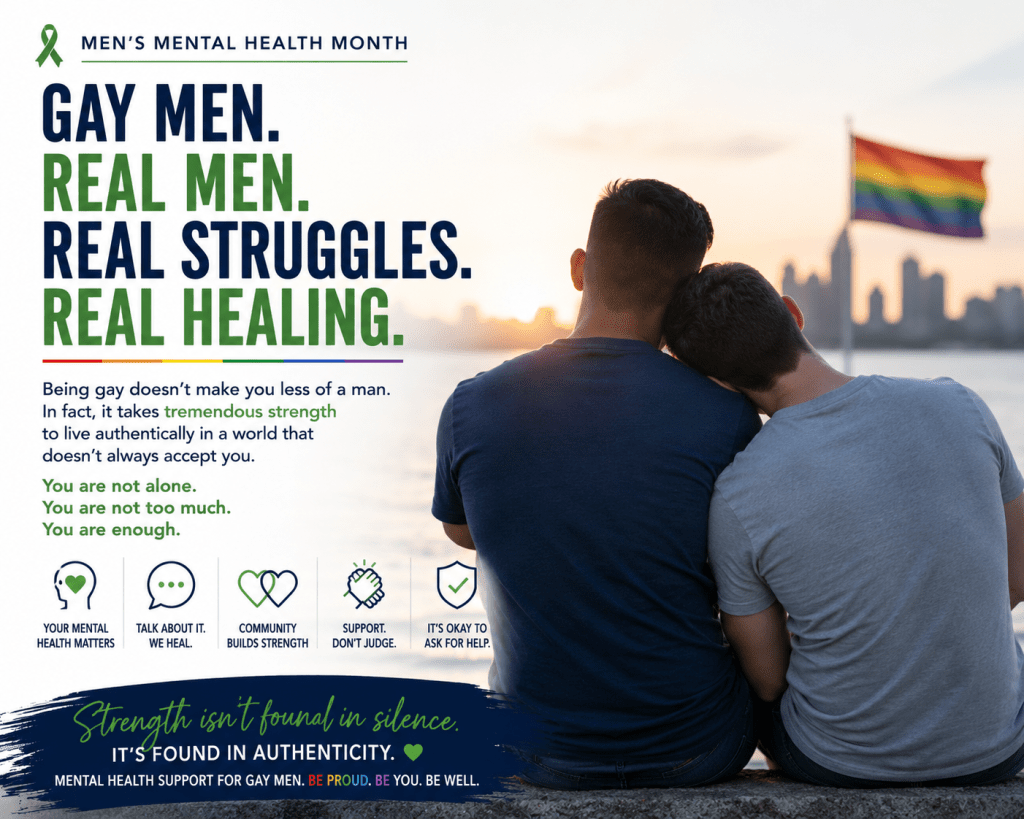
Many gay men grow up learning to monitor themselves. We learn to watch how we walk, how we talk, who we find attractive, and whether we fit into the expectations placed upon us. Some of us spend years hiding parts of ourselves, fearing rejection from family, friends, teammates, faith communities, or society as a whole.
Even when acceptance eventually comes, the effects of those early experiences can linger.
Many gay men continue to struggle with:
Anxiety
Depression
Loneliness
Body image concerns
Perfectionism
Shame
Relationship insecurity
Fear of vulnerability
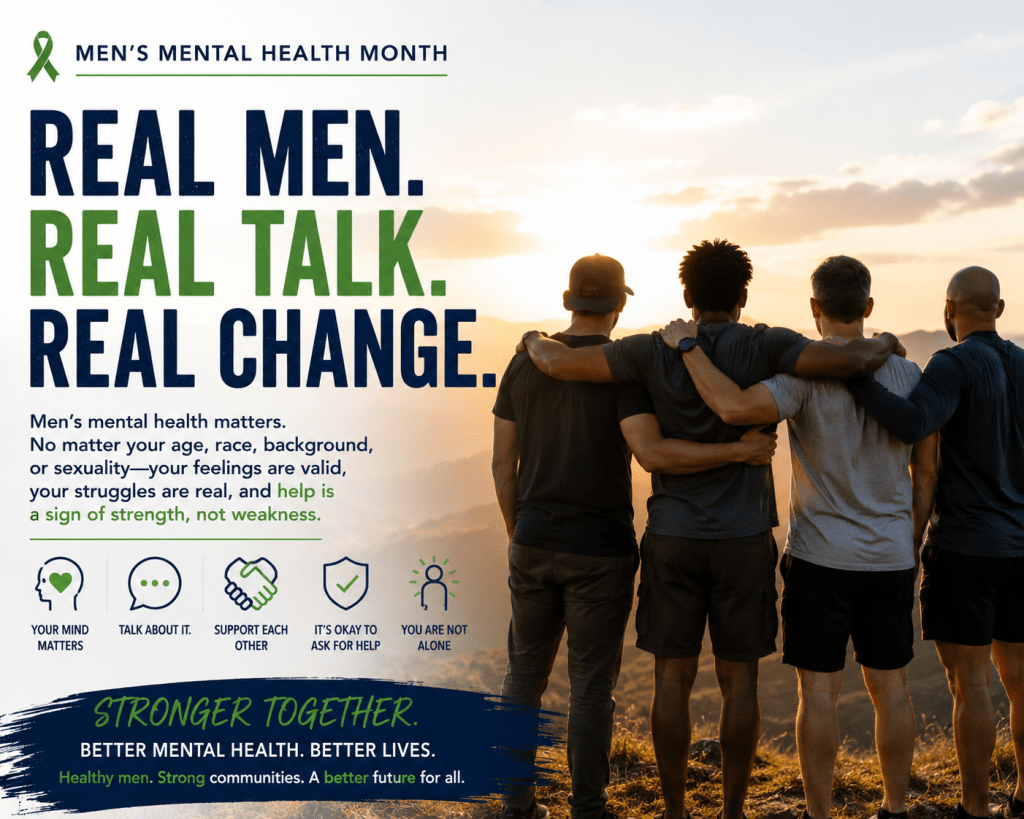
The reality is that many men are taught that strength means silence. Gay men often receive that same message while simultaneously being told that who they are is somehow different or less acceptable.
That combination can be powerful—and damaging.
The result is that many gay men become experts at surviving while never learning how to truly thrive.
We become high achievers.
We become caretakers.
We become funny.
We become successful.
We become resilient.
But underneath those accomplishments, many of us are still carrying wounds that were never fully acknowledged.
Mental health is not weakness.
Seeking therapy is not weakness.
Talking about your emotions is not weakness.
Asking for help is not weakness.
The strongest thing a man can do is tell the truth about what he is carrying.
This Men’s Mental Health Month, I encourage all men—gay, straight, bisexual, transgender, and questioning—to check in with themselves honestly.
Ask yourself:
What am I feeling that I haven’t said out loud?
What am I carrying that no one knows about?
What would healing look like for me?
Who can I trust enough to let them see the real me?
Healing doesn’t begin when we become perfect.
Healing begins when we stop pretending we are.
As men, we need strength.
But we also need connection.
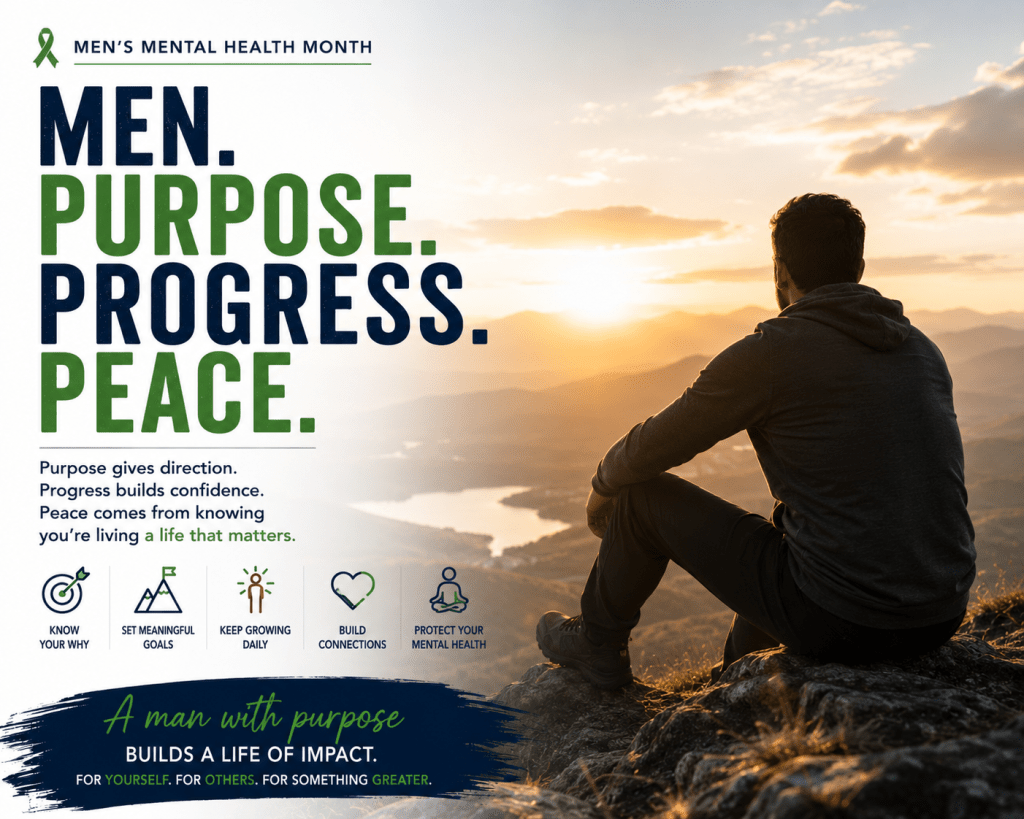
We need purpose.
We need belonging.
And perhaps most importantly, we need spaces where we can show up as our authentic selves and know that we are enough.
This June, let’s remind ourselves and one another that mental health matters.
Not just for some men.
For all men.
And that includes gay men too.
— John J. Schessler, Jr., BA, CMT, SPC
M.S. Sports Psychology Candidate


Leave a comment