
Walk into almost any gym today and you’ll notice something immediately:
Most people aren’t training to move better anymore.
They’re training to look better.
Visible abs. Bigger shoulders. Leaner waistlines. Veins. The perfect physique under perfect lighting.
And to be fair — there’s nothing inherently wrong with aesthetics. Wanting to feel attractive and confident is completely human. Physical appearance has always mattered socially, psychologically, and culturally.
But somewhere along the way, modern fitness culture blurred the line between health and appearance.
Now many people equate being fit with simply looking fit.
And those are not always the same thing.
The Rise of Aesthetic Fitness
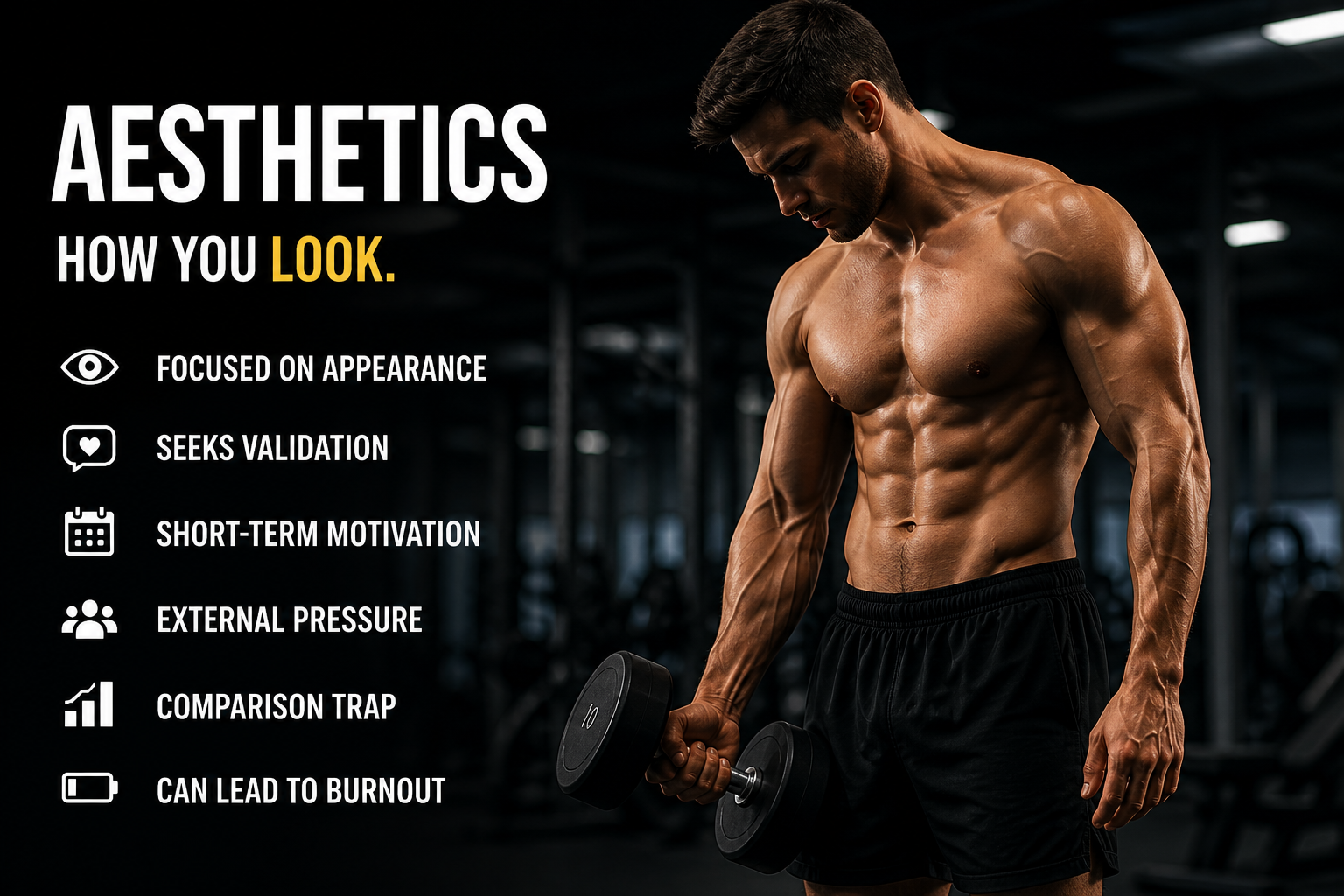
Social media transformed fitness into visual performance.
Platforms like Instagram and TikTok reward physiques that photograph well:
- Extremely lean body fat percentages
- Hyper-developed muscle groups
- Unrealistic proportions
- Constant “transformation” content
- Extreme dieting and training methods
The problem is that social media rarely shows the full reality behind those bodies:
- Dehydration before photos
- Performance-enhancing drugs
- Editing and filters
- Strategic lighting and angles
- Unsustainable routines
- Mental burnout
Over time, these physiques become normalized.
People start comparing themselves to curated snapshots instead of real human health.
And eventually, fitness can stop being about wellness altogether.
It becomes image management.
What Is Functional Fitness?
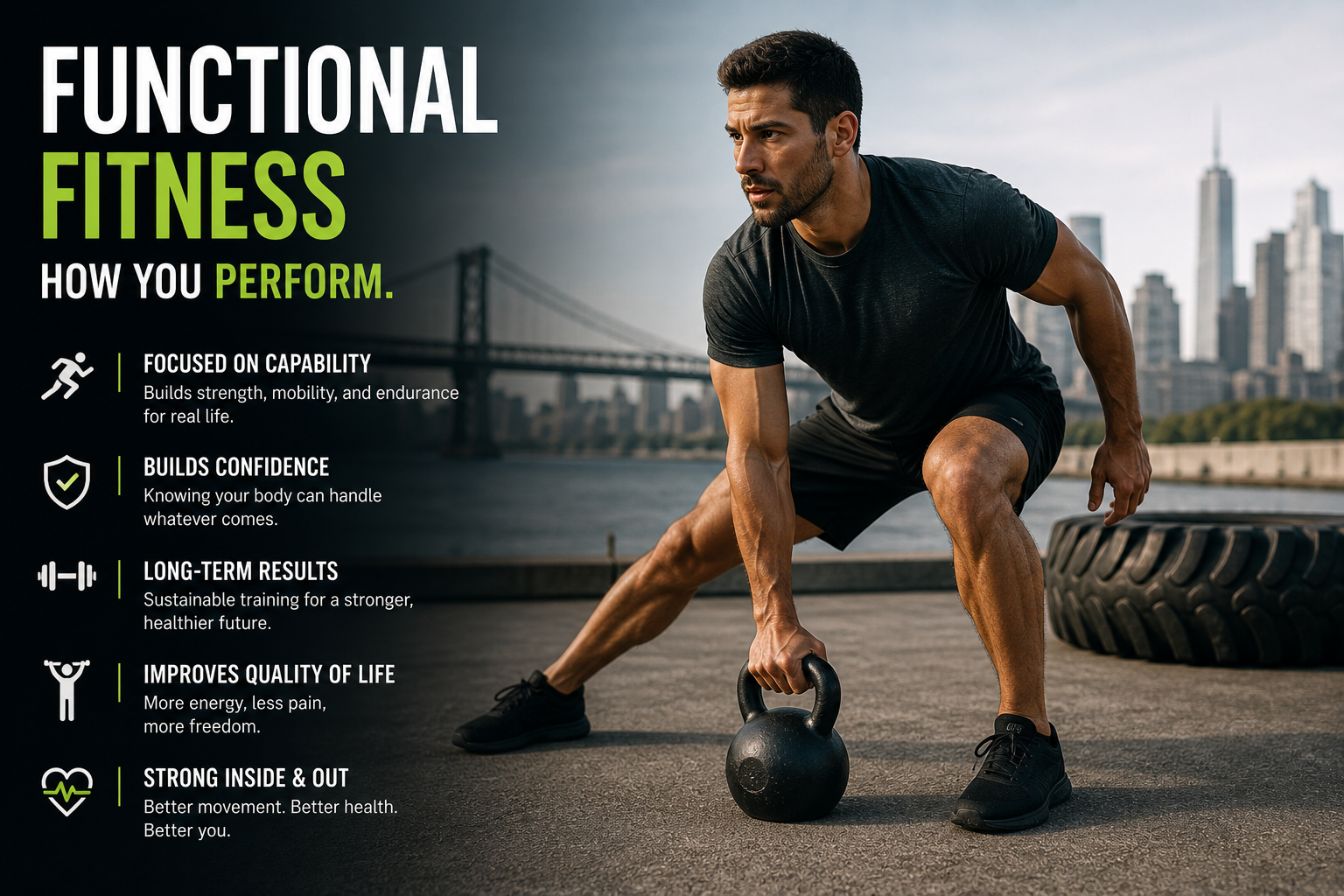
Functional fitness focuses less on appearance and more on capability.
Instead of asking:
“How does my body look?”
Functional training asks:
“What can my body do?”
Can you:
- Run without exhaustion?
- Move pain-free?
- Carry heavy objects?
- Stay athletic as you age?
- Recover properly?
- Maintain mobility and balance?
- Perform well under physical stress?
- Sustain energy throughout your day?
Functional fitness emphasizes:
- Strength
- Endurance
- Mobility
- Coordination
- Athleticism
- Longevity
- Injury prevention
- Real-world movement
It trains the body as a system — not just as something to visually optimize.
The Psychological Difference
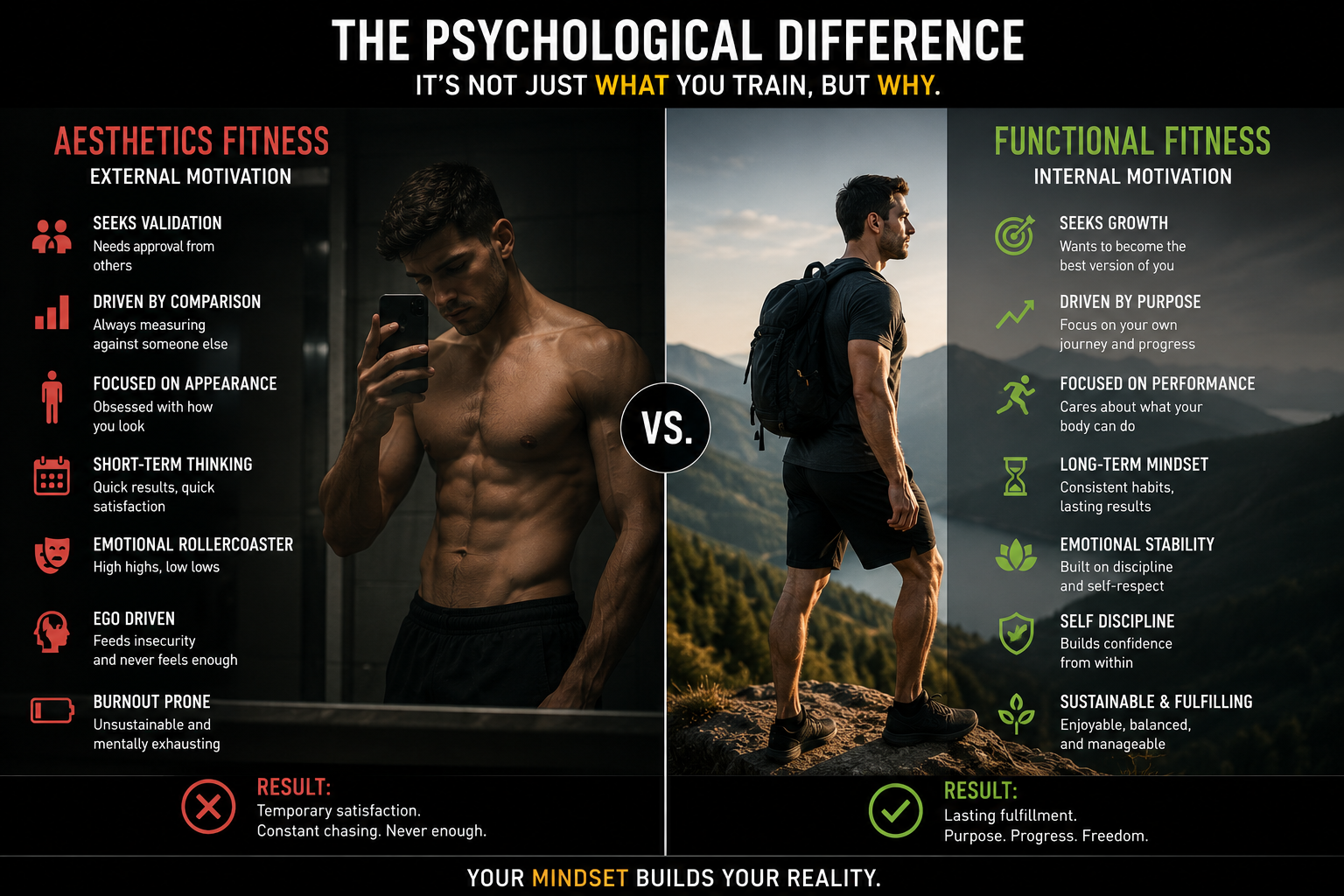
One of the biggest differences between aesthetic fitness and functional fitness is psychological.
Aesthetic-focused training often creates external motivation:
- Validation
- Attention
- Comparison
- Approval
- Attractiveness
Functional fitness tends to create internal motivation:
- Performance
- Discipline
- Confidence
- Energy
- Resilience
- Self-respect
That difference matters.
Because external validation is unstable.
If your confidence depends entirely on staying shredded year-round, eventually your mental health becomes tied to fluctuations in body fat, muscle size, and appearance.
That’s a dangerous foundation.
Many people trapped in aesthetic-only fitness cycles experience:
- Body dysmorphia
- Food guilt
- Obsessive mirror checking
- Anxiety around social eating
- Overtraining
- Burnout
- Constant comparison
Ironically, the pursuit of looking “healthy” can sometimes become psychologically unhealthy.
Why Functional Fitness Ages Better
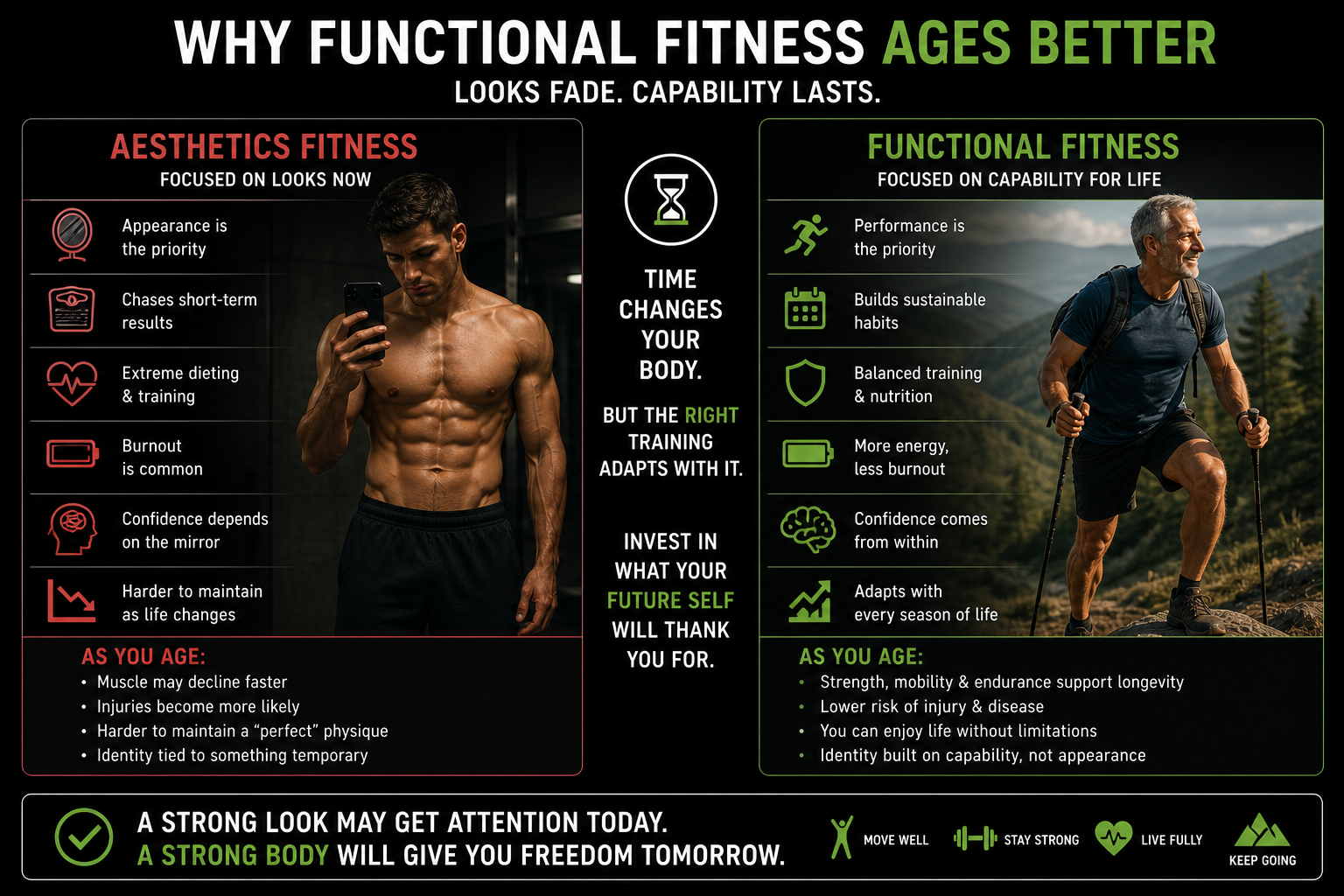
Aesthetics naturally change with time.
Everyone ages.
Recovery slows.
Hormones shift.
Life responsibilities increase.
If identity is built entirely around physical perfection, aging can feel devastating.
Functional fitness offers something more sustainable.
A person who trains functionally may still care about appearance — but appearance is not the sole objective.
The goal becomes:
- Staying capable
- Staying active
- Staying mentally sharp
- Staying independent
- Staying strong enough to fully participate in life
That mindset tends to create a healthier long-term relationship with fitness.
And interestingly enough, many people who train primarily for function still end up looking impressive physically.
But there’s less desperation attached to it.
The Middle Ground
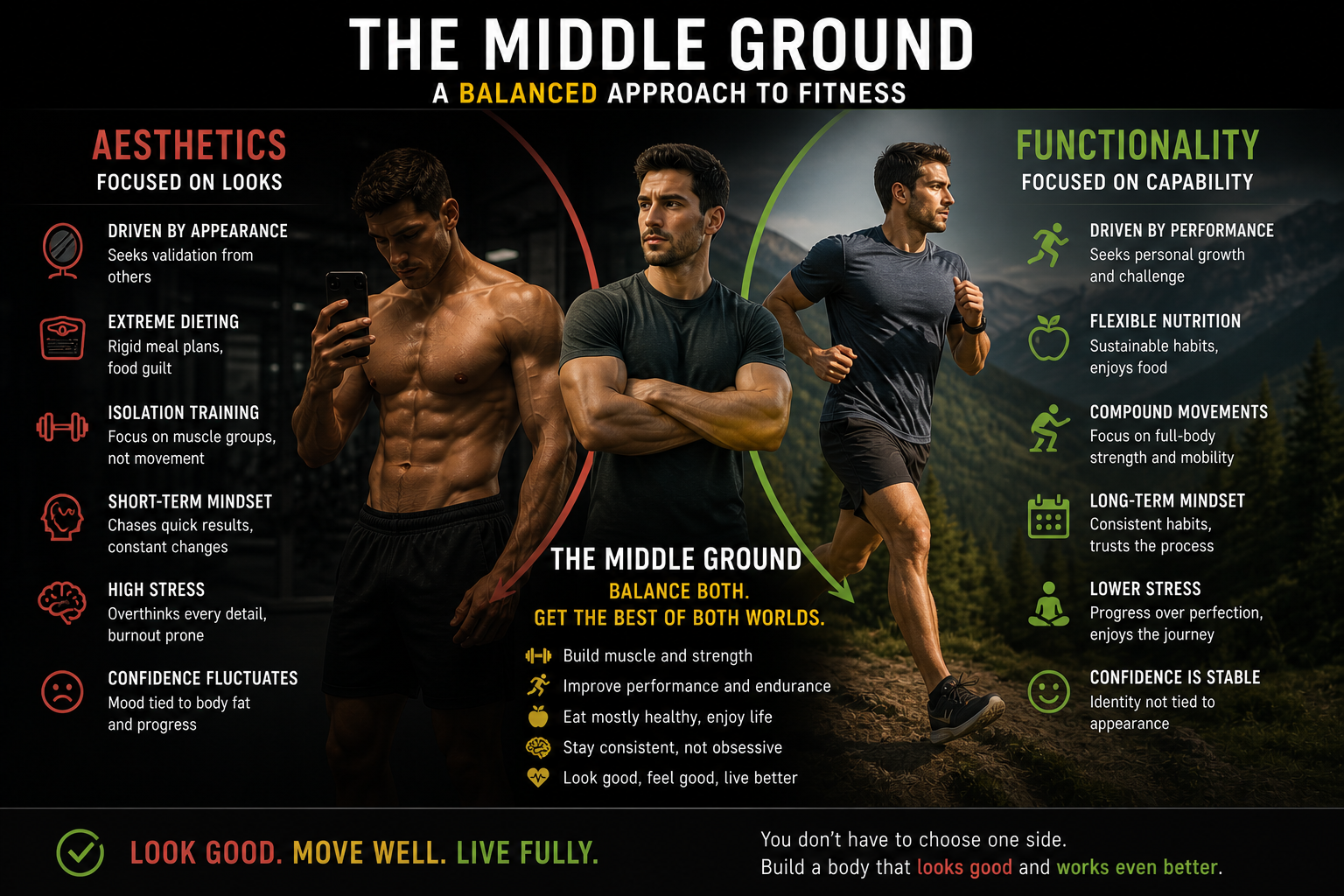
This doesn’t have to be an either-or conversation.
You can care about aesthetics and functionality.
You can want muscle definition while also prioritizing:
- Heart health
- Mobility
- Performance
- Mental wellness
- Longevity
The issue begins when aesthetics become the only measure of success.
Because the mirror is never fully satisfied.
There will always be:
- Someone leaner
- Someone bigger
- Someone younger
- Someone more genetically gifted
- Someone more enhanced
If fitness becomes purely appearance-driven, the finish line keeps moving forever.
What Real Fitness Might Actually Look Like
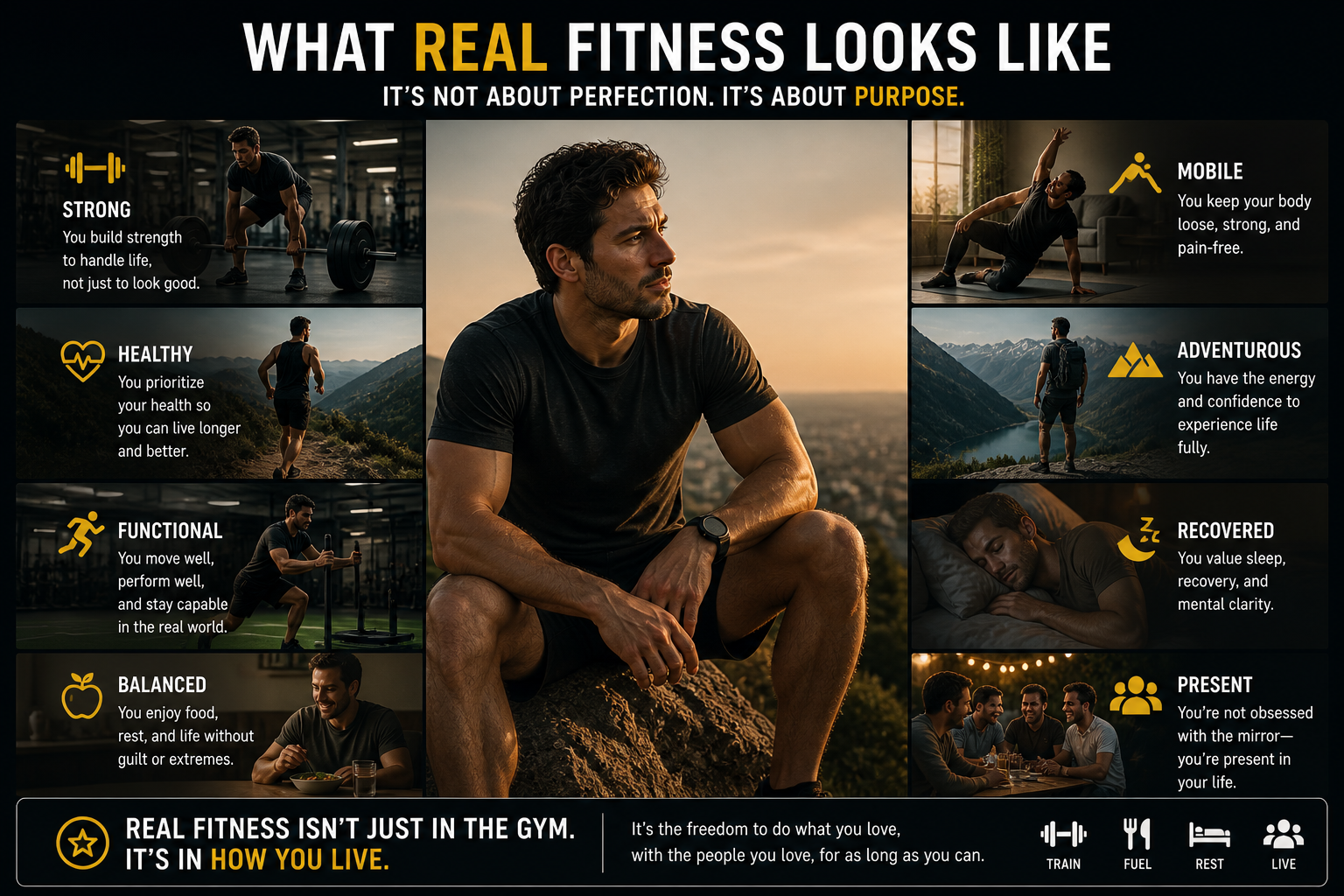
Real fitness is probably less about chasing perfection and more about building a body that supports your life.
A body that:
- Has energy
- Handles stress
- Moves confidently
- Performs reliably
- Feels strong
- Allows freedom
- Supports mental health instead of harming it
There’s nothing wrong with wanting to look good.
But functionality gives fitness something aesthetics alone cannot:
purpose beyond the mirror.
And in the long run, purpose usually lasts longer than appearance.
#fitness #aesthetics #functionality #beyondthemirror #findyourwhy #menshealth #masculinity #accountability #proactivemedicine #lookinggood #feelinggood #confident #strong
About THE AUTHOR
Coach John Schessler Jr.
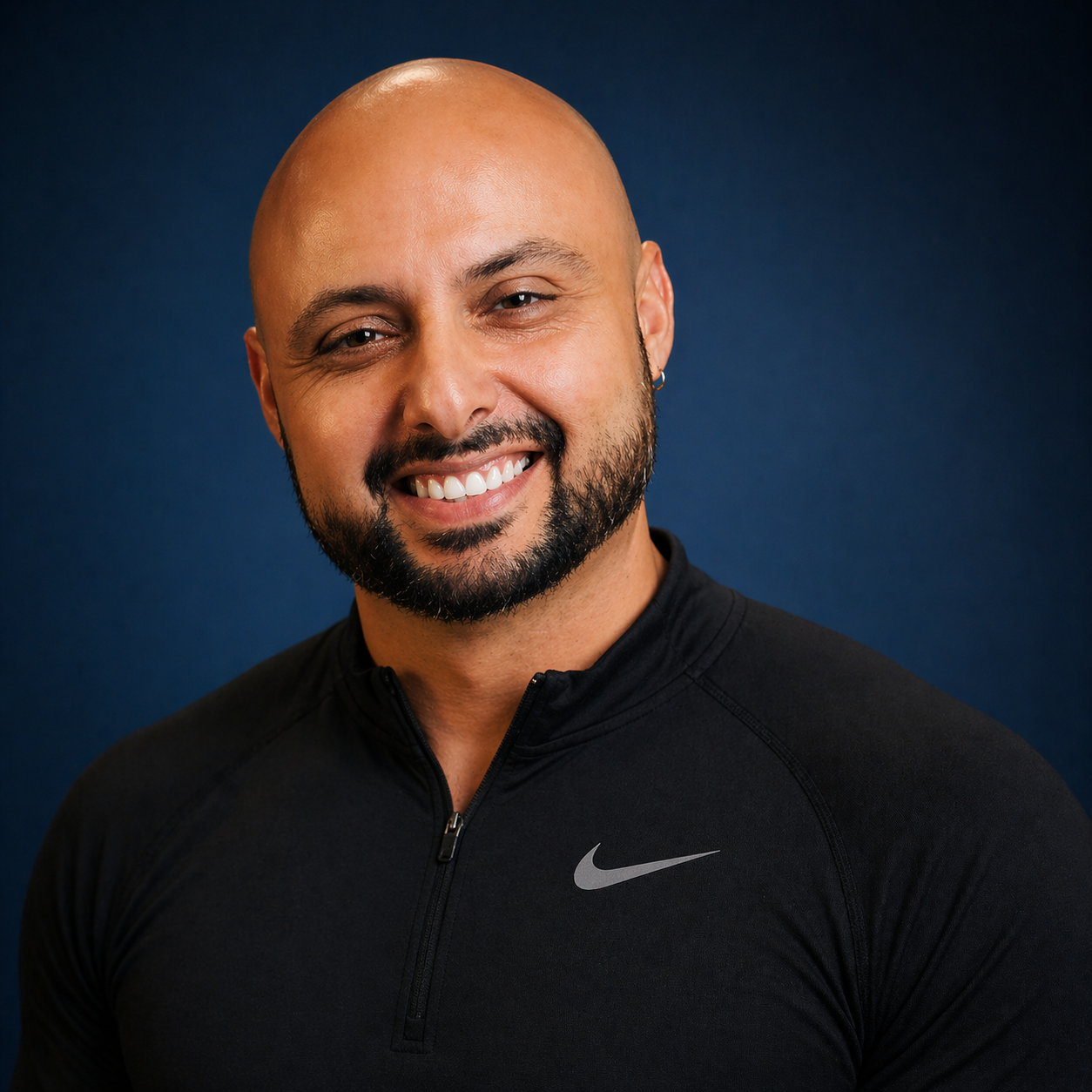
I’m Coach John — the mind behind AthleteMindsetHQ — and my mission is simple: help athletes build the kind of mental toughness, confidence, and resilience that shows up long after the final whistle blows.
I coach from experience, education, and heart. As a Sports Psychology Coach and Behavior Interventionist, I’ve spent years working with athletes and students who carry big potential but also big pressure. My job? Teach them how to channel that pressure into power.
Right now, I’m leveling up my own game, pursuing my graduate degree in Sports Psychology so I can support athletes at an even higher level. Every day, I study how mindset, emotion, and performance work together — and every day, I bring that knowledge straight to the athletes and readers who trust me.
This blog is your locker room talk for the mind.
Here, we break limits.
We train confidence.
We learn how to stay locked in when it matters most.
Because winning isn’t just physical — it’s mental.
And when you master your mind, the rest follows.
If you’re ready to grow, challenge yourself, and build an unshakeable mental edge… welcome to the team. Let’s get to work.


Leave a comment