
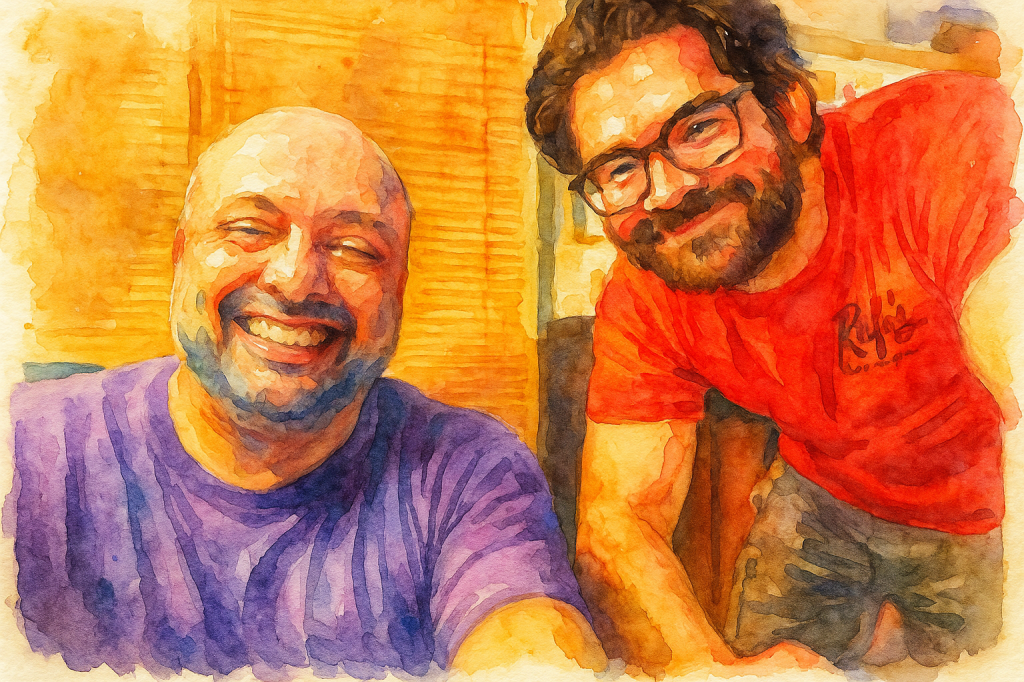
My best friend, Matt and I
In 2025, men’s mental health challenges are rising — but so is the power of brotherly love. Discover why authentic male connection matters more than ever, and how friendships, mentorship, and community can save lives.
The Meaning of Brotherly Love Today
Brotherly love isn’t just about friendship — it’s about connection, vulnerability, and presence. It’s the quiet check-ins, the late-night talks, the gym sessions that turn into therapy. It’s about men learning to support each other openly, without judgment or ego.
In 2025, as the world grows more digital and isolating, these bonds are a lifeline for mental health. With suicide rates among men still alarmingly high and many men hesitant to seek help, the simple act of showing up for one another becomes revolutionary.

The Challenge: Men’s Mental Health in 2025
Despite progress, men still face cultural pressure to be “strong,” stoic, and self-sufficient. According to recent studies:
• Men are significantly less likely than women to seek mental-health treatment.
• Loneliness has become a silent epidemic — worsened by social media and the pandemic’s lasting effects.
• Younger generations of men are redefining masculinity, but stigma still lingers.
Brotherly love directly combats these challenges by creating safe, judgment-free spaces where men can be real, express emotion, and support one another’s healing.
The Power of Connection
When men have deep, trusting relationships, powerful things happen:
• Isolation decreases — genuine friendship reminds men they’re not alone.
• Help-seeking increases — hearing “I’ve been there” can normalize therapy and vulnerability.
• Resilience grows — emotional connection helps men handle stress and bounce back stronger.
• Identity expands — men learn they are more than achievements — they are human beings with value, compassion, and depth.
Brotherly love becomes both prevention and treatment: a buffer against anxiety, depression, and burnout.
How to Cultivate Brotherly Love
For individuals:
• Check in with your friends — not just when things are good.
• Replace “I’m good” with honesty: “It’s been a rough week.”
• Create rituals — a workout group, breakfast meet-ups, or video calls.
• Encourage your brothers to seek help when needed.
For communities and workplaces:
• Form men’s circles or peer-support groups.
• Bring male-focused mental-health education to gyms, schools, and workplaces.
• Redefine masculinity through open conversation, mentorship, and shared stories.
Brotherly love starts with one small act — and multiplies through every man who dares to care.
Love, Not Fixing
Brotherly love isn’t about solving each other’s problems. It’s about listening, validating, and walking beside one another through life’s storms. True strength is found in connection, not in silence.
Final Reflection
As 2025 unfolds, the modern man is rewriting what it means to be strong. Strength now includes empathy, vulnerability, and connection. Brotherly love is no longer optional — it’s a cornerstone of men’s mental well-being.
So this week, send that text. Call that friend. Take that walk. Ask, “How are you really doing?” That simple question might be the most powerful form of love there is.
Author Bio

John Schessler Jr. is a graduate student in Sports Psychology and a certified Sports Psychology Coach (AFAA). Known as The PGH Sports Psy. Coach, he focuses on athlete mental health, mindset, and personal development through coaching, writing, and mentorship. Follow his work on Instagram at @ThePGHsportspsycoach.


Leave a comment