

I meet with people pretty regularly who have either injured themselves or are just bouncing back from a surgery. The one thing I hear from a majority of my clients when I tell them about either scaling back their training regimen or inserting a few rest days in between their workout days, is that none of them want to modify their training routine. Either because they feel 100% better, which usually isn’t the case, or because they ‘don’t want to lose their gains’, everybody has a reason NOT the adequately let their body rest and recover. If you have been consistently hitting your workouts for any length of time and then, BAM, something comes along to screw all that up, it’s disheartening. I totally get it. People use working out and physical exercise to help cope with a lot of life’s problems that get thrown our way. Stress, anxiety, depression, death, life changes…anything really can have a positive or negative effect on our mood and how we react towards the stimuli thrown at us and exercise can help curb that and make things just a little bit better. What do you do though when you have to sit it out for a length of time?
The rest and recovery principle of training is a guideline that states that athletes (and people in general who exercise), need to balance physical activity with adequate rest and recouperation. The principle is based on the idea that if stress is imposed on the body, rest and recovery will help the body adjust to the demands being put on it and improve as a result. This is known as the principle of adaptation. Because these are legitimate principles that apply to bodybuilding and exercise in general, why do most people want to just skip it? I personally think it’s because it’s the way our brains are wired, combined with feelings of guilt if one skips a day or two to properly rest up.

Anything professional athlete of any sport will tell you that proper rest is going to not only help your body recover but also help your mind recover and give you clarity as well. People who suffer from mental health problems such as depression or anxiety for example, use exercise and physical activity to help balance out the chemical imbalances they deal with in their brains causing them to become depressed or anxious. The same idea is used when the same types of people rest and recover. Their minds aren’t as scattered, things don’t seem so fast-paced and on the whole, some type of homeostasis happens inside their entire body.
Overtraining effects roughly 60% of elite athletes and about 30% of non-elite athletes and once you have, it’s difficult to overcome. WAIT! Wouldn’t your body just take a little longer to recover then? Technically yes but that’s if you overtrain just a little. Overtraining and spraining or tearing muscle is a whole other level of rest and recovery because they usually require advanced healing techniques. Enter the Physical Therapists and Doctors.
If you’ve read my other posts, you already know that PT’s treat most physical injuries that aren’t simple accidents. Tears, sprains, bone breaks, etc. are something all PTs are educated and trained to treat, and it usually requires some home exercise on the patient’s part. Now, I don’t treat patients anymore, I train clients and the difference between the two isn’t actually that far from each other. Depending on the type of clients you train, you like me, may find yourself ‘treating’ these kinds of symptoms after they’ve graduated from physical therapy outpatient treatment. The line that I hear ALOT is “I don’t want to pay for PT services, so I decided to come to the gym and self-treat myself with your help.” Let’s unpack this from a trainer’s perspective.

Let’s say that the above scenario just happened to me during my last consult with a new client. The first question I always ask after they let me know what’s going on is “Have you been cleared by your doctor to exercise?” If they say no, things stop right there for my services and it’s at the client’s discretion whether or not they want to work out on their own. If they have been cleared, then I’ll assess the limitations of their pain or movement patterns. I work for a commercial gym, so I’m covered under their blanket liability insurance as a personal trainer. That means if someone gets hurt, they can’t sue the gym. However, that doesn’t stop them from suing me as an individual, which is why it’s always a good idea for trainers to have their own liability insurance, so you’re covered from all angles! But I digress.
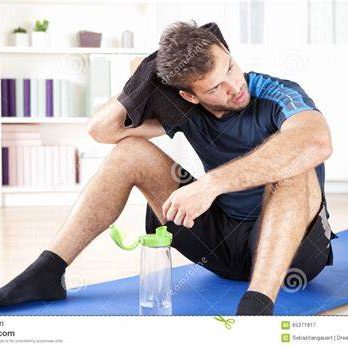
Back to rest and recovery. How do you rest and recover? It sounds like a stupid question but has real benefits for people. There are two kinds of recovery: active and passive and they are just what they sound like. Passive recovery involves taking the day entirely off from exercise. Active recovery is when you engage in a low-intensity exercise, placing minimal stress on the body, if any. During active recovery, your body repairs soft tissue (tendons, ligaments, muscles), improves blood circulation by removing waste products from muscle breakdown. Passive recovery involves taking the day entirely off from exercise.
After speaking with some friends of mine at the gym, Nick and Anthony, to find out whether they adequately rest if they have any prominent muscle tears or injuries, they both answered yes. However, it’s interesting to hear each guy’s expansion on the subject. Nick said that just last night he got about eight hours of sleep and woke up feeling refreshed and in a good mood today. Anthony’s point of view was more scientific though. Anthony is going to school to become a chiropractor, so I expected his answer to be a little more specific. He was saying that many people overtrain, the same way that they may undertrain. For athletes, recovery days are literally built into their schedules because they know the importance of it. The difference between regular people when it comes to overtraining is that most people aren’t as informed on the specifics of recovery periods and knowing when to taper off for a few days.

If you feel that you have done too much in the gym or your body feels tired, it’s OKAY to take a day off to get your head and body back in order. One of the things I stress with my clients and gym members in general is that if you’re tired or sore, that means your form is likely to suffer and if your form is sloppy, you might as well not do the exercise at all. One thing is for certain though, make rest and recovery a normal part of your workout schedule. You’ll begin feeling much more energized that first day back lifting.

John J. Schessler, Jr. is a Pittsburgh-based ISSA/NPTI Certified Master Trainer, Tactical Conditioning Specialist, Motivational Speaker, Men’s Life Coach and host of the podcast, “Flip Your Script” available on Apple & Spotify platforms. He has also been featured on the BBC News regarding body dysmorphia and eating disorders. He has worked in the health and fitness industry for the past 15 years, assisting clients in the areas of physical therapy, personal training, and neuromuscular training. If you would like to contact John concerning training inquires or speaking engagements, please email pghwellnesspt@gmail.com.
#rest #recovery #mentalhealth #fitness #exercise #strength #bodybuilding #fitfam #fitlife #personaltraining #hitt #crossfit #zumba #spinning #bodypump #kickboxing #actor #physicaltherapy #activerecovery #passiverecovery #bbc #overtraining #undertraining #adaptation #pittsburgh #lgbtq #awareness #bodypositivity #gymettiquette #workouts #healthandfitness #menshealth #womenshealth #nutrition


Leave a comment