
For years, the phrase “locker room talk” has carried a negative connotation. Popular culture often paints locker rooms as places of crude jokes, hyper-masculinity, and immature behavior.
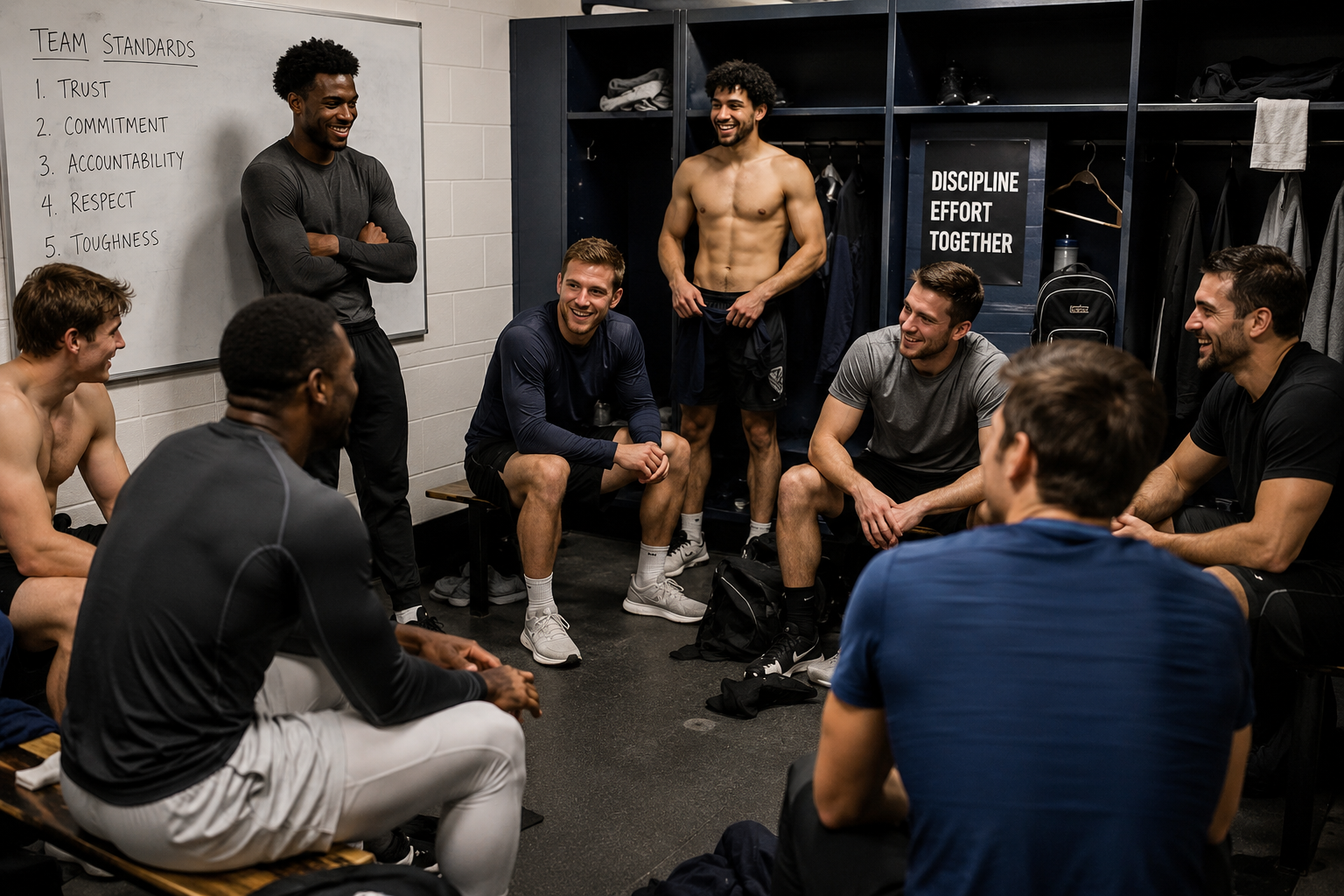
But as someone who has spent years around athletics, fitness centers, and men’s spaces, I can tell you that’s only part of the story—and often not the most important part.
The reality is that healthy locker rooms serve a purpose many people overlook: they are among the last remaining places where men naturally learn to socialize with other men.
The Unofficial Classroom
Nobody walks into a locker room and announces they’re about to receive a lesson in masculinity.
Yet it happens every day.
A younger athlete watches how an older athlete handles a tough loss.
A rookie listens as veterans discuss family responsibilities.
A teenager hears men talking about careers, relationships, fatherhood, finances, and personal struggles.
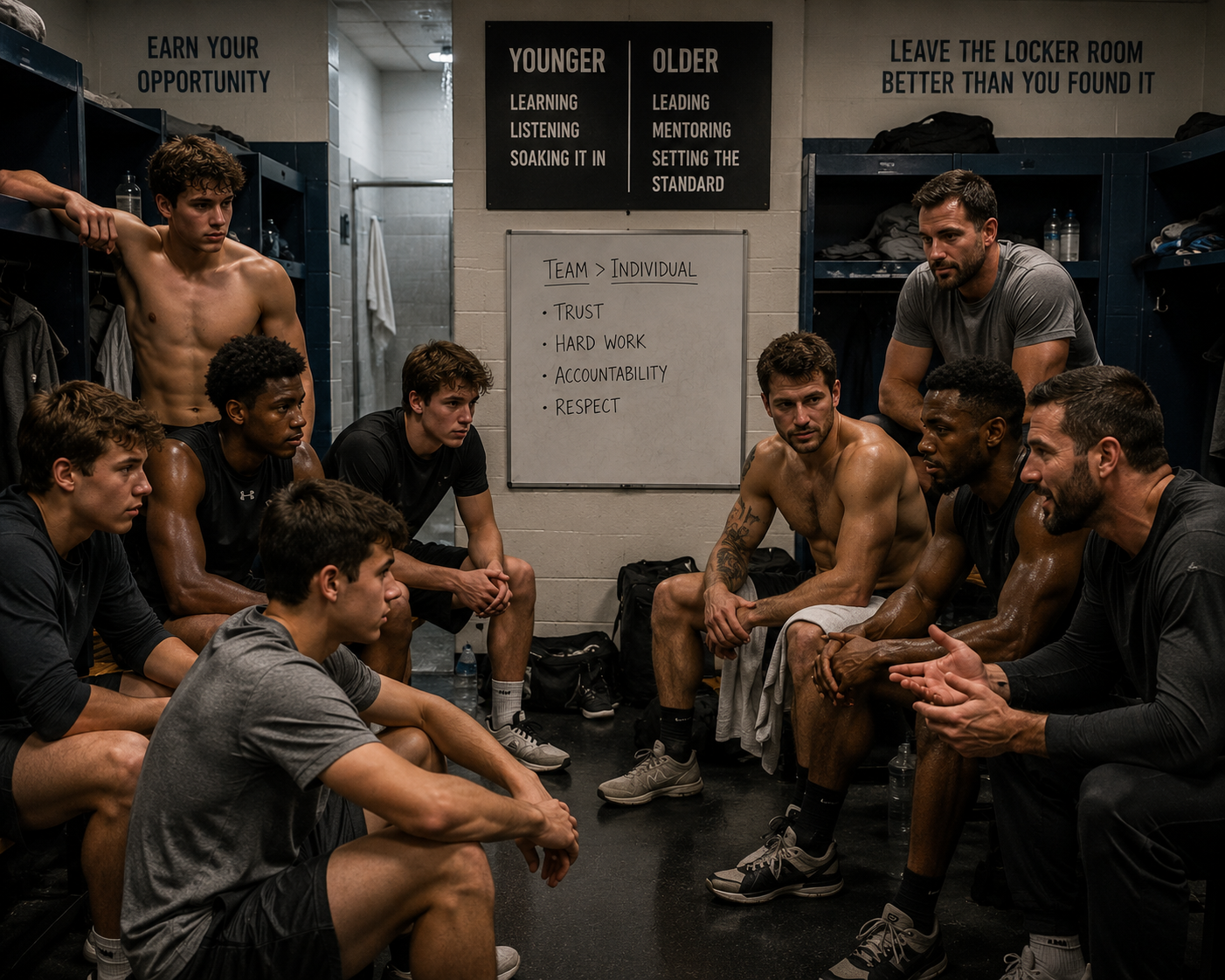
Advice is exchanged. Stories are shared. Humor breaks tension.
These interactions aren’t scheduled. There is no curriculum. But lessons are being taught nonetheless.
For generations, locker rooms have functioned as informal classrooms where boys and young men learn what adult male behavior looks like.
Men Socialize Differently
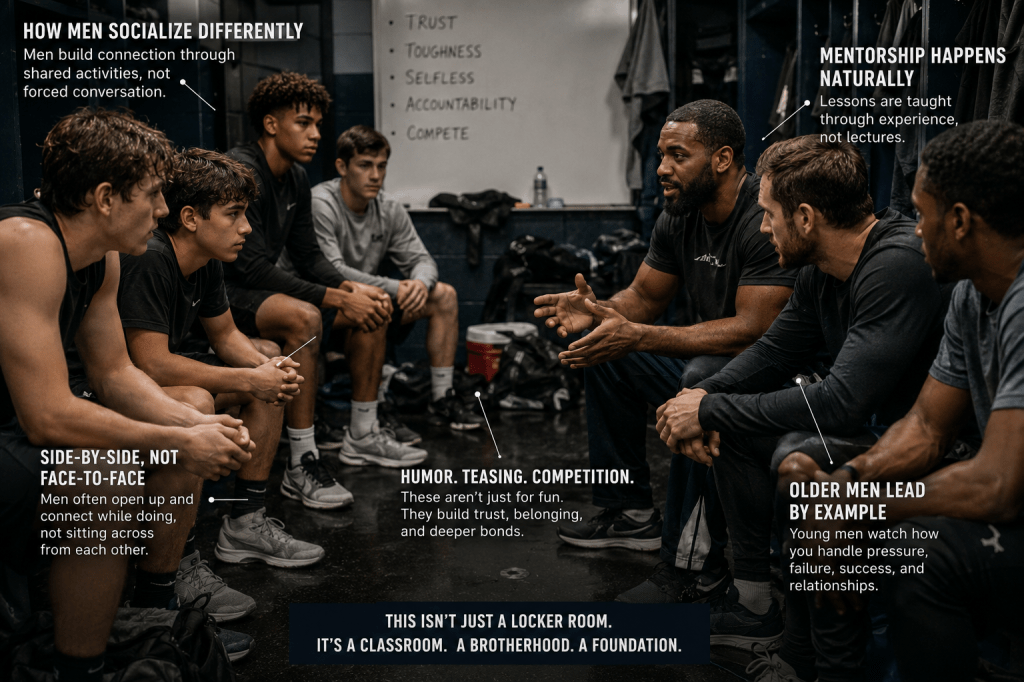
Research consistently shows that men often build relationships through shared activities rather than face-to-face emotional disclosure.
Many men find it easier to open up while lifting weights, playing sports, working on a project, or simply sitting beside someone rather than directly across from them.
The locker room naturally creates this environment.
Conversations happen while tying shoes, putting equipment away, or cooling down after practice.
Ironically, some of the most meaningful conversations occur when nobody is trying to have one.
The pressure is gone.
The masks come off.
The conversation becomes real.
Brotherhood and Belonging
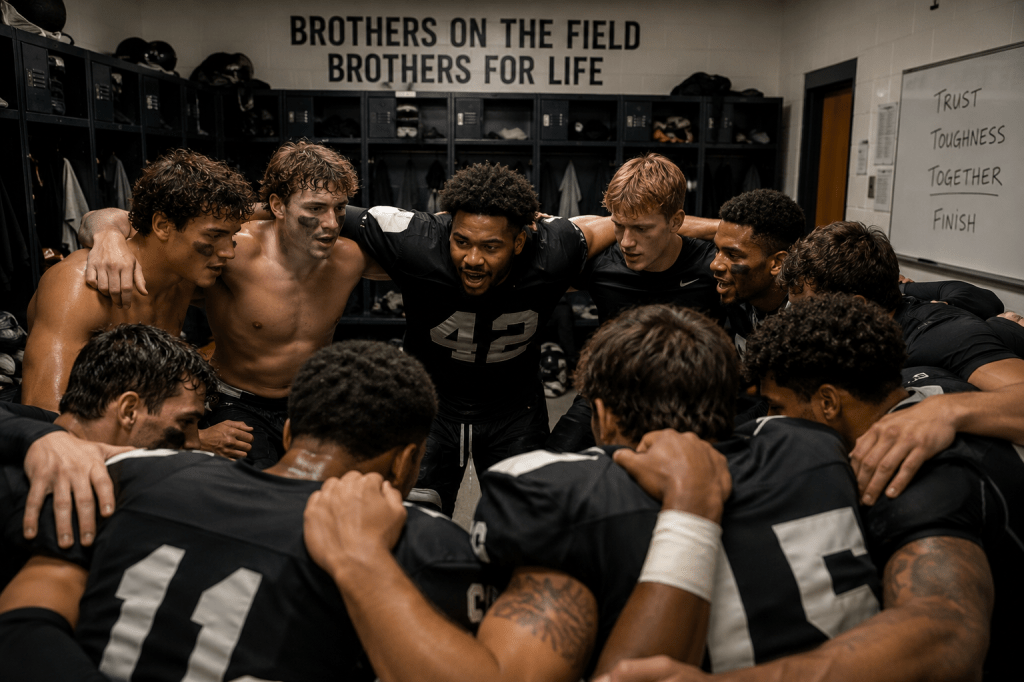
One of the strongest psychological needs humans possess is the need to belong.
For many men, sports teams, gyms, and athletic communities provide that sense of belonging.
The locker room becomes the physical space where that bond is reinforced.
It’s where teammates celebrate victories.
It’s where losses are processed.
It’s where people learn they are not alone in their struggles.
Many men who appear confident and self-assured on the outside are quietly dealing with anxiety, depression, loneliness, career stress, or family problems.
Sometimes the first place those conversations emerge is in the locker room.
Not in therapy.
Not online.
Not on social media.
In the locker room.
The Role of Humor
Outsiders often misunderstand the role of humor among men.
Good-natured teasing is frequently less about aggression and more about acceptance.
When done respectfully, humor serves as a bonding mechanism.
It creates trust.
It lowers defenses.
It communicates, “You’re one of us.”
Of course, there is a line.
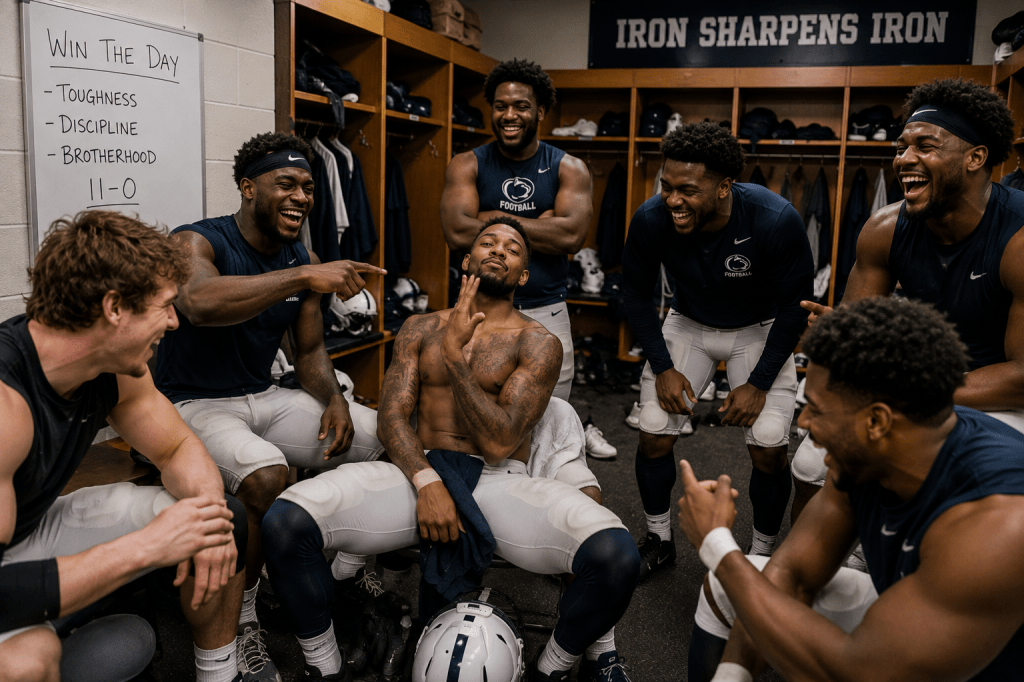
Humor that humiliates, isolates, or degrades someone crosses into toxicity.
Healthy locker rooms understand that distinction.
The goal isn’t cruelty.
The goal is connection.
Accountability and Standards
Healthy locker rooms don’t just build friendships—they build accountability.
Athletes learn that their actions affect the group.
Showing up late impacts teammates.
Giving less than full effort impacts teammates.
Poor attitude impacts teammates.
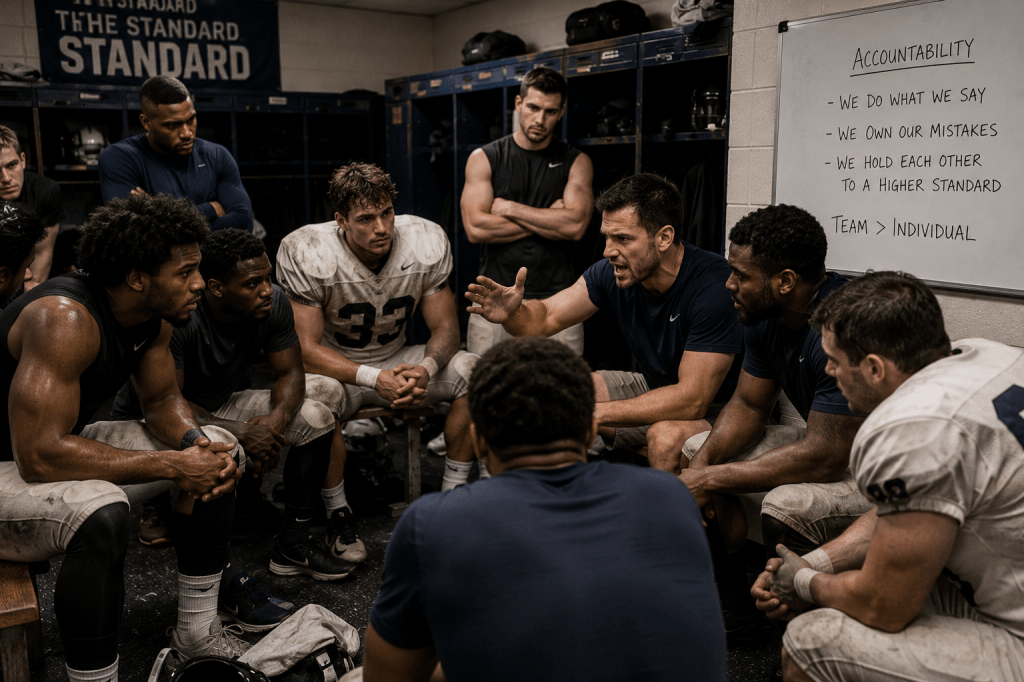
This environment teaches responsibility, discipline, and commitment to something larger than oneself.
In many ways, the locker room becomes a miniature society.
Everyone has a role.
Everyone contributes.
Everyone is expected to uphold shared standards.
When Locker Rooms Become Toxic
Not every locker room is healthy.
Some environments promote bullying, hazing, exclusion, or unhealthy ideas about masculinity.
Those behaviors should never be defended simply because they occur in a male space.
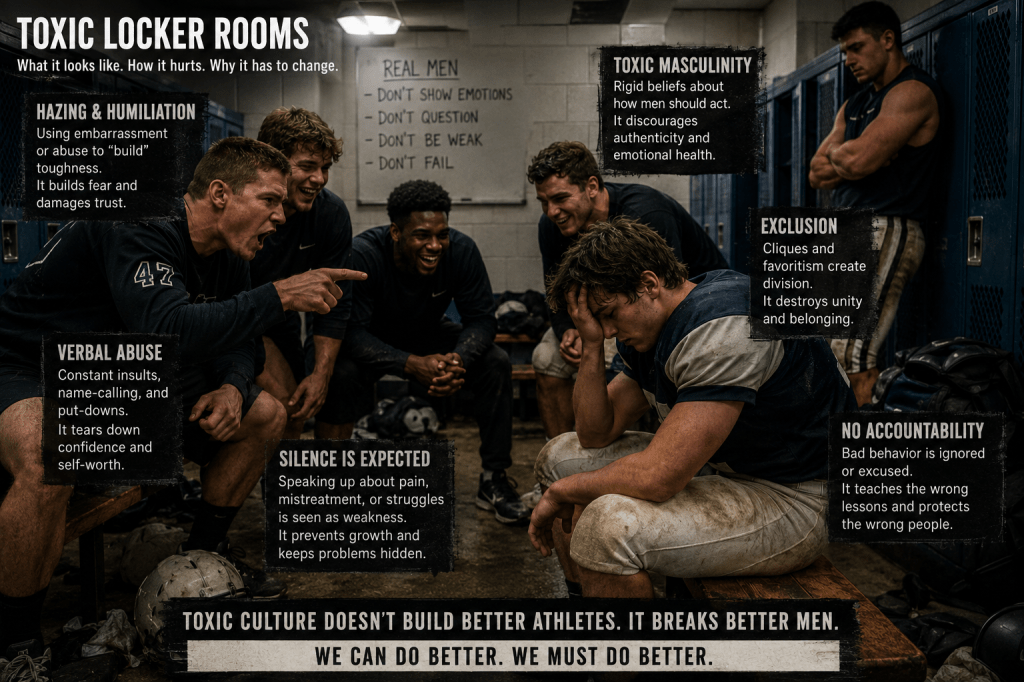
Healthy masculinity isn’t about dominance.
It’s about responsibility.
It’s about protecting weaker members of the group.
It’s about respect.
It’s about integrity.
The best locker rooms challenge men to become better versions of themselves—not more aggressive versions.
Why Men Need These Spaces
Many experts are concerned about increasing levels of loneliness among men.
Fewer men belong to clubs.
Fewer men participate in community organizations.
Many friendships become increasingly isolated as men age.
As a result, opportunities for meaningful male connection continue to shrink.
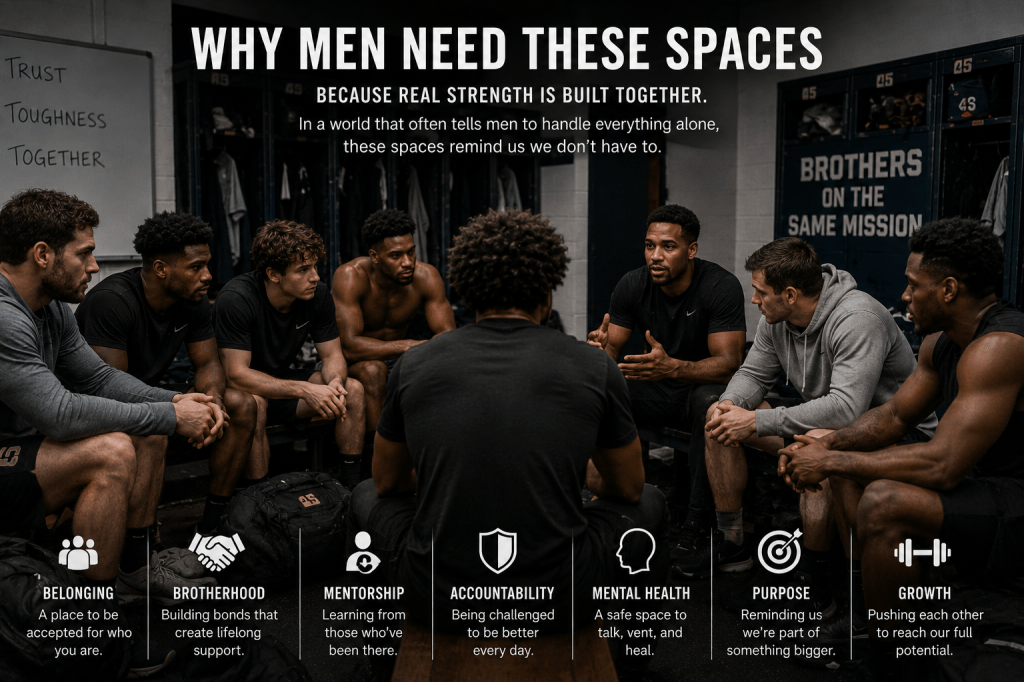
That’s one reason why gyms, sports teams, recreational leagues, and locker rooms remain so important.
They provide a place where men can gather without needing an agenda.
A place where mentorship can happen naturally.
A place where friendships can form organically.
A place where men can learn, grow, and support one another.
Final Thoughts
The locker room isn’t perfect.
It never has been.
But when its culture is healthy, it becomes far more than a place to change clothes.
It becomes a community.
A classroom.
A support system.
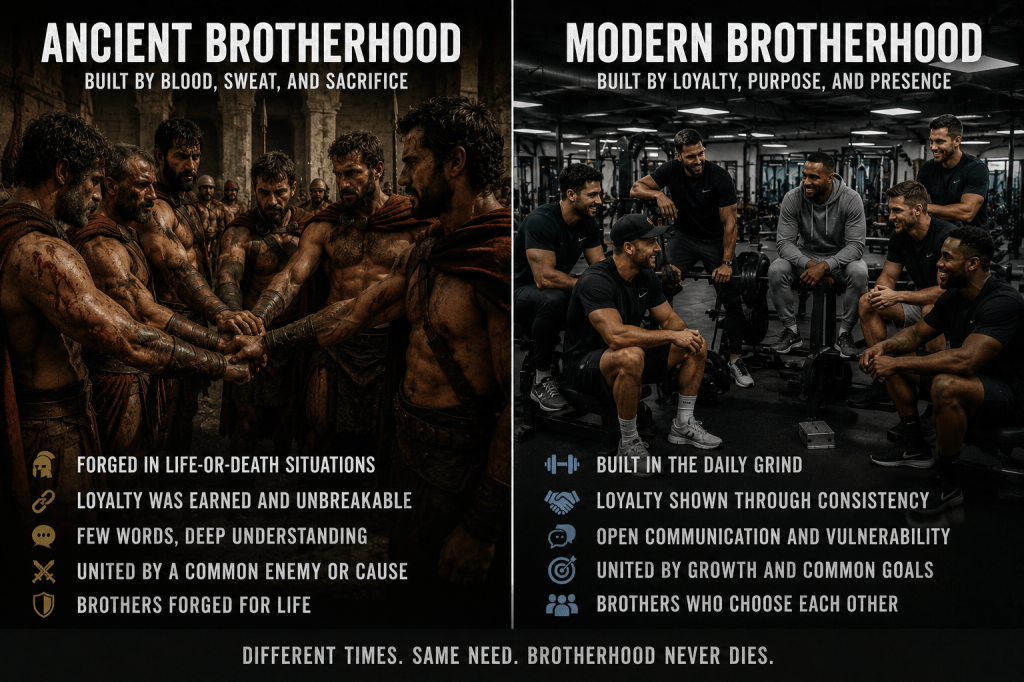
A brotherhood.
And in a world where many men are increasingly disconnected from one another, those spaces may be more important than ever.
The goal shouldn’t be to eliminate locker room culture.
The goal should be to create locker rooms worth being a part of.
About Me
Hi, I’m John J. Schessler, Jr.

AFAA Sports Psychology Coach and graduate student pursuing my Master of Science in Sports Psychology, graduating in August 2026 from Capella University. More importantly, I’m someone who has spent much of my life exploring one question:
What helps people become stronger—physically, mentally, and emotionally?
My passion for human performance isn’t rooted solely in textbooks or certifications. It’s rooted in experience.
At the age of ten, I was diagnosed with Guillain-Barré Syndrome, a rare neurological condition that placed me in a coma for six weeks and forced me to relearn many of the basic skills most people take for granted. That experience taught me lessons about resilience, identity, and perseverance that continue to shape my life today.
Since then, I’ve dedicated my career to helping others overcome obstacles and unlock their potential.
Professionally, I work with autistic students as a Behavior Interventionist, helping young people develop the skills necessary to navigate challenges and build meaningful lives. In the fitness and performance space, I’ve spent years coaching individuals toward healthier lifestyles, improved confidence, and greater physical performance.
Through Athlete Mindset HQ, I bring these worlds together.
This blog explores the intersection of sports psychology, fitness, men’s mental health, resilience, leadership, and personal growth. You’ll find conversations about athletic performance, motivation, masculinity, mindset, discipline, relationships, confidence, and the realities of growing as a man in today’s world.
I believe strength is more than muscle.
I believe mental toughness is more than simply “pushing through.”
I believe healthy masculinity includes accountability, courage, emotional intelligence, and service to others.
Most of all, I believe that growth happens when we are willing to challenge ourselves, learn from others, and remain committed to becoming better than we were yesterday.
Whether you’re an athlete, coach, fitness enthusiast, or simply someone looking to improve your mindset and performance, I’m glad you’re here.
Welcome to Athlete Mindset HQ.
Let’s get to work.


Leave a comment