
By John Schessler, CMT, ET-C,
If you are a diabetic or prone to having physical symptoms from having low sugar, you know that having things to eat or drink on hand can be lifesavers, literally. One of the scenarios that I usually find myself assisting clients and gym members in are these types of issues. By the time a member comes to me at the gym and complains of becoming lightheaded, usually we still have some time to get some sugar into them. Most of us know what having low blood sugar IS but what does it LOOK like? Here’s a breakdown:
Low blood sugar or hypoglycemia is pretty common these days and mainly found in patients who have Type I Diabetes. Hypoglycemia occurs when blood sugar levels drop below 70mg/dL and for those without having diabetes, hypoglycemia occurs when your blood sugar falls below 55mg/dL. Usually when someone experiences a drop in blood sugar, the individual needs to ingest sugar or carbohydrates and having their blood sugar levels return to a normal level.
Back to my initial question, what do someone who is having a low sugar attack look like and what are the signs? According to the Cleveland Clinic,
The signs include:
Shaking or trembling.
Weakness.
Sweating and chills.
Extreme hunger (polyphagia).
Faster heart rate.
Dizziness or lightheadedness.
Confusion or trouble concentrating.
Anxiety or irritability.
Color draining from your skin (pallor).
Tingling or numbness in your lips, tongue or cheeks.
Signs of severe hypoglycemia include:
Blurred or double vision.
Slurred speech.
Clumsiness or difficulty with coordination.
Being disoriented.
Seizures.
Watching someone have a hypoglycemic episode can be very unpleasant for the person in question. However, the first signs of an oncoming attack can be good warning signs for you to get some sugar or carbs into your system quickly. Severe hypoglycemia is a medically threatening scenario and must be treated as such because if left untreated, the patient could go into shock, experience multiple organ failure or death in the worst-case scenario.
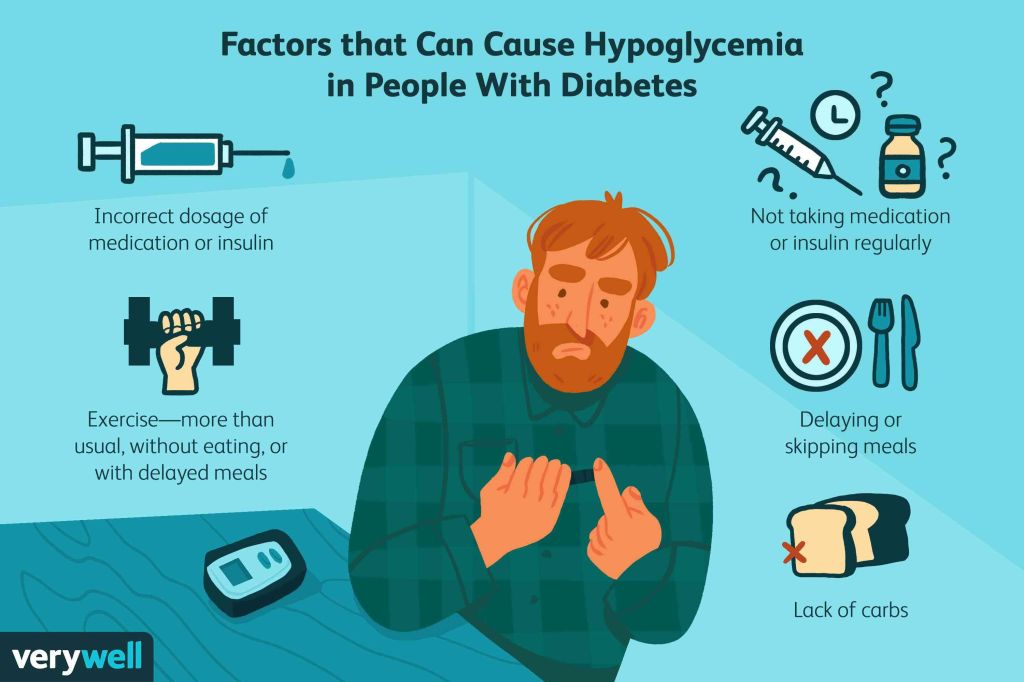
Hypoglycemia happens when your blood sugar drops below a healthy range. Several factors can contribute to this for people with diabetes. Hypoglycemia can develop if things like food, exercise and diabetes medications are out of balance.
Common situations that can lead to hypoglycemia for people with diabetes include:
Taking too much insulin, the wrong insulin or injecting it into your muscle instead of in your fat tissue.
Not timing insulin and carb intake correctly (for example, waiting too long to eat a meal after taking insulin for the meal).
Taking too much or too high of a dose of oral diabetes medications.
Being more active than usual.
Drinking alcohol without eating.
Eating meals later than usual or skipping meals.
Not balancing meals by including fat, protein and fiber.
People who are pregnant and have Type 1 diabetes are also more likely to experience low blood sugar during the first trimester due to hormone changes.
You treat mild to moderate hypoglycemia by eating or drinking sugar (carbohydrates).
The American Diabetes Association recommends the “15-15 rule” to treat an episode of mild to moderate hypoglycemia:
Eat or drink 15 grams of fast-acting carbs to raise your blood sugar.
After 15 minutes, check your blood sugar.
If it’s still below 70 mg/dL, have another 15 grams of fast-acting carbs.
Repeat until your blood sugar is at least 70 mg/dL.
To know how many carbs you’re eating, read food nutrition labels. Some examples of foods that contain about 15 grams of fast-acting carbs include:
1 small piece of fruit, such as half a banana.
4 ounces (half-cup) of juice or regular soda (not diet).
1 tablespoon of sugar, honey or syrup.
1 tube of instant glucose gel (check the instructions).
3 to 4 glucose tablets (check the instructions).
If you have symptoms of hypoglycemia but can’t check your blood sugar, use the 15-15 rule until you feel better.
Children may need fewer grams of carbs to treat hypoglycemia. Check with your child’s healthcare provider.
Hypoglycemia isn’t anything to be swept under the rug if you are experiencing changes in your blood sugar. Aside from organ failure, patients can experience cardiac arrest, falling into a coma, and permanent brain damage. This is why it is extremely important if you suspect that you may have hypoglycemia to have your PCP order a CBC blood panel to see where your levels lie. The more proactive you are about it, the more you can stay on top of your health and livelihood.
#diabetes #hypoglycemia #hyperglycemia #glucose #medicalinformation #medicine #personaltrainer #hospital #greysanatomy #lowbloodsugar #equalibrium #fitness #health #therapist #flipyourscriptpt #johnschesslerjr #pittsburgh #americandiabetesassociation #awareness #exercise #psychology #themoreyouknow
John J. Schessler is a Pittsburgh-Based Personal Trainer, Motivational Speaker, Exercise Therapist & Writer. He is also the host and Showrunner of the podcast, “Flip Your Script” available on all podcast platforms. Mr. Schessler has been working in the fitness and health industry for the past 17 years and has specializations in Orthopedics, Pediatrics, Sports Injury and Tactical Conditioning. For speaking engagements or training inquiries, please email John directly at pghwellnesspt@gmail.com.


Leave a comment